
If you’re hunting for the best time to buy a used Tesla in 2025, you’re not alone. After a roller-coaster couple of years, huge price cuts, fast depreciation, then a surprise rebound, timing your purchase can easily swing the cost of a Model 3 or Model Y by thousands of dollars. The good news: the data from 2024 through early 2026 points to some clear patterns you can use to your advantage.
Key takeaway up front
Why timing matters for a used Tesla in 2025
Historically, used-car pricing follows a rhythm: tax-refund season and summer road-trip months push prices up, while late fall and year-end tend to be softer. Used Teslas now layer EV-specific forces on top of that, rapid technology updates, shifting demand, and policy changes. In 2024–2025, those forces made used Tesla values unusually volatile.
Three forces that shape used Tesla timing
Understanding these will help you decide when to pull the trigger in 2025.
1. Fast tech cycles
Tesla pushes frequent software updates and major hardware revisions. When a new battery or interior update lands, older cars often see a step down in resale values, especially for Model 3 and Model Y.
2. Policy whiplash
The federal EV tax credits for new and used vehicles effectively ended for purchases after September 30, 2025, reshuffling the economics of new vs. used and shifting demand toward cleaner-priced used Teslas.
3. Battery confidence
Because the battery pack is the most expensive component, buyers are choosy. That means clean battery-health documentation can matter more than catching the absolute bottom price.
Watch the calendar, not just the listing price
How used Tesla prices moved from 2024 to early 2026
To understand the best time to buy a used Tesla in 2025, you need to know where we are in the cycle. Through 2024 and early 2025, used Teslas were among the biggest price losers in the market, as a flood of trade-ins met softening EV demand. Then the story pivoted in late 2025 and early 2026.
What the numbers say about used Tesla pricing
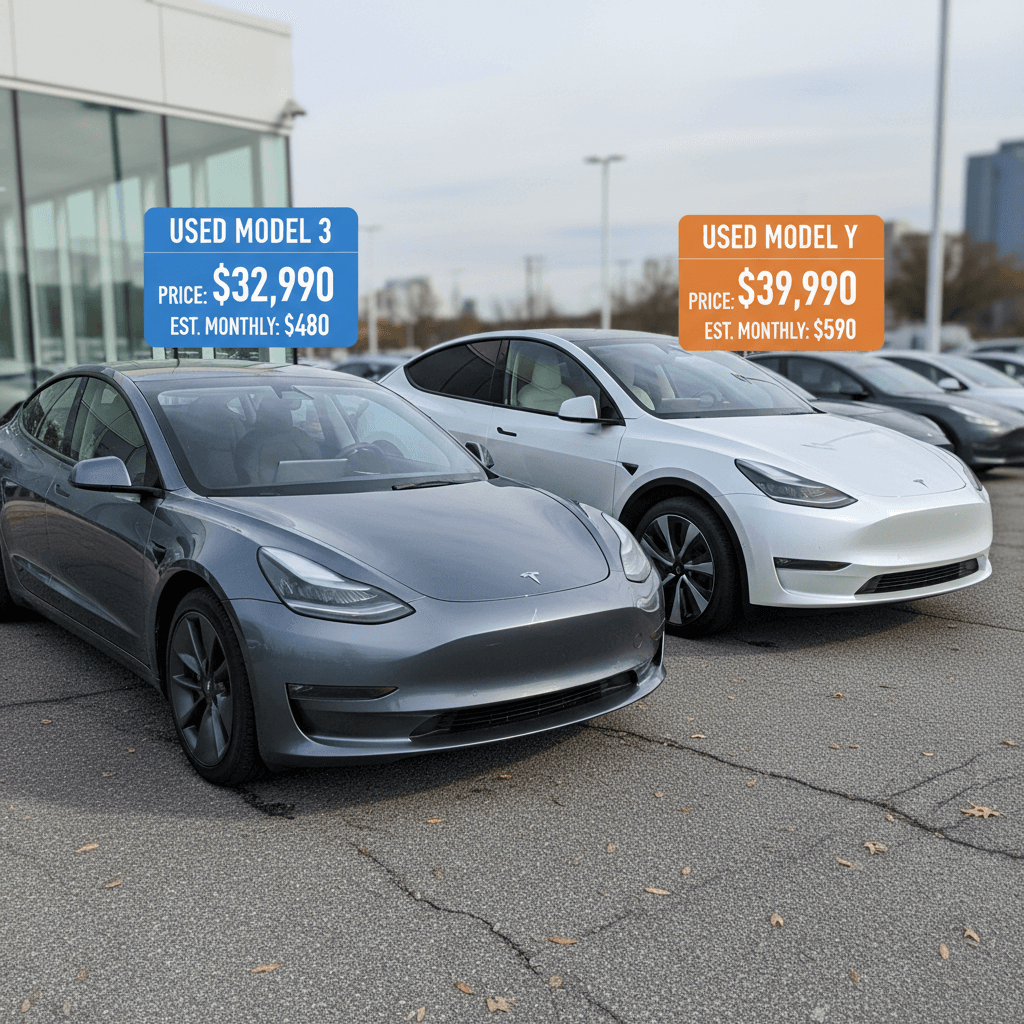
In plain English, 2024 and early 2025 were a bonanza for bargain hunters. By mid‑2025, used Tesla prices had crashed well below many buyers’ expectations. But after the federal EV tax credits ended for vehicles acquired after September 30, 2025, used Teslas bucked the broader EV trend and actually ticked back up. That means the very cheapest days may be behind us, but there are still windows in 2025 where you can do very well, especially if you’re flexible on color, options, and mileage.
Seasonal “best times” to buy in 2025
Seasonality didn’t disappear just because we’re talking EVs. In 2025, the traditional used-car calendar still applies, but you need to overlay the EV tax-credit deadline and Tesla’s own pricing moves. Here’s how the year tends to break down if you’re shopping in the U.S.
2025 timing guide for used Tesla buyers
How each part of 2025 typically looks for pricing, inventory, and competition.
| 2025 period | Typical pricing | Inventory & selection | Buyer competition | What it means for you |
|---|---|---|---|---|
| Jan–early Mar | Softer; dealers clearing year-end leftovers | Good: off-lease cars plus trade-ins | Moderate | Strong window for value, especially on 2–4 year-old Model 3 and Model Y. |
| Mid‑Mar–Apr (tax refund season) | Often firm or slightly higher | Good | High | Plenty of choices but more buyers; be prepared to move fast on well‑priced cars. |
| May–Aug (summer driving) | Firm to high | Variable by region | High | Road-trip season and graduation buyers can push prices up on attractive specs. |
| Sep 1–30 (pre-credit cutoff) | Mixed: some upward pressure | Solid as sellers rush deals | High | Shoppers rushed to buy before credits expired; expect more competition and less room to negotiate on the best cars. |
| Oct–Nov | Stabilizing after policy shift | Decent, but some cars pulled to wait for spring | Moderate | Good time to negotiate with sellers adjusting to a post‑credit market and cooler EV sentiment. |
| Dec (year‑end) | Often softer, especially late month | Varies: some dealers push volume | Moderate | Historically a sweet spot: motivated sellers, buyers distracted by holidays, and dealers closing the books. 2025 should be similar even without federal credits. |
Use this as a directional guide, local supply and individual vehicles always matter more than the calendar alone.
If you only remember one window…
How the end of the EV tax credit changes 2025 timing
Until September 30, 2025, many used EV shoppers could qualify for up to $4,000 in federal tax credits on qualifying vehicles, and new EV shoppers could get up to $7,500. Those incentives effectively ended for vehicles acquired after that date, which reshaped the math for buying both new and used Teslas.
What the credit sunset means for your timing
New vs. used gap narrowed
When new EV credits went away on September 30, 2025, the effective price gap between a new and a used Tesla narrowed. That pushed some buyers toward used Teslas in late 2025 and early 2026, helping prices rebound slightly.
Used EV bargain window shifted earlier
Through mid‑2025, used Teslas were dropping faster than the broader used market. Shoppers who moved before the September 30 deadline often stacked lower prices with remaining credits, grabbing some of the best deals we’ve seen yet.
Post‑credit market is more “normal”
Without federal money on the table, buyer urgency cooled. Going forward in late 2025 and into 2026, pricing will hinge more on <strong>supply, demand, and interest rates</strong> than on tax-driven deadlines.
State and utility incentives still matter
Even though the big federal credits ended, <strong>state rebates, HOV perks, and utility charging incentives</strong> can offset thousands over the life of the car. Factor those into your timing, especially if your local programs have annual funding cycles.
Don’t plan around a federal comeback
Model-by-model timing: Model 3, Model Y, Model S, Model X
Not every Tesla behaves the same on the used market. In 2025, compact models like the Model 3 and Model Y are plentiful and price-sensitive; the Model S and Model X are fewer in number and respond more to niche demand. Your “best time” depends in part on which badge is on the trunk.
How timing differs by Tesla model in 2025
Use this as a guide, then zoom in on your local market.
Model 3: Volume king, shopper’s market
What we’re seeing: Large supply across 2018–2023 model years, with significant depreciation already baked in. Higher‑mileage cars often dip below $20,000.
- Best timing in 2025: Late Jan–early Mar and Oct–Dec.
- Strategy: Track several similar cars for 3–4 weeks; price cuts are common as sellers chase the market.
Model Y: Still in high demand, but softening
What we’re seeing: Prices have fallen hard from 2023 peaks, but family-hauler demand keeps the Model Y relatively resilient.
- Best timing in 2025: Late winter and late fall, especially on all‑wheel‑drive trims as winter ends.
- Strategy: Look at cars coming off 36‑month leases, usually 30–40k miles with good service history.
Model S: Big swings, small pool
What we’re seeing: Sharp depreciation in 2024–2025 followed by a recent price bump as fewer new S models reach the market.
- Best timing in 2025: When you see the right spec under your budget. Inventory is thin enough that rigid calendar timing matters less.
- Strategy: Prioritize condition and verified battery health over month-to-month price shifts.
Model X: Niche demand, timing is opportunistic
What we’re seeing: Similar story to the Model S, with Falcon Wing doors and three‑row layouts limiting the buyer pool, but also limiting supply.
- Best timing in 2025: Around tax-refund season when families trade up or down, and again at year‑end when larger vehicles can linger.
- Strategy: Watch individual units over time; a high‑priced X that sits for 45–60 days often gets a meaningful cut.
Where Recharged fits in
Market signals to watch before you make an offer
The best time to buy a used Tesla in 2025 isn’t just about a month on the calendar. It’s about recognizing when the market around you is leaning in your favor. A few signals are especially useful if you’re trying to time your move within a 30–60 day window.
- Days on market: A used Tesla that’s been listed 45–60 days with only small price cuts is often ripe for a larger drop or a stronger offer.
- Chunky price drops: When you start seeing multiple cars in your saved search category cut by $1,000–$2,000 in a week, it’s a sign sellers are chasing softer demand.
- Dealer vs. private mix: A wave of dealer inventory with similar mileage and options (for example, 2022 Model 3 RWD around 30k miles) can put downward pressure on prices.
- Interest-rate moves: If your lender or dealership partner drops APRs on used EVs, that can offset a modest price uptick and make “now” the right answer, even if you’re not at the seasonal low.
Use alerts, not just bookmarks
Timing vs. condition: what matters more?
It’s tempting to obsess over catching the absolute bottom of the market. But with Teslas, and EVs in general, buying the cheapest car on the cheapest day isn’t always the smartest move. Battery health, software features, and repair history can easily outweigh what you saved by waiting another month.
When to prioritize timing
- You’re flexible on color, wheels, and options.
- You’re shopping for common trims (e.g., Model 3 RWD, Model Y Long Range) with plenty of local supply.
- You’re watching interest rates and want to strike when financing and prices align.
- You’re not in a rush, you can wait 60–90 days if needed.
When to prioritize condition
- You’ve found an unusually clean, low-mileage example with documented battery health.
- The configuration is rare in your area (for example, seven‑seat Model Y, performance trims, or specific interiors).
- The vehicle comes with a strong inspection report, recent tires, and no accident history.
- You plan to keep the car 5+ years, so long-term reliability matters more than squeezing the last dollar out of 2025 pricing.
Why battery reports trump tiny timing wins
How Recharged helps you catch the right moment
Even seasoned shoppers struggle to read the EV market in 2025. That’s part of the reason Recharged exists: to make buying a used Tesla simpler, more transparent, and less risky, whether you buy in February, July, or December.
Shopping a used Tesla with Recharged
Tools and services that make timing less stressful.
Recharged Score battery diagnostics
Every Tesla on Recharged includes a Recharged Score Report with verified battery health and a transparent look at range, charging behavior, and overall condition. You’re not guessing how “used” your used Tesla really is.
Fair market pricing insights
Our pricing tools benchmark each car against the broader used-EV market, including recent swings in Tesla values. That context helps you recognize a fair deal even if prices have ticked up since 2024 lows.
Financing & trade-in support
Recharged offers financing options tailored to used EVs and streamlined trade‑ins, so you can lock in a monthly payment that works, without spending weekends at traditional dealerships.
Nationwide delivery
If the best‑timed deal isn’t in your backyard, Recharged can coordinate nationwide delivery, opening up more options than your local lot alone.
EV-specialist guidance
Our EV specialists help you weigh condition vs. timing, talk through battery health reports, and decide whether it’s smarter to grab a car now or wait for the next wave of off‑lease Teslas.
Experience Center in Richmond, VA
If you’re near Virginia, you can visit the Recharged Experience Center in Richmond to see vehicles in person, get hands-on with Tesla features, and test your fit before you buy online.
Frequently asked questions about buying a used Tesla in 2025
Used Tesla 2025 timing FAQ
Bottom line: so when is the best time?
Putting it all together, the data points to a clear answer: in 2025, the best time to buy a used Tesla is when three things line up, seasonally soft pricing (usually late winter or year‑end), a clean vehicle with strong battery health, and financing you’re comfortable with. You probably won’t be able to engineer the absolute lowest dollar that ever appears on a Model 3 or Model Y, but you can stack the odds in your favor by watching days on market, following price cuts, and shopping in those historically quieter parts of the year.
If you’d rather not track all of that alone, Recharged is built for this moment. With Recharged Score battery diagnostics, transparent pricing, EV‑savvy support, and nationwide delivery, you can focus less on guessing the perfect week and more on finding the Tesla that will serve you well for years. In a market that’s finally stabilizing after a wild ride, that combination matters more than chasing one last percentage point of savings.