If you own an electric vehicle, you’ve probably seen the headlines about plunging EV resale values. In 2023–2025, used EV prices dropped sharply while many gas cars held steadier. That makes where you sell a used EV more important than ever, pick the wrong channel and you can leave thousands of dollars on the table.
Quick takeaway
Why “where” you sell matters more with EVs
Every used car loses value, but EVs depreciate differently. Price cuts on new models, rapid tech changes, and buyer worries about battery life all hit used EV prices harder than comparable gas vehicles. Recent analyses show three‑year EV depreciation commonly in the 50–60% range, noticeably steeper than many internal‑combustion cars in the same period. That gap is widening in some segments as more off‑lease EVs hit the market.
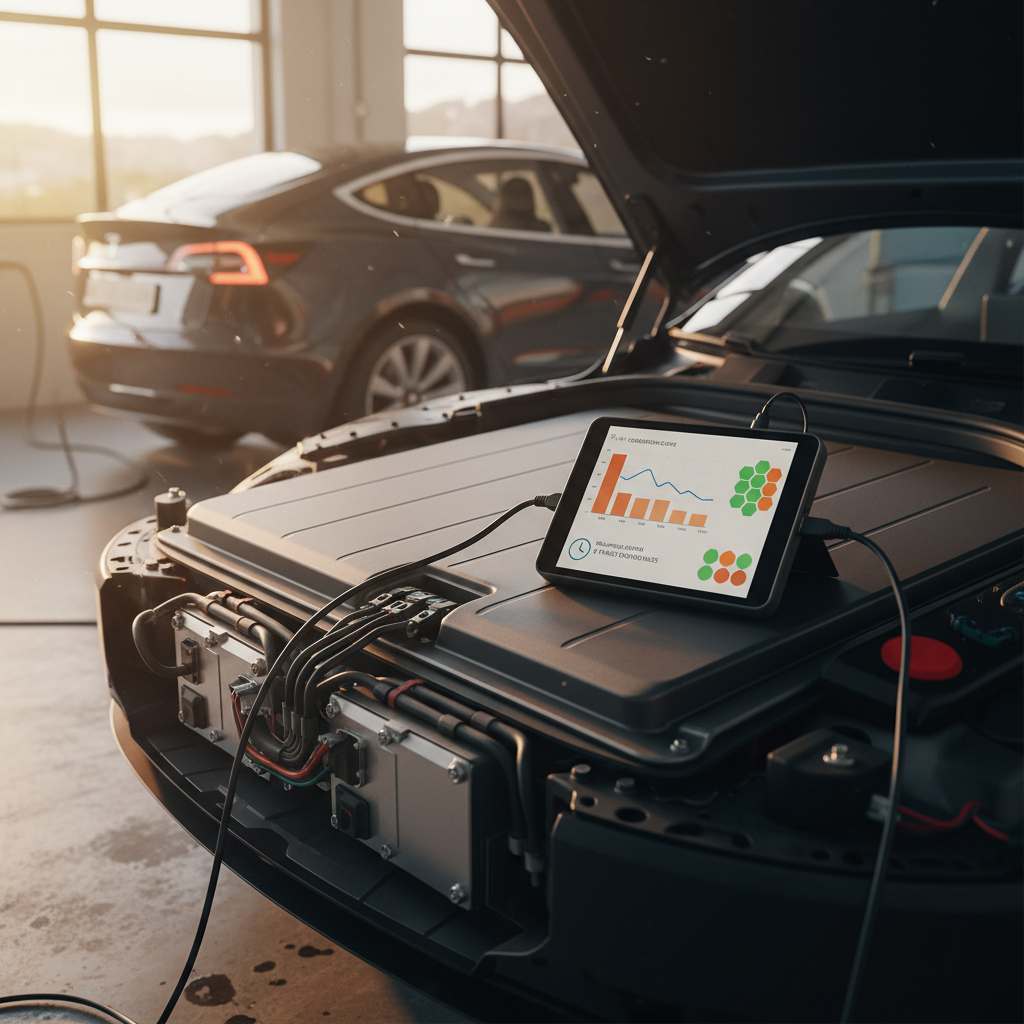
At the same time, some EVs, especially Teslas and newer long‑range models with good charging performance, hold value surprisingly well. The difference often comes down to: - How clearly you can show battery state of health (SOH) - Whether you’re selling into a national buyer pool or a local lot - How much effort you’re willing to invest in marketing, photos, and screening buyers
Why this is higher‑stakes than a gas car sale
How used EV values behave in today’s market
Used EV value patterns you should know
For you as a seller, this means two things: 1. Timing matters. Selling in the first year is often painful; years two to four are usually the sweet spot before another big technology leap makes your car feel dated. 2. Proof of battery health is gold. Two otherwise‑similar EVs can be thousands of dollars apart in value if one has a documented 88% SOH and the other has no report at all.
Pro move: lead with battery health
Your main options for selling a used EV
Broadly speaking, you have four ways to sell a used EV today. Each has different strengths depending on whether you care most about price, speed, or convenience.
Compare your options at a glance
All roads can work, the key is matching the channel to your priorities.
Dealer trade‑in
Best for: Convenience when buying another car.
Typical outcome: Lowest price, fastest and simplest process.
Instant‑offer EV buyers
Best for: Quick sale with better pricing than many local dealers.
Typical outcome: Solid offers, especially on Teslas and newer long‑range EVs.
Online marketplaces
Best for: Reaching EV‑savvy shoppers nationwide.
Typical outcome: Higher price potential, moderate effort.
Private sale
Best for: Absolute top dollar.
Typical outcome: Highest price, but you do all the work and take the risk.
No one "best" universal choice
Option 1: Dealer trade‑in or direct sale
Traditional dealers are still the default “best place” for many owners because they’re familiar, local, and one‑stop. You drive in with an EV and drive out with something else. The catch: dealers are usually the lowest‑paying buyer for electric vehicles, especially if they don’t specialize in EVs.
Pros of dealer trade‑ins for EVs
- Fast and simple: One visit, paperwork handled for you.
- Great if you’re upside‑down: They can roll negative equity into your next loan.
- No strangers: You avoid test drives with private buyers and phone tag.
Cons of dealer trade‑ins for EVs
- Often underpriced: Many non‑EV dealers undervalue battery health and over‑discount older EVs.
- Limited buyer pool: Your car has to fit that dealer’s lot and audience.
- Price blur: Trade‑in value and new‑car discount get mixed, so it’s hard to see what you really received.
Watch out for this with EV trade‑ins
Option 2: Instant‑offer and EV‑specialist buyers
Over the last few years, a wave of sites has emerged that will buy your EV directly or connect you to dealers via an instant offer. Some are generalists, others focus heavily on electric vehicles. They typically give you a value online based on VIN, photos, mileage, options, and condition, sometimes with added weight for battery data if you provide it.
How instant‑offer buyers stack up for EVs
Not a ranking, just how typical services compare on what sellers care about.
| Type of buyer | Speed | Typical pricing vs. dealer | Effort level | Best fit |
|---|---|---|---|---|
| Big national used‑car chains | Same‑day to 3 days | Often slightly higher than local dealer on popular EVs | Low | Late‑model Teslas, mainstream crossovers |
| EV‑only instant‑offer sites | 1–3 days | Can beat generalist dealers, especially on niche EVs | Low–moderate | Less common EVs, out‑of‑state buyers |
| Auction-style dealer networks | 2–5 days | Competitive when multiple EV‑savvy dealers bid | Moderate | Clean‑title, well‑optioned EVs with good photos |
Actual offers vary by brand, mileage, condition, region, and battery documentation.
Why EV‑specialist buyers can be a sweet spot
Option 3: Online EV marketplaces and consignment
If your top goal is net price, not speed, dedicated EV marketplaces and consignment services can shine. Platforms such as EV‑only listing sites and specialist retailers put your car in front of EV‑educated shoppers nationwide, often with support on pricing, photos, and paperwork.
Peer‑to‑peer EV marketplaces
- Control over price: You set the ask and negotiate directly.
- Audience of EV fans: Buyers often understand SOH, charging curves, and software packages.
- Lower fees than traditional consignment: Some platforms charge a flat listing fee or small success fee.
EV consignment & hybrid models
- Hands‑off experience: A professional team markets, shows, and negotiates on your behalf.
- Retail‑style presentation: Reconditioning, photos, and transparency tools can justify a higher price.
- Aligned incentives: Many consignment models earn more when your vehicle sells for more.
Where Recharged fits on this spectrum
Option 4: Private sale to an individual buyer
For many EVs, especially desirable models with long range and clean histories, the highest possible price still comes from a private buyer. Listing on platforms like local classifieds, EV owner forums, and social‑media marketplaces gives you maximum control over price and negotiation, but also maximum responsibility.
- You handle all communication, scheduling, and test drives
- You must screen for scams and unsafe situations
- You negotiate price, manage payment, and complete paperwork
- You may wait weeks for the right buyer, especially in weaker EV markets
Safety & payment checklist for private EV sales
So what’s actually the best place to sell a used EV?
From years of watching retail deals unfold, the honest answer is: the best place to sell a used EV is the one that best matches your vehicle and your priorities. But we can be more specific by looking at a few common seller profiles.
Best place to sell a used EV by scenario
Match your situation to the channel that tends to deliver the best outcome.
Late‑model, low‑mile EV
Example: 2‑year‑old Tesla Model 3, Hyundai Ioniq 5, or Mustang Mach‑E with clean history.
Best place: EV‑savvy instant‑offer platforms or specialist EV retailers with a national audience.
Older or high‑mile EV
Example: 7‑year‑old Nissan Leaf, Bolt with high mileage, or first‑gen compliance car.
Best place: Local dealer trade‑in or wholesale‑oriented buyers if you prioritize speed over price.
Desirable spec, strong battery
Example: Long‑range model, rare trim, documented 85–90% SOH, great photos.
Best place: EV‑focused marketplaces, consignment with an EV retailer like Recharged, or a carefully managed private sale.
The biggest mistake I see EV owners make is assuming their local dealer is the default best option. In a market this volatile, getting two or three real offers from EV‑savvy buyers before you decide is just smart business.
How to boost your EV’s sale price anywhere you sell
7 steps to prep your EV for sale
1. Get a battery health report
This is your single most important document. A recent report showing SOH, estimated remaining range, and fast‑charging behavior can easily move your EV from the “risky” bucket to the “confident buy” bucket for dealers and private shoppers alike.
2. Pull a full history file
Gather your title, registration, service invoices, recall documentation, and charger installation paperwork if applicable. A neat folder, or PDF, of records sends a strong signal that the car’s been cared for.
3. Fix cheap, obvious issues
Handle low‑cost items like tire pressure, warning lights caused by simple sensors, wiper blades, and an overdue alignment. You don’t need to fully recondition the car, but you do want it to drive straight and feel mechanically sound.
4. Detail the car like a dealer would
A clean interior, washed exterior, and clear windows change the perceived value instantly. Remove personal items, neutralize odors, and include photos of the dashboard and screens powered on to show there are no warning lights.
5. Document your charging routine
Buyers worry about owners who fast‑charge to 100% every day. If you typically charged at home to 70–80% and rarely let the pack run to 0%, say so in your listing and be prepared to show app screenshots if you have them.
6. Price using real EV comps
Don’t rely on gas‑car rules of thumb. Look at recent sales of your specific EV trim, battery size, and mileage in your region, plus national EV marketplaces. Adjust for options like advanced driver‑assist, upgraded audio, and towing packages.
7. Get at least two real offers
Even if you plan to trade in, get a couple of instant offers from EV‑savvy buyers first. Those numbers give you leverage at the dealership and a backup plan if the trade‑in number is too low.
Battery report + smart pricing = more money

How Recharged can help you sell or trade a used EV
Recharged was built specifically around used electric vehicles, so our entire process, from valuation to sale, is tuned to what actually drives EV value: battery health, charging capability, and transparent history. Whether you want to sell outright, trade into a different EV, or maximize value through a consignment‑style sale, we’re designed to make it straightforward.
Ways to sell your EV with Recharged
Choose the path that fits your timeline and priorities.
Instant offer or trade‑in
Submit your EV details online and get a fair, EV‑savvy offer informed by real‑world data and battery health. Use it as a straight sale or apply it toward another vehicle.
Consignment & marketplace listing
Let Recharged handle pricing, marketing, and buyer screening while you keep ownership until your EV sells. We leverage our nationwide audience of EV shoppers.
Recharged Score battery diagnostics
Every vehicle we handle receives a Recharged Score Report with verified battery health and fair‑market pricing. That transparency helps justify stronger offers from informed buyers.
Ready to find your next EV?
Browse VehiclesIn‑person and fully digital options
FAQ: Best place to sell a used EV
Frequently asked questions about selling a used EV
The used EV market is evolving quickly, and so are the best places to sell. Instead of assuming your neighborhood dealer is your only option, think like a retailer: understand your car’s battery health and desirability, prepare it properly, and shop it to buyers who truly understand EVs. Whether that’s a specialist instant‑offer service, a dedicated marketplace, or a partner like Recharged, choosing the right channel can be the difference between taking a painful loss and walking away confident you squeezed the most value out of your electric investment.