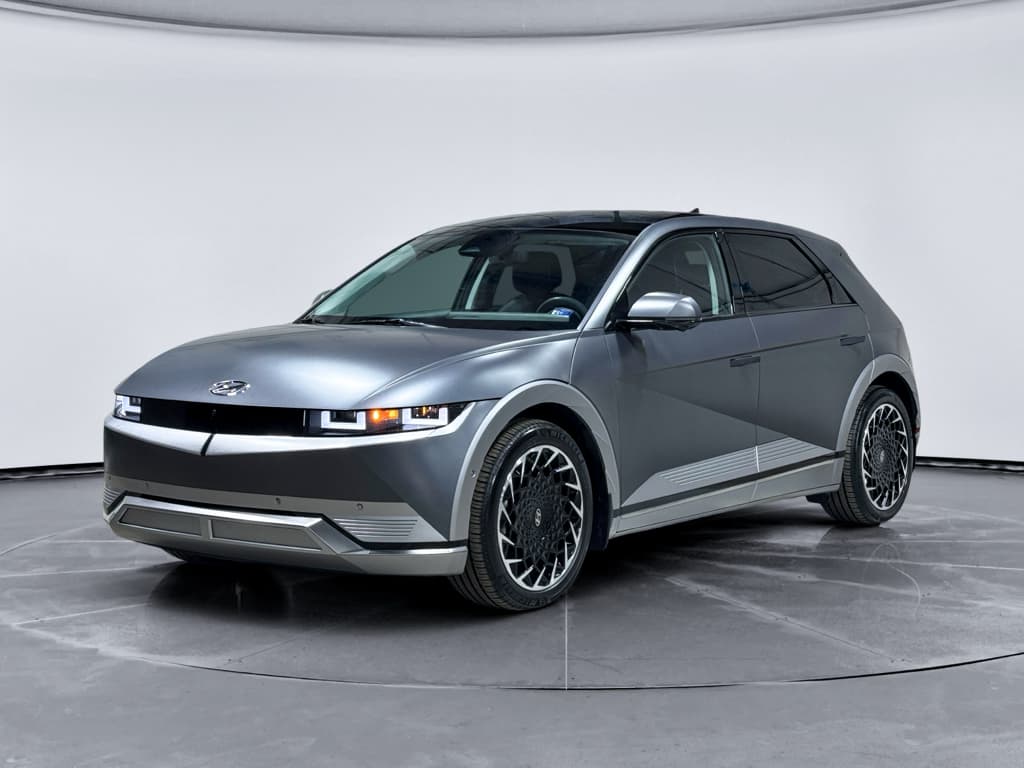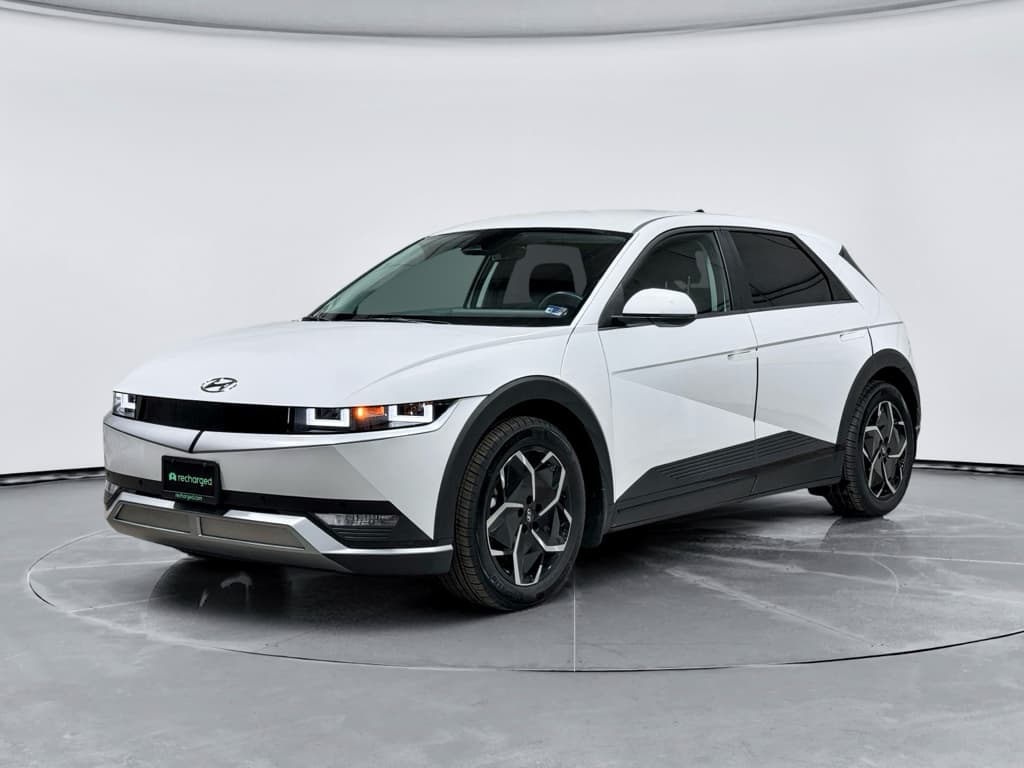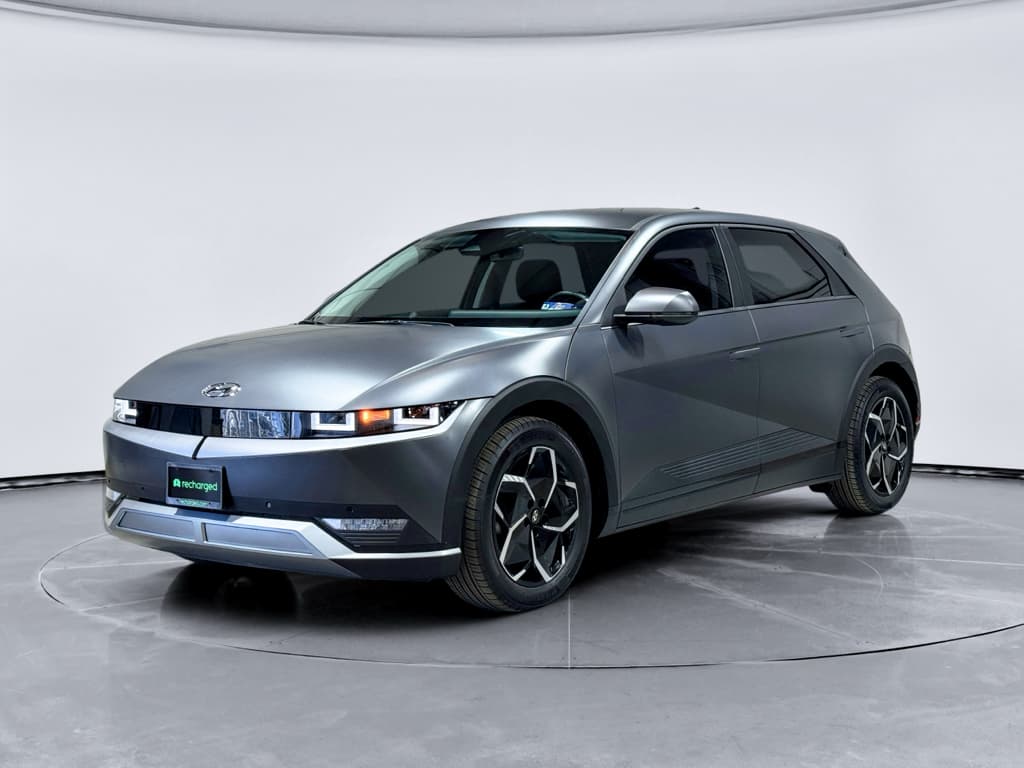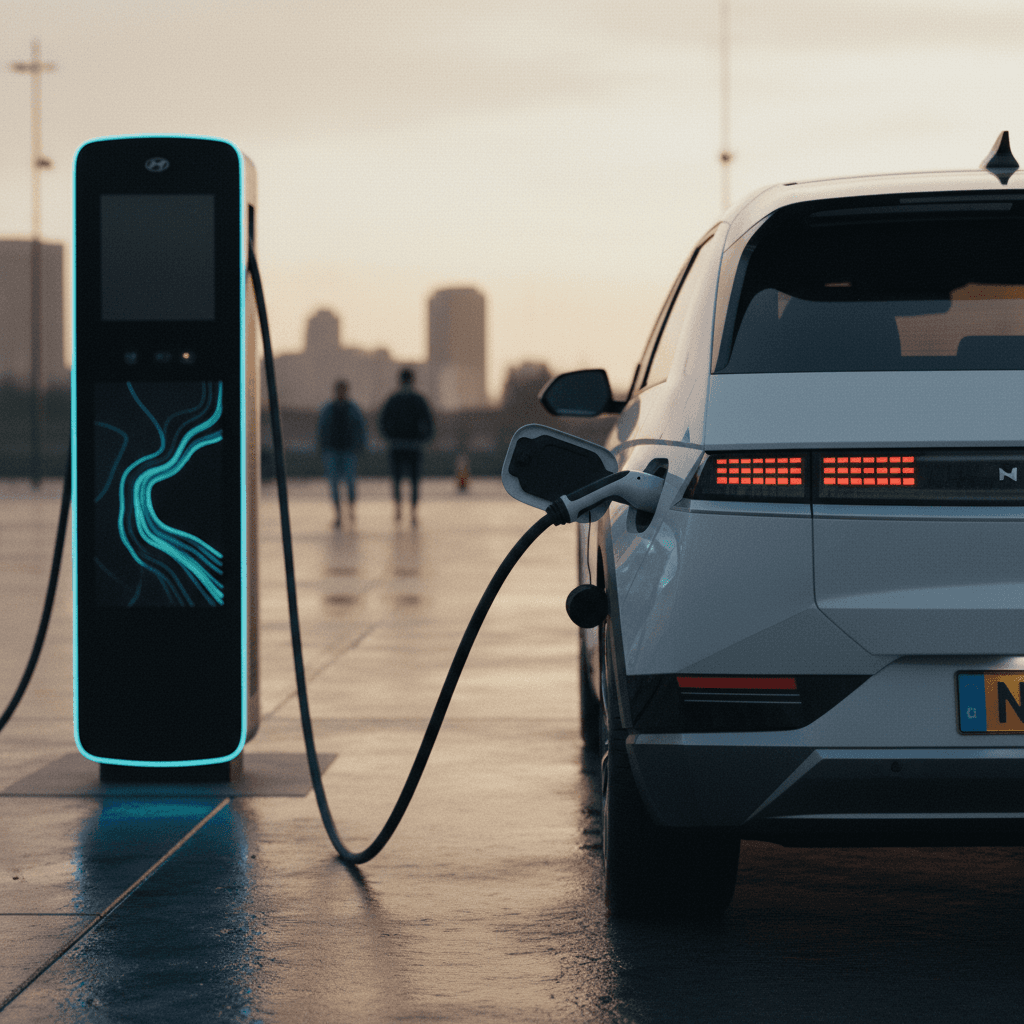
If you’re shopping for a Hyundai IONIQ 5, or already own one, the first question you eventually ask is: how fast does this thing really charge? Manufacturer claims of “10–80% in 18 minutes” sound great, but your reality at a lonely highway charger at 11 p.m. can look very different. This guide breaks down real-world Hyundai IONIQ 5 charging speed tests, why results vary so much, and what smart owners do to get the most from the car’s impressive 800‑volt hardware.
At a glance
Why the IONIQ 5’s charging speed matters
The IONIQ 5 isn’t just another electric crossover. It’s one of the first mass‑market EVs built on an 800‑volt platform, technology that used to be reserved for six‑figure Germans and Silicon Valley moonshots. That architecture lets the Hyundai pull down seriously high power on big DC fast chargers, making it one of the fastest-charging EVs in its class.
For you, that translates to three practical questions: 1. How fast can it charge on a road trip? 2. How long will it take to fill overnight at home? 3. What happens as the battery and charging network age? We’ll tackle each, starting with the different battery packs and what the spec sheet actually means when you roll up to a charger.
IONIQ 5 battery variants and charging basics
IONIQ 5 battery packs & headline specs
Different packs, broadly similar fast‑charging behavior
Standard Range
Battery: ~58–63 kWh depending on model year
EPA range (US): ~220 miles (earlier years)
Max DC power: ~175–200 kW on big chargers
Long Range
Battery: 77.4 kWh (early years), ~80+ kWh later
EPA range: ~269–303 miles (trim‑dependent)
Max DC power: up to ~230–235 kW on 300+ kW units
2025+ NACS update
Newer IONIQ 5 models in North America add a NACS (Tesla) inlet, making it easier to use Superchargers while still supporting high‑power CCS stations via adapter.
Hyundai’s own numbers claim that, on a 350 kW DC fast charger, the IONIQ 5 can go from 10–80% in about 18–20 minutes for both the smaller and larger batteries, with peak DC power typically landing around 200–235 kW on the long‑range versions. That’s the lab brochure talking. Let’s look at what independent charging speed tests show.
DC fast charging speed test results
Real‑world IONIQ 5 DC fast charging benchmarks
A typical Hyundai IONIQ 5 charging speed test uses a 10–80% DC fast‑charge window. That’s the sweet spot where the battery accepts high power without dwelling too long at the extremes of state‑of‑charge.
IONIQ 5 DC fast charging test results (approximate)
Representative numbers pulled from independent tests and Hyundai’s own specs. Your results will vary with temperature, charger, and model year.
| Scenario | Charger type | Battery size | SoC window | Approx. time | Notes |
|---|---|---|---|---|---|
| Best case road trip | Ultra‑fast DC (150–350 kW) | Long Range (~77–84 kWh) | 10–80% | 18–22 min | Warm battery, strong charger, minimal taper; peak near 230 kW. |
| Typical US highway stop | 150 kW DC | Long Range | 10–80% | 22–28 min | Slightly lower peak + busier sites and minor throttling. |
| Older/urban fast charger | 50 kW DC | Any | 10–80% | 60–80 min | Charger is the bottleneck; car can’t pull more than 50 kW. |
| Quick top‑up | 150–350 kW DC | Any | 20–60% | 10–15 min | Staying in the power “plateau” keeps average speed high. |
| Cold‑soaked winter pack | 150–350 kW DC | Any | 10–80% | 30–45 min | Battery may limit power to protect itself, even on big hardware. |
How long you’ll actually sit at a fast charger depends more on the network and conditions than on the brochure number.
Watch the average, not just the peak
Real-world factors that slow your IONIQ 5’s charge
1. Charger limitations
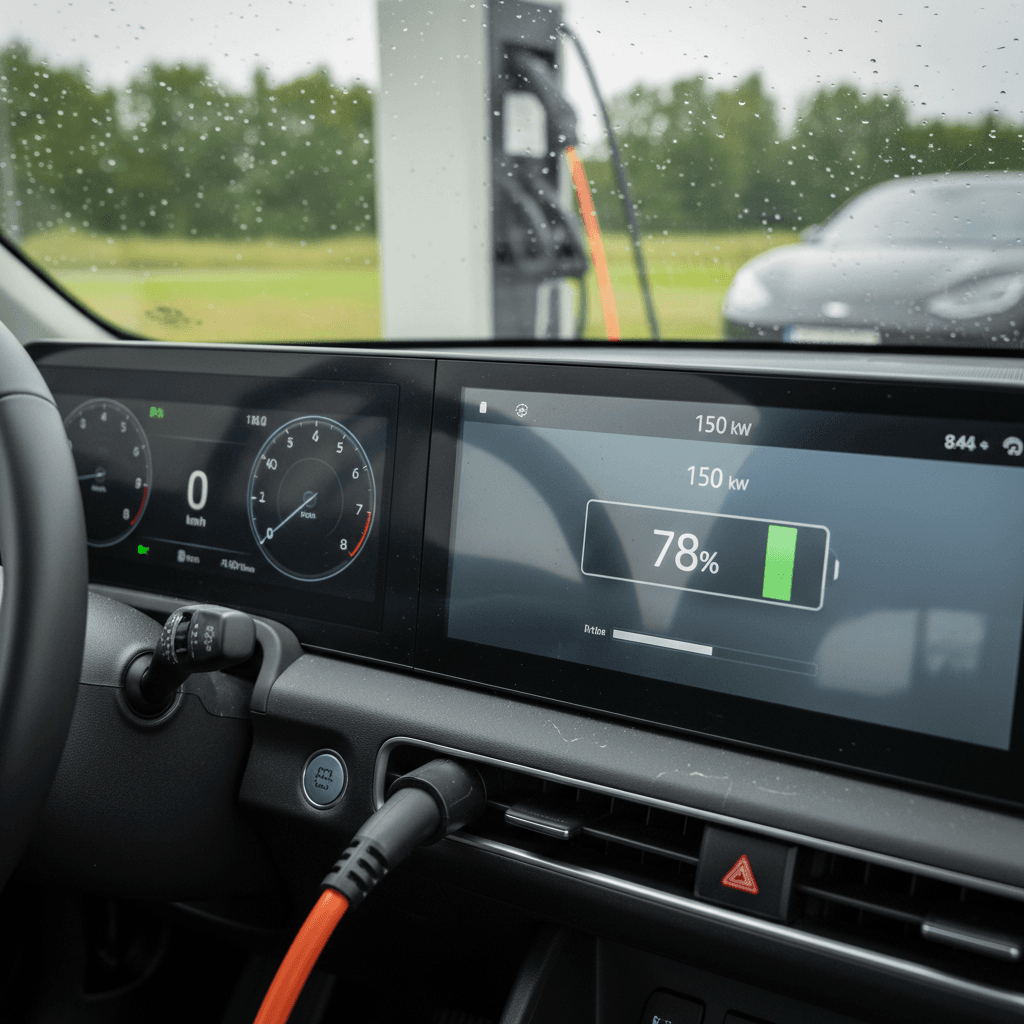
Most of the IONIQ 5’s bad‑day stories start with the charging network, not the car. A 50 kW unit simply cannot deliver more than 50 kW, no matter how advanced your 800 V battery is. Even 150 kW stations can quietly throttle back due to site power limits, heat, or shared cabinets.
Before you blame the Hyundai, check the charger’s advertised power and what other cars at the site are pulling. The car can only drink from the hose it’s given.
2. Temperature & battery prep
Cold batteries charge slowly. If you arrive at a fast charger after a short, low‑speed winter drive, don’t be surprised to see power capped well below the headline numbers. Later‑model IONIQ 5s can precondition the battery when you navigate directly to a DC charger in the nav, bringing temps into the sweet spot.
Heat matters too: after back‑to‑back fast‑charge sessions on a scorching day, the thermal system may pull power to protect the pack.
- State of charge (SoC): The IONIQ 5 charges fastest between roughly 10–60%. Above ~70–80%, power drops off a cliff by design.
- Software & model year: Firmware tweaks over the years, and hardware updates on 2025+ cars with revised packs, change the exact charging curve.
- Superchargers vs CCS: Early IONIQ 5s using Tesla Superchargers via adapter often saw lower power because Tesla’s 400 V hardware wasn’t ideal for an 800 V pack. Newer NACS‑port models and updated firmware improve this, but CCS high‑power sites still tend to show the strongest numbers.
Don’t chase 100% on DC fast chargers
Home charging speed tests: Level 1 and Level 2
DC fast charging is the road‑trip hero, but the quiet work of ownership happens at home. Here’s how long the IONIQ 5 takes to charge on common home setups in North America.
Approximate Hyundai IONIQ 5 home charging times
Times assume a long‑range pack and typical US voltages. Real‑world results depend on your exact charger, wiring, and utility limits.
| Charging method | Power (approx.) | 0–100% time | Miles of range per hour* | Best use case |
|---|---|---|---|---|
| Level 1 wall outlet (120 V, 12 A) | 1.3–1.4 kW | 35–45 hours | 3–5 mi/hr | Emergency top‑ups, very light daily use. |
| Level 2, 240 V, 32 A | 7.2 kW | 10–11 hours | 25–30 mi/hr | Typical home wallbox on a 40 A breaker. |
| Level 2, 240 V, 48 A | 10–11 kW (vehicle‑limited) | 6–8 hours | 35–40+ mi/hr | Overnight full recharges, larger daily commutes. |
For most owners, a 240 V Level 2 charger is the sweet spot: fast enough overnight without stressing your electrical service.
A note on onboard charger limits
If you own your home and drive more than ~25–30 miles a day, a professionally installed Level 2 charger is almost mandatory for a relaxed ownership experience. If you’re in the market for a used IONIQ 5, pairing it with a good Level 2 setup is where companies like Recharged can help you understand real‑world charging behavior, install needs, and ongoing costs, not just glossy range numbers.
How the IONIQ 5’s 800V architecture changes the game
800 V vs. 400 V: why the IONIQ 5 feels so quick to charge
Same energy, less time at the plug
800 V (IONIQ 5, EV6, Taycan, etc.)
- Can pull high power (200 kW+) without absurdly high currents.
- Smaller, lighter cabling for the same power transfer.
- Flatter, more sustained charging plateau between ~10–60% SoC.
Typical 400 V EV
- Often peaks below 150–170 kW even on big chargers.
- More drastic taper as SoC climbs past 50–60%.
- Still perfectly usable, just slower in back‑to‑back road‑trip legs.
The IONIQ 5’s superpower isn’t just a big number on the charger readout; it’s how short your coffee stops feel on a 500‑mile day.
Where the IONIQ 5 beats some rivals
Charging tips to protect your IONIQ 5’s battery
Seven habits of battery‑kind IONIQ 5 owners
1. Live between 20–80% day to day
For daily driving, try to keep your state of charge between about 20% and 80%. This is where lithium‑ion batteries are happiest, especially if the car is going to sit for long periods.
2. Save 100% for trips
Charging to 100% is fine before a road trip, just <strong>time it so you depart soon after</strong> hitting full rather than letting the car sit at 100% for hours.
3. Don’t fear fast charging, just be strategic
The IONIQ 5 is engineered for frequent DC fast charging, but using it every single day when you don’t need to will add stress and cost. Mix in home Level 2 when possible.
4. Precondition in cold weather
On later‑model IONIQ 5s, use the built‑in navigation to route to a DC fast charger. That prompts the car to warm the battery to its preferred temperature window on the way.
5. Give the pack a breather after hard use
After back‑to‑back high‑speed driving and fast charging in very hot weather, a short, gentle drive or a few minutes parked before the next plug‑in can help temperatures normalize.
6. Keep an eye on software updates
Hyundai has tweaked charging behavior through firmware updates over time. Applying updates can improve charging curves, fix bugs, and add preconditioning features.
7. Use quality equipment at home
Install a reputable, UL‑listed Level 2 charger on a properly sized circuit. If you’re buying a used IONIQ 5, ask for documentation on any prior charging equipment and installation work.
Used IONIQ 5: what to look for in a charging test
If you’re considering a used Hyundai IONIQ 5, charging behavior is where the story of the car’s past life is quietly written. Two otherwise identical cars can deliver very different experiences at the plug if one spent its days on gentle Level 2 and the other lived at abused, under‑maintained DC chargers.
Checklist for a quick DC fast‑charge test
- Start near 10–20% SoC. That’s where the charging curve gets interesting.
- Use a healthy, high‑power charger. Aim for 150 kW or higher and avoid obviously limping stations.
- Watch the ramp‑up. Power should climb quickly past 100 kW and stabilize north of ~150–170 kW on long‑range cars in good conditions.
- Note the taper. Around 60–70%, power should gently fall, not plunge off a cliff at 40%.
How Recharged helps with used IONIQ 5s
Every IONIQ 5 sold through Recharged includes a Recharged Score Report with verified battery health, charging history insights where available, and pricing that reflects real‑world condition, not just odometer and trim.
Our specialists can walk you through what to expect at public chargers, help you plan a home charging setup, and arrange a fully digital purchase with nationwide delivery or a visit to our Richmond, VA Experience Center.
Red flags on a used IONIQ 5
FAQ: Hyundai IONIQ 5 charging speed
Frequently asked questions about IONIQ 5 charging speed
Bottom line: how fast does the IONIQ 5 really charge?
Strip away the marketing, and the Hyundai IONIQ 5 remains one of the fastest‑charging, most road‑trip‑friendly EVs you can buy, new or used. On a healthy 150–350 kW charger, plan on roughly 20 minutes to jump from 10–80%, with home Level 2 easily refilling the pack overnight. When real‑world results fall short, it’s usually the charging network, or ugly weather, holding things back, not Hyundai’s hardware.
If you’re hunting for a used IONIQ 5, pay close attention to how the car behaves at the plug. Pairing its 800‑volt superpower with a solid home charging setup turns this angular retro crossover into a remarkably easy daily driver. And if you’d rather not decode charging curves and battery reports alone, Recharged can match you with a vetted IONIQ 5, a transparent Recharged Score Report on its battery, and EV‑savvy guidance from your first quote to the moment it’s delivered to your driveway.