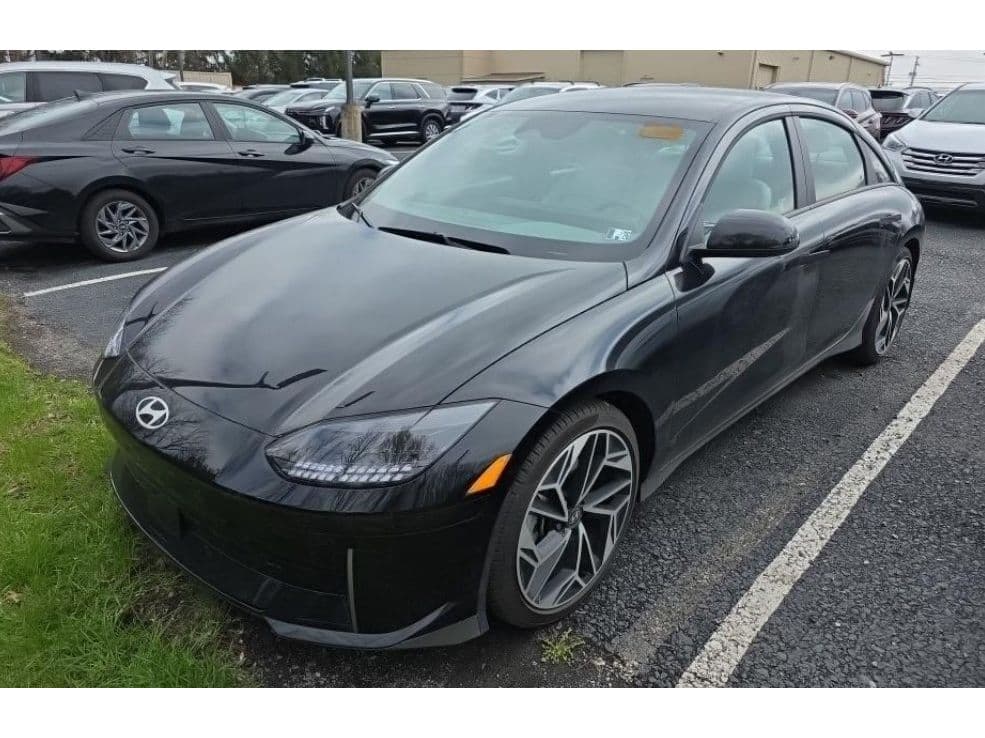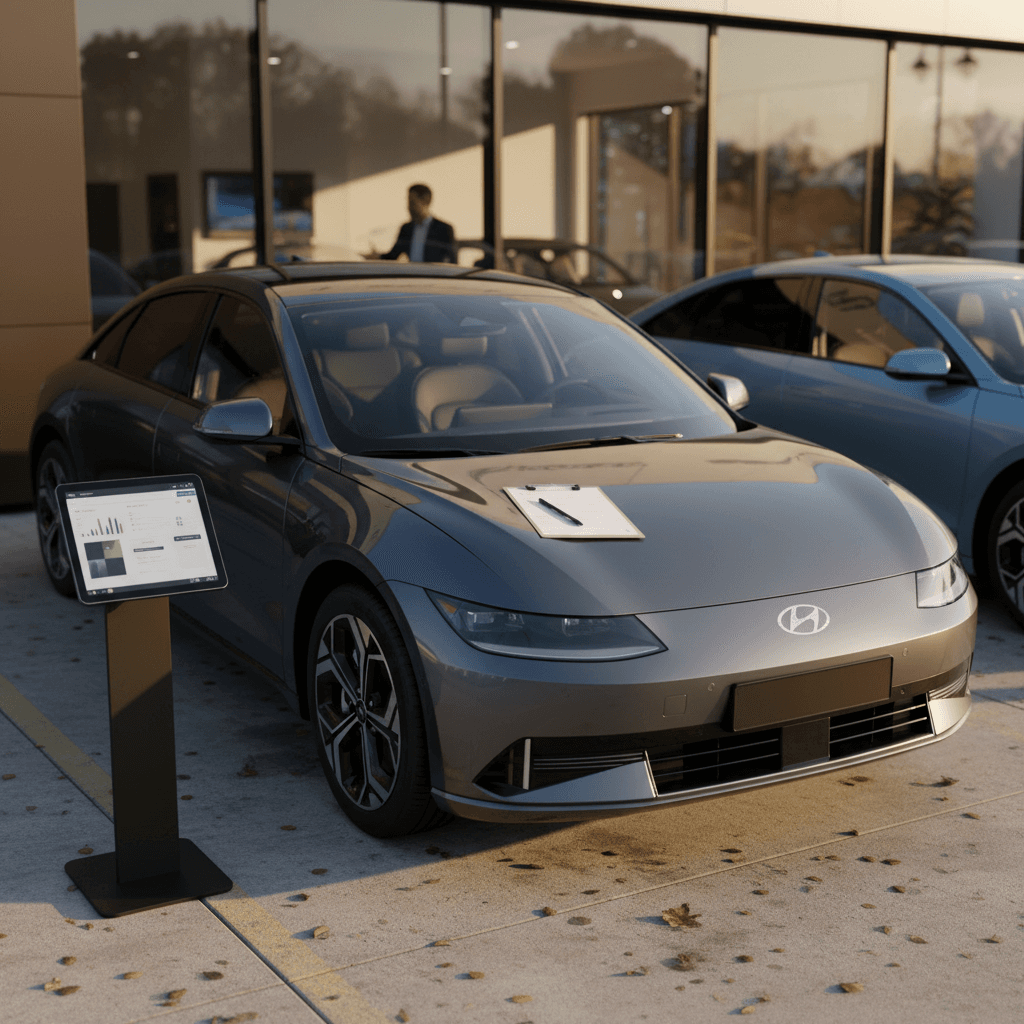
If you own a Hyundai IONIQ 6, you’ve probably already noticed something the hard way: on paper, it depreciates faster than most gas sedans. That’s exactly why the best place to sell a Hyundai IONIQ 6 is not always the first dealer or instant‑offer site you click. Where you sell – and how – can easily swing your payout by $2,000–$5,000 on the same car.
The short story on IONIQ 6 resale
Why where you sell your IONIQ 6 matters in 2026
The IONIQ 6 is a bit of a paradox. On one hand it’s a highly efficient, tech‑forward EV sedan with distinctive styling and an 8‑year/100,000‑mile battery warranty that still transfers to the next owner. On the other, U.S. shoppers have been stampeding toward crossovers and SUVs, and EV prices overall have fallen sharply since 2022. That combination creates a car that’s fantastic to buy used, and tricky to sell for what it’s actually worth if you pick the wrong channel.
Traditional dealers, generalist instant‑offer sites, and auction‑driven platforms tend to treat EVs like any other used car. They rarely account for battery health, software feature sets, or charging hardware in a nuanced way. That can drag down offers on IONIQ 6s even when the pack is healthy and the car is optioned well. EV‑specialist marketplaces like Recharged exist to solve exactly that problem by matching EV‑savvy buyers with EVs whose real value is in the battery, not just the badge on the grille.
Hyundai IONIQ 6 resale snapshot (early 2026)
Quick answer: Best place to sell a Hyundai IONIQ 6
If you want to maximize what you walk away with, the best place to sell a Hyundai IONIQ 6 is usually an EV‑focused marketplace that can showcase verified battery health and finance the next buyer, rather than a single price‑taker like a dealer or instant‑offer site.
Who’s usually best for your IONIQ 6?
Different sellers shine for different priorities. Here’s the big picture.
Highest potential price: Recharged consignment
If your priority is top dollar, letting an EV‑only marketplace like Recharged consign your IONIQ 6 is often the strongest play. Their Recharged Score battery health report, nationwide buyer pool, and built‑in financing typically support a higher sale price than a dealer trade‑in or generic instant‑offer buyer.
Fastest, no‑hassle exit: Instant offer
If you need the car gone this week, a Recharged instant offer, CarMax, or a reputable online car‑buying site will beat haggling with multiple dealers. You’ll sacrifice some money for speed, but you’ll avoid private‑sale headaches.
Absolute max (with more work): Private sale
A well‑marketed private sale can net the most money, especially on a low‑mile IONIQ 6 with good options. But you’re taking on photos, listings, test drives, paperwork, and flake‑risk. Many sellers choose consignment with Recharged instead to offload that work while still chasing a strong price.
How to actually pick the best place
How much is my Hyundai IONIQ 6 worth right now?
Values move every month, but as of early 2026, most U.S. IONIQ 6s fall into a few broad buckets based on age, trim, and mileage. New‑car discounts and lease incentives have hammered book values, but market transaction data tells a more nuanced story.
Typical Hyundai IONIQ 6 used value ranges (early 2026)
Illustrative ballpark ranges for clean‑title U.S. cars with average mileage. Your local market and options may push you above or below these numbers.
| Model year & trim | Condition / miles | Likely trade‑in range | Likely retail / consignment ask |
|---|---|---|---|
| 2023 IONIQ 6 SE / SEL | 40k–60k miles | $17,000–$21,000 | $21,000–$25,000 |
| 2023 IONIQ 6 Limited | 30k–50k miles | $19,000–$23,000 | $24,000–$28,000 |
| 2024 IONIQ 6 SE / SEL | 20k–40k miles | $19,000–$24,000 | $24,000–$29,000 |
| 2024 IONIQ 6 Limited | 15k–35k miles | $22,000–$26,000 | $27,000–$32,000 |
| 2025 IONIQ 6 SEL / Limited | Under 25k miles | $24,000–$30,000 | $30,000–$35,000+ |
Use this as a starting point, not a substitute for live offers or an appraisal.
Don’t anchor on original MSRP
The upshot: there’s often a $3,000–$6,000 spread between an aggressive trade‑in number and what the same car can retail for with the right audience and battery‑health documentation. Your mission is to decide how much of that spread you want to keep, and how much convenience you’re willing to pay for.
Selling options for your IONIQ 6, compared
Let’s break down the major ways you can sell a Hyundai IONIQ 6 today, and what each is really good (and bad) at. The right answer for you depends on three things: how fast you need to sell, how much effort you’re willing to put in, and how much risk you’re comfortable taking.
1. Dealer trade‑in (Hyundai or any franchise)
What it is: You sell your IONIQ 6 to a dealer at wholesale value, usually as part of buying or leasing another car.
- Pros: One‑stop, tax savings in many states, no strangers or test drives, instant payoff of your loan.
- Cons: Typically the lowest raw price, and most dealers still undervalue EVs, especially sedans.
Best for: Swapping into another vehicle at the same dealership and prioritizing simplicity over every last dollar.
2. Instant‑offer car buyers (CarMax, online players, Recharged instant offer)
What it is: You get a quick offer based on your VIN, photos, and condition report, then drop the car off or schedule pickup.
- Pros: Faster than private sale, no need to buy another car, often better than dealer trade‑in.
- Cons: Still priced to leave margin for the buyer; most won’t pay a premium for excellent battery health.
Best for: Sellers who want a 48–72‑hour exit and are okay leaving some upside on the table.
3. Private‑party sale (DIY)
What it is: You list the car yourself on marketplace sites, field leads, arrange test drives, and close the deal directly with a buyer.
- Pros: Potentially the highest selling price, especially for well‑optioned trims with low miles.
- Cons: Time‑consuming, safety concerns, buyers struggling to arrange financing on newer EVs, risk of no‑shows.
Best for: Experienced private sellers with time to spare and comfort handling title work, bank payoffs, and EV‑specific questions.
4. EV‑focused consignment with Recharged
What it is: Recharged markets and sells your IONIQ 6 on your behalf. You keep ownership until it sells; they handle pricing, leads, test drives, paperwork, and delivery.
- Pros: Access to EV‑savvy buyers nationwide, professional photos, a Recharged Score battery health report, and integrated financing that broadens your buyer pool. You typically net more than a direct sale to a dealer or instant‑offer site.
- Cons: Not as instantaneous as taking the first cash offer; you wait for the right buyer, though Recharged guides pricing to move the car.
Best for: Owners aiming for a top‑of‑market sale price without turning themselves into a full‑time salesperson.
Where Recharged fits in
Ready to find your next EV?
Browse VehiclesWhen a dealer or trade‑in actually makes sense
It’s easy to say “never trade in,” but that’s not realistic. There are situations where a dealer trade‑in, especially combined with tax advantages, can be perfectly rational, even for an IONIQ 6 that’s taken a big haircut on paper.
Good reasons to accept a dealer or instant‑offer number
You’re not always leaving money on the table by walking away quickly.
You’re heavily upside‑down
Big tax savings in your state
You’re on a tight deadline
Watch out for “we don’t really sell EVs” discounts
Why EV‑only marketplaces like Recharged can pay more
With the IONIQ 6, the single biggest driver of real‑world value isn’t whether the car has a sunroof or premium audio. It’s the state of the high‑voltage battery, how the car has been charged, and whether software and hardware are aligned with where the EV market is going, NACS, DC fast‑charging behavior, and so on. Generic pricing tools barely look at any of this.
What an EV‑focused sale does differently
1. Values the battery, not just the badge
Recharged runs a <strong>Recharged Score battery health diagnostic</strong> on every car it lists. That data gives buyers confidence and helps justify higher prices for cars with strong packs and smart charging histories.
2. Targets buyers who actually want an IONIQ 6
On a general used‑car lot, an IONIQ 6 is a niche sedan. On an EV marketplace, it’s a <strong>hero car for efficiency geeks</strong>, design fans, and commuters who care about aero and range. Matching with the right audience directly supports stronger offers.
3. Offers financing built for used EVs
Many private‑sale buyers struggle to get fair financing on late‑model EVs. Because Recharged can <strong>finance your buyer directly</strong>, more qualified shoppers can say yes at your asking price.
4. Handles nationwide delivery and paperwork
A buyer in another state may be willing to pay more for your exact spec, but logistics are hard on your own. Recharged already manages <strong>nationwide delivery, titling, and registration</strong>, opening up higher‑value markets without extra friction for you.

Step‑by‑step: How to get the best offer for your IONIQ 6
The process to squeeze the most value from your Hyundai IONIQ 6 is less about clever negotiation and more about doing your homework in the right order. Here’s a practical playbook you can follow in a weekend.
IONIQ 6 selling playbook
1. Get a real‑world value baseline
Check recent IONIQ 6 listings that actually sold (not just asking prices) on major marketplaces. Focus on your trim, your model year, and mileage. This frames what’s realistic before anyone starts anchoring you low.
2. Pull instant offers from 2–3 sources
Get online quotes from at least one dealer group, a big‑box buyer (like CarMax or similar), and Recharged’s instant‑offer tool if it’s available in your area. Now you know the <strong>“money‑tomorrow” floor</strong> for your car.
3. Document condition and maintenance
Gather records for <strong>tire replacements, software updates, and any warranty work</strong>. Clean the car thoroughly, photograph the interior and exterior in good light, and scan for curb rash or cosmetic issues that might spook buyers.
4. Get your battery health documented
Battery health is your IONIQ 6’s biggest selling point. An EV‑specific assessment, like a <strong>Recharged Score battery report</strong>, turns vague “range seems fine” claims into hard data you can show to buyers or use in consignment pricing.
5. Decide: instant sale, consignment, or DIY
With data in hand, choose your path. If the spread between instant‑offer and realistic retail is small, a fast sale might be fine. If it’s several thousand dollars, <strong>consignment through Recharged</strong> or a carefully managed private sale likely makes more sense.
6. Price to move, not to linger
Overpricing by $1,500 might feel good on day one, but stale EV listings quickly attract low‑ballers. Work with an expert (or mimic their pricing curves) to position your IONIQ 6 near the <strong>top of realistic market value</strong> without drifting into fantasy land.
Use Recharged as your benchmark
Timing the market: When to sell your IONIQ 6
For most owners, the best time to sell a Hyundai IONIQ 6 is somewhere between year two and year three of ownership, before mileage climbs and before the next big hardware refresh or price cut lands. That’s when you’ve enjoyed the car long enough to justify the purchase, but it still feels “new enough” to buyers and has plenty of warranty runway.
- If you bought new in 2023, the 2026 market, right now, is likely your sweet spot before early battery‑tech and NACS‑native 2026+ cars take over listings.
- If you grabbed a discounted 2024 or 2025 IONIQ 6, selling after 24–36 months can help you dodge the steepest part of the depreciation curve.
- Lease‑holders should compare their buyout amount to real‑world market values. If the buyout is well below market, buying then immediately selling or consigning can put real cash in your pocket. If it’s above market, it may be smarter to walk away.
Macro EV trends matter too
Common mistakes IONIQ 6 owners make when selling
IONIQ 6 owners often repeat the same few errors, understandable, because the playbook for selling a used EV still isn’t as well understood as flipping a gas Camry. Avoid these and you’re already ahead of most sellers in the market.
Avoid these IONIQ 6 selling pitfalls
Each one can quietly cost you serious money.
Anchoring to MSRP or payoff, not market value
Skipping professional‑level presentation
Not proving battery health
Choosing the wrong channel for your situation
FAQ: Best place to sell a Hyundai IONIQ 6
Frequently asked questions about selling an IONIQ 6
Selling a Hyundai IONIQ 6 in 2026 means navigating an EV market that’s still finding its balance. The same dynamics that created painful depreciation on paper also make your car a fantastic value for the next owner, if you connect with them through the right channel and show them why your particular IONIQ 6 is worth more than an anonymous pricing tool suggests. Whether you opt for a fast instant offer, a methodical consignment with Recharged, or a carefully managed private sale, the key is to treat this as an EV transaction, not just a used‑car transaction. Do that, and you’ll give yourself the best shot at walking away with both a clean conscience and a stronger check.