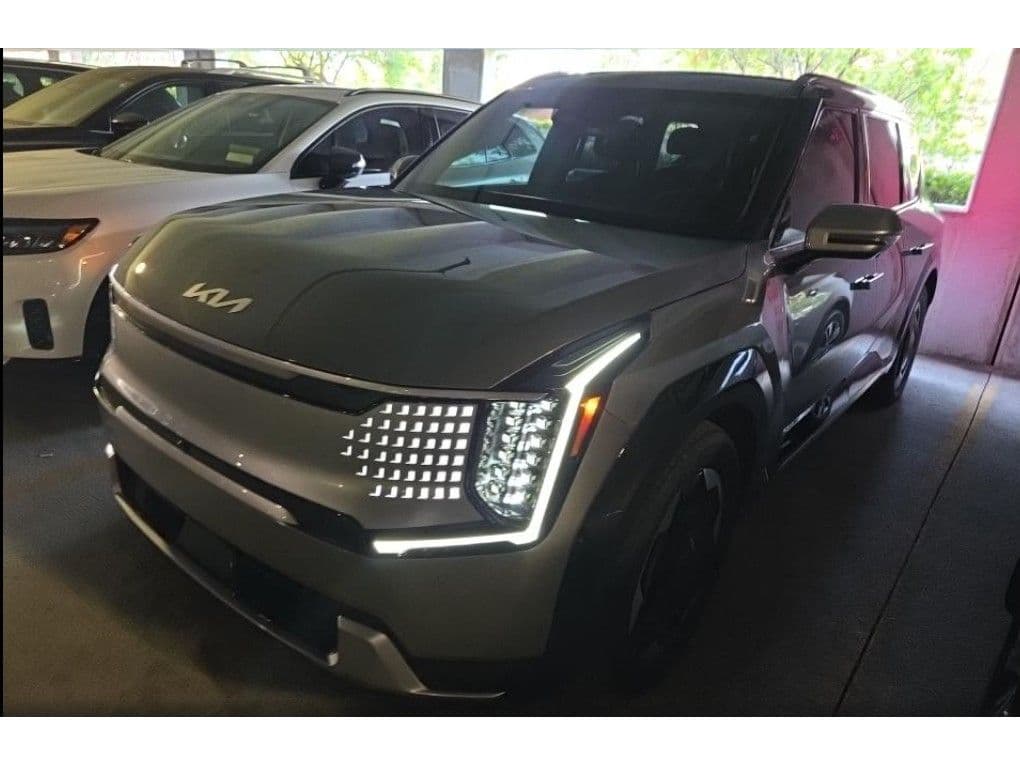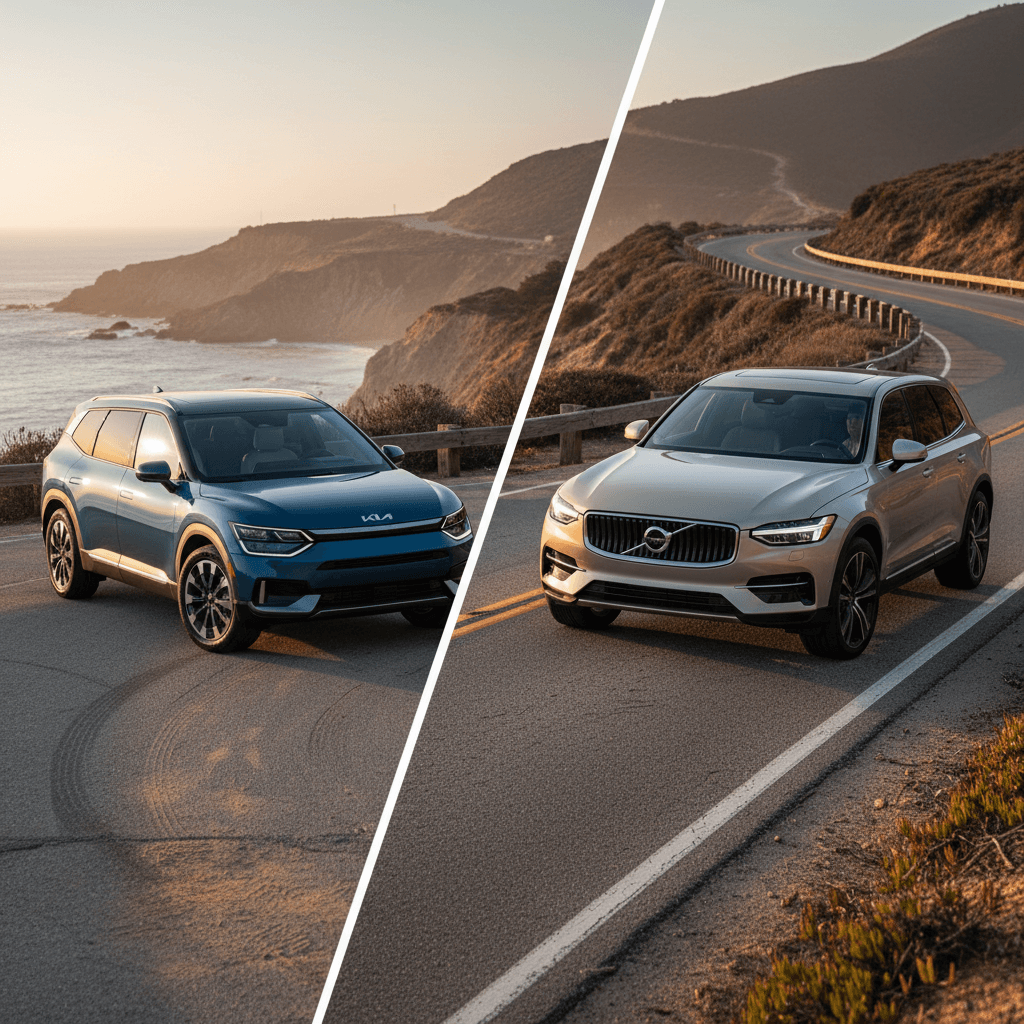
If you want a **full-size, three-row electric SUV**, your short list probably comes down to the Kia EV9 and the Volvo EX90. Both promise seven-seat practicality, long-range road trips, and luxury-level tech, but they get there with very different priorities on price, safety, and performance. This guide walks you through Kia EV9 vs Volvo EX90 so you can decide which three-row EV actually fits your life and budget.
Two Flagship EVs, Two Different Philosophies
Kia EV9 vs Volvo EX90: Who These SUVs Are For
Kia EV9: Pragmatic Family Flagship
- Lower starting price than EX90 while still offering 3 rows and strong range.
- Flexible 6- or 7-seat layouts, including captain’s chairs that actually recline.
- Excellent warranty coverage and strong real-world efficiency for a big boxy SUV.
- Best fit if you value space and value over brand cachet.
Volvo EX90: Tech-Heavy Safety Cocoon
- Volvo’s all-electric replacement for the XC90, positioned as a luxury flagship.
- Standard dual-motor AWD and a big battery for long-range confidence.
- Industry-leading focus on active and passive safety, including roof-mounted LiDAR on many trims.
- Best fit if you want a Volvo luxury experience first, EV efficiency second.
New vs Used Strategy
Pricing, Trims, and Value: Why EV9 Under-Cuts EX90
Both the Kia EV9 and Volvo EX90 are expensive vehicles, but they don’t start from the same place. By U.S. launch, Volvo was targeting the EX90 to start in the mid-to-high $70,000s, with most well-equipped examples landing closer to or above $80,000. Kia, by contrast, slots the EV9 as a mainstream flagship: in the mid-$50,000s for lower trims and roughly mid-$70,000s for fully loaded GT-Line models.
Kia EV9 vs Volvo EX90: U.S. Pricing Snapshot (New)
Approximate starting MSRPs for key trims; actual transaction prices vary by dealer and incentives.
| Model | Trim Example | Drivetrain | Approx. Starting Price (USD) |
|---|---|---|---|
| Kia EV9 | Light (RWD, Standard Range) | RWD | Mid-$50,000s |
| Kia EV9 | Light Long Range / Wind | RWD or AWD | Low-to-mid $60,000s |
| Kia EV9 | Land / GT-Line | AWD | Low-to-mid $70,000s |
| Volvo EX90 | Core Twin Motor | AWD | Mid-to-high $70,000s |
| Volvo EX90 | Plus / Ultimate | AWD | $80,000+ |
Kia undercuts Volvo by roughly a segment on price, even when similarly equipped.
Volvo’s Pricing Creeps Into Luxury EV Territory
For most families, the value equation is straightforward: the EV9 delivers more seats and similar range for noticeably less money. The EX90 justifies its premium with badge appeal, richer materials, and top-shelf safety hardware, but in pure dollars‑per‑cubic‑foot or dollars‑per‑mile of range, the Kia wins.
Battery, Powertrain, and Range
Headline Specs: EV9 vs EX90
On paper, the Volvo EX90 carries a slightly larger battery pack (around 111 kWh gross) while the EV9 tops out near 99.8 kWh. Despite that, real‑world tests have often favored the EV9 on efficiency, especially at highway speeds, where its powertrain tuning and slightly lower weight help offset the smaller pack.
Battery, Power, and Range Comparison
Key configurations most U.S. shoppers will encounter.
| Model | Configuration | Battery (approx.) | Drive | Est. EPA / Target Range |
|---|---|---|---|---|
| Kia EV9 | Light RWD (Standard Range) | ~76 kWh | RWD | ~230 miles |
| Kia EV9 | Light Long Range / Wind RWD | ~99.8 kWh | RWD | Up to ~300 miles |
| Kia EV9 | Wind / Land / GT-Line AWD | ~99.8 kWh | AWD | High‑200s (depends on wheels) |
| Volvo EX90 | Twin Motor (Core/Plus) | ~111 kWh | AWD | High‑200s to low‑300s (targeted) |
| Volvo EX90 | Performance Twin Motor | ~111 kWh | AWD | Slightly lower due to extra power |
Both SUVs offer near‑300‑mile configurations, but the EV9’s efficiency gives it an edge in some testing.
Real-World vs EPA Numbers
In practice, either SUV will comfortably cover a couple of hours on the highway between charging stops. Where the EV9 pulls ahead is in its ability to deliver that performance with **simpler, cheaper RWD trims**, while every EX90 currently sold in the U.S. uses a dual‑motor AWD setup whether you need it or not.
Charging Speeds and Road-Trip Usability
Both SUVs support DC fast charging, but they sit on different electrical architectures. The Kia EV9 uses an 800‑volt system similar to the Hyundai Ioniq 5/6 and Kia EV6, while the EX90 rides on a newer 400‑volt SPA2 platform. That matters because it changes how quickly they can move energy into those big packs.
Charging: EV9’s 800V Advantage vs EX90’s Big Battery
Think in time-to-80% rather than just peak kW numbers.
Peak DC Speed
Kia EV9: Up to ~215 kW at compatible 800V chargers.
Volvo EX90: Roughly 250 kW peak claimed on 400V architecture.
Peak numbers are similar, but curve stability and battery size matter more for stop length.
Typical Fast-Charge Stop
From low state-of-charge to ~80%:
- EV9: ~25–30 minutes in real-world testing when starting near 10%.
- EX90: Expect ~30–35 minutes due to bigger pack, even with strong peak power.
Network Access
Both will have access to CCS and NACS fast charging via adapters or native ports depending on model year.
What matters more is where you live and travel, Electrify America vs Tesla Supercharger vs other networks.
Plan Around Stops, Not Just Range
If road‑tripping is a core use case, the EV9’s combination of strong charging performance and slightly better efficiency gives it a small but real edge. The EX90 counters with a bigger pack that may feel more relaxed if you routinely drive in cold climates or haul a lot of weight, but you’ll pay for that in longer charge sessions.
Space, Seating, and Everyday Practicality
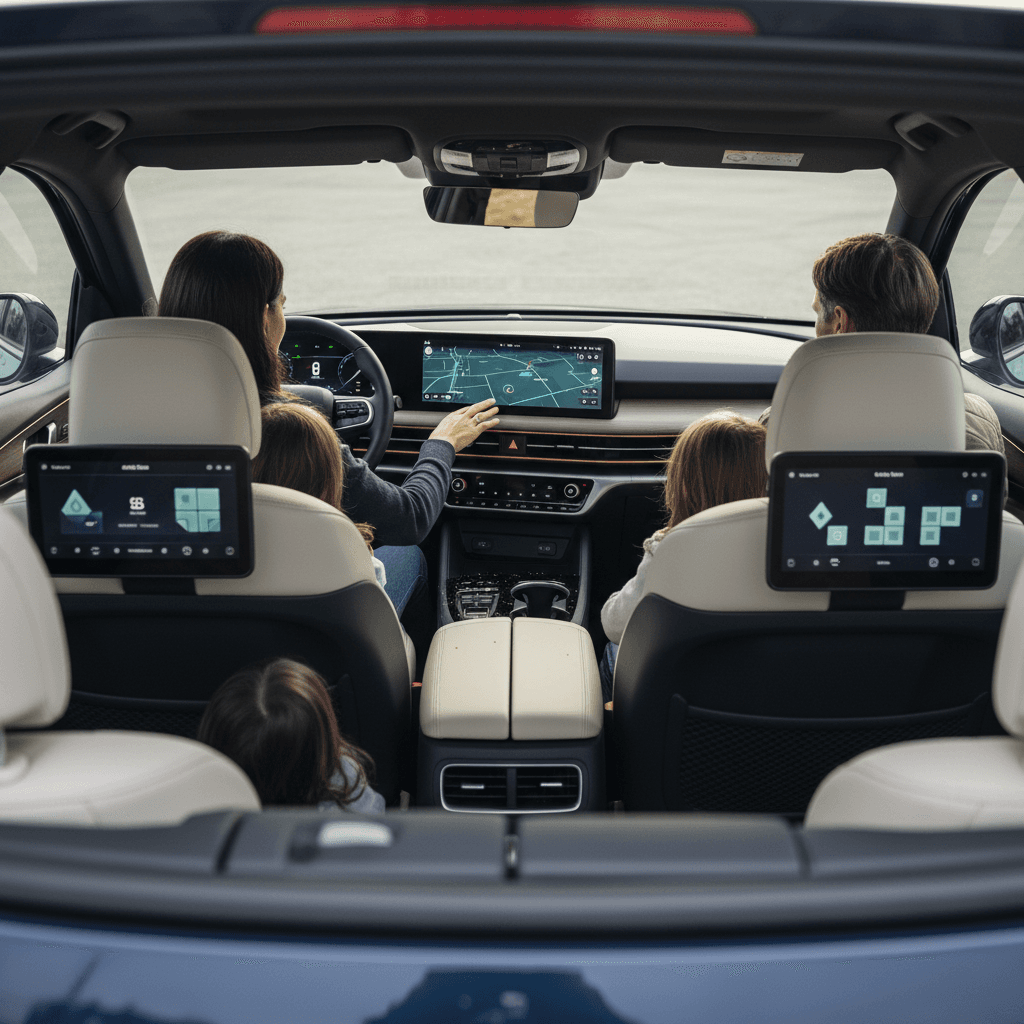
The reason you buy one of these instead of a smaller Model Y or Ioniq 5 is simple: space. Both EV9 and EX90 offer genuine three‑row seating, but they make some different tradeoffs in layout and storage.
Interior Space and Practicality
Headline interior stats and usability notes for families.
| Category | Kia EV9 | Volvo EX90 |
|---|---|---|
| Seating | 6 or 7 seats (captain’s chairs available) | Standard 7 seats, 2–3–2 layout in most specs |
| Third Row | Usable for adults on shorter trips, good for kids | Best for kids/teens; adults okay for shorter stints |
| Cargo Behind 3rd Row | Low‑20s cu ft (approx.) | Similar ballpark; varies by seat position |
| Max Cargo (rows folded) | Over 80 cu ft | Comparable, but packaging slightly tighter |
| Towing | Up to 5,000 lbs | Up to 5,000 lbs |
| In-Cabin Storage | Lots of family‑oriented cubbies and open console space | More minimalist Scandinavian design, fewer but nicer-feeling touchpoints |
On paper and in practice, the EV9 is slightly roomier and more flexible; the EX90 feels more luxurious in the first two rows.
Family Hauler Winner: EV9
The EX90 counters with more elegant materials and a calmer Scandinavian interior vibe. It feels like a luxury SUV first and a family bus second. The EV9 flips that script: it’s unabashedly a family flagship, with materials that are improving but still not on par with Volvo’s best.
Safety Tech and Driver Assistance
Volvo has staked its modern brand identity on safety, and the EX90 is the purest expression of that yet. It runs a dense sensor suite including cameras, radar, and, on many trims, roof‑mounted LiDAR designed to enable even more advanced assisted‑driving and crash‑prevention features over time.
Safety Approach: Conservative Volvo vs Confident Kia
Both are safe; Volvo just dials it up to 11.
Volvo EX90 Safety Focus
- Standard dual‑motor AWD with sophisticated stability and traction systems.
- Extensive active safety: automatic emergency braking, lane‑keeping, junction assist, and more.
- Optional or standard LiDAR on many trims, feeding a centralized safety computer.
- Volvo expects EX90 to be its safest vehicle ever, and that’s saying something.
Kia EV9 Safety Package
- Full suite of ADAS: highway driving assist, lane centering, blind‑spot avoidance, rear cross‑traffic braking.
- Strong crash structure and multiple airbags including side curtain coverage for three rows.
- Available surround‑view monitor and remote parking assist on higher trims.
- Less sensor redundancy than EX90 but still very well equipped by segment standards.
Remember: ADAS ≠ Self-Driving
If your top priority is being inside the most safety‑obsessed SUV money can buy, the EX90 is compelling. But from a practical perspective, the EV9’s safety tech already exceeds what most drivers will fully use, and we’ll need years of real‑world data before we can say Volvo’s extra sensors translate into meaningfully better outcomes.
Infotainment, Software, and In-Car Experience
Both of these SUVs lean hard into screens and software. That’s a double‑edged sword: when it works, the experience is futuristic and convenient; when it doesn’t, you’re stuck rebooting an SUV in your driveway.
Kia EV9 Tech
- Wide, nearly seamless display band with dual 12.3-inch screens plus a smaller climate/control display.
- Traditional volume knob and some hard keys remain, good news if you hate hunting through menus.
- Wireless Apple CarPlay and Android Auto (market dependent) plus Kia Connect app with remote functions.
- Interface feels familiar if you’ve driven other modern Hyundais or Kias.
Volvo EX90 Tech
- Portrait‑oriented central touchscreen running a next‑gen Volvo interface built around Google services.
- Clean, minimalist graphics and native apps for maps, voice, and media.
- More physical controls relegated to the screen; fewer redundant buttons.
- More premium feel overall, but potentially steeper learning curve for some drivers.
Software Updates Matter Long-Term
Driving Character: Comfort vs Confidence
Neither the EV9 nor EX90 is chasing Tesla Plaid numbers, and that’s a good thing. These are heavy three‑row family SUVs, not track toys. Still, the way they drive day‑to‑day is meaningfully different.
How They Feel on the Road
Both are quick enough; nuances come down to tuning and weight.
Kia EV9 On-Road Feel
- Surprisingly tidy handling for its size; feels more like a big crossover than a traditional trucky SUV.
- AWD trims deliver strong, instant shove, with 0–60 mph in the mid‑4s in some independent tests.
- Ride can be firm on 21-inch wheels; lower trims on smaller wheels are more forgiving.
- Generally quiet, but not as hushed as the very best luxury SUVs.
Volvo EX90 On-Road Feel
- Heavier and more substantial; you feel the mass but also the solidity.
- Suspension tuning prioritizes calm, steady progress over agility.
- Well‑insulated cabin with Volvo’s typical focus on low noise and a relaxed driving environment.
- Standard AWD gives confidence in bad weather, especially with winter tires.
Wheel Size Isn’t Just Cosmetic
Ownership Costs, Warranty, and Long-Term Confidence
Sticker price is only the start. With large‑battery EVs, you also have to think about warranty coverage, battery longevity, and maintenance costs over 8–10 years.
Ownership and Warranty Snapshot
High-level differences that affect cost and peace of mind.
| Factor | Kia EV9 | Volvo EX90 |
|---|---|---|
| Basic Warranty | Around 5 years / 60,000 miles | Typically 4 years / 50,000 miles |
| Battery Warranty | Around 10 years / 100,000 miles (to ~70% SOC) | Similar 8–10 year coverage depending on market |
| Maintenance | No oil changes; periodic brake fluid, cabin filter, etc. | Same EV basics; Volvo service pricing tends to be higher |
| Depreciation Risk | New model but Kia mainstream brand helps volume | High sticker price may lead to steeper first‑owner depreciation |
| Service Network | Large Kia dealer network expanding EV capability | Smaller Volvo network, but more premium service experience |
Kia’s warranty is a major selling point; Volvo leans on brand reputation and safety cachet.
Why Used EV Transparency Matters
Kia EV9 vs Volvo EX90: Which Should You Buy?
Quick Decision Guide: EV9 or EX90?
Choose the Kia EV9 if…
You want three rows, strong range, and modern tech but can’t or don’t want to spend luxury‑brand money. The EV9 offers more configurations, better value, and a friendlier warranty while still feeling genuinely special inside.
Choose the Volvo EX90 if…
You prioritize safety branding, Scandinavian design, and a luxury‑SUV experience above all else. The EX90 makes sense if you’re already a Volvo loyalist or cross‑shopping high‑end European SUVs and want to go all‑electric.
Think About Charging Where You Live
Before deciding, map out the fast‑charging options along your typical routes and near your home. An EV that fits your family but doesn’t fit your local charging reality will be frustrating, no matter how good the brochure looks.
Consider Buying Slightly Used
Early adopters absorb the steepest depreciation on premium EVs. Shopping for a 1–3 year‑old EV9 (and eventually EX90) with a verified <strong>Recharged Score</strong> can save you thousands while still keeping plenty of warranty on the table.
Zooming out, the Kia EV9 vs Volvo EX90 comparison reflects where each brand is headed. Kia is betting that mainstream buyers are ready for a practical, reasonably priced electric family hauler. Volvo is betting that affluent buyers will pay more for a cocoon of tech‑driven safety and Scandinavian calm. If you’re shopping with your spreadsheet, the EV9 is the stronger all‑rounder. If you’re shopping with your heart and have the budget, the EX90 may still be the one that keeps you looking back over your shoulder in the parking lot.