If your electric vehicle has just been through a flood, or you’re shopping for a used EV in a recently flooded area, knowing **what to check for EV flood damage** is critical. Water and high‑voltage lithium‑ion batteries are a risky mix, and the wrong move can turn a bargain into a safety hazard or an insurance nightmare.
First priority: Your safety
Why EV flood damage is different from gas cars
On a gasoline car, flood damage usually means ruined upholstery, corroded wiring, and potentially a seized engine. With an EV, you’re dealing with a **large high‑voltage battery pack, powerful electronics, and complex safety systems**. When those components see water, especially dirty or salt water, you add two major risks: **delayed thermal runaway (battery fire)** and **high‑voltage shock hazards**.
- High‑voltage battery modules can trap moisture and slowly corrode, leading to internal short circuits days or even months after a flood.
- Salt water is especially aggressive; it conducts electricity and accelerates corrosion of bus bars, terminals, and connectors.
- Modern EVs rely on dozens of control modules and sensors; flood‑induced glitches can cause braking, steering, or airbag malfunctions later.
- Even if a flooded EV seems to drive normally, hidden damage can destroy resale value and make future repairs extremely expensive.
The good news
Immediate steps if your EV was in a flood
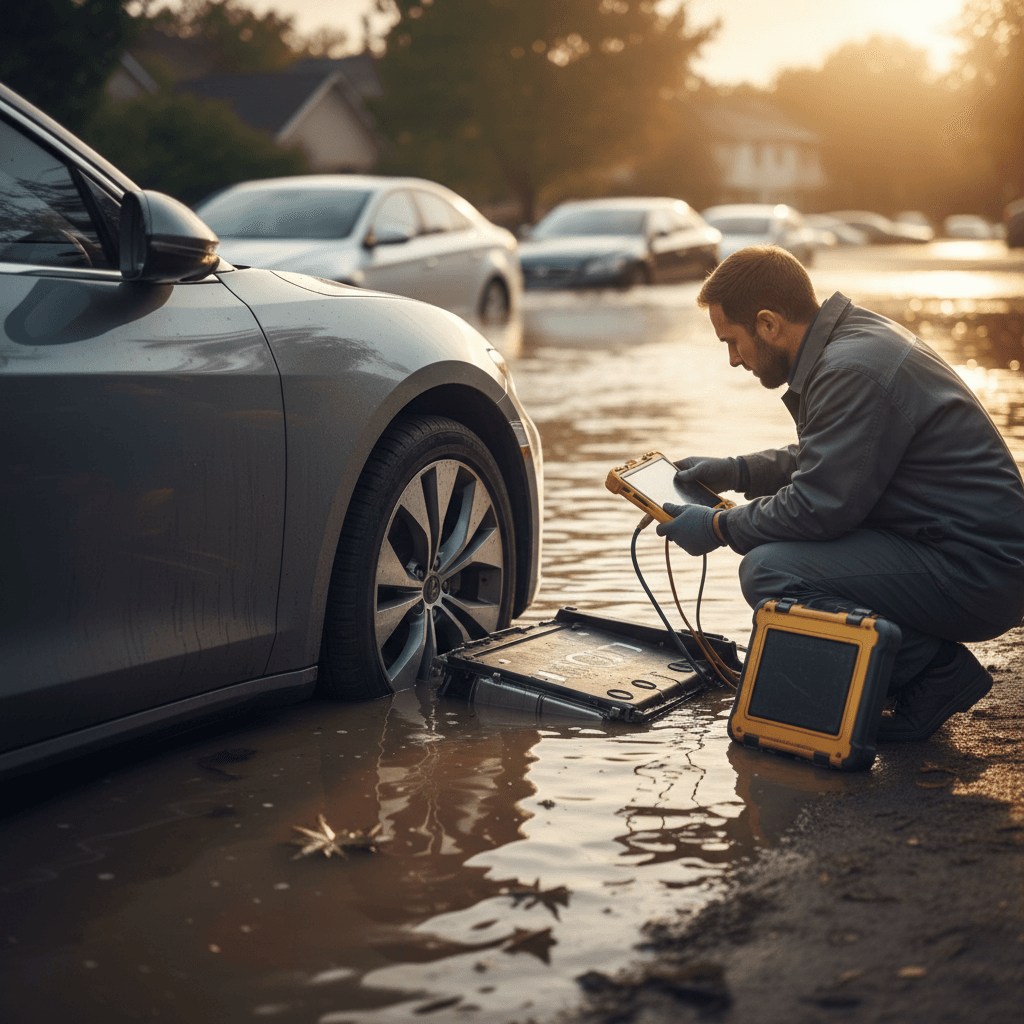
If your EV has just been exposed to flood water, from a hurricane, storm surge, or a river that jumped its banks, what you do in the first 24–48 hours has big implications for safety and insurance coverage.
Step‑by‑step: What to do right after flooding
1. Get yourself and others to safety
Never wade into moving flood water to reach a vehicle. If the EV is already flooded, stay clear of standing water that’s touching the car, especially if there are downed power lines nearby.
2. Assume the EV is unsafe to drive or charge
Even if it powers up, **don’t start it, move it under its own power, or plug it in** until it’s been inspected by a qualified EV technician trained on high‑voltage systems.
3. Keep it away from structures and other vehicles
If it can be safely towed, have it moved to an open area **at least 50 feet from buildings, other cars, and combustible materials**. This spacing is widely recommended to reduce risk if a delayed battery fire occurs.
4. Disconnect from any charger
If the car was plugged in during the flood, do not touch the handle if it’s still under water. Once water recedes and it’s safe, unplug the EVSE (charger) at the wall first, then the vehicle, and have both inspected before reuse.
5. Document everything for insurance
Take photos or video of water levels inside and around the vehicle, any mud lines, and visible damage before anything is cleaned or moved. This documentation supports your insurance claim.
6. Contact your insurer and your dealer
Report the flood exposure immediately and follow their instructions. Ask specifically whether the vehicle should be treated as a **total loss** and where to tow it for a **high‑voltage safety inspection**.
Don’t try to “dry it out” and drive
When is a flood‑damaged EV likely a total loss?
Insurers are still refining their playbooks for EV flood claims, but there are some consistent patterns. Because high‑voltage battery packs and power electronics are expensive, **relatively modest water exposure can push repair estimates over the vehicle’s value**, especially on older EVs.
Red flags that often lead to total loss
These conditions frequently push repair costs beyond the EV’s value
Water at or above the battery pack
Prolonged submersion
Contaminated (salt or sewage) water
Ultimately, the call belongs to your insurer in consultation with the manufacturer’s guidance. As an owner, your job is to **push for a thorough high‑voltage inspection and clear documentation** so you’re not left holding a compromised vehicle with poor resale value.
DIY checklist: What to check on a flooded EV
Only trained technicians should open or probe the high‑voltage system, but there are several **low‑risk visual checks** you can perform as an owner. Think of these as triage, not a green light to drive, but clues for your insurance adjuster and service advisor.
Owner visual checks (no tools required)
Check the water line
Look for dried mud or silt on the paint, glass, and interior trim. A visible line on doors, pillars, or the dash tells you how deep the water got. Photograph it before cleaning.
Inspect carpets and seat tracks
Lift floor mats and look for dampness, silt, or water staining. Rusty seat tracks, mounting bolts, or seat frame springs suggest prolonged exposure.
Look in hidden cavities
Open the trunk or hatch and check the **spare‑tire well, under‑floor storage, and side compartments** for standing water, mud, or debris that shouldn’t be there.
Smell for mold or heavy cleaners
A strong musty odor is a classic flood sign. An overpowering scent of air freshener or cleaner can be an attempt to mask it, another red flag.
Walk around the exterior
Look for water lines in wheel wells, behind the front grille area, and on underbody panels. If safe, you can take photos from a crouched position without crawling under the car.
Check lights and lenses
Fogging, condensation, or a visible water line **inside** headlamps, taillights, or marker lights indicates water intrusion into otherwise sealed areas.
Review the instrument cluster
Once a technician has confirmed it’s safe to power the car, note any **HV system, battery, or drivetrain warnings**. Capture screenshots or photos for the record.
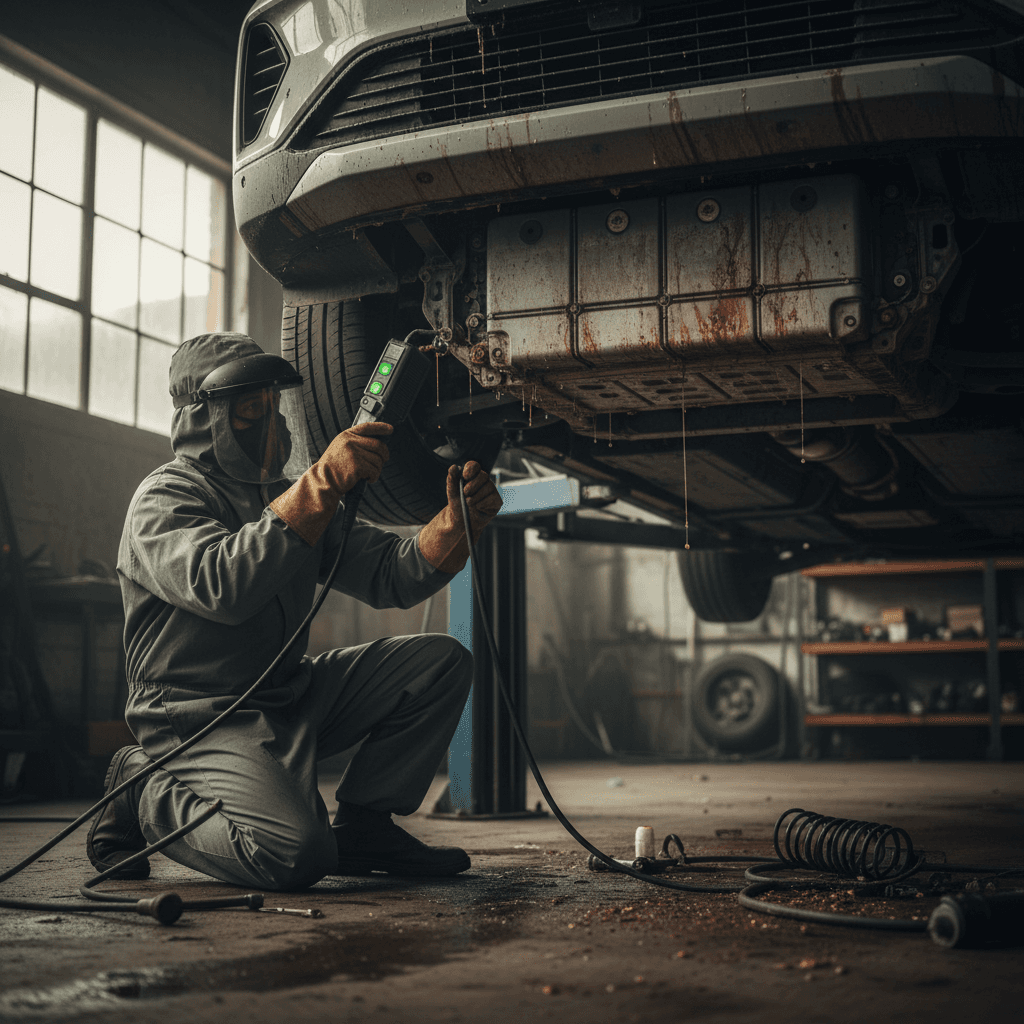
Let the pros handle high voltage
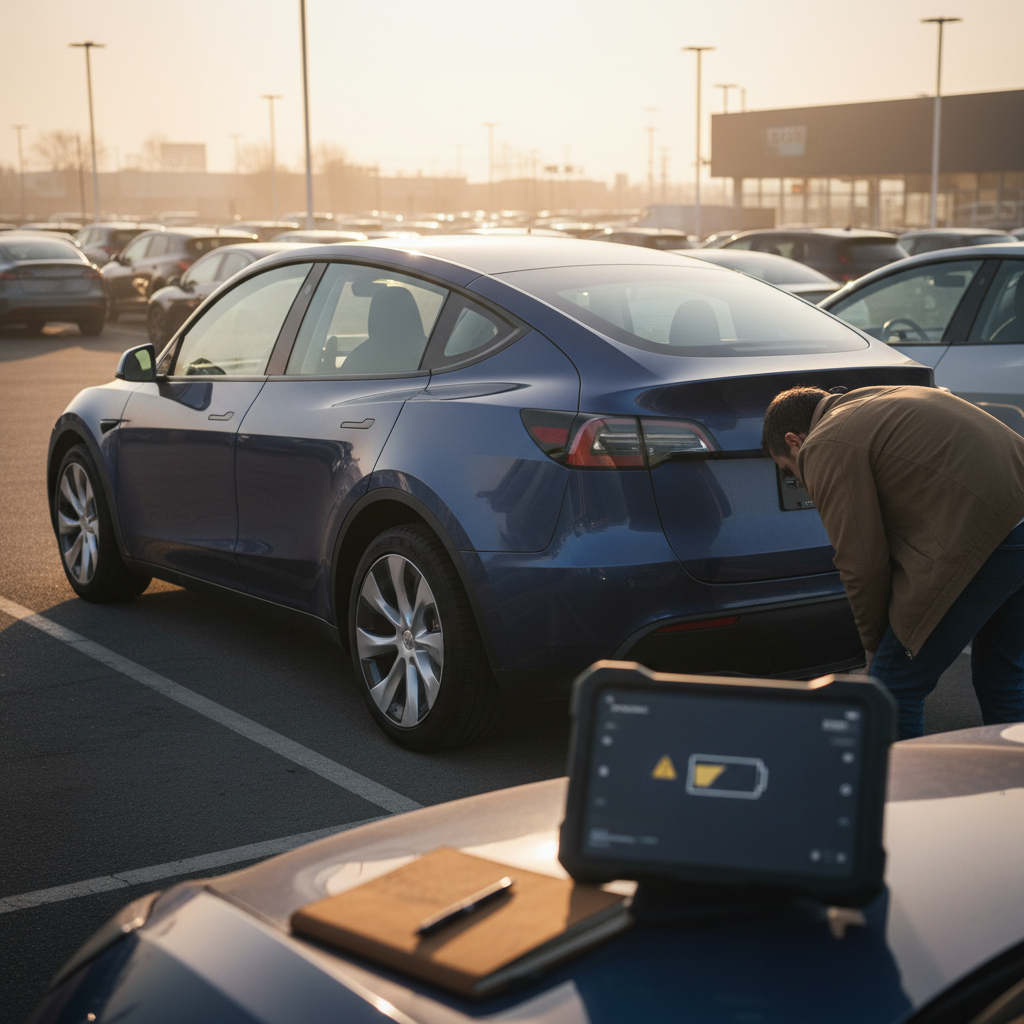
Inspecting a used EV for hidden flood damage
After major storms, thousands of flood‑damaged vehicles enter the used‑car stream every year. Some are properly branded as salvage; others are cleaned up and sold far from the disaster zone with **little or no disclosure**. With EVs, the financial and safety stakes are even higher, so your **pre‑purchase inspection must include flood‑specific checks.**
What to check on a used EV for flood history
Use this table as a quick reference when you’re inspecting a used electric vehicle in person.
| Area | What to look for | Why it matters |
|---|---|---|
| Interior smell & carpet | Musty odor, heavy deodorizer, mismatched or brand‑new carpet in an older EV | Common sign interior was soaked and quickly refurbished |
| Seat mounts & hardware | Rusty seat bolts, seat rails, or unpainted metal brackets under the seats | Rust here usually means water pooled on the floor for hours or days |
| Under trunk floor | Mud, silt, rust, or water staining in spare‑tire well or storage bins | Flood water tends to settle in low hidden pockets |
| Lights & lenses | Condensation, silt, or a water line inside headlamps or taillights | Indicates water got into areas that should stay sealed |
| Underbody & fasteners | Heavy surface rust on suspension bolts, exhaust hangers (on PHEVs), and subframe areas inconsistent with vehicle age/region | Flood cars often show a sharp rust line or unusual corrosion pattern |
| Charging port area | Corrosion on pins, green or white deposits, or gritty feel when plugging/unplugging | Flood water can compromise safe charging and signal reliability |
| Electronics behavior | Random warning lights, glitchy infotainment, intermittent window or lock behavior | Water‑damaged modules often show up as “ghosts in the machine” |
| Paperwork & history | Title branded as salvage/flood, recent out‑of‑state title change from a flooded region, gaps in history reports | Paper trail inconsistencies are classic flood‑car clues |
If more than one or two of these items look suspicious, it’s usually smartest to walk away and keep shopping.
Title and history checks are necessary, not sufficient
How floods affect the battery pack and high‑voltage system
EV battery packs are engineered with **sealed cases, gaskets, and pressure‑relief paths**. That protects against normal rain, puddles, and road spray. Floods are different: water can reach vents, wiring harnesses, and service plugs in ways the car was never meant to withstand, especially if water is deep or moving.
Common failure modes after EV flooding
What a trained EV technician is looking for
Intrusion into the pack
Damaged high‑voltage cabling
Electronics and contactors
Owner’s role
Your job is to **notice symptoms** and communicate them clearly:
- Unusual smells, especially burning plastic or “hot electronics.”
- Warning lights related to the battery, charging system, or drivetrain.
- New noises like clicking, hissing, or popping from under the car.
- Any signs of smoke, steam, or heat after the flood event.
Technician’s role
A qualified EV technician will:
- Use insulated tools and protective equipment to safely access HV components.
- Run manufacturer‑specific diagnostics to check isolation resistance and fault codes.
- Inspect connectors, seals, and harness routing for corrosion or damage.
- Determine whether the vehicle is safe to repair, or should be written off.
Delayed fires are a real risk
How insurance, dealers, and manufacturers handle flooded EVs
Behind the scenes, a lot happens once an EV is flagged as flood‑exposed. Understanding that process helps you navigate claims as an owner and make smarter decisions as a used‑EV shopper.
- **Insurance companies** typically treat significant flood exposure much like a serious collision. If high‑voltage components or multiple control modules are affected, they often declare the EV a **total loss** and send it to auction with a salvage or flood‑branded title.
- **Manufacturers** publish internal guidance on when packs, cables, or chargers must be replaced after submersion. Many advise treating a submerged pack as non‑repairable, replacing it instead of attempting an internal repair.
- **Dealers and auctions** may part out obviously damaged EVs, but some vehicles get cosmetically cleaned and resold. Title branding rules vary by state, which is one reason flood cars sometimes move across state lines before being listed for sale.
Know your rights as a buyer
How Recharged evaluates flood risk on used EVs
At Recharged, we specialize in used electric vehicles, and that means being **extra cautious about flood history**. The financial and safety stakes with high‑voltage batteries are simply too high to treat flood checks as a quick sniff test and a car‑wash.
- We start with **VIN‑based history and disaster‑zone checks** to flag vehicles that lived in counties with recent FEMA flood declarations or major storm events.
- Every EV receives a **Recharged Score Report**, which includes verified battery health, fault‑code scanning, and visual inspections that can reveal flood or corrosion patterns.
- Our technicians perform a **hands‑on EV inspection** on a lift, including underbody, suspension, charging port, battery enclosure, and wiring harness routing, areas most buyers can’t see on a test drive.
- Vehicles with confirmed or strongly suspected flood involvement **don’t make it onto our retail site**. If we’re not comfortable putting our name on it, we won’t put it in your driveway.
- If you’re considering trading in or consigning an EV that’s been near a flood, our team can **evaluate it, explain your options, and give you an honest market‑based offer** so you know where you stand.
Why buy a used EV through a specialist
EV flood damage FAQs
Frequently asked questions about EV flood damage
The bottom line on EV flood checks
Flood damage is one of those issues where **you’re better off overly cautious than even slightly casual**, especially with an electric vehicle. If your own EV has been in a flood, treat it like a serious accident: stay safe, document everything, and let high‑voltage‑trained technicians and your insurer decide whether it lives or dies.
If you’re shopping used, remember that **the cheapest EV on the lot is rarely a bargain if it’s been underwater**. Combine smart visual checks, history reports, and a professional EV inspection, or work with an EV‑only retailer like Recharged where battery health and condition transparency are part of the package. A little extra scrutiny today can save you thousands of dollars, and major safety headaches, down the road.