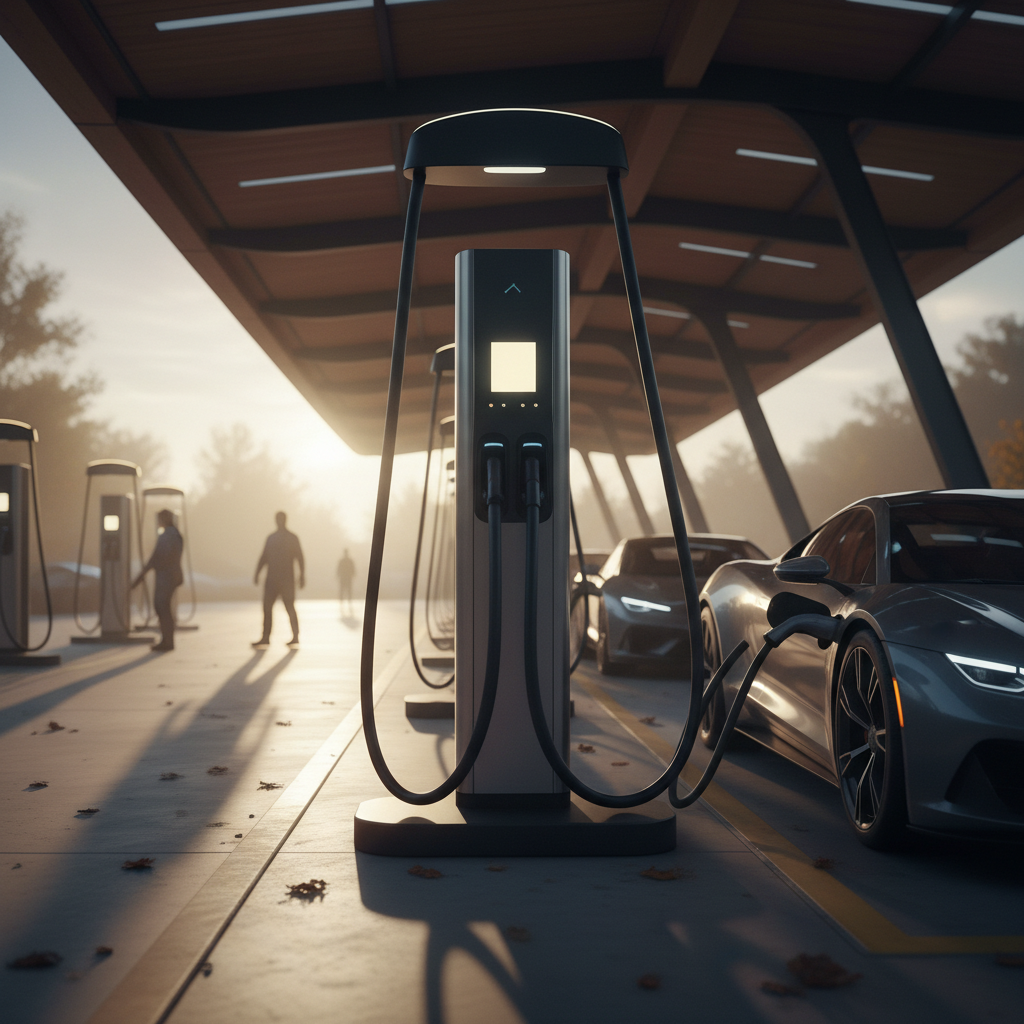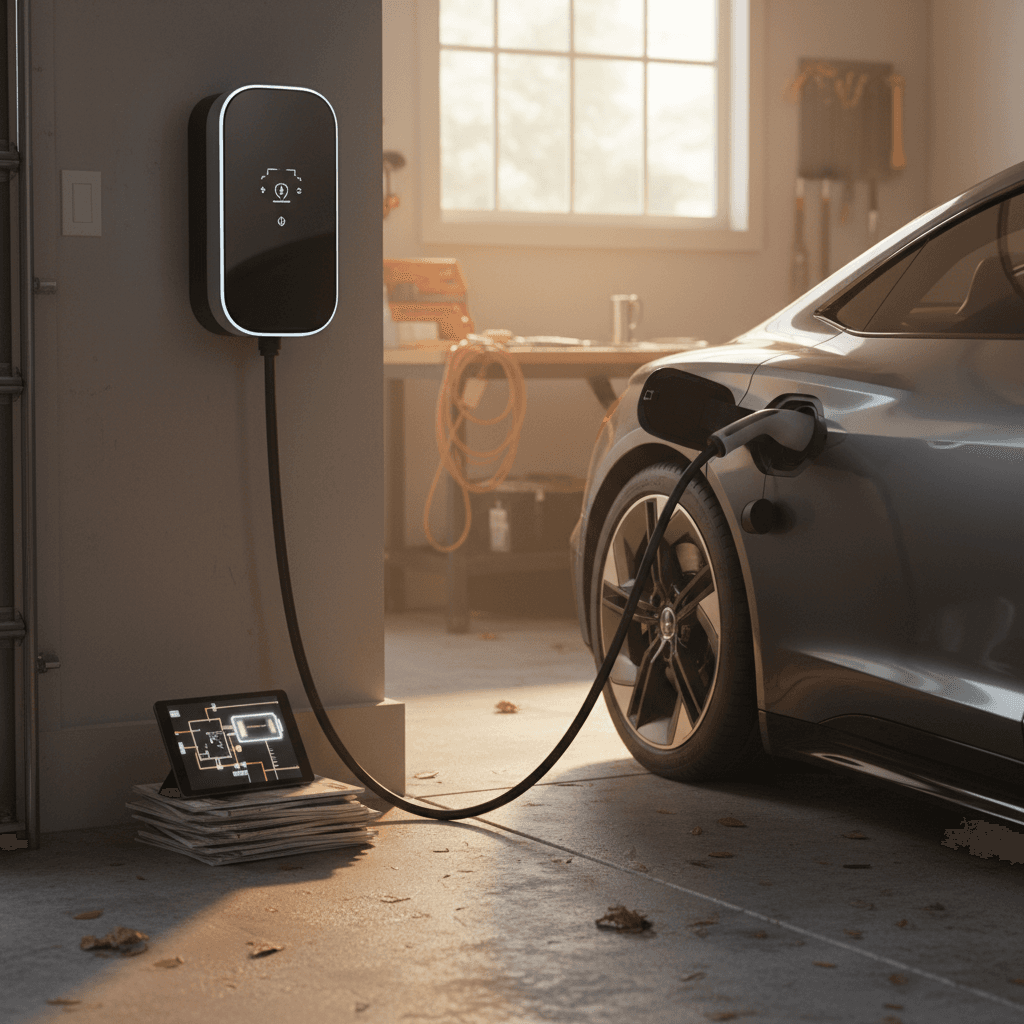
If you own an EV in 2025, the best Level 2 charger you can buy isn’t the flashiest box on the wall. It’s the one that quietly adds 25–40 miles of range per hour, plays nicely with your home’s wiring, and never makes you think about public chargers when you don’t want to. That’s the real luxury: not speed, not apps, just always leaving the driveway with more range than you need.
Level 2 in one sentence
Why Level 2 charging matters more than you think
Level 2 charging by the numbers
Most EV owners do 80–90% of their charging at home. A good Level 2 unit turns your driveway into your own private “station,” and that changes how the car feels. A modest‑range hatchback driven off a 40‑amp home charger is a better ownership experience than a long‑range SUV you’re constantly nursing between public stations. If you’re looking at a used EV on Recharged, pairing it with the right home charger is often the difference between carefree and annoying ownership.
Don’t underestimate Level 1
How to choose the best Level 2 charger for your home
Four questions that narrow the field fast
You don’t need to read every spec sheet, just answer these honestly.
1. How fast do you need?
Check your EV’s max AC charging rate in kW and amps. If your car tops out at 7.2 kW (30A), a 48‑amp monster won’t charge it any faster, it just costs more to install.
2. Plug‑in or hardwired?
Plug‑in (NEMA 14‑50) gives flexibility and easier replacement. Hardwired can support higher amperage and is often required outdoors by code.
3. Smart features or not?
Do you actually want apps, Wi‑Fi, and Alexa integration, or will you ignore them? Smart chargers help with time‑of‑use rates; simple bricks are cheaper and often more reliable.
4. Indoors or outdoors?
For driveway or carport installs, look for NEMA 4 or better weather rating, thick cable insulation, and a solid connector holster.
From there, you’re mostly optimizing for build quality, cable length (aim for 23–25 feet), connector type (NACS vs. J1772), and brand support. The ‘best’ Level 2 charger for a Tesla in a suburban garage is not the same as the best for a CCS hatchback street‑parked in winter.
Best Level 2 chargers for 2025: Shortlist
Editor’s picks: Best Level 2 chargers by use case
These are widely available U.S. models with strong real‑world track records as of late 2025.
| Charger | Why it stands out | Max Amps / kW | Connectivity | Plug / Connector | Approx. Price (USD) |
|---|---|---|---|---|---|
| ChargePoint Home Flex | Best all‑around smart charger with excellent app and flexible amperage settings | 50A / 12 kW | Wi‑Fi, app | J1772 or NACS | ≈ $549 |
| Tesla Universal Wall Connector | Best for Tesla owners or mixed garages; built‑in J1772 adapter and NACS support | 48A / 11.5 kW | Wi‑Fi, Tesla app | NACS + integrated J1772 | ≈ $595–650 |
| Grizzl‑E Classic | Best budget workhorse; simple, durable, no‑app design | 40A / 9.6 kW | None (dumb) | J1772 or NACS | ≈ $380–400 |
| Emporia Level 2 | Best budget smart charger; strong app and energy monitoring | 48A / 11.5 kW | Wi‑Fi, app | J1772 | ≈ $400–450 |
| Wallbox Pulsar Plus | Compact smart unit with good app and power‑sharing for multi‑EV households | 40A or 48A | Wi‑Fi, Bluetooth, app | J1772 | ≈ $599 |
| Heavy‑duty 19.2 kW (90A‑class) units | Emerging ‘ultra‑Level‑2’ options for large batteries and fleets; ideal if you’re future‑proofing and your panel can handle it | 80–90A / up to 19.2 kW | Smart features vary | J1772 or NACS, model‑dependent | Starting under $1,000 |
Always confirm latest pricing and plug options; NACS is rapidly replacing J1772 on new vehicles.
A note on prices
Deep dive: Pros, cons, and who each charger is for
ChargePoint Home Flex – the smart default
If you want a set‑and‑forget smart charger that plays nicely with most utilities, ChargePoint’s Home Flex stays near the top of every comparison for a reason. You can dial the amperage down (perfect for older panels), schedule off‑peak charging, and track costs with more detail than most people will ever want.
- Up to 50 amps, user‑adjustable
- App is polished and widely supported
- Available with J1772 or NACS, plus adapters
If you’re buying a used EV on Recharged and aren’t sure what you’ll drive next, this is a safe, flexible pick.
Tesla Universal Wall Connector – king of mixed garages
The Universal Wall Connector is Tesla doing what Tesla does best: integrating hardware and software. It charges any NACS‑equipped Tesla at full tilt and hides a J1772 adapter in the cradle for non‑Tesla EVs. If your household has one Tesla and one non‑Tesla, this is the neatest answer on the market.
- Up to 48A, 24‑ft cable
- Clean industrial design; wall art for garage people
- Managed through the Tesla app with solid reliability
If you’re already living in Tesla’s ecosystem, this is the one to beat.
Grizzl‑E Classic – the steel‑toe work boot
Grizzl‑E’s Classic is what happens when Canadians design a charger for Canadian winters. It’s a metal box (aluminum enclosure), a relay, and a fat cable. No Wi‑Fi, no app, no mood lighting, and that’s precisely the charm.
- 40A, 9.6 kW – enough for overnight on almost anything
- NEMA 4 enclosure; happily lives outdoors
- Often one of the cheapest UL‑listed 40A units
If your idea of a good app is no app, Grizzl‑E is your charger.
Emporia & Wallbox Pulsar Plus – small boxes, big brains
Emporia and Wallbox Pulsar Plus occupy that space where you want smart features, but don’t want to pay Tesla or ChargePoint money. Emporia leans into home‑energy nerd territory, great if you also have solar or an Emporia energy monitor. Wallbox scores on its compact form factor and the ability to share power between two units.
- Both offer 40–48A variants
- Good for cramped garages and multi‑EV homes
- Apps can be fiddly, but improve over time
If you’re the type who actually checks their energy‑usage graphs, start here.
Quick matching guide
Smart vs. simple chargers: Which camp are you in?
Smart chargers (Wi‑Fi, apps, integrations)
- Pros: Schedule charging for cheap overnight rates, track costs, integrate with solar or home batteries, some support load‑sharing between two chargers.
- Best for: Time‑of‑use utility plans, multi‑EV households, energy nerds, renters who need usage reports.
- Watch out for: Clunky apps, Wi‑Fi dropouts, and the temptation to over‑complicate something that should be as simple as “plug in, go to bed.”
Simple chargers (no app, just charge)
- Pros: Cheaper, fewer failure points, no account logins, and often better cold‑weather reliability.
- Best for: Predictable daily driving, owners who already schedule charging in the car’s settings, and outdoor installs where Wi‑Fi is weak.
- Watch out for: No usage tracking or remote control; if your utility offers big discounts for off‑peak charging, you’ll rely on the car to schedule it.
Your EV already has a brain
Installation, permits, and what it really costs
Here’s the unglamorous part. The difference between a $400 charger and a $600 one is maybe a night out. The difference between a straightforward install and a panel upgrade can be thousands. That’s where people get surprised.
Home installation: what drives the price
1. Distance from panel to charger
Long wire runs cost more in copper and labor. A charger mounted on the other side of the wall from your main panel can be hundreds cheaper than one 60 feet away in a detached garage.
2. Panel capacity and available breakers
If you have at least a spare 40–60A slot and a 200A panel, life is easy. Older 100A panels or already‑maxed services may require a load calculation, smart load management, or a full upgrade.
3. Plug‑in vs. hardwired
Using a NEMA 14‑50 receptacle with a plug‑in charger can reduce labor and lets you swap units easily. Hardwiring may be mandated outdoors and can support higher‑amp units, but is more permanent.
4. Permit and inspection requirements
Many U.S. jurisdictions require a permit for a new 240‑volt circuit. Factor in permit fees and an inspection visit. A reputable electrician will handle this for you.
5. Trenching or surface work
If your charger lives on a detached structure or far from the house, conduit runs, trenching, and patching will inflate the invoice quickly.
6. Future‑proofing choices
Spending a bit more now on heavier‑gauge wire and conduit can save money later if you upgrade from 40A to 60–80A charging or add a second EV.
7. GFCI and code compliance
Modern code often requires GFCI protection on 240‑volt outlet circuits. Combining GFCI breakers with GFCI receptacles or charger‑built‑in protection can cause nuisance trips, your electrician should sort this out.
8. Utility rebates and tax credits
Check whether your state, city, or utility offers rebates for Level 2 chargers or panel upgrades. The ‘best’ charger is sometimes the one that qualifies for the biggest reimbursement.
Don’t DIY 240‑volt work unless you’re qualified
Future‑proofing: NACS, adapters, and charging standards
The plug war is ending, and NACS, Tesla’s slim connector, is winning. Ford, GM, Hyundai, Kia, and most major brands have committed to NACS in North America, with new models rolling out through 2025–2026. So what do you do today?
- If you drive a Tesla now and expect to stay in the Tesla ecosystem, a Tesla Wall Connector or Universal Wall Connector is the most seamless choice.
- If you drive a CCS/J1772 EV today but might buy a NACS‑equipped car later, a ChargePoint, Emporia, Wallbox, or Grizzl‑E with a J1772 plug plus a NACS adapter keeps options open.
- If your household will always be mixed (Tesla + non‑Tesla), the Tesla Universal Wall Connector is tailor‑made for that scenario.
- Public charging will remain a mix of CCS, NACS, and CHAdeMO for a while, so don’t over‑optimize around public plugs when you’re choosing a home unit. Focus on your driveway reality first.
Think in 10‑year chunks
Pre‑purchase checklist: 8 questions to answer
Before you click “Buy Now”
1. What’s my EV’s max AC charging rate?
Look it up in the owner’s manual or manufacturer site. If your car is limited to 32A (7.7 kW), buying a 60A charger won’t speed things up, though it might future‑proof for your next EV.
2. How many miles do I actually drive per day?
If you average 30 miles, a 32–40A charger is plenty. If you routinely burn 100+ miles and come home late, a 48–80A unit starts to make sense.
3. Where will the car actually park?
Measure the distance from the planned charger location to the charge port on the car, accounting for different parking orientations. That’s your minimum cable length, then add a few feet of margin.
4. What does my electrical panel look like?
Snap a photo of your panel (with the door open) and share it with your electrician or a charger brand that offers virtual assessments. This will determine what amp rating is realistic without upgrades.
5. Plug‑in or hardwired for my situation?
If you’re renting or think you’ll move soon, a plug‑in unit plus a NEMA 14‑50 outlet preserves flexibility. If you’re in your forever home and want maximum amperage, hardwiring is usually better.
6. Do I care about smart features?
If your utility offers time‑of‑use rates or you have rooftop solar, smart features can pay for themselves. If not, a rugged, ‘dumb’ charger is typically cheaper and simpler.
7. How harsh is my climate?
For very hot, cold, or wet environments, prioritize metal enclosures, outdoor‑rated units (NEMA 4 or better), and brands with good reputations for durability in your climate zone.
8. Should I plan around my next EV now?
If you’re shopping used EVs on <strong>Recharged</strong> and know a bigger‑battery model is in your near future, size the wiring and breaker for that, even if you start with a modest charger today.
Frequently asked questions about Level 2 chargers
FAQ: Best Level 2 charger choices in 2025
Bottom line: The “best” Level 2 charger for you
The best Level 2 charger in 2025 isn’t necessarily the one with the longest spec sheet, it’s the one that fits your car, your panel, your driveway, and your life. For many people, that’s a 40–48 amp wall unit from a reputable brand, installed by a pro, with a cable just long enough to reach without becoming jump rope. Tesla’s Universal Wall Connector and ChargePoint’s Home Flex are excellent anchors at the smart end of the pool. Grizzl‑E, Emporia, and Wallbox round out a cast of hardware that’s far better than what early EV adopters had to live with.
If you’re also shopping for a car, it makes sense to think about the charger and the EV as a package. On Recharged, every used EV comes with a Recharged Score Report, including verified battery health, so you’re not guessing about how that car has been charged in the past. From there, pairing it with the right Level 2 charger and a sane installation plan turns EV ownership from a science project into something boringly reliable. And boring, in this case, is exactly what you want.