If you’re shopping for an electric car in 2025, the phrase “best EV warranty” probably sounds like magic words. Batteries are the most expensive part of an EV, and the idea of paying five figures for a replacement is enough to make anyone hesitate. The good news: modern EV warranties are far better than most gas-car coverage ever was. The catch: not all of them protect you in the same way, especially once the car is a few years old.
Quick take
Why EV warranties matter more than you think
EV warranty numbers that actually matter
Traditional gas-car warranties mostly worry about mechanical failures you can hear or feel: engines, transmissions, fuel pumps. EVs flip the script. The crucial question becomes, “How long will this battery stay healthy?” That’s what modern EV warranties are really trying to answer, both for the first owner and whoever buys the car next.
A strong warranty isn’t a guarantee of zero issues
EV warranty basics: key terms to know
1. Battery warranty
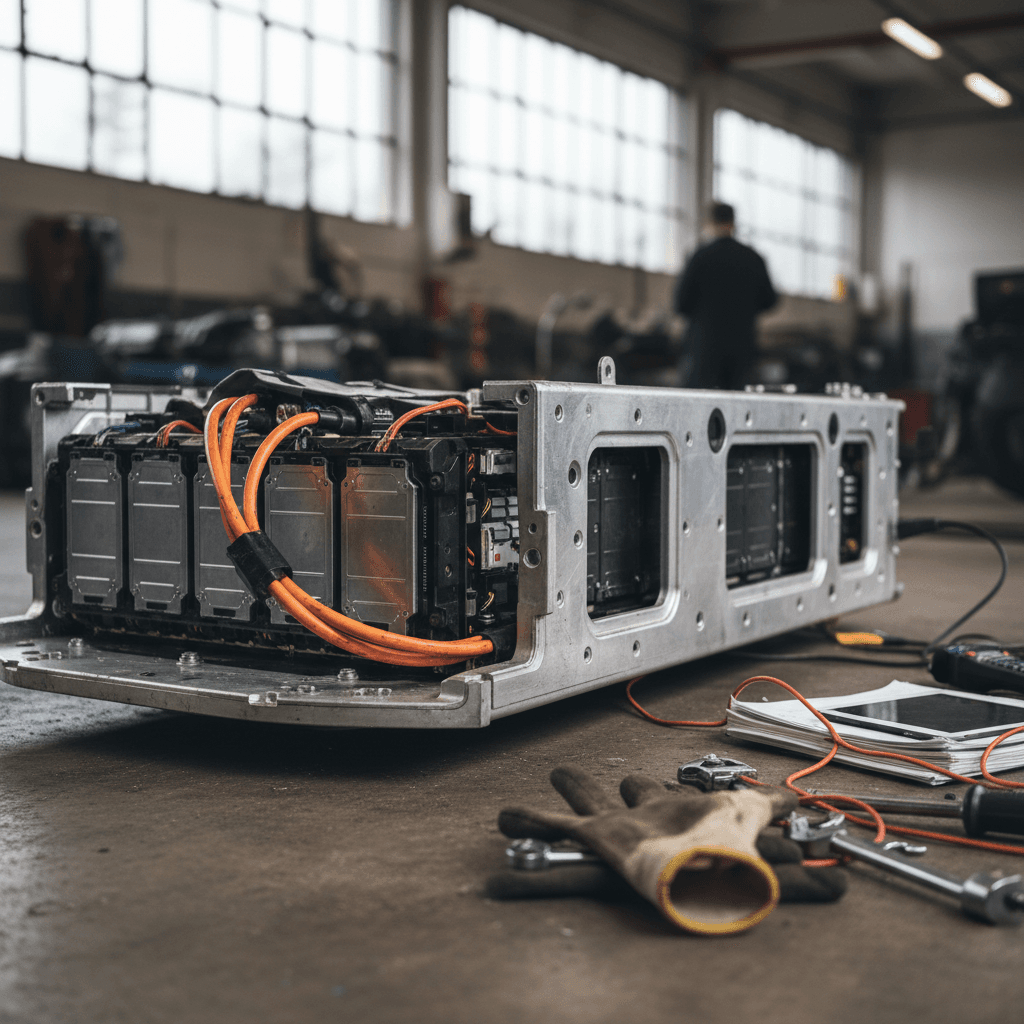
This is the star of the show. The high-voltage battery warranty covers defects and, on most modern EVs, excessive loss of capacity. It’s usually written as years + miles (for example, 8 years/100,000 miles) and often includes a promise that the battery will retain at least 70% of its original capacity during that period.
2. Powertrain & bumper-to-bumper warranties
EVs still have motors, inverters, chargers, and plenty of electronics. The powertrain warranty usually covers the motor(s) and drive unit, while the bumper-to-bumper warranty covers everything else for a shorter period (often 3–4 years/36,000–50,000 miles). These are important, but the battery coverage is what separates an average EV warranty from a great one.
- Capacity retention guarantee: A promise that your battery will keep at least a certain percentage (often 70%) of its original capacity during the warranty period.
- Degradation vs. defects: Defects are sudden failures; degradation is the gradual loss of range. The best EV warranties clearly cover both.
- Transferability: Can a second or third owner still benefit from the original EV battery warranty? That’s critical if you’re shopping used.
How to read EV warranty fine print fast
Who really offers the best EV battery warranty?
There isn’t one single winner for every driver, but a few brands clearly stand out in 2025. If we’re talking pure battery coverage, Rivian, Hyundai, Kia, Genesis, and VinFast are at the front of the pack, with Tesla close behind thanks to long mileage limits on some models.
Standout EV battery warranties in 2025
These brands set the benchmark for factory battery coverage right now.
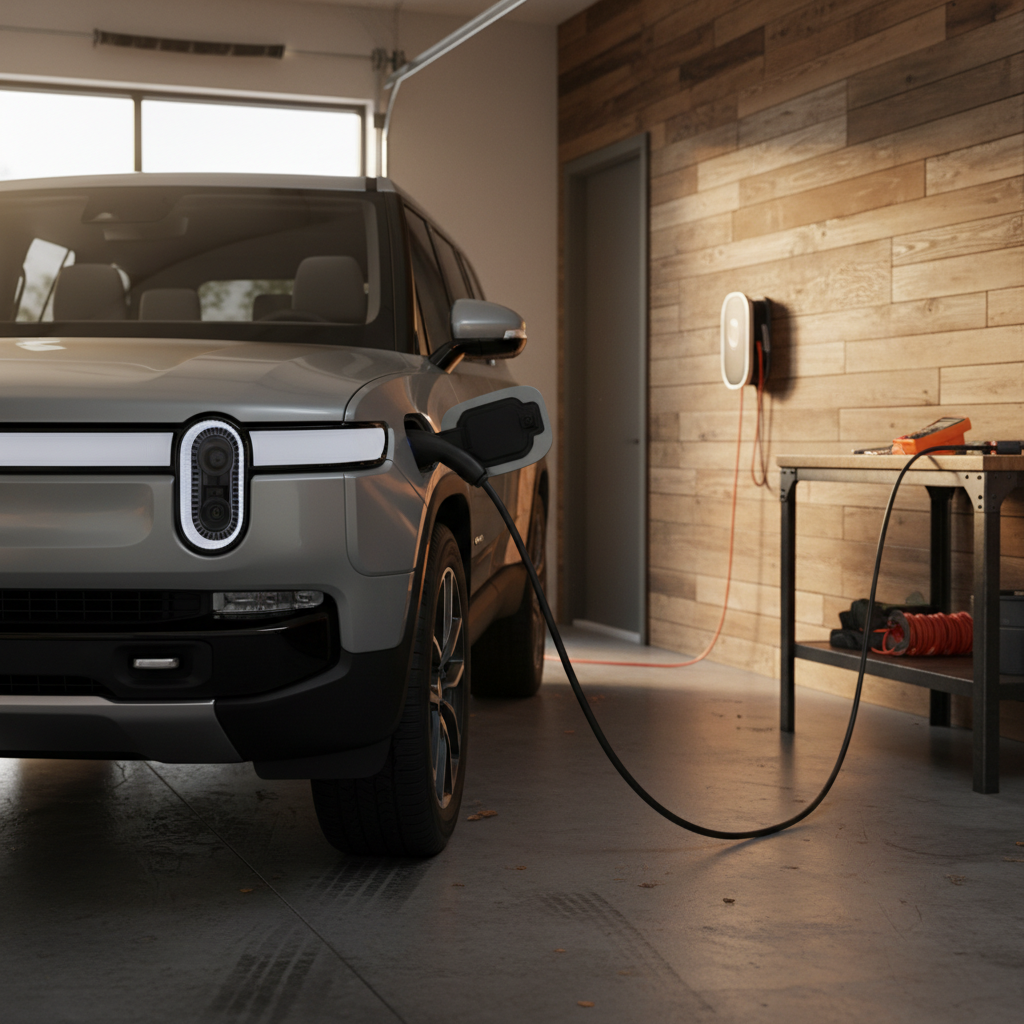
Rivian
Coverage: 8 years / up to 175,000 miles on R1T and R1S batteries, including drive unit components.
Why it’s great: Rivian pairs long mileage limits with robust coverage of battery and drivetrain parts, ideal for high-mileage drivers and adventure use.
Hyundai / Kia / Genesis
Coverage: 10 years / 100,000 miles on high-voltage batteries, plus a 70% capacity guarantee.
Why it’s great: A full decade of coverage is rare, and these brands have a strong track record of honoring claims. A sweet spot if you keep cars for a long time.
Tesla
Coverage: 8 years / 100,000–150,000 miles depending on model, with at least 70% capacity retention.
Why it’s great: Tesla pairs generous mileage limits with a huge fast-charging network. For road trippers, that combination is hard to beat.
New players with big promises
2025 EV battery warranty comparison at a glance
Major EV brands: battery warranty snapshot (2025, US market)
Always confirm exact terms for your specific model and model year, but this table shows how the big players stack up.
| Brand | Typical battery warranty | Mileage cap | Capacity guarantee | Transferable? |
|---|---|---|---|---|
| Rivian | 8 years | 150,000–175,000 mi | 70% | Yes |
| Hyundai / Kia / Genesis | 10 years | 100,000 mi | 70% | Yes |
| Tesla | 8 years | 100,000–150,000 mi | 70% | Yes |
| VinFast | 10 years | Unlimited miles | Not always published | Yes |
| Ford | 8 years | 100,000 mi | Often 70% (model-dependent) | Yes |
| VW / Audi | 8 years | 100,000 mi | 70% | Yes |
| Nissan | 8 years | 100,000 mi | 70% | Yes |
| BMW / Mercedes-Benz | 8–10 years | 100,000–155,000 mi | 70% (where specified) | Yes |
| GM (Chevy, Cadillac, GMC) | 8 years | 100,000 mi | Typically 70% | Yes |
Years and miles are maximums for most common EV models; some trims vary.
Don’t chase years and miles alone
Best EV warranty for new vs. used buyers
If you’re buying a new EV
Your decision is mostly about brand choice. A 2025 Hyundai IONIQ 5 with a 10-year battery warranty offers longer peace of mind than an 8-year alternative. If you plan to own the car for a decade, those extra two years can be the difference between selling with warranty coverage left or facing battery risk on your own.
Think about how many miles you realistically drive. If you do 12,000 miles a year, a 10-year/100,000-mile warranty effectively runs out on miles after about 8 years. Brand-specific mileage caps matter just as much as the headline number of years.
If you’re buying a used EV
Now the question becomes “how much of the original battery warranty is left?” An 8-year battery warranty on a 4‑year‑old car is only useful if the previous owner didn’t chew through the mileage cap. You want a car where both the calendar time and miles remaining line up with how long you plan to keep it.
Because Recharged focuses on used EVs, every vehicle listing includes a Recharged Score Report with verified battery health plus clear, plain‑English warranty status so you’re not guessing how much coverage you still have.
Good news for second owners
Fine print that makes or breaks an EV warranty
Once you’ve narrowed down which brands offer the strongest headline coverage, the real separation comes from the fine print. This is where you find out how easy, or painful, it will be to actually use that warranty if something goes wrong.
Four questions to ask about any EV warranty
These details often matter more than the big numbers in the brochure.
1. How is capacity measured?
Many brands only replace a battery if testing shows capacity below 70% (or another stated threshold). Ask who performs the test, how long it takes, and whether you can see the data. A transparent process is worth a lot.
2. Are there usage exclusions?
Some warranties can be limited by commercial use, track use, or heavy fast-charging. Occasional DC fast charging is usually fine, but if your lifestyle means charging hard and often, make sure your use case isn’t excluded.
3. Are software updates covered?
Battery and powertrain software updates can be the fix for certain issues. The best EV warranties clearly cover necessary updates and related labor rather than treating them as a separate service item.
4. What’s the claim experience like?
Two brands can offer identical paper coverage but wildly different real‑world experiences. Owner forums, independent reviews, and dealer reputation all matter when you’re trying to decide whose promise you trust.
Red flags in EV warranty terms
How EV warranty coverage affects resale value
One of the quiet benefits of a strong EV battery warranty shows up when you sell or trade the car. Shoppers browsing used EVs care deeply about two things: current battery health and how much warranty is left. Together, those two factors can swing a vehicle’s value by thousands of dollars.
More warranty, more buyer confidence
A used EV with 3–5 years of battery warranty remaining is much easier to sell than a similar car that’s just aged out of coverage. The buyer knows there’s a safety net if a pack module fails or range drops unexpectedly. That confidence often shows up as higher offers and faster sales.
How Recharged’s Score Report fits in
On Recharged, every vehicle includes a Recharged Score Report that combines verified battery diagnostics with market pricing and warranty details. Instead of guessing how healthy the pack is or whether the warranty still applies, you can see it laid out clearly before you commit.
Smart move if you like to flip cars
How Recharged helps you shop warranties smarter
Comparing EV warranties across brands can turn into a spreadsheet hobby. Recharged exists to simplify that. Because the platform is built entirely around used EVs, the warranty question is baked into everything, from how vehicles are inspected to how they’re priced.
What Recharged does for used EV warranty peace of mind
So you don’t have to become an amateur warranty lawyer.
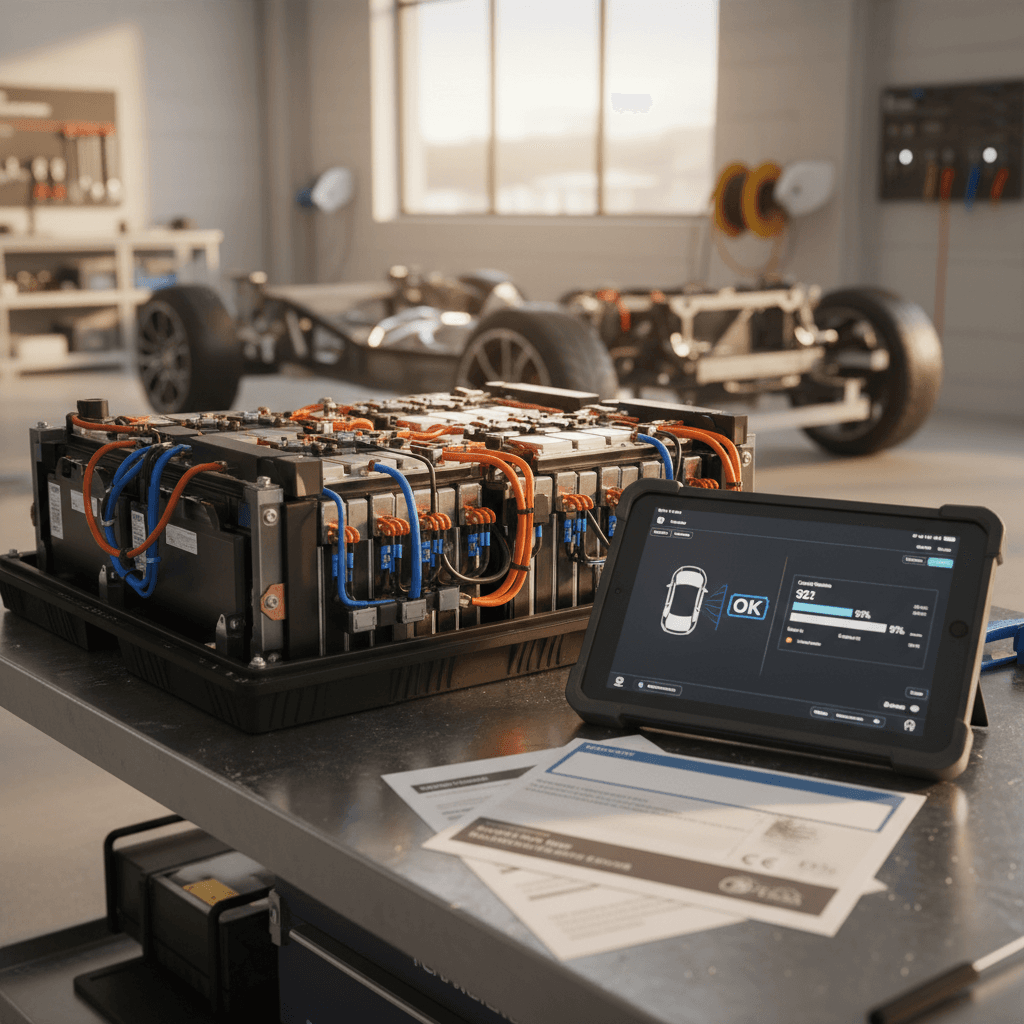
Recharged Score battery diagnostics
Every car on Recharged receives a Recharged Score Report with battery health data, so you can see real‑world capacity and charging behavior before you buy.
Fair market pricing with warranty factored in
Recharged’s pricing tools account for battery health and remaining warranty, so a car with better coverage or a stronger pack is priced accordingly, not just by age and mileage.
EV-specialist support
Need help decoding a specific brand’s EV battery warranty? Recharged’s EV specialists do this every day and can walk you through what coverage you’re actually getting.
Ready to find your next EV?
Browse VehiclesChecklist: choosing the best EV warranty for you
6-step checklist for evaluating an EV warranty
1. Confirm years, miles, and capacity threshold
Write down the battery warranty term in <strong>years</strong>, <strong>miles</strong>, and <strong>capacity percent</strong>. If you can’t find all three, keep asking questions, or consider another brand.
2. Check how much warranty is left (for used EVs)
Look at the in‑service date and mileage. A 5‑year‑old EV with 40,000 miles left on an 8‑year/100,000‑mile battery warranty is in a very different position than a 5‑year‑old car with 95,000 miles.
3. Make sure the warranty is transferable
Most modern EV battery warranties are, but confirm there’s no fee or “first owner only” clause hiding in the fine print. Transferability is a big part of resale value.
4. Match the warranty to your driving habits
If you drive 20,000 miles a year, you’ll hit mileage caps long before the calendar runs out. In that case, prioritize brands with higher mileage limits like Rivian or Tesla’s upper‑tier coverage.
5. Ask about exclusions and claim process
Find out whether heavy fast‑charging, towing, or commercial use affects coverage. Also ask how capacity testing works if you suspect excessive degradation.
6. Look beyond the brochure
Spend 10–15 minutes reading owner experiences and reputable reviews of the brand’s warranty support. The best EV warranty isn’t just generous on paper, it’s backed up by real‑world service.
Best EV warranty FAQ
Frequently asked questions about the best EV warranties
Bottom line on the best EV warranty
There’s no single “best EV warranty” that wins every category, but there is a best warranty for the way you actually drive. High‑mileage road‑trippers might lean toward Rivian or Tesla with their generous mileage caps. Long‑term keepers may prefer the 10‑year peace of mind from Hyundai, Kia, or Genesis. And value‑focused used‑EV shoppers should look for the sweet spot where strong factory coverage overlaps with verified battery health and fair pricing.
If you’re browsing used EVs, don’t treat the warranty as a footnote. It’s a core part of the car’s value. On Recharged, every vehicle comes with a Recharged Score Report, transparent battery diagnostics, and expert EV support so you can line up the warranty, the health of the pack, and your budget, before you sign anything.