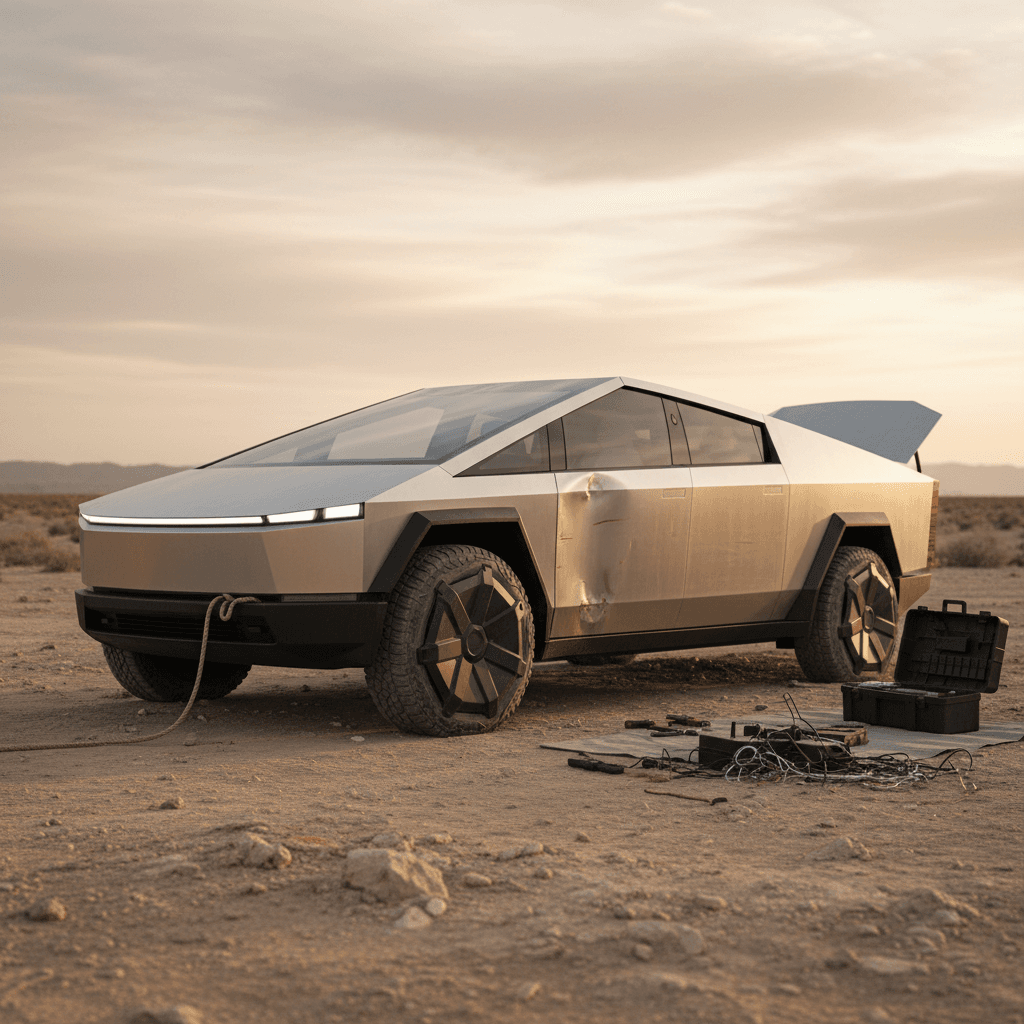
If you’re wondering about the 2025 Tesla Cybertruck reliability rating, you’re not alone. The wedge-shaped truck has generated huge attention, and a growing list of recalls, owner complaints, and polarized reviews. The challenge is that it’s still a very new platform, so the “rating” depends heavily on which data you look at and how comfortable you are living through the early years of a first‑generation vehicle.
Quick take
Overview: How reliable is the 2025 Tesla Cybertruck?
2025 Tesla Cybertruck at a glance
Here’s the honest answer: there is no single, universally accepted 1–100 reliability score for the 2025 Tesla Cybertruck yet. What we do have are early indicators: - Independent reliability trackers that compile recall and complaint data currently give the Cybertruck an overall rating in the “mixed” range. - Owner surveys and forums describe a split experience: some trucks are trouble‑free, others rack up service visits in the first few months. - The truck has already logged a high recall count per vehicle compared with established pickup rivals. So if you’re looking for a short summary, it’s this: the Cybertruck is fascinating, fast, and capable, but as of early 2026, you should treat it as an early‑adopter vehicle with elevated reliability risk, not a proven long‑term work truck.
Why there’s no neat “JD Power style” score yet
How reliability ratings work for a brand‑new EV
When you see a reliability rating attached to a brand‑new model like the Cybertruck, it’s usually built from three main ingredients:
- Recall history: How many recalls, how serious they are, and whether fixes are simple software updates or major hardware work.
- Owner complaint data: Reports to regulators plus what owners log in surveys and on forums, everything from squeaks and rattles to safety issues.
- Predicted reliability models: Some organizations blend early data from a new model with historical performance of similar vehicles from the same brand. With the Cybertruck, that means Tesla’s mixed track record on build quality but decent powertrain longevity.
Because the Cybertruck is a clean‑sheet design, stainless‑steel body, steer‑by‑wire, new suspension layout, there’s less past data that translates directly. That’s why most experts are still using language like “mixed,” “too soon to tell,” or “highly variable” rather than calling the 2025 truck clearly reliable or unreliable.
How to read early reliability scores
Early Cybertruck reliability scores & owner feedback
Independent reliability snapshots
Aggregators that track recalls, investigations, and formal complaints are currently giving the 2024–2025 Cybertruck a mid‑pack score, often around the low‑to‑mid 50s out of 100 on their internal scales. That translates to a “Mixed” or “Below average / Too early to call” rating.
Those scores reflect not just how often things go wrong, but how many different systems are affected, structure, steering, electrical, and software among them.
What early owners are saying
Owner reports paint a similar picture. Plenty of Cybertruck drivers say they’ve had minimal trouble beyond the odd rattle or infotainment glitch. But others describe:
- Multiple early service visits for trim, alignment, or software bugs.
- Wind noise, panel gaps, and water seals that needed adjustment.
- Annoyances like squeaky steering, wiper performance issues, and intermittent warning lights.
The take‑home: the variance between individual trucks is high. Your experience will depend heavily on how well your specific truck was built and updated.
One piece of good news
Major 2024–2025 Cybertruck recalls that affect reliability
Recalls are a key part of any reliability rating. The Cybertruck racked up a remarkable number of them in its first two years on the road. Here are several of the most important campaigns affecting 2024 and 2025 trucks:
Key Cybertruck recalls through late 2025
Not a complete list, but the most consequential recalls for reliability and safety on 2024–2025 Cybertrucks.
| Recall focus | Model years | What can go wrong | Fix type | Reliability impact |
|---|---|---|---|---|
| Accelerator pedal pad | 2024–2025 | Pedal cover can slip and trap the accelerator, risking unintended acceleration | Hardware fix at service center | High – safety‑critical; must be verified as completed |
| Wiper motor / visibility | 2024–2025 | Wiper failure or poor performance in heavy weather | Hardware replacement plus software update | Medium – especially important in cold or wet climates |
| Lighting / headlight brightness | 2024–2026 | Headlights too bright or mis‑aimed, potentially blinding other drivers | Software update to adjust lighting behavior | Medium – mostly safety and compliance, but also signals software quality issues |
| Trim and body fasteners | 2024–2025 | Loose exterior trim or bed panel attachments that can rattle or detach | Inspection and hardware replacement | Low–medium – annoying but typically easy to correct |
| Rear‑view camera software | 2024 | Delay in showing rear camera image when shifting to reverse | Over‑the‑air software update | Low – once updated, issue is usually resolved |
Always run a VIN check with NHTSA or Tesla to see if all recalls have been completed before you buy.
Don’t ignore “just software” recalls
Build quality problems and common real‑world issues
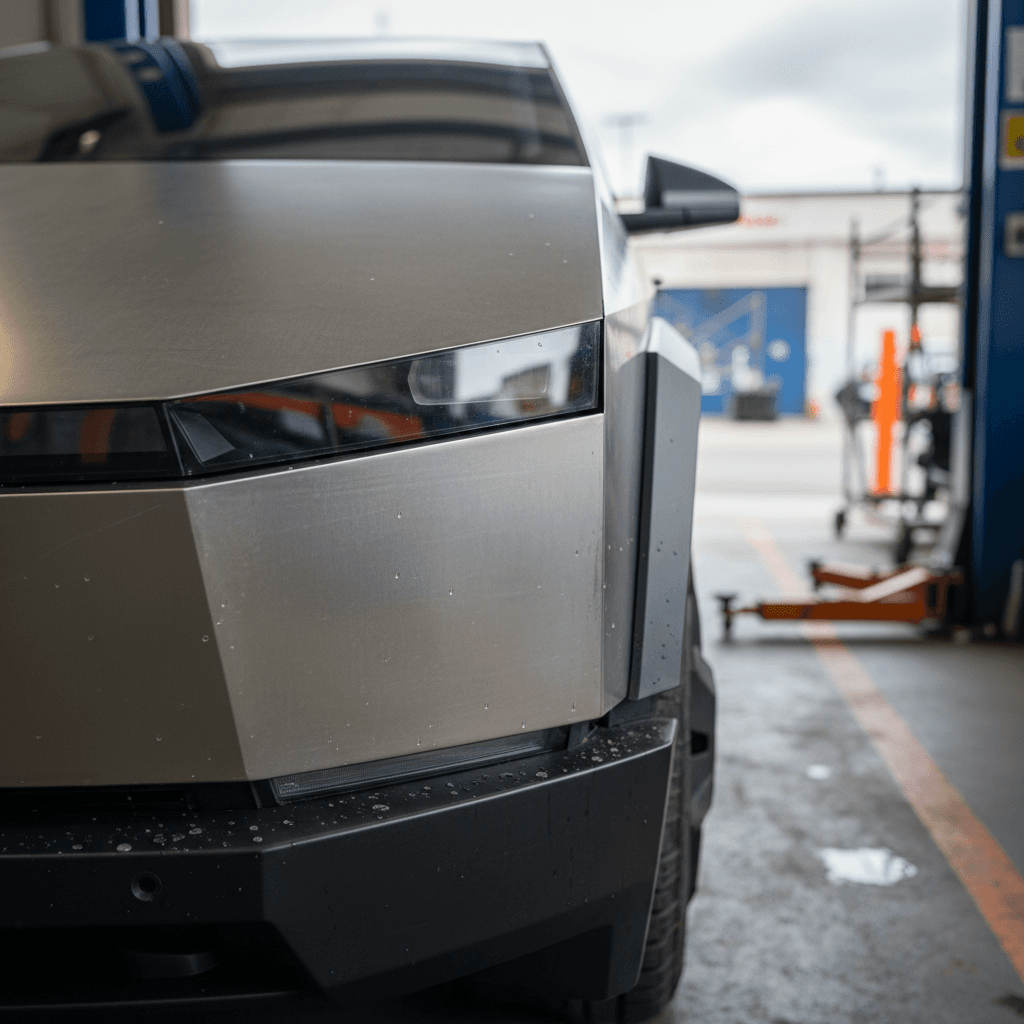
Every brand has teething problems with an all‑new model. With the Cybertruck, those growing pains are happening in public, on social media, and in front of millions of people who already have strong opinions about Tesla. Here are the most common problem areas owners and technicians are calling out so far:
Common 2024–2025 Cybertruck trouble spots
Not every truck has these problems, but they’re the patterns to watch for when you inspect or test‑drive.
Panel gaps & trim
Misaligned stainless panels, uneven gaps around doors and tailgate, and loose exterior trim pieces are frequent complaints. Most qualify as build‑quality defects, not structural failures, but repairs can be time‑consuming.
Wind & road noise
Owners report excessive wind noise at highway speeds and whistles from the unique mirror and A‑pillar shapes. Some trucks improve after seal adjustments; others remain noisier than rival pickups.
Steering feel & vibrations
A subset of trucks exhibit steering shake, vague on‑center feel, or alignment issues, especially on larger wheel/tire combos. These can sometimes be resolved with updated alignment specs and software, but you’ll want to feel it for yourself on a test drive.
Software & sensor quirks
Like other Teslas, the Cybertruck leans hard on software. Owners have logged glitchy cameras, intermittent warnings, and UI freezes, many addressed by updates, but some recurring depending on the software build.
Cold‑weather usability
From wiper performance in slush to door handle behavior in ice, winter owners report a mix of minor annoyances that don’t strand the truck but make it less pleasant to live with in harsh climates.
Battery & charging behavior
There’s not yet strong evidence of accelerated battery degradation, but early owners do report range swings in cold weather and sensitivity to charging habits, similar to other large EV trucks.
Stainless steel: tough, but not magic
Safety and crash-test ratings vs reliability
Reliability and safety aren’t the same thing, but they tend to get discussed together, especially when a vehicle is new and controversial. As of late 2025, the Cybertruck has undergone more structured crash and safety testing, with mixed results:
- Independent safety institutes have tested the Cybertruck and found strong crash protection in some areas but weaknesses in others, including mediocre seat‑belt reminders and headlight performance that contributed to missing top safety awards.
- The truck’s sharp styling and stiff front profile have raised concerns about pedestrian safety and compatibility with smaller vehicles, limiting its approval in some overseas markets.
- From a reliability standpoint, headlights, driver‑assist tech, and sensors sit at the intersection of safety and dependability, issues here generate both complaints and lower safety scores.
What this means for you
What this reliability picture means if you’re buying a Cybertruck
Smart steps if you’re shopping for a Cybertruck
1. Decide if you’re truly an early adopter
Owning a first‑generation, first‑few‑years vehicle, especially one this complex, means living through software revisions, service bulletins, and quirks. If that sounds exhausting, you may be happier waiting a few years or shopping a more mature EV truck.
2. Favor later‑build 2025 trucks when possible
As production matures, automakers typically iron out the worst assembly issues. When you can, choose a truck built after major recall fixes and running the latest hardware revisions rather than an early 2024 build.
3. Pull a full recall & software history
Before you sign, confirm that all <strong>open recalls have been completed</strong> and that the truck is on a current software release. Don’t accept vague assurances, ask to see documentation or screen photos from the vehicle.
4. Inspect body, seals, and glass up close
Panel alignment, door seals, windshield and roof glass, and bed hardware are all areas where early Cybertrucks can fall short. Look for uneven gaps, wind noise on the test drive, and any signs of water intrusion.
5. Test every driver-assist and camera function
Because so many Cybertruck features are software‑driven, spend time using cameras, parking aids, adaptive cruise, and lane‑keeping on your test drive. Glitches here can range from annoying to safety‑critical.
6. Plan for higher‑than‑average hassle
Even if your particular truck is solid, you should assume more <strong>service visits and software dramas</strong> than you’d face with a long‑running, conventional pickup. Build that into your expectations and schedule.
Negotiate with reliability in mind
How a Recharged Score helps with a used Cybertruck
The Cybertruck is exactly the kind of vehicle where a generic “looks clean, drives fine” once‑over isn’t enough. At Recharged, every used EV we list comes with a Recharged Score Report that goes deeper than a traditional inspection, especially important for a complex, software‑heavy truck like this.
What you see in a Recharged Score on a Cybertruck
Designed to take the guesswork out of buying a controversial, high‑tech EV pickup.
Verified battery & charging health
We run diagnostics on pack health, DC fast‑charging history, and charge behavior to spot unusual degradation or abuse. For a heavy EV truck that may have done a lot of towing or fast charging, this is critical.
Structured reliability risk summary
Your report highlights known Cybertruck trouble spots and documents how the specific truck in front of you compares, panel fit, steering feel, software version, and more.
Recall & service verification
We check VINs against recall campaigns and confirm which fixes have been completed. You can see at a glance whether major items like the accelerator and lighting updates are done.
Pricing that reflects reality
Because Recharged specializes in EVs, our pricing bakes in real‑world Cybertruck reliability data, not just auction results. If a truck carries higher risk, that’s reflected in what you pay.
Ready to find your next EV?
Browse VehiclesShop on your terms
FAQ: 2025 Tesla Cybertruck reliability rating
Frequently asked questions about Cybertruck reliability
The bottom line on the 2025 Tesla Cybertruck reliability rating is that it’s a work in progress. The truck is fast, capable, and unlike anything else on the road, but it’s also carrying the baggage of multiple recalls, uneven build quality, and a short track record. If you’re drawn to the Cybertruck’s personality and performance, go in with clear eyes: choose your specific truck carefully, lean on data like a Recharged Score Report, and budget a little extra time and patience for the realities of early‑generation ownership.