If you’re hunting for the best EV deals right now in 2026, you’re shopping at a strange but promising moment. New EV incentives have shifted, lease programs are all over the map, and used EV prices have finally come back to earth, often within about a thousand dollars of comparable gas cars. That chaos can work in your favor if you know where to look.
Key context for April 2026
Why EV deals look different in 2026
EV market snapshot: why deals are better in 2026
Two big shifts shape the best EV deals in 2026. First, the easy federal tax credits on both new and used EVs expired in late 2025, which spooked some shoppers and slowed new‑EV demand. Second, a flood of low‑mileage lease returns from 2022–2024 is hitting dealer lots, giving price‑sensitive buyers a lot more choice. Automakers and lenders are filling the incentive gap with bigger rebates, 0–1.9% APR offers, and discounted leases, especially on models that built up inventory in 2024–2025.
Why this matters to you
Where the best EV deals are right now
Three places value is hiding in 2026
Hint: it’s not just about MSRP anymore
1. One‑ to four‑year‑old used EVs
Many 2022–2024 EVs are coming off lease with:
- Low miles and modern safety tech
- Massive first‑owner depreciation already paid
- Prices now similar to comparable used gas SUVs and sedans
2. Subvented leases on new EVs
Some brands are quietly using lease deals to keep factories humming:
- Low monthly payments on 36‑month terms
- High residual values that tame depreciation
- Often limited to certain regions or trims
3. Low‑APR financing on slow sellers
Instead of rebates, some brands offer:
- 0–1.9% APR for 36–72 months
- Stackable with smaller cash incentives
- Big interest savings over the life of the loan
Don’t chase unicorn ads
Best used EV deals in 2026
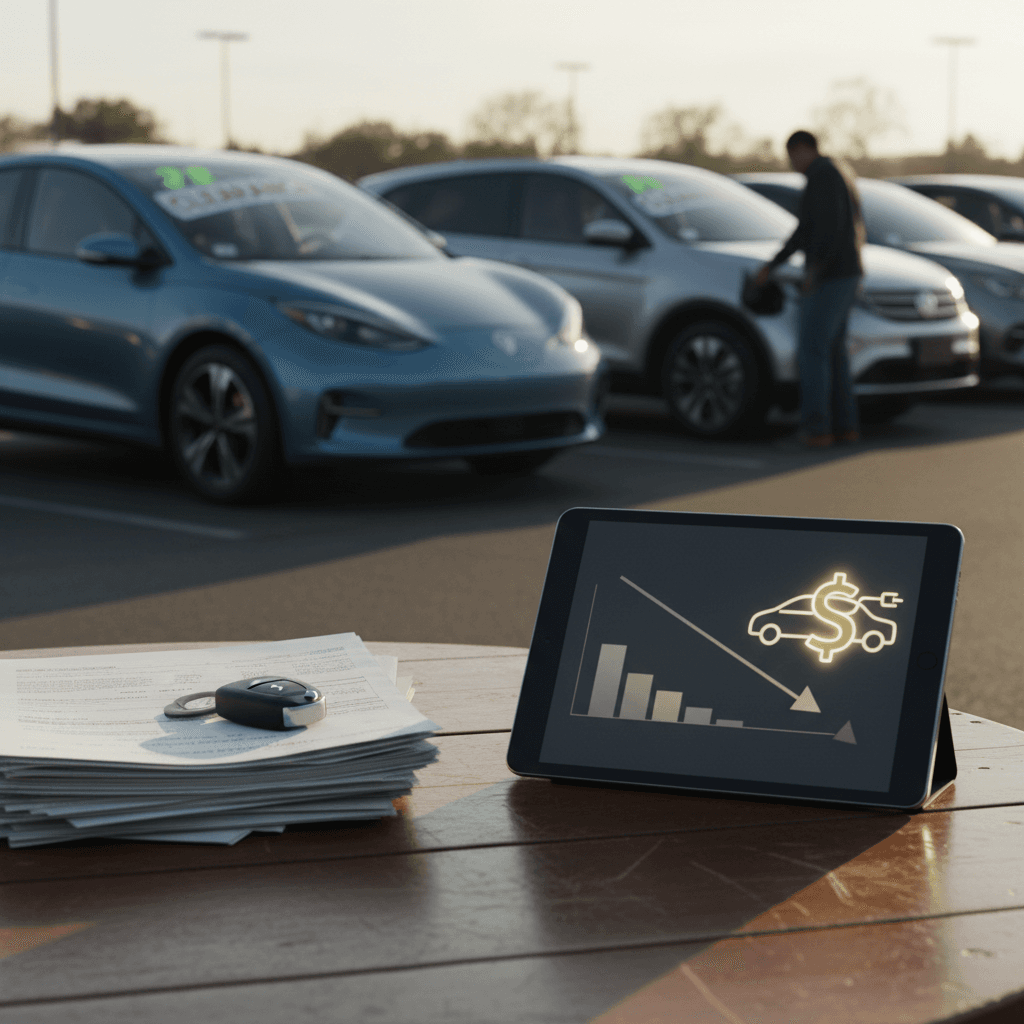
With federal used‑EV tax credits gone after September 30, 2025, the story in early 2026 is simple: pricing has had to do the talking. Data from industry analysts shows used EV prices down dramatically from their 2022 peak and now hovering near parity with gas cars. At the same time, used EV sales jumped more than 30% from 2024 to 2025 and are still climbing in 2026, which suggests shoppers are responding to these lower prices instead of waiting for subsidies to come back.

Used EV segments with especially strong deals in 2026
These categories tend to offer the best mix of price, range, and modern tech on the used market right now.
| Segment | Typical Model Years to Target | Why Deals Are Strong | Watch‑outs |
|---|---|---|---|
| Compact hatchbacks | 2019–2023 | First‑wave cars like Nissan Leaf, Chevy Bolt, and older Kia Niro EVs have taken the steepest depreciation hits. | Shorter range on early models; check battery warranty history carefully. |
| Mainstream crossovers | 2021–2024 | Hyundai Ioniq 5, Kia EV6, VW ID.4, Mustang Mach‑E and others are coming off lease in volume. | Fast‑charging performance and battery health can vary; ask for data, not guesses. |
| Luxury sedans & SUVs | 2020–2023 | Older Tesla Model S/X, Audi e‑tron, and similar models can be thousands below original MSRP. | Higher repair and tire costs; verify options like air suspension and advanced driver assist. |
| Entry Teslas (3/Y) | 2020–2023 | High production volumes and rapid model‑year updates depressed early prices, especially on higher‑mile cars. | Autopilot/FSD configuration and battery health matter more than trim names. |
Examples are illustrative, always compare actual listings in your area.
Why used EVs are often the best deal in 2026
Checklist: spotting a strong used EV deal
Confirm battery health with real data
Ask for a <strong>battery health report</strong>, not just “it feels fine.” At Recharged, every car includes a Recharged Score with verified pack health so you can see how much usable range you’re really buying.
Compare total range to your real driving
Take the battery health estimate, subtract a buffer for cold weather, and ask whether that range comfortably covers your weekly routine. A bargain EV that can’t do your commute without stress isn’t really a deal.
Look for remaining factory battery warranty
Most EVs carry 8‑year/100,000‑mile (or more) battery warranties. A three‑year‑old car with 30,000 miles may still have plenty of coverage left, which dramatically lowers your risk.
Check charging compatibility in your area
Make sure the car’s charging standard (CCS or Tesla’s NACS) lines up with stations you actually have nearby. For CCS cars, confirm there are healthy DC fast chargers on your normal routes.
Run the math vs. gas cars
Compare monthly payment, fuel savings, and likely maintenance costs against a similar gas car. Between cheaper energy and fewer moving parts, the EV often wins even if the sticker price is similar.
Buy from someone who understands EVs
A traditional lot that rarely sells EVs may not inspect batteries or explain charging clearly. An EV‑focused retailer like <strong>Recharged</strong> can walk you through range, battery history, and home charging so you’re not guessing.
Best new EV and lease deals in 2026
The best new EV deals right now tend to show up in two buckets: sticker‑price rebates on models that overshot demand in 2024–2025, and aggressively subsidized leases where the automaker is quietly eating some of the cost to keep monthly payments attractive. April 2026 deal roundups from major shopping sites show four consistent themes: big cash on full‑size electric trucks and SUVs, incentives on premium luxury EVs, targeted deals on mainstream crossovers, and low‑APR offers on models that don’t discount as heavily.
When a new‑EV purchase makes sense
- You plan to keep the car 7–10 years and don’t mind owning it beyond warranty.
- You can qualify for 0–1.9% APR, which shrinks interest costs dramatically.
- You want specific options or trims that rarely show up used (tow packages, max battery, special interiors).
In 2026, large electric trucks and SUVs often carry the fattest rebates, great if you truly need the space and towing, overkill if you don’t.
When a lease is the better "deal"
- You like new tech and would rather upgrade every 3 years.
- You’re unsure about long‑term battery life and want the bank to take the residual‑value risk.
- Your commute fits well inside the mileage cap (usually 10–12k miles/year), or you’re comfortable paying for extra miles up front.
Some 2026 EV leases effectively function as long test drives: low payments, low down, and an easy walk‑away if you decide EVs aren’t for you.
Quick way to compare leases
How to spot a genuinely good EV deal
The anatomy of a strong EV deal in 2026
Five things to check before you sign anything
1. Fair price vs. the market
Compare to multiple listings with similar year, miles, and trim. Tools that track EV pricing trends, and marketplaces like Recharged that benchmark fair value, help you avoid overpaying just because inventory is thin locally.
2. Verified battery health
A beautiful price on a tired battery is a bad deal. Look for measured pack health and recent range tests. Every Recharged vehicle includes a Recharged Score so you can see battery condition in black and white.
3. Financing that doesn’t erase the discount
A 9% loan can swallow thousands of dollars in interest. Favor lower APRs, even if it means a slightly higher sticker, and beware loans that stretch past the battery warranty period.
4. Charging that fits your life
A deal only works if charging does. Verify you can install Level 2 at home or reliably access public chargers that match the car’s connector. Factor in the cost of a home charger or adapters.
5. Real support if things go wrong
EVs are still new territory for many shops. Prioritize sellers that understand EV diagnostics, offer transparent reconditioning, and help you plan charging, this is exactly where Recharged’s EV specialists earn their keep.
6. Honest fees and add‑ons
Scrutinize doc fees, “market adjustments,” and forced add‑ons like paint sealant and etching. A clean, line‑item purchase agreement is a good sign; a busy one full of codes and bundles usually isn’t.
Using financing, trade‑ins, and Recharged to maximize savings
In a year without big federal rebates, the way you structure your deal matters as much as the raw price. The right financing, a well‑handled trade‑in, and a seller who understands used EV values can easily swing the math by several thousand dollars either way.
Smart money moves for EV deals in 2026
Shop your rate before you shop the car
Get pre‑qualified with your bank or credit union and compare it to dealer or online‑retailer offers. Market‑leading APRs in April 2026 are often tied to manufacturer programs, but your own lender might beat them on used EVs.
Right‑size your loan term
Try to keep the loan shorter than the remaining battery warranty. A 72‑ or 84‑month loan can look friendly month‑to‑month but leave you paying big money on a car that’s out of coverage.
Treat your trade‑in as a second transaction
Know what your current car is worth via instant‑offer tools, then compare against dealer and marketplace bids. At <strong>Recharged</strong>, you can get an instant offer or opt for consignment to squeeze more value out of a good EV or gas trade‑in.
Leverage EV‑specific expertise
Traditional lenders still struggle to value EV batteries correctly. Platforms like <strong>Recharged</strong> use battery health diagnostics and EV‑specific pricing data to avoid under‑ or over‑valuing a car just because it’s electric.
Consider total ownership cost, not just payment
An EV with a slightly higher payment but dramatically lower fuel and maintenance costs can be the better deal over five years. Use simple spreadsheets or online calculators to see the full picture.
How Recharged fits into the picture
Best EV deal strategies by buyer type
Pick the EV deal playbook that matches your life
Payment‑focused commuters
Target 2‑ to 4‑year‑old compact EVs or crossovers, these have already taken the steepest depreciation hit.
Prioritize low APR over the very lowest price; a cheaper car with a high interest rate can cost more overall.
Look for cars with enough range for your weekly routine plus 30–40% buffer so you’re not DC‑fast‑charging constantly.
Road‑trip families
Shop used crossovers with proven DC fast‑charging performance, not just big battery numbers on paper.
Consider a subsidized lease on a new family EV with strong charging network support if you travel often.
Verify roof‑rack, towing, and cargo needs are met so you’re not replacing the car early.
Tech‑curious first‑timers
Look for lease deals that minimize cash up front and let you walk away after 3 years.
Stick to mainstream models with plenty of service options and active software support.
If you buy used, buy from an EV‑savvy seller who can demystify charging and battery health in plain English.
Value hunters and second‑car shoppers
Hunt for older but healthy EVs to use as a low‑cost commuter or around‑town runabout.
Don’t overpay for giant range you’ll never use; short‑range EVs can be steals if they fit your life.
Check that your home electrical panel can support a simple Level 2 charger without a massive upgrade bill.
Common pitfalls that quietly ruin EV deals
- Judging a used EV solely by mileage instead of battery health and charging history.
- Assuming any EV will work with any fast charger, connector standards and networks still matter in 2026.
- Ignoring home‑charging costs, including panel upgrades or long cable runs to the garage or driveway.
- Stretching loan terms far beyond warranty coverage just to “make the payment work.”
- Letting a dealer fold negative equity from your current car into the new EV without a clear, written breakdown.
- Buying from a seller that can’t answer basic questions about range, degradation, or charging behavior.
Deal‑killer red flags
FAQ: Best EV deals right now in 2026
Frequently asked questions about 2026 EV deals
Bottom line: What’s the best EV deal right now?
In 2026, the best EV deals right now are rarely the loudest ads or the lowest headline prices. They’re the quiet, well‑sorted used EVs, often two to four years old, with healthy batteries, honest pricing, and sensible financing. For some shoppers, a heavily subsidized lease or a 0% APR offer on a new EV will be the right play, but only if the total cost and terms make sense over the life of the deal.
Your job is to ignore the noise and focus on five things: fair market pricing, verified battery health, realistic charging plans, clean financing, and a seller who treats EVs as more than just cars with cords. That’s exactly the gap companies like Recharged aim to fill, combining used‑EV expertise, transparent diagnostics, financing, trade‑in support, and nationwide delivery into one experience. Do that, and 2026 stops looking like a confusing transition year and starts looking like the moment you finally get into the right EV, on your terms and at the right price.