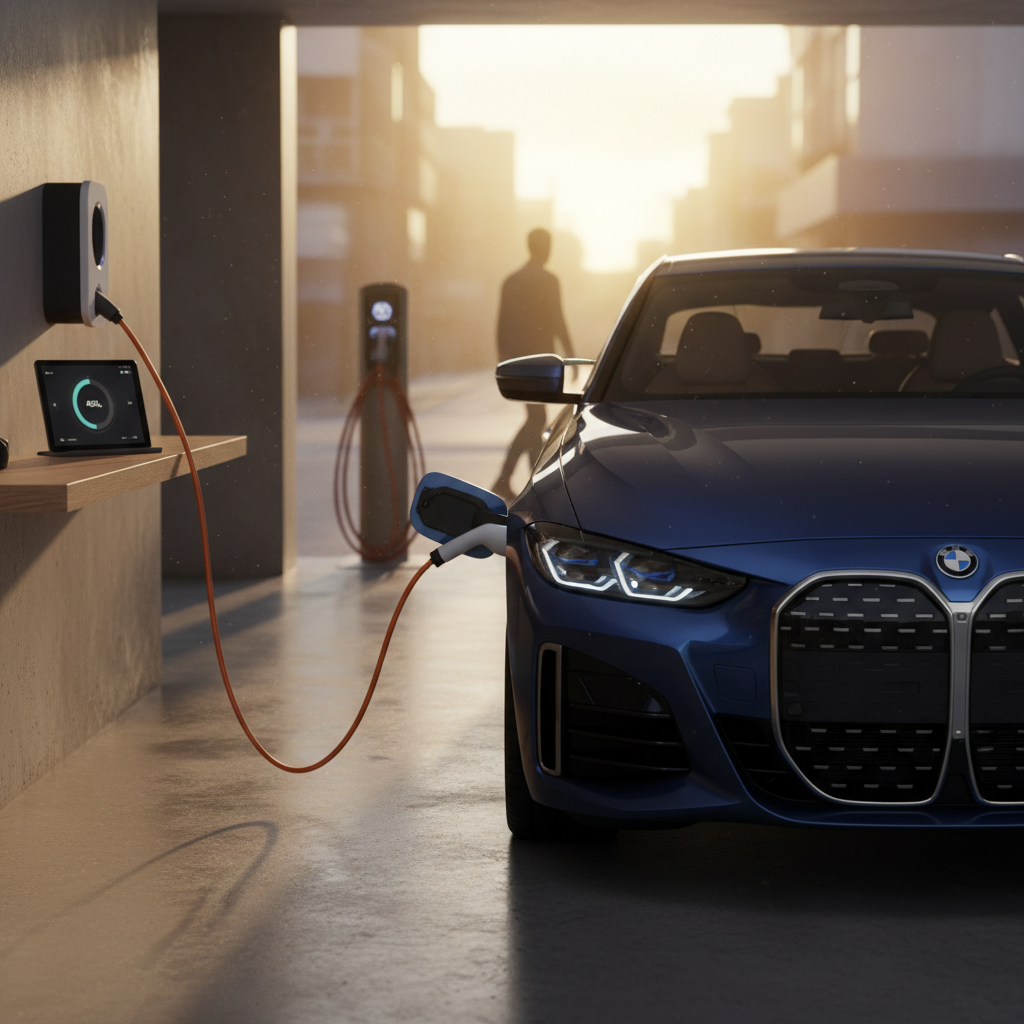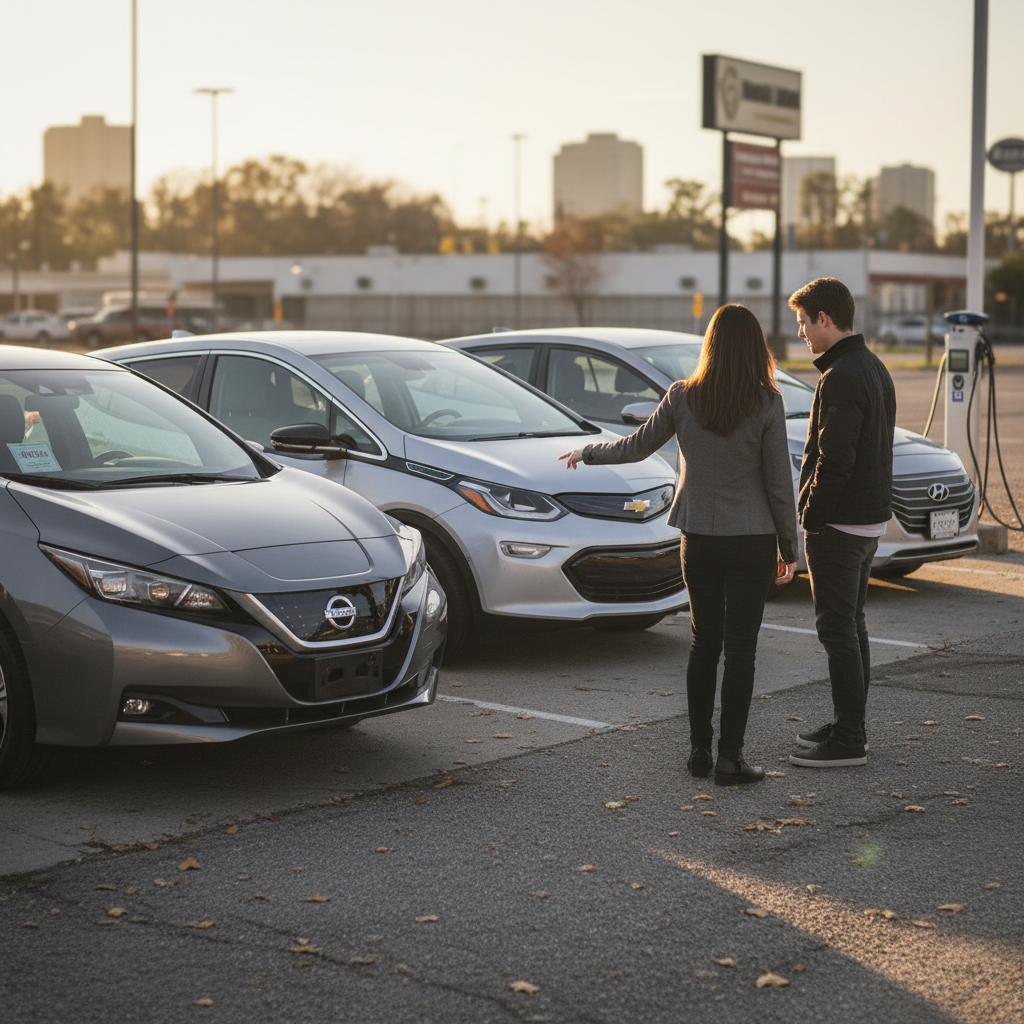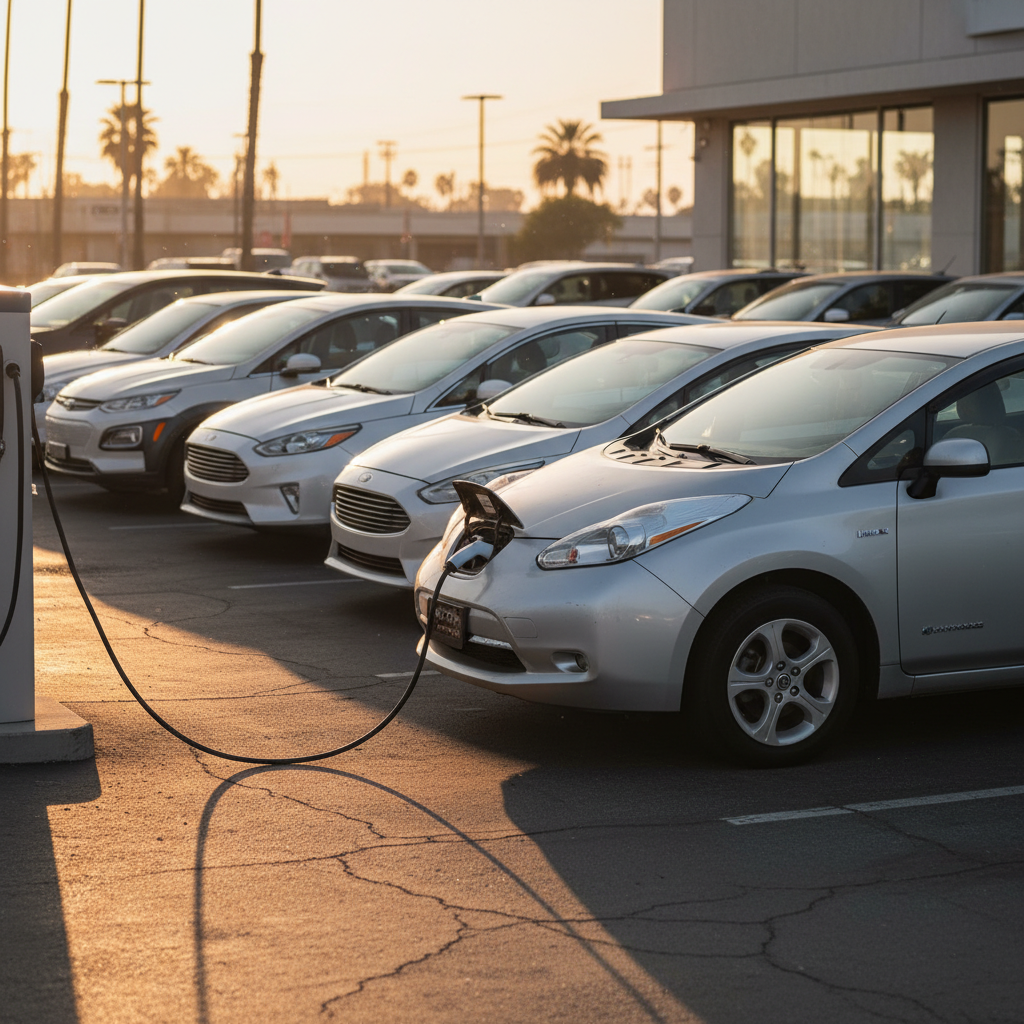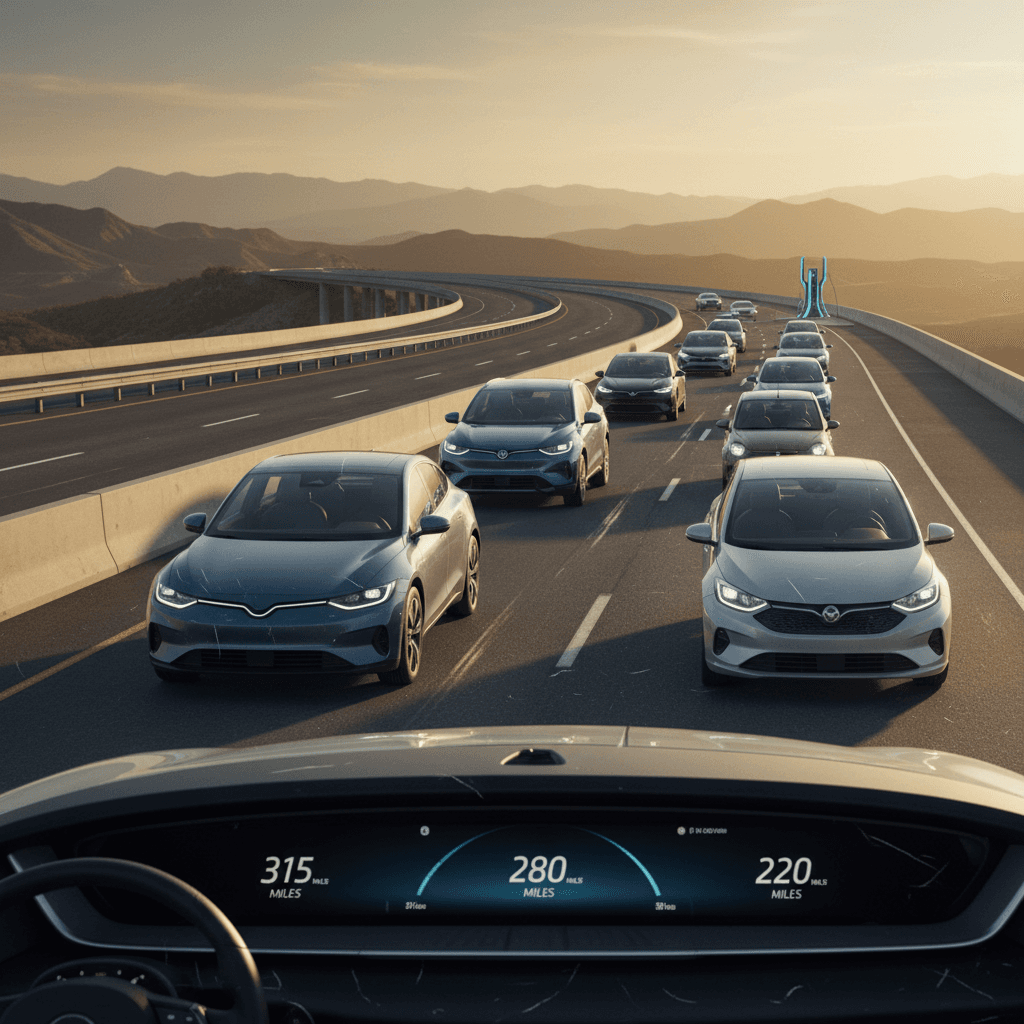
If you’re shopping for an electric vehicle, it’s tempting to chase the best EV car range number you can find. In 2025, some new EVs claim 500+ miles on a charge, more than many gas cars. But for most drivers, the smartest move isn’t buying the range king. It’s matching your actual daily driving and road-trip habits with the right battery size, at the right price, new or used.
Quick takeaway
How much EV range do you really need?
Start with how you actually drive today. The average American covers well under 50 miles a day, and even many long commuters stay below 70. That means an EV with 260–300 miles of rated range will usually go several days between charges if you’re plugging in at home or work. Range only becomes critical when you can’t charge where you park, or you take frequent long road trips.
- Daily commute under 40 miles round-trip → 230+ miles of range is usually plenty.
- Daily commute 40–70 miles with occasional errands → aim for 260–300 miles.
- Frequent interstate travel or remote, rural driving → 320–400+ miles of range can reduce charging stops.
- Apartment living with limited charging → prioritize longer range and strong DC fast-charging speeds.
Think in charging sessions, not tank size
Longest-range EVs in 2025 at a glance
If you’re curious about the absolute leaders, several 2025 models push range into territory that would have looked unrealistic just a few years ago. Here’s a simplified snapshot of some of the best EV car range figures on the U.S. market right now.
Top long-range EVs in 2025 (selected models)
EPA-rated maximum ranges and approximate starting MSRPs for notable long-range EVs currently on sale in the U.S. market. Figures rounded for simplicity and may vary by trim.
| Model | Type | Approx. Max EPA Range (mi) | Approx. Starting MSRP |
|---|---|---|---|
| Lucid Air (Grand Touring) | Luxury sedan | ≈512 | Low $70Ks and up, depending on trim |
| Tesla Model S Long Range | Luxury sedan | ≈405–410 | Low $80Ks |
| Mercedes-Benz EQS 450+ | Luxury sedan | ≈390 | Low $100Ks |
| Hyundai Ioniq 6 Long Range RWD | Midsize sedan | ≈342 | High $30Ks |
| Tesla Model 3 Long Range | Compact sedan | ≈340–360 | High $40Ks |
| Rivian R1T Max Pack | Pickup | ≈400+ | High $80Ks |
| Rivian R1S Max Pack | SUV | ≈400+ | High $70Ks |
| Chevrolet Blazer EV RS RWD | Midsize SUV | ≈334 | Mid $40Ks |
| Kia EV6 Long Range RWD | Crossover | ≈310 | Mid $40Ks |
| 2026 Nissan Leaf (redesigned) | Compact hatch | ≈303 | Under $30K (2026 model year) |
Always check the specific trim and wheel size, small configuration changes can move the official range rating up or down.
Numbers move fast
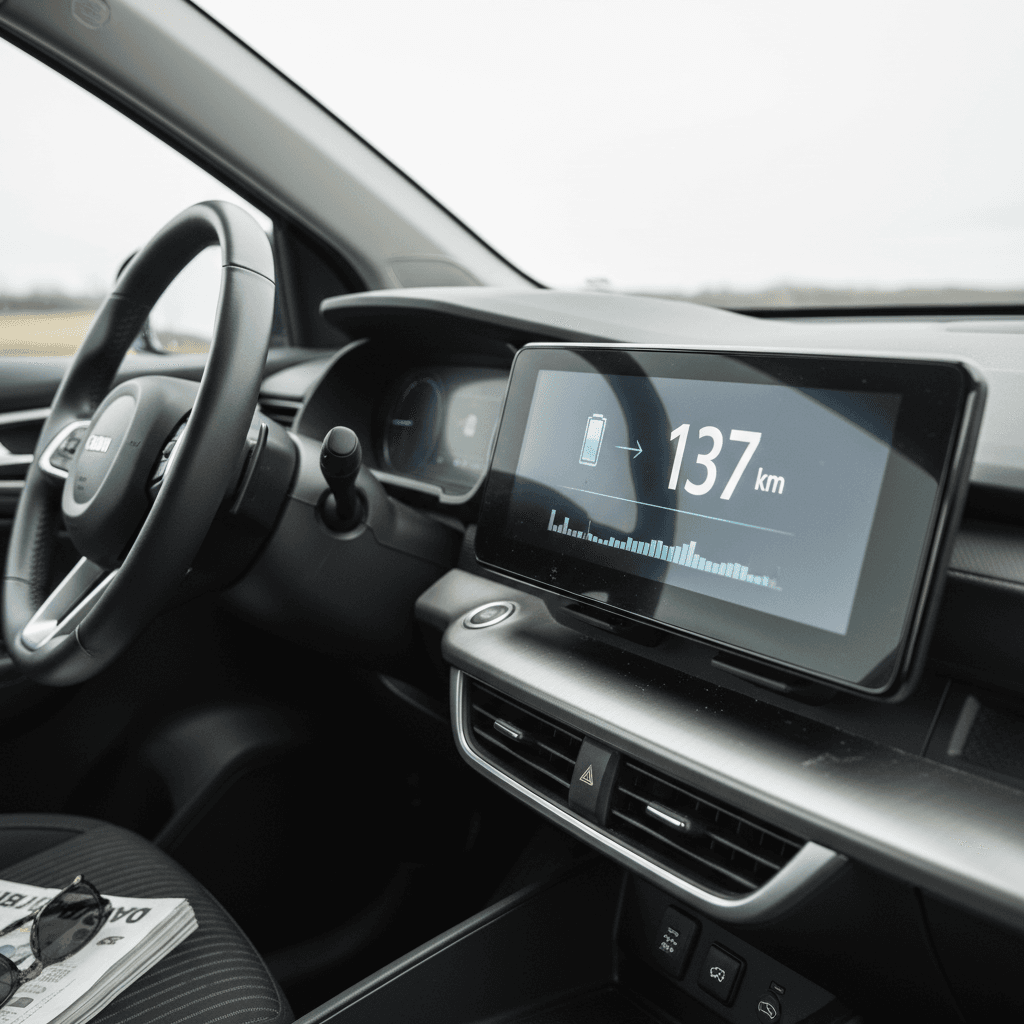
Best EV car range by vehicle type
Standout long-range EVs by segment
From luxury sedans to family crossovers, here are models that balance range, capability, and price in 2025.
Luxury sedans: Lucid Air, Tesla Model S, Mercedes EQS
If you want the absolute best EV car range, this is where it lives. The Lucid Air Grand Touring tops 500 miles on paper, while the Tesla Model S Long Range and Mercedes EQS 450+ live in the high-300s.
These cars are expensive, but they deliver serious long-haul comfort plus rapid DC fast-charging.
Mainstream sedans: Hyundai Ioniq 6, Tesla Model 3
For many buyers, the sweet spot is a sedan like the Hyundai Ioniq 6 or Tesla Model 3 Long Range, both around 340 miles of range with competitive pricing.
You still get strong road-trip ability without six-figure price tags.
Crossovers & SUVs: Rivian, Model Y, Blazer EV
Need space and cargo? Rivian’s R1S, Tesla’s Model Y Long Range, and GM’s Blazer EV deliver around 330–400 miles depending on spec.
Aerodynamics work against SUVs, so their range numbers are impressive considering the size and capability.
Daily-driver sweet spot
For commuting, school runs, and weekend errands, a 260–320-mile EV is usually ideal. You can charge overnight at home, wake up to a “full tank,” and rarely think about public chargers.
Popular options in this band include many trims of the Tesla Model Y, Hyundai Ioniq 5, Kia EV6, and a growing list of compact crossovers and hatchbacks.
Road-trip and towing duty
If you plan regular interstate road trips, tow a camper, or drive in remote areas with sparse charging, more range pays off. Look for 320–400+ miles of EPA range and strong DC fast-charging (150 kW and up).
That points you toward larger packs in vehicles like the Rivian R1T/R1S, long-range trims of Tesla models, or future 800-volt SUVs designed for fast charging and long hauls.
Real-world vs EPA range: what you can actually expect
EPA range is a standardized lab test, meant to give you a level playing field when comparing models. It is not a guarantee. Real-world range depends heavily on speed, temperature, elevation, wheel size, and how hard you drive.
- Highway speeds above 70 mph can trim range by 10–25% compared with mixed driving.
- Cold weather, especially below freezing, can temporarily cut usable range by 20–30% or more.
- Big wheels and performance tires look great but usually shave off miles versus base wheels.
- Roof racks, cargo boxes, bikes and heavy loads all increase drag and reduce efficiency.
- Fast charging back-to-back on a road trip can heat the battery and slightly change efficiency.
Cold-weather reality check
How much range do EV drivers really need?
Best EV range for used buyers: smart picks
New models grab headlines, but the best value in EV range often lives in the used market. Many 2018–2023 cars launched with 240–330 miles of EPA-rated range and have seen only modest degradation when properly cared for.
Used EVs that still offer strong range
Examples of models that commonly deliver 230+ miles of real-world range on the used market when their batteries are healthy.
Tesla Model 3 Long Range (2018–2023)
- Originally rated around 310–358 miles depending on year and wheels.
- Well-kept examples still offer robust highway range with access to Superchargers.
- Often priced far below a new 2025 Model 3 Long Range, especially with higher mileage.
Hyundai Kona Electric & Kia Niro EV
- Subcompact crossovers with EPA ranges around 258–293 miles when new.
- Efficient in city and suburban driving; good choice for commuters.
- Often overlooked, which can translate into attractive used pricing.
Hyundai Ioniq 5 / Kia EV6 (early years)
- Modern 800-volt platforms with strong DC fast-charging and 250–310 miles of range.
- Great fit if you want both decent range and extremely quick road-trip charging.
Chevrolet Bolt EUV & Bolt EV (later years)
- EPA range around 247–259 miles on many trims.
- Compact footprint but useful space and very competitive pricing in the used market.
Where Recharged fits in
Ready to find your next EV?
Browse VehiclesHow battery health affects range over time
Lithium-ion batteries do degrade, but for most modern EVs the curve is gentler than early skeptics feared. Many high-mileage Teslas and other EVs still retain 85–90% of their original capacity after well over 100,000 miles. That’s the difference between, say, 310 miles and 270–280 miles of real-world range.
- A healthy used EV might lose about 5–10% of range in the first few years, then decline more slowly.
- Heat is harder on batteries than cold in the long term, desert climates can accelerate degradation.
- Frequent DC fast-charging adds stress but is less of a concern in newer packs designed for it.
- Software updates from automakers sometimes unlock small efficiency or usable-capacity gains.
How to gauge real-world range on a used EV
Range vs. price: finding your sweet spot
Range feels like peace of mind, but every extra kWh of battery capacity adds cost, weight, and complexity. The most expensive EVs on the market today are almost always the ones with the biggest batteries. Your job as a shopper is to decide how much of that you’ll actually use.
Range bands and what they usually mean for your budget
General guidance for how range bands correlate with pricing and use cases in 2025. There are exceptions in every category.
| EPA Range Band | Typical Use Case | Typical New-Price Tier | Used-Market Opportunity |
|---|---|---|---|
| 200–240 miles | Urban drivers, short commutes, second cars | Entry-level pricing, often smaller packs | Strong value; consider if you have home charging. |
| 240–280 miles | Most commuters and small families | Mainstream EV sweet spot | Plenty of 2–4-year-old models with modest degradation. |
| 280–330 miles | Frequent highway trips, single-car households | Mid-tier and higher trims | Lightly used vehicles can be a bargain vs. new. |
| 330–400+ miles | Road-warriors, towing, rural drivers | Premium territory; large batteries and high MSRPs | Used examples deprecate quickly, sometimes offering luxury for less. |
Use this as a starting point, then compare specific models and trims that fit your budget.
When to pay up for more range
- You often drive long distances where charging is sparse.
- You tow regularly and want to reduce charging stops.
- Your household has only one vehicle and it needs to do everything.
- You live in a cold climate and rely heavily on highway driving.
When to save money on smaller packs
- You have reliable home or workplace charging.
- Your daily driving stays under 50–70 miles.
- You’re adding an EV as a second or third car.
- You’d rather spend budget on features, safety, or a newer model year than maximum range.
Used EV advantage
Checklist: choosing the right EV range for you
9-step checklist for dialing in your ideal EV range
1. Map your real daily miles
Track a typical week of driving with a phone app or your current car’s trip computer. Use the highest day, not just the average, as your starting point.
2. Decide where you’ll charge most
Home garage, driveway, workplace, on-street only? Reliable home or work charging makes slightly lower range far more practical.
3. Consider your worst-case days
Think about winter commutes, airport runs, kid activities, and late-night detours. Add a buffer for those days, not just the easy ones.
4. Think about road-trip style
Are you a non-stop, 500-mile-per-day driver, or do you like a break every 2–3 hours? Your tolerance for charging stops matters as much as range.
5. Factor in climate
Cold climates justify more range; hot climates require more attention to battery cooling and degradation history on used cars.
6. Look at charging networks
Check the density of fast chargers (including access to Tesla Superchargers) along your regular routes. More chargers can offset slightly less range.
7. Set a realistic budget
Decide your ceiling for the total purchase, then see what range bands are available new vs. used at that price point.
8. Compare new vs. used range
A lightly used long-range EV might deliver similar real-world range to a brand-new, slightly smaller-pack model, at a lower price.
9. Get the battery checked
For used EVs, demand independent or third-party battery health data. Recharged’s Score Report is one example of how to see degradation before you sign anything.
FAQ: best EV car range in 2025
Frequently asked questions about EV range
Bottom line: focus on the right range, not the biggest number
The best EV car range in 2025 isn’t just the biggest number on a spec sheet. It’s the range that matches your daily miles, charging options, climate, and budget, without making you pay for capacity you’ll rarely use. Ultra-long-range EVs like the Lucid Air reset expectations for what’s possible, but for most buyers, a well-priced EV in the 260–320 mile band delivers a better mix of cost, comfort, and convenience.
If you’re considering a used EV, tools like the Recharged Score Report put real battery health and pricing in black and white, so you can shop by usable range instead of guesswork. Whether you’re hunting for a high-mileage commuter or a long-distance road-trip machine, dialing in the right range band is the first step toward confident, stress-free electric driving.