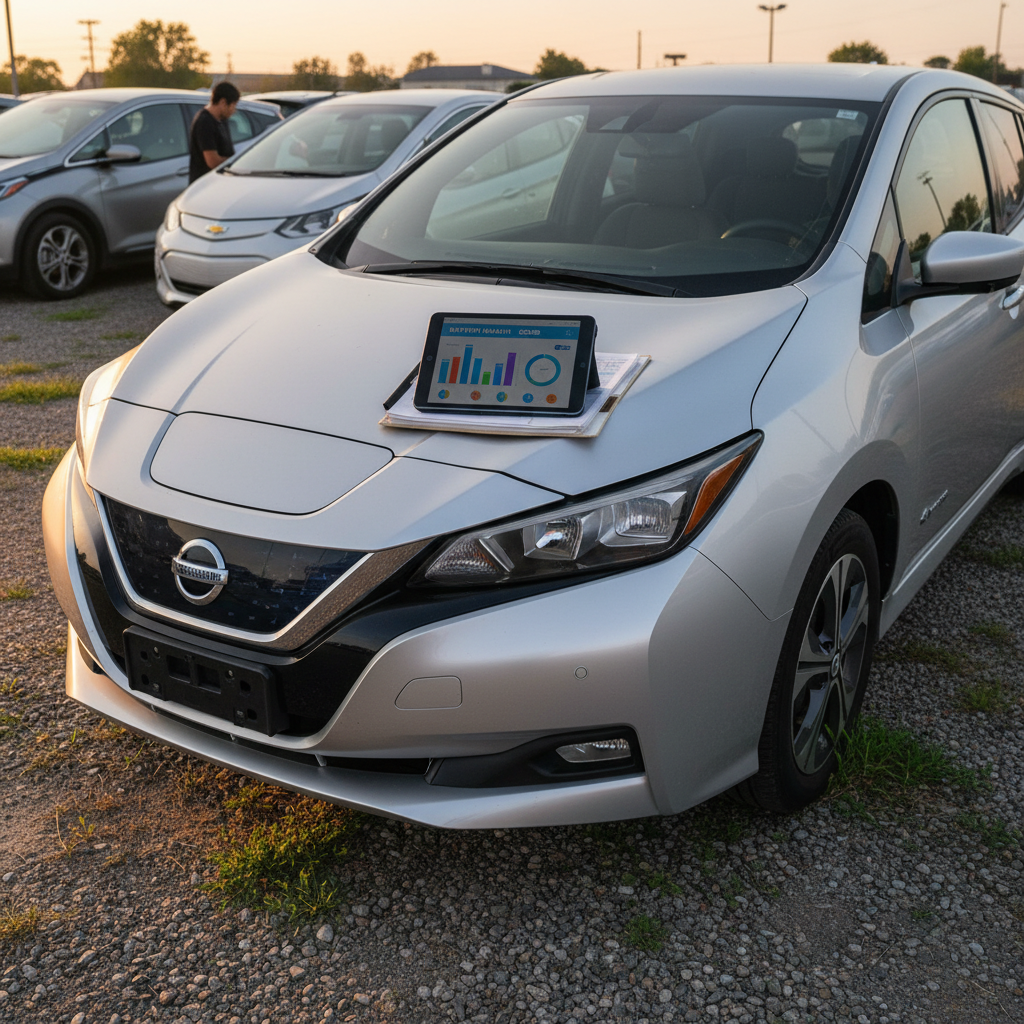
When people search for the best EV battery life, they usually mean two things: an electric car that goes far on a charge today, and a battery that will still feel healthy many years and miles from now. Those two ideas are related, but not the same. If you’re choosing your first EV or shopping used, understanding that difference will save you money and stress.
Two sides of “battery life”
What Does “Best EV Battery Life” Really Mean?
1. Range per charge
This is the headline number you see in ads, "up to 405 miles of range" and so on. It’s usually based on EPA-estimated range for U.S. vehicles. In 2025, the longest‑range EVs like the Lucid Air Grand Touring and Tesla Model S Long Range can exceed 400 miles on a single charge in ideal conditions.
2. Battery longevity
Longevity is about how much capacity the battery retains after years of charging, driving, and weather. Most modern EVs lose capacity slowly, often around 2–3% per year on average in real‑world studies, so a 250‑mile car when new might still deliver well over 200 miles after a decade if it’s been cared for.
If you mostly drive 40–60 miles a day, you may not need a 400‑mile range monster. You might be better off with a slightly shorter‑range EV whose chemistry and thermal management are known to age gracefully, especially if you’re buying used. That’s where understanding both sides of battery life really pays off.
EV Battery Life by the Numbers
Longest-Range EVs in 2025: Top Contenders
If maximum range per charge is your top priority, here are some of the best‑ranging EVs you can buy new in 2025. Numbers below focus on EPA‑estimated range for U.S. models, which is the fairest apples‑to‑apples comparison for most shoppers.
2025 EVs With the Best Rated Range
Representative long‑range trims with standout EPA‑rated range. Exact range and pricing can vary by wheel size, options, and region.
| Model (2025) | Max EPA Range (mi) | Battery Size (approx.) | Vehicle Type | Notable Strength |
|---|---|---|---|---|
| Lucid Air Grand Touring | 512 | ~112 kWh | Luxury sedan | Class‑leading range and fast DC charging |
| Chevrolet Silverado EV WT | ≈493 | >200 kWh | Full‑size pickup | Huge battery for towing and long highway hauls |
| Tesla Model S Long Range | ≈405–430 | ~100 kWh | Luxury sedan | Proven long‑range platform and Supercharger access |
| Mercedes‑Benz EQS 450+ | ≈390 | ~108 kWh | Luxury sedan | Efficient aero and comfortable highway cruiser |
| Hyundai Ioniq 6 Long Range RWD | 342 | 77.4 kWh | Midsize sedan | Excellent efficiency and value pricing |
| Tesla Model 3 Long Range | 363 | 82 kWh | Compact sedan | Strong range in a practical, affordable package |
Flagship long‑range EVs offer 390–512 miles of EPA‑rated range in 2025, but they’re not the only smart choices for real‑world battery life.
Don’t over‑buy range
EVs That Age Well: Battery Longevity on the Used Market
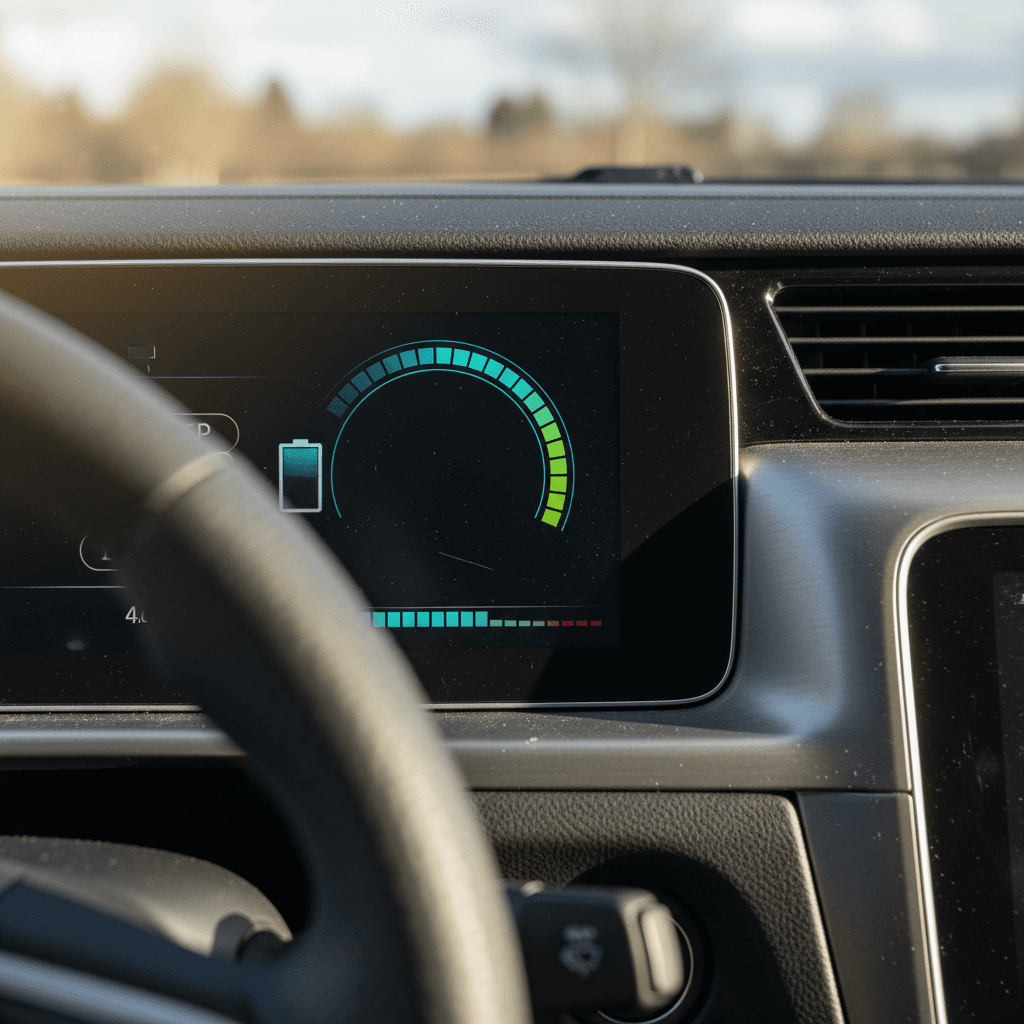
Range specs tell you how a battery performs when new. But if you’re eyeing a used EV, you care just as much about how the pack holds up after years of commuting and quick charges. Some brands and models have built strong reputations for slow, predictable degradation.
Models Known for Solid Long-Term Battery Health
If you’re shopping used, these nameplates are often safe bets, assuming each individual car checks out.
Tesla Model 3 & Model Y
Huge U.S. fleet, mature battery management, and robust thermal control. Many owners report relatively modest degradation even beyond 100,000 miles, especially on Long Range trims.
Hyundai Ioniq 5 & Ioniq 6
Hyundai’s 800‑volt platform is efficient and gentle on packs. Long warranties and strong DC‑fast‑charging performance make them appealing long‑term bets.
Kia EV6
Shares a platform with Ioniq 5/6, with similarly good thermal management. Real‑world reports show healthy capacity even after heavy road‑trip use.
Chevy Bolt EUV (late‑build)
Post‑battery‑replacement Bolts effectively have newer packs; many drivers are seeing slow degradation and strong value on the used market.
Tesla Model S/X (newer packs)
Later‑generation packs are performing better than early 2010s cars. Look for vehicles with clean service histories and moderate fast‑charging use.
Nissan Ariya
Unlike early Leaf models, Ariya uses liquid cooling and modern battery controls, which should help its packs age far better over time.
Older EVs with limited thermal management
This is where a data‑driven inspection matters. At Recharged, every used EV we list includes a Recharged Score Report that looks at battery health, real‑world range, and historical charging behavior, so you’re not guessing about how the previous owner treated the pack.
What Actually Affects EV Battery Life?
- Time at very high or very low state of charge (SoC) – Parking at 100% for days or letting the pack sit near 0% is harder on cells than hovering in the middle, say 20–80%.
- Extreme temperatures – Hot climates accelerate chemical aging. Good liquid cooling and preconditioning help, but shaded parking and garages still matter.
- Frequent DC fast charging – Occasional quick charges are fine, but using high‑power fast charging as your daily routine can increase wear compared with slower Level 2 charging.
- Aggressive driving – Hard acceleration and high speeds use more current and generate heat, which can add stress over many years.
- Battery chemistry and cooling design – Some packs are simply engineered to be more robust. That’s why model‑specific data is so valuable when you buy used.
Why temperature matters so much
How to Check Battery Health on a Used EV
When you’re evaluating a used EV, you’re really buying two things: the car you can see, and a battery pack you can’t. Fortunately, there are practical ways to peek behind the curtain before you sign anything.
Used EV Battery Health Checklist
1. Look for a battery report, not just a Carfax
A clean accident report doesn’t tell you how the battery is doing. Ask for a recent battery health report from a diagnostic tool or dealer, or look for vehicles that include an independent score, like the Recharged Score Report on every EV sold through Recharged.
2. Compare displayed range to original EPA rating
Fully charge the car and note the indicated range. Compare it to the EPA rating for that trim when new. A modest drop is normal; a huge gap can be a red flag that deserves further investigation.
3. Check for software or battery recalls
Make sure all battery‑related recalls and software updates have been done. These can improve longevity, safety, and even usable capacity in some cases.
4. Review charging history if available
Some tools and services can infer how often the car used DC fast charging versus home Level 2. A mix is perfectly normal, just be wary of a car that lived its entire life on highway fast chargers.
5. Inspect for physical damage
Look under the car (or have a shop do it) for signs of damage to the battery enclosure from curbs or debris. Even if range looks good today, structural damage can be a safety concern.
6. Take a real‑world test drive
Drive a familiar loop at typical speeds and note energy use (mi/kWh or kWh/100 mi). Compare it to other owners’ reports for the same model. Big outliers could indicate tire issues, alignment problems, or battery health concerns.
How Recharged simplifies this
Recharged data
Used EV battery health
94%
avg remaining capacity
From Recharged battery inspections, not manufacturer estimates.
- Lowest
- 70%
- Median
- 95%
- Highest
- 100%
- Est. range
- 266 mi avg
- Cell balance pass
- 100%
- Quick charges
- 18 avg
- Slow charges
- 61 avg
Average cell imbalance: 7.8 mV
Based on vehicles Recharged tested as of Jul 23, 2026
Recharged data
Recent EV sold prices
$25,997
median sold price
What buyers actually paid through Recharged, not list price.
- Lowest
- $4,527
- Average
- $28,433
- Highest
- $129,998
Monthly median sold price
Based on Recharged sales in the last 12 months as of Jul 23, 2026
Ready to find your next EV?
Browse VehiclesWarranty and Lifespan: How Long EV Batteries Really Last
Modern EV batteries are engineered to outlast the rest of the car in typical use. To de‑risk things further, automakers back them with long warranties that give you a clear floor for what “acceptable” battery life means.
Typical EV Battery Warranty Terms (U.S.)
Representative warranty structures; always confirm details for the specific model year you’re considering.
| Brand (example) | Years / Miles | Capacity Guarantee | Notes |
|---|---|---|---|
| Tesla | 8 yrs / 100k–150k mi (model dependent) | Often ~70% capacity | Different terms by model and pack size |
| Hyundai / Kia | 10 yrs / 100k mi | Typically around 70% | Among the longest battery warranties in the market |
| GM (Chevy Bolt, Silverado EV, etc.) | 8 yrs / 100k mi | ~60–70% in many cases | Check specific model documentation |
| Ford (Mach‑E, F‑150 Lightning) | 8 yrs / 100k mi | Around 70% | Covers defects and capacity loss beyond threshold |
| Volkswagen (ID.4, etc.) | 8 yrs / 100k mi | 70% | Standard across many recent VW EVs |
Most major brands warranty their EV batteries for at least 8 years and around 100,000 miles, often with a minimum capacity guarantee.
Warranty ≠ expiration date
Range vs. Battery Health: Which Matters More?
When range is king
- You routinely drive long distances or road‑trip several times a year.
- Your home or workplace charging is limited, so you want fewer plug‑ins.
- You live in a cold climate, where winter can temporarily trim range by 20% or more.
In these cases, flagship long‑range models, or mid‑range EVs with 300+ miles of rated range, offer valuable breathing room.
When battery health should drive the decision
- You’re buying a used EV that’s already several years old.
- Your daily driving is modest, but you want the car to feel “healthy” for a decade or more.
- You’re budget‑focused and want to avoid surprise range loss or pack repairs later.
Here, a well‑cared‑for 250–300‑mile car with slow degradation can easily beat a neglected 350‑mile car in real‑world satisfaction.
A simple rule of thumb
Best Practices to Make Any EV Battery Last Longer
Everyday Habits for Maximum EV Battery Life
1. Live in the 20–80% zone when you can
For daily driving, there’s rarely a need to charge to 100%. Set your charge limit to 70–80% for routine use and only top off to 90–100% right before longer trips.
2. Prefer Level 2 charging over daily fast charging
DC fast charging is great when you need it, but slower Level 2 charging is gentler on the pack. Think of it like jogging vs. sprinting all the time.
3. Precondition in hot and cold weather
Use your car’s preconditioning features so the battery (and cabin) are at a comfortable temperature before driving. This improves efficiency and reduces stress on cells.
4. Park in shade or indoors when possible
High heat is battery enemy number one. A garage or shaded spot can make a surprising difference over many years of ownership.
5. Keep software up to date
Automakers routinely refine thermal management, charging curves, and range estimates via over‑the‑air updates or dealer visits. Staying current can improve longevity and charging behavior.
6. Watch your tires and alignment
Under‑inflated tires or poor alignment make the battery work harder for every mile. Proper maintenance helps preserve both range today and your sense of battery “health” over time.
Small habits, big payoff
FAQ: Best EV Battery Life
Frequently Asked Questions About EV Battery Life
Bottom Line: Choosing an EV with Great Battery Life
The best EV battery life isn’t just about chasing the highest range number on a spec sheet. It’s about choosing a car whose battery fits your lifestyle today and ages gracefully for years to come. For some drivers, that means a 400‑mile luxury sedan. For many others, it means a well‑priced EV with 250–300 miles of range and a proven track record of slow, predictable degradation.
If you’re shopping used, insist on objective battery data, not just a quick test drive. And if you want that work done for you, consider browsing the used EVs on Recharged, where every vehicle includes a Recharged Score battery health report, EV‑specialist guidance, financing options, and even nationwide delivery. With the right information, and the right partner, finding an electric car with truly great battery life becomes a lot simpler.