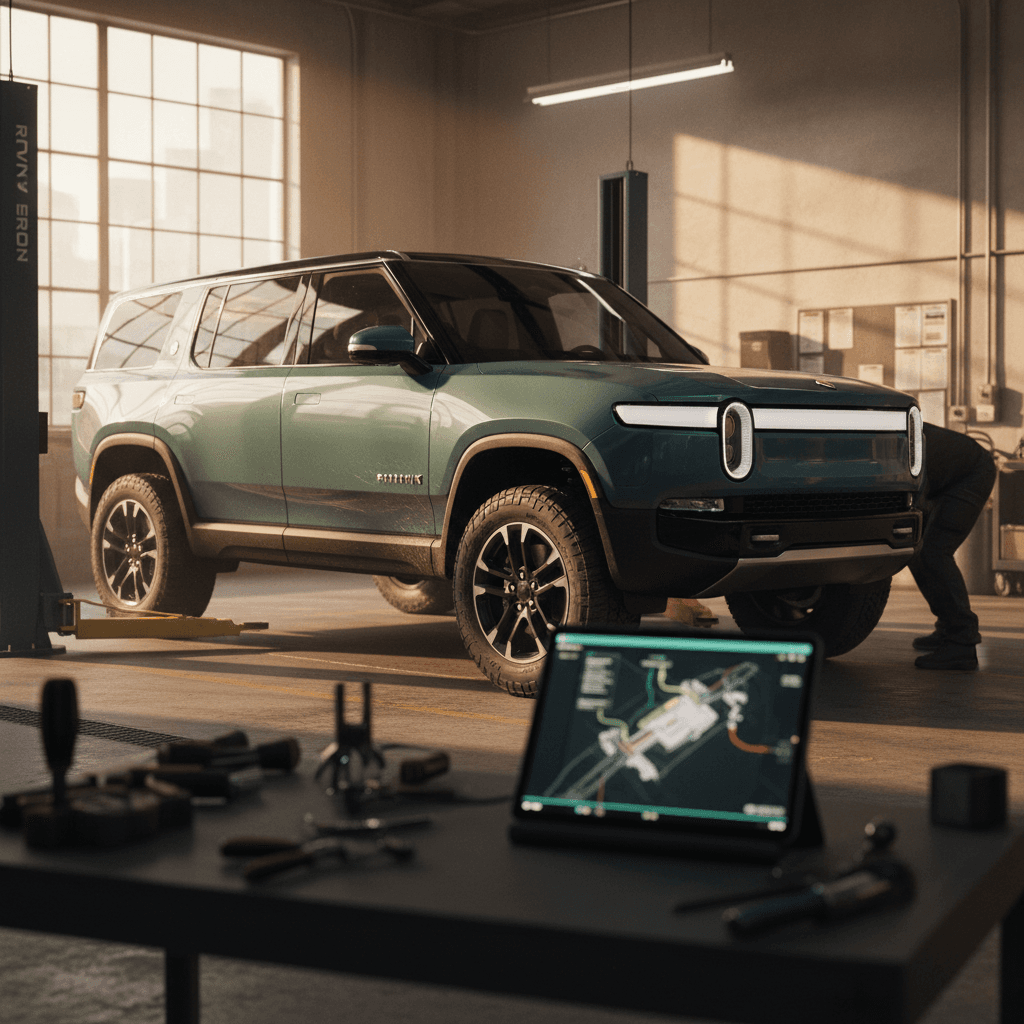
If you own or are shopping for a 2023 Rivian R1S, you’ve probably heard about various Rivian recalls and want one clear, reliable place to see the 2023 Rivian R1S recalls list. This guide walks through each recall in plain English, explains what it fixes, and shows you how to check that your current or future R1S is up to date.
Quick takeaway
Overview: 2023 Rivian R1S recalls at a glance
2023 Rivian R1S recall snapshot
One complication with Rivian is that the company frequently uses customer satisfaction campaigns and over‑the‑air (OTA) updates alongside formal NHTSA recalls. That means owners sometimes hear about issues from the app or an email long before they ever see an official government notice. To keep things simple, we’ll focus first on the key NHTSA‑listed safety recalls that explicitly cover the 2023 R1S, then explain how the softer “campaigns” and OTA updates fit into the picture.
Complete 2023 Rivian R1S recalls list
Below is a consolidated look at the major NHTSA safety recalls that list the 2023 Rivian R1S in their population. Exact coverage depends on your individual VIN, build date, and whether previous service work was performed, so always confirm using the tools later in this guide.
Key NHTSA recalls that can include the 2023 Rivian R1S
Use this table as a starting point, then verify your specific VIN with NHTSA or Rivian.
| Recall / Campaign | Primary issue | Likely fix type | Applies to 2023 R1S? |
|---|---|---|---|
| 23V-233 (FSAM-1216) | Backup lamp brightness may be too low for federal standards | Visual inspection, lamp assembly replacement if needed | Yes – certain 2022–2023 R1S SUVs |
| Airbag dashboard label (FSAM-1185) | Required airbag warning label missing or not in the mandated location | Install or relocate dashboard airbag warning label | Yes – select 2022–2023 R1S builds |
| 23V783000 (FSAM-1331) | Infotainment / software behavior not meeting spec (e.g., display or alerts) | OTA software update and/or service visit if update fails | Certain 2023 R1S vehicles |
| Later suspension‑service recall* | Toe link joint could separate if earlier suspension service was done using an outdated procedure | Inspection of rear suspension work; parts replaced and torqued correctly if needed | Some 2022–2025 R1S depending on prior service history |
Not every 2023 R1S is affected by every recall below. Coverage is VIN‑specific.
Important nuance
Recall 23V-233: Backup lamp brightness
One of the earliest formal recalls to call out the 2023 R1S was 23V‑233, which Rivian refers to internally as FSAM‑1216. It targets certain 2022–2023 R1S vehicles whose rear backup lamps may not meet federal brightness requirements when the vehicle is in reverse.
- Potential risk: Reduced rear visibility to other drivers and pedestrians when you’re backing up, especially in low‑light conditions.
- Typical symptoms: You probably won’t notice anything in normal driving; this is mainly a compliance and visibility issue, not a dashboard‑warning kind of problem.
- Remedy: Rivian inspects the backup lamps and, if your SUV is within the affected range, replaces the lamp assemblies to restore compliant brightness. The work is free.
Good news for owners
Dashboard airbag warning label recall
Another early‑run Rivian campaign involved missing or misplaced airbag warning labels on the dashboard. Federal Motor Vehicle Safety Standard (FMVSS) 208 requires a clearly visible warning in specific locations. On some early R1S and R1T builds around the 2022–2023 model years, that label wasn’t where the regulation says it must be.
- Potential risk: The safety concern is informational, not mechanical. Without the proper label, a front passenger might not appreciate the risks of airbag deployment for children or small occupants.
- Typical symptoms: There’s no drivability issue, you’d only notice by looking for the exact wording and placement of the label.
- Remedy: A Rivian technician installs or repositions the required label so the vehicle meets FMVSS 208. No parts of the airbag system itself are replaced as part of this particular campaign.
How serious is an airbag label recall?
Infotainment software recall (23V783000)
NHTSA campaign 23V783000 lists the 2023 R1S with an issue categorized under equipment / electrical / infotainment / software. In plain terms, certain software behavior in the center display or driver‑information systems didn’t line up with what Rivian originally certified with regulators.
- Potential risk: Depending on the exact symptom on your build, it can range from nuisance behavior (like screens not behaving as expected) to more meaningful issues, such as certain alerts not presenting the way regulations require.
- Typical symptoms: You might have seen quirky screen behavior, unexpected resets, or odd timing around certain messages before Rivian pushed an update.
- Remedy: Rivian issued an over‑the‑air software update associated with internal campaign FSAM‑1331. If your R1S was online and up to date, the fix likely installed automatically. Vehicles that missed the OTA can be updated at a Rivian service center.
Check your software version
How to check if your 2023 R1S has open recalls
Because recall coverage is VIN‑specific, the only way to know for sure what affects your 2023 R1S is to run a quick lookup. It takes about two minutes and is worth doing before any long trip, or before you buy a used example.
Step‑by‑step: Check your 2023 R1S for open recalls
1. Locate your VIN
Your 17‑digit Vehicle Identification Number (VIN) is on the lower driver‑side windshield, your registration, insurance card, and in the Rivian app under vehicle details.
2. Use NHTSA’s VIN lookup
Go to the official NHTSA recall lookup site, enter your VIN, and review any <strong>open safety recalls</strong>. If nothing appears, you’re recall‑current as of that moment.
3. Check the Rivian app & account
Open the Rivian app or your online account. Rivian often surfaces recall or “campaign” notices directly, including OTA‑only fixes that may not show the same way in NHTSA’s system yet.
4. Call Rivian service if you’re unsure
If the results are confusing, especially on a used vehicle, call Rivian customer service. Ask them to confirm which campaigns and recalls are completed on your VIN and which, if any, are still open.
5. Get documentation of completed work
After any recall repair, keep the service invoice or digital record. This helps with resale, warranty questions, and insurance down the line.
Don’t ignore an open recall
What these recalls actually mean for safety
It’s easy to see any recall headline and assume a vehicle is fundamentally unsafe. With the 2023 R1S, the story is more nuanced. Most of the campaigns tied to this model year involve compliance items (like light output and labels) or software behavior where an OTA can bring the vehicle back in line with the spec Rivian promised regulators.
Higher‑impact concerns
- Anything that affects crash protection, such as seat belts, airbags, or structural integrity.
- Suspension work that, if not performed correctly, could lead to loss of control, like a toe link that might separate after an earlier repair.
- Software faults that could mask critical warnings or disable driver‑assist safeguards.
Lower‑impact concerns
- Labeling and indicator‑light compliance issues.
- Minor screen behavior glitches that don’t affect steering, braking, or crash energy management.
- Cosmetic or convenience items that are handled through campaigns rather than NHTSA recalls.
How 2023 R1S compares to other EVs
Impact on used 2023 R1S value and insurability
If you’re eyeing a used 2023 Rivian R1S, you’re right to consider how recalls might affect resale value, insurance, and long‑term peace of mind. In the used‑EV world, the mere presence of recalls typically isn’t the deal‑breaker, the big question is whether the fixes were done and documented.
How recalls factor into used‑R1S shopping
Think in terms of risk management, not perfection.
Completed recalls = plus
Open recalls = leverage
Insurance impact
How Recharged helps with recall risk
Recalls vs TSBs, OTA updates, and “campaigns”
Rivian owners often hear about recalls, service bulletins, campaigns, and over‑the‑air updates in the same conversation, which can be confusing. They’re related, but not identical.
- NHTSA safety recall: A formally registered safety defect tied to federal standards. Shows up in NHTSA’s database, must be fixed free of charge, and stays attached to a VIN until remedied.
- Technical Service Bulletin (TSB): Guidance from Rivian to its service network on diagnosing or repairing an issue. Not all TSBs are safety‑critical or visible to owners.
- Customer campaign: Rivian’s term for a proactive service action, sometimes safety‑related, sometimes convenience‑oriented, that might or might not also be a formal NHTSA recall.
- OTA update: A software update delivered wirelessly. Some formal recalls on the 2023 R1S are remedied primarily through OTAs, with in‑person follow‑up only if the update fails.
Why OTA recall fixes matter
What to do as a current or future 2023 R1S owner
Whether the 2023 R1S is already in your driveway or you’re considering a used one, your game plan should be simple: verify, document, and stay current. Here’s how to work through that checklist.
Owner checklist: Staying on top of 2023 R1S recalls
Verify recall status by VIN
Run your VIN through NHTSA’s lookup tool and cross‑check in the Rivian app. Screenshot or save the results with today’s date.
Schedule any open recall work
If you see open recalls, contact Rivian service or use the app to book mobile or service‑center appointments. Ask roughly how long each fix takes.
Confirm software is fully up to date
Install any pending OTA updates before and after recall work. This can clear minor glitches and ensure all safety‑related code is current.
Collect and keep service records
Maintain a digital folder with recall invoices, campaign notes, and OTA version history. Buyers and insurers alike appreciate organized documentation.
If shopping used, ask pointed questions
Request proof of recall completion from the seller. If they can’t provide it, factor the time to complete those repairs, and any uncertainty, into your offer.
Consider a third‑party inspection
For added confidence, especially on early‑build EVs, a pre‑purchase inspection from an EV‑savvy shop or a marketplace like <strong>Recharged</strong> can flag issues beyond what a recall list reveals.
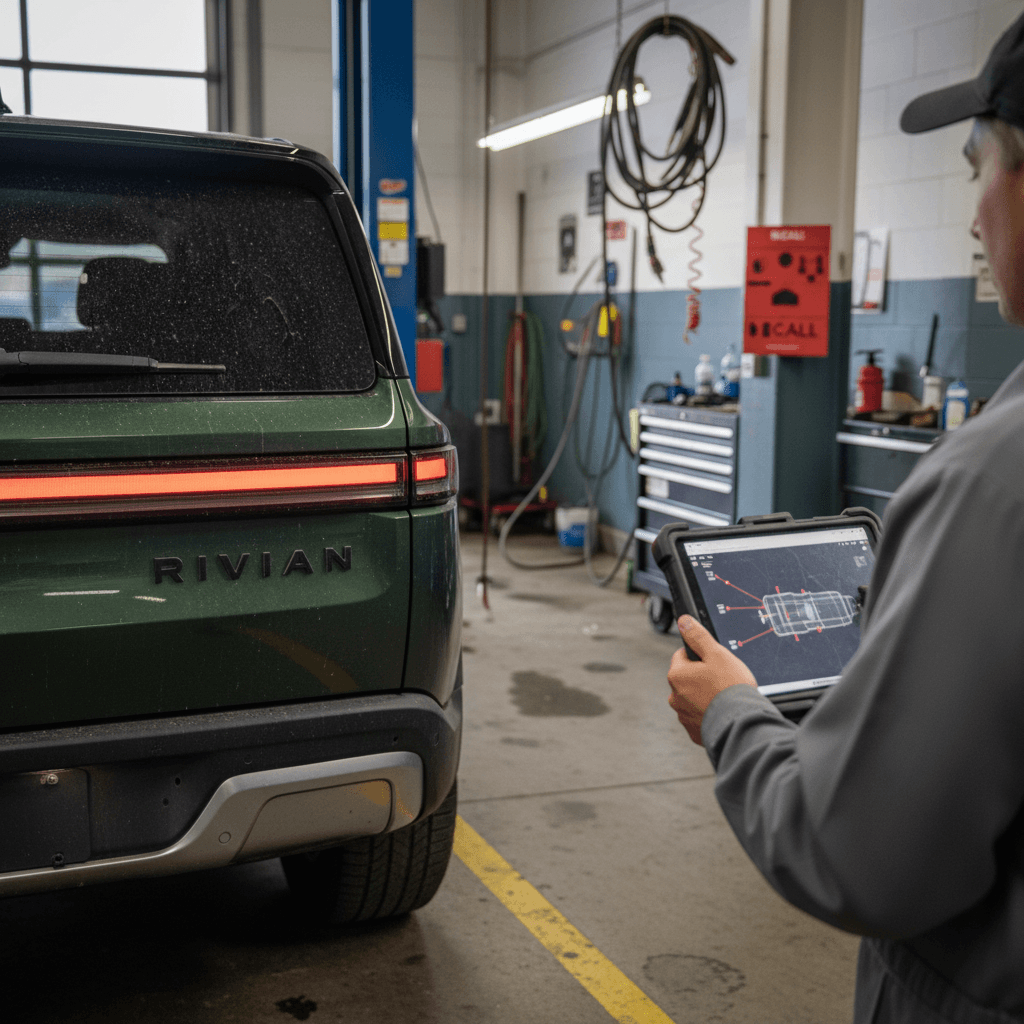
2023 Rivian R1S recalls FAQ
Frequently asked questions about 2023 Rivian R1S recalls
Bottom line: Should recalls scare you off a 2023 R1S?
If you’re attracted to the 2023 Rivian R1S for its design, performance, and all‑electric capability, the current recalls list shouldn’t automatically send you running. Like most new‑tech vehicles, the R1S is evolving through a combination of hardware fixes and over‑the‑air software updates. What matters is not that recalls exist, but that your specific SUV is current on them and that you understand what they addressed.
Do your homework: run the VIN, read the recall descriptions, and insist on documentation, especially if you’re buying used. Marketplaces like Recharged are designed to simplify that process by pairing transparent safety and battery‑health information with expert EV guidance, financing options, and even nationwide delivery. In that context, a 2023 R1S with a clean recall record can be a compelling, confidence‑inspiring choice for your next electric SUV.