If most of your miles are spent dodging potholes, squeezing into street parking, and crawling through rush hour, the **best electric cars for city driving** aren’t the same ones built for 400‑mile road trips. City drivers can trade massive batteries and three‑row interiors for something far more useful: tight dimensions, excellent efficiency, and stress‑free maneuverability. That’s good news if you’re shopping the used EV market, because the best city EVs are often the most affordable, too.
City EVs are a different game
Why city driving is actually perfect for EVs
Stop‑and‑go traffic works in your favor
EVs recapture energy through regenerative braking. Every time you lift off the accelerator or brake for a light, the motor acts like a generator and feeds power back into the battery. That’s why many EVs actually get better efficiency in the city than on the highway.
Shorter trips, easy top‑ups
Most urban drivers cover modest daily mileage, often 20–40 miles a day. With home or workplace charging, you can treat your EV like your phone: plug in overnight and start each morning with a "full tank," even if your car’s rated range isn’t huge.
City driving and EV efficiency at a glance
What makes an electric car great for city driving
Key traits of the best city EVs
Look for these attributes when you’re browsing used listings
Small footprint
Short overall length and a tight turning circle make it easier to:
- Fit into parallel spots
- Navigate alleys and parking garages
- Slip through dense traffic
High efficiency
Efficiency is measured in mi/kWh or kWh/100 mi. For city duty, prioritize EVs that are:
- At or above ~3.5 mi/kWh
- Or below ~30 kWh/100 mi
Easy charging
The best city EVs are easy to keep topped up:
- 240V home charging or reliable public options
- Smaller batteries = faster full charges
- Some offer vehicle‑to‑load for powering gear
Visibility & safety tech
Urban driving throws surprises at you. Big pluses include:
- Good outward visibility
- Automatic emergency braking
- Blind‑spot and cross‑traffic alerts
Smart interior packaging
City EVs don’t need three rows. You want:
- Comfortable seats for 4
- Usable cargo area for groceries
- Simple controls for low‑stress commuting
Total cost of ownership
Urban use amplifies EV strengths:
- Low fuel cost per mile
- Minimal maintenance
- Often lower used prices than big‑battery road‑trippers
Don’t overbuy range
Best electric cars for city driving: quick shortlist
Below is a representative mix of electric cars that tend to shine in urban use, especially on the used market in the U.S. We’ll group them by size rather than chase a single "winner," because downtown Boston and suburban Phoenix are very different environments.
Representative city‑friendly EVs (U.S. market focus)
These models balance size, efficiency, and practicality for urban driving. Ranges are approximate EPA ratings for recent model years; always check the specific year and trim you’re considering.
| Model | Category | Typical EPA Range | Why it works well in the city |
|---|---|---|---|
| Fiat 500e (new gen) | Tiny city car | ~140–150 mi | Ultra‑small footprint, great efficiency, built for dense European‑style cities. |
| Chevrolet Bolt EV / Bolt EUV | Compact hatchback | ~247–259 mi | Excellent efficiency, small exterior but good interior space; great value used. |
| Nissan Leaf (2nd gen) | Compact hatchback | ~149–212 mi | Soft ride, simple controls, widely available used, strong city efficiency. |
| Hyundai Kona Electric | Subcompact SUV | ~258 mi | City‑friendly size, strong efficiency, decent cargo and comfort. |
| Kia Niro EV | Small crossover | ~239–253 mi | Feels less tiny than a hatch but still easy to park; efficient and practical. |
| Volvo EX30 | Small premium SUV | ~275–298 mi | Short but tall; great visibility, tight footprint, strong safety tech. |
| Mini Cooper SE (Mini Electric) | Subcompact hatch | ~114–120 mi | Low range but very small and fun; ideal for short, dense urban use. |
| Tesla Model 3 RWD | Compact sedan | ~260–300+ mi | Not tiny, but efficient with great software and charging if you leave the city. |
City drivers can often focus on smaller batteries and higher efficiency rather than maximum range.
Always double‑check year and trim

Best tiny city EVs and microcars
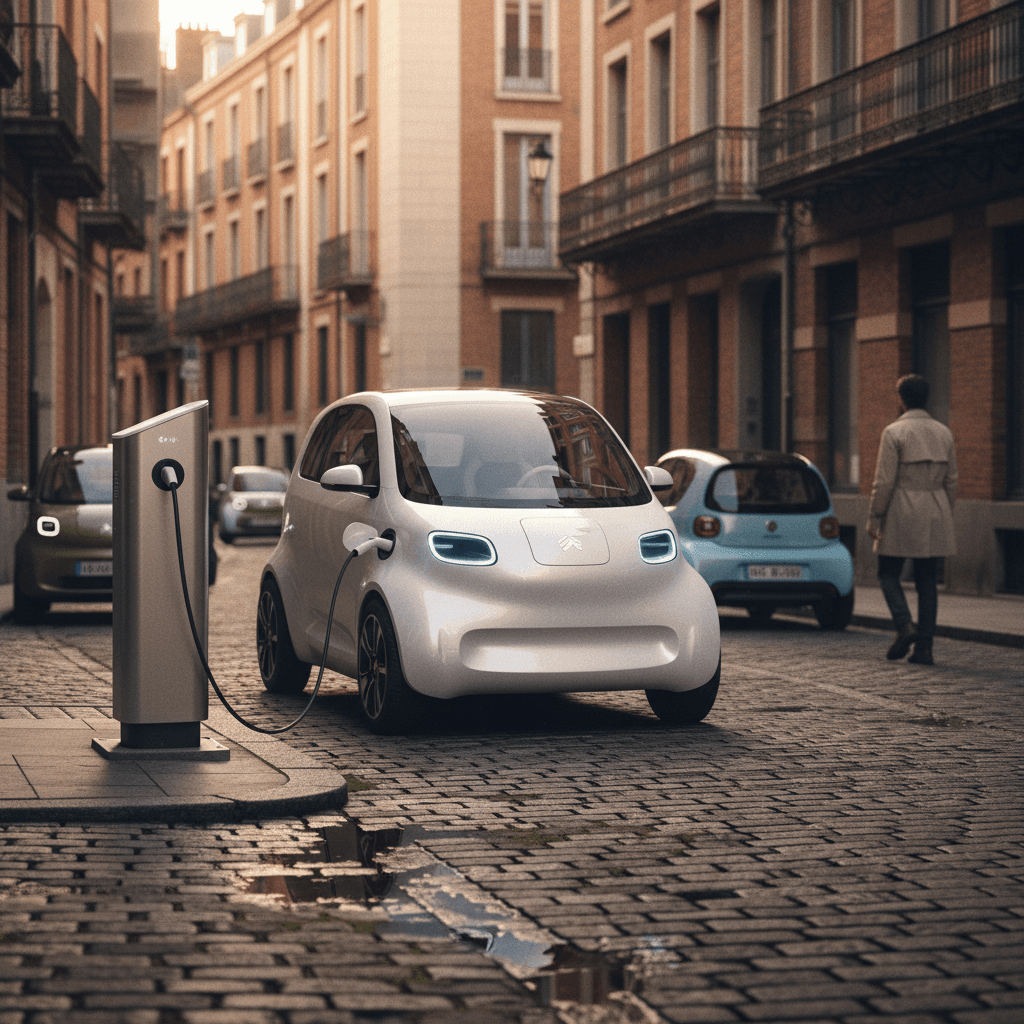
If you live where street parking is a blood sport and garages are rare, the best electric cars for city driving may be the tiniest ones. New micromobility concepts are emerging in Europe and Asia, but U.S. shoppers still mainly see a handful of ultra‑compact EVs and short crossovers.
Who should consider the smallest EVs?
These shine when space is scarce and trips are short
Dense downtown dwellers
If your world is a few square miles of city grid, a tiny hatch or micro‑EV makes daily life easier:
- Slip into motorcycle‑sized gaps
- Park nose‑in where bigger cars simply don’t fit
- Turn around in alleys and tight garages without multi‑point maneuvers
Households with multiple cars
If you already have a family hauler for road trips, a short‑range city EV can be a perfect second car. You get ultra‑low running costs and zero tailpipe emissions where congestion and local air pollution are worst.
Watch crash‑safety trade‑offs
Best small electric hatchbacks and compact cars
For a lot of U.S. drivers, small hatchbacks hit the sweet spot: they’re efficient, easy to park, and still feel like real cars on the occasional freeway run. On the used market, they’re also where some of the best values live.
Chevrolet Bolt EV and Bolt EUV
The Chevy Bolt twins are arguably modern America’s default city EVs. They combine a compact footprint with surprisingly generous interior space, strong efficiency, and real‑world ranges around 240–260 miles in recent years. For urban use, that’s massive overkill, in a good way.
- Easy to park, upright seating
- One‑pedal driving tuned nicely for stop‑and‑go traffic
- Often some of the most affordable used EVs per mile of range
Nissan Leaf (2nd generation)
The 2018+ Leaf is softer‑riding and quieter than many small hatchbacks, with simple controls that make it a low‑stress commuter. Range on later "Plus" trims is enough for suburban sprawl, but even base models can comfortably cover short commutes with nightly charging.
- Very smooth at low speeds, ideal for creeping through traffic
- Wide used availability, often at lower prices than comparable new gas cars
- CHAdeMO fast‑charging is fading, but for city use you may rely mostly on Level 2 anyway
Think about your parking first
Best small electric SUVs for city life
If you want a higher seating position, a bit more cargo room, or you routinely haul kids and gear, the new breed of small electric SUVs can still work beautifully in the city, as long as you stay on the smaller end of the spectrum.
City‑friendly electric crossovers to look at
Short overhangs and tight packaging matter more than big range numbers
Hyundai Kona Electric
A subcompact SUV that feels made for city streets:
- Short overall length with easy maneuverability
- Strong efficiency and respectable range
- Comfortable ride over broken pavement
Kia Niro EV
For drivers who don’t want to feel like they’re in a tiny car:
- More conventional crossover look
- Plenty of headroom and cargo space
- Still compact enough for tight garages
Volvo EX30
A premium small SUV designed with European cities in mind:
- Short footprint, tall seating position
- Serious safety tech, good visibility
- Great choice if you want something upscale but city‑friendly
Don’t rule out sedans
How much range you really need in the city
Range anxiety is a psychological problem more than a technical one, especially in cities. If you can plug in most nights, a car that honestly delivers 120–200 miles of usable range is often more than enough. In fact, chasing maximum range can backfire for city use by saddling you with a heavier, more expensive car and slower home charging.
Right‑sizing range for an urban lifestyle
Know your real daily mileage
Track a normal week in your current car. Many urban drivers are under 40 miles per day. If you’re routinely under 60, almost any modern EV with 120+ miles of usable range can work.
Plan for cold weather and detours
Weather, HVAC use, and hills can carve 20–40% off range. If you routinely hit 60 miles in winter, you probably want at least ~150–180 miles of rated range to feel relaxed.
Consider charging frequency, not just range
A 250‑mile EV you can only charge on weekends is less convenient than a 150‑mile EV you can plug in every night. Urban EV ownership is about routine, not hero numbers.
Think about weekend patterns
If your weekends include longer suburban trips or regional drives, a higher‑range car or occasional DC fast‑charging access might be worth paying for.
Used EVs and battery health
Used vs. new: why city drivers are perfect for used EVs
Urban driving lines up almost perfectly with what used EVs do best: predictable mileage, frequent charging, and lower‑speed use. You don’t need the very latest 350‑kW fast‑charging standard to commute across town, and you may not need 300+ miles of range. That opens up a wide slice of the used EV market at much lower prices than comparable new crossovers or trucks.
Where used EVs shine for city use
- Lower purchase price: Depreciation hits EVs hard in the first few years; city drivers can benefit.
- Plenty of range for short trips: Even with some degradation, many used EVs still exceed typical urban needs.
- Fewer moving parts: No oil changes, fewer wear items than a gas car, especially at low speeds.
What to scrutinize on a used city EV
- Battery state of health: Ask for a proper diagnostic, not just a guess.
- Charging history: Heavy DC fast‑charging can age packs faster than mostly Level 2 home charging.
- Urban wear and tear: Curb rash, tight‑parking dings, and suspension wear from potholes show up more in city cars.
How Recharged helps city shoppers
Ready to find your next EV?
Browse VehiclesShopping checklist: picking the right city EV
City‑EV buyer’s checklist
Measure your parking reality
Before you shop, measure the space you have. Note ceiling height in older garages, ramp angles, and how tight your street parking really is. Then filter to EVs that fit with some margin.
Map your daily routes and chargers
Look at where you actually drive: home, work, daycare, gym. Use plug‑finder apps to see what Level 2 and DC fast chargers are on your common routes in case you can’t charge at home.
Decide on home charging now, not later
If you have off‑street parking, get a quote for a 240‑V outlet or home charger. Knowing your home‑charging reality helps you choose between shorter‑range bargains and longer‑range flexibility.
Prioritize efficiency over peak power
In the city, instant torque is standard on every EV. A lighter, more efficient model often feels just as quick from 0–35 mph and costs less to run than a high‑performance variant.
Check visibility and maneuverability in person
Test‑drive in the environment you’ll actually use the car: tight alleys, parking structures, crowded arterials. Pay attention to blind spots, turning circle, and how easy it is to place the car at low speeds.
Use transparent battery diagnostics
When you shop through Recharged, review the Recharged Score battery report to understand remaining capacity, estimated range, and any fast‑charging impacts before you commit.
FAQ: best electric cars for city driving
Frequently asked questions about city EVs
Bottom line on the best EVs for city driving
For city driving, the best electric cars are not the biggest or the longest‑range, they’re the ones that fit your streets, your parking reality, and your charging routine. Compact hatchbacks like the Bolt EV and Leaf, small crossovers like the Kona Electric, Niro EV, and EX30, and even tiny city cars like the new 500e can all be outstanding urban tools when matched to the right use case.
If you’re shopping used, you’re in an especially strong position as a city driver. You can lean into efficiency, maneuverability, and honest battery health rather than chasing headline specs. Recharged was built for exactly this kind of buyer: every car on the platform comes with a transparent Recharged Score Report, expert EV guidance, and the option to finance, trade in, or consign your current vehicle, all without setting foot in a traditional dealership. Get clear on how you really use your car day‑to‑day, and the right city EV will almost pick itself.