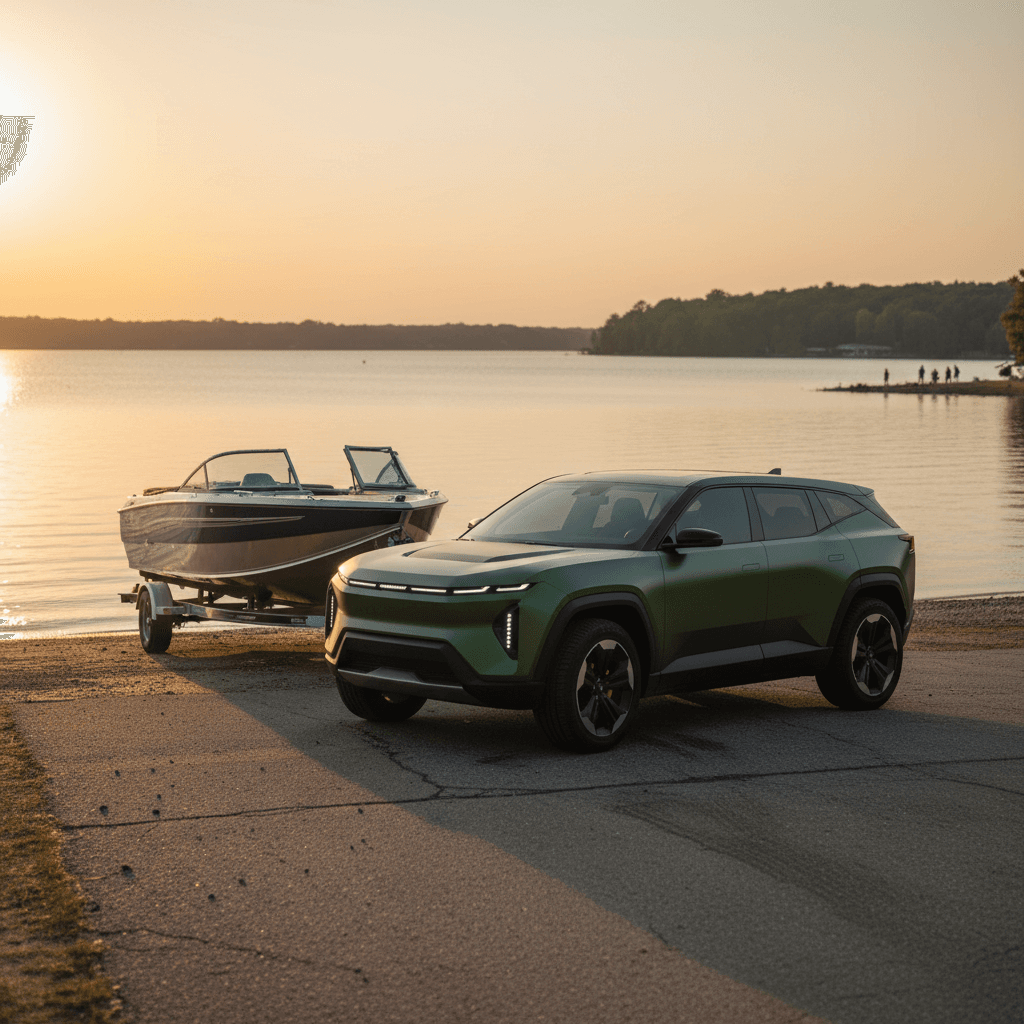
If you spend weekends at the lake, it’s natural to ask: what’s the best electric car for towing a boat? The good news is that today’s EV trucks, SUVs, and even some plug‑in hybrids can handle everything from a lightweight aluminum fishing boat to a sizable wake boat, if you choose carefully and understand the limits.
A quick word on terminology
Why EVs Can Make Great Boat-Towing Vehicles
Core advantages of using an EV or PHEV to tow a boat
It’s not just about fuel savings, there are real control and comfort benefits.
Instant torque
Superior low‑speed control
Strong braking & stability tech
The trade‑off is range. Under load, even the best EVs for towing see their effective range drop by 40–60% on highway runs, and boat trailers are often tall and not very aerodynamic. That means picking the right vehicle comes down to matching its tow rating and battery to your boat, distance, and charging options.
EV towing realities at a glance
How Much Boat Can an Electric Car Tow?
Before you fall in love with any EV, start with the numbers. You’ll need to know your boat’s fully loaded trailer weight and the vehicle’s tow rating. That rating is a hard limit, exceeding it isn’t just unsafe, it can void warranties and cause insurance headaches if something goes wrong.
Common boat types vs. what an electric vehicle must handle
Approximate ready‑to‑tow weights (boat + trailer + fuel + gear). Always verify your actual numbers on the trailer tag and in the owner’s manual.
| Boat type | Typical length | Approx. loaded weight | What can tow it |
|---|---|---|---|
| Aluminum fishing boat | 14–16 ft | 1,500–2,000 lb | Many electric crossovers & small SUVs |
| Bass boat / runabout | 17–20 ft | 3,000–4,500 lb | Stronger electric SUVs & PHEVs, some trucks |
| Wake boat / surf boat | 21–25 ft | 5,000–7,000+ lb | Electric trucks, heavy‑duty PHEVs |
| Cabin cruiser / large offshore | 25+ ft | 8,000–10,000+ lb | High‑capacity electric pickups only, often better left to HD gas/diesel today |
Use this table as a starting point, then compare to your EV’s tow rating and payload limits.
Don’t forget payload and tongue weight
Range Loss When Towing a Boat with an EV
Towing is where electric vehicles diverge sharply from the way you’re used to thinking about range. Aerodynamic drag from the boat and trailer becomes the dominant factor at highway speeds, and it eats into efficiency fast.
What you can expect in the real world
- Light, low boat (canoes, small aluminum): Often 5–20% range loss if you keep speeds moderate.
- Mid‑size fiberglass runabout: 30–50% loss is common on the highway.
- Large wake boat or pontoon: Range can be cut in half, or worse, especially at 70+ mph or in a headwind.
Why boat shape matters more than weight
Two trailers that weigh the same can have very different results. A narrow, low profile fishing boat lets air flow around it; a tall pontoon is like towing a billboard. That extra drag is why some owners see dramatically more range loss towing a boxy boat than an enclosed trailer of similar weight.
Plan around your effective towing range, not the window sticker
Best Electric Trucks for Towing Boats
If you regularly tow a big wake boat or offshore rig, an electric pickup is usually the best electric "car" for towing a boat. Trucks bring higher tow ratings, bigger battery packs, and beefier cooling systems designed to handle long grades under load.
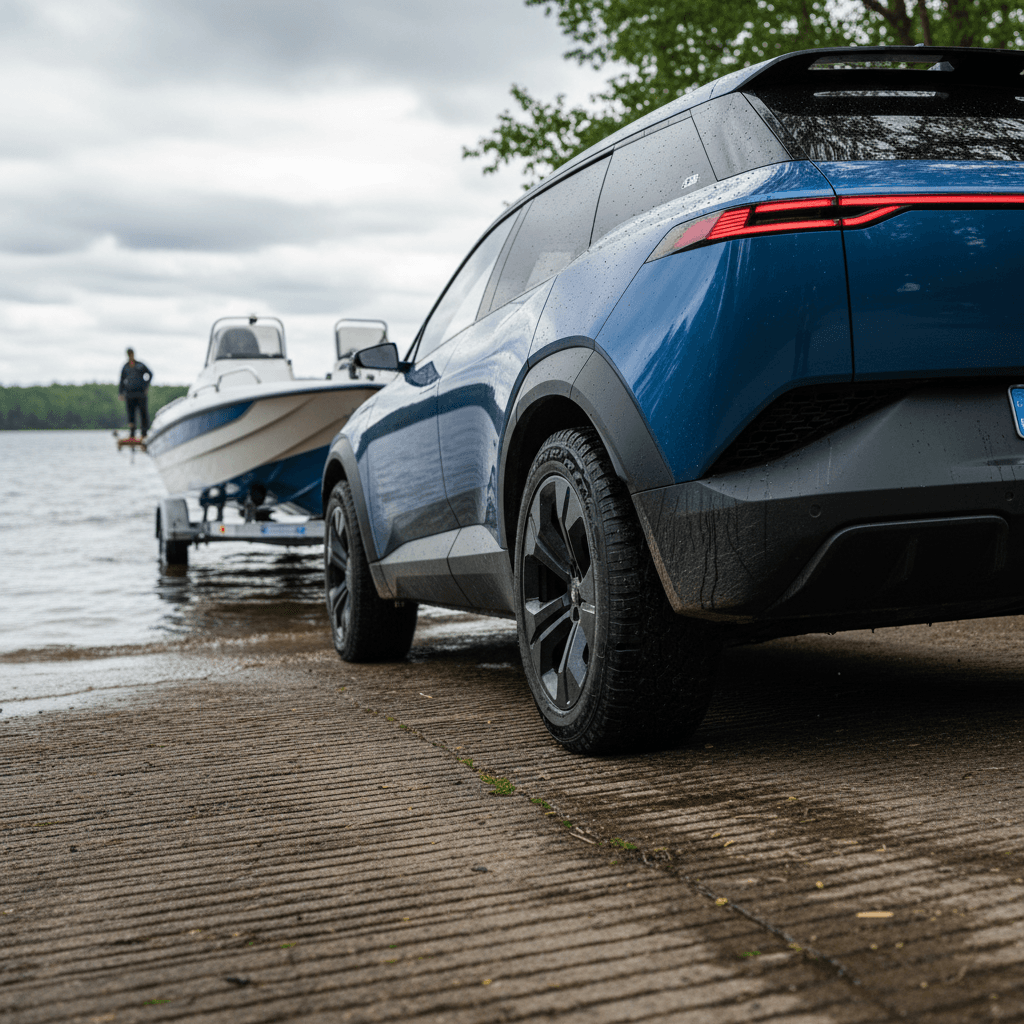
Electric trucks to consider for serious boat towing
Specific tow ratings and range will vary by configuration, always confirm the numbers for the exact truck you’re shopping.
Rivian R1T
Chevrolet Silverado EV & GMC Sierra EV
Ford F‑150 Lightning
Future heavy‑duty EVs
Be honest about your use case
Best Electric SUVs for Light to Medium Boats
Most boat owners aren’t towing five‑figure weights. If your rig plus trailer comes in under roughly 4,500–5,500 pounds, a strong electric SUV or three‑row crossover can be the sweet spot: comfortable family transport during the week, efficient tow vehicle on weekends.
Electric SUVs that work well with fishing boats, runabouts, and pontoons
Exact tow ratings vary by trim; always verify the number on the vehicle’s door sticker and in the owner’s manual.
Kia EV9
Tesla Model X
Other tow‑rated electric SUVs
Think in "round‑trip" terms
When a Plug-In Hybrid Is the Better Boat Tow Vehicle
Plug‑in hybrids (PHEVs) occupy an underappreciated sweet spot for many boaters. They give you electric driving around town and a gas engine for long‑distance towing days, without the same range anxiety you might feel pulling a boat through rural areas in a pure EV.
Where PHEVs shine for boating
- Medium boats, long distances: Many performance‑oriented PHEV SUVs tow 5,000–7,700 lb, plenty for a 20‑ to 23‑ft wake boat.
- Limited charging near the marina: If your lake has no DC fast chargers nearby, a PHEV lets you refuel anywhere and recharge at home that night.
- Single‑vehicle households: One PHEV can cover commuting on battery power and boat‑towing duty on the weekends.
Trade‑offs vs. pure EVs
- More mechanical complexity to maintain vs. a battery‑electric SUV.
- You’ll still burn gas during towing, especially on steep or long grades.
- Battery‑only range is usually 20–50 miles, so you don’t get long EV‑only towing days.
If you want to cut fuel bills and emissions substantially but aren’t ready to rely on charging infrastructure for every boat trip, a tow‑rated PHEV is worth serious consideration.
Safety and Boat Ramp Behavior with EVs
The boat ramp is where many owners feel the biggest difference, usually in a good way. EVs and PHEVs use electric motors for low‑speed maneuvers, which means smooth, controllable torque instead of a gas engine idling against a torque converter.
Key safety tips for towing and launching a boat with an EV
1. Use the correct hitch and trailer brakes
Confirm your receiver, ball mount, and ball size match the trailer. For heavier boats, electric or surge brakes on the trailer are a must. Many states legally require trailer brakes above a certain weight, check your local rules before launch day.
2. Enable trailer or tow mode
Most tow‑rated EVs and hybrids have a dedicated tow or trailer mode. It can adjust steering weight, stability control, and even range estimates to reflect the added drag and weight of your boat.
3. Take advantage of regenerative braking, within limits
Regen can help manage downhill speed and save your friction brakes, but don’t rely on it alone. Always test how your vehicle behaves with the trailer attached before bombing down a steep grade to the marina.
4. Back down slowly and avoid sudden inputs
Instant torque is great, but it also means any abrupt pedal stab can lurch the rig. Use gentle throttle, and if your EV has a low‑speed creep mode, turn it on for the ramp.
5. Rinse thoroughly if you’re in saltwater
Salt spray is tough on any tow vehicle. After launching or retrieving in saltwater, rinse the undercarriage, hitch, and brakes. That’s especially important on EVs, where corrosion around high‑voltage components is a concern long‑term.
Mind water depth at the ramp
Checklist: Matching Your Boat to the Right Electric Vehicle
Once you understand your boat and typical trips, you can narrow down which electric trucks, SUVs, or PHEVs make sense. Use this checklist as a structured way to compare candidates, whether you’re looking at new EVs or used models on a marketplace like Recharged.
Boat‑to‑EV matching checklist
1. Confirm real trailer weight
Check the trailer’s data plate and, if possible, weigh your rig at a local scale with fuel, gear, and water tanks full. Don’t guess, it’s easy to underestimate by 1,000 pounds or more.
2. Compare tow rating with headroom
Aim for a tow vehicle rated at least <strong>20–30% above</strong> your actual trailer weight. That buffer helps with hills, headwinds, and hot days where cooling systems work harder.
3. Calculate effective towing range
Take the EV’s rated range and assume a 40–60% hit for medium to large boats. Does the remaining range comfortably cover your typical round trip or planned charging stops?
4. Check charging along your route
Look for DC fast chargers near your marina or along the highway. Apps from major networks and automakers make this easier, but availability still varies widely by region.
5. Evaluate ramp access and surfaces
If you often use steep, gravel, or muddy ramps, prioritize <strong>all‑wheel drive</strong>, good approach/departure angles, and tow/haul modes that fine‑tune throttle response.
6. Test‑drive with a trailer, if possible
Nothing replaces seat time. If you can, bring your boat, or a similar‑weight trailer, when test‑driving. Pay attention to launch feel, highway stability, and braking confidence.
Used EVs for Boat Towing: What to Watch
Shopping used can be a smart way to get into an electric tow vehicle without paying new‑truck money. But towing is one of the hardest jobs you can ask of any EV or PHEV, so you’ll want more than a quick spin around the block before you hook up the boat.
Battery health matters more when you tow
Range is your margin of safety when you’re pulling a trailer. A used EV with a tired battery will feel that margin shrinking quickly under load. Look for:
- Verified battery health data instead of guesses or dashboard bars.
- Evidence of proper thermal management and charging habits.
- Service history that doesn’t show repeated high‑temp or power‑limit warnings.
How Recharged helps de‑risk used EV towing
Every vehicle on Recharged comes with a Recharged Score Report that includes battery health diagnostics, charging history insights where available, and fair‑market pricing. If you’re eyeing an EV or PHEV specifically to tow your boat, our EV specialists can help you:
- Interpret the battery data in the context of towing.
- Compare tow ratings and payload among similar models.
- Plan charging strategies for your usual lake runs before you buy.
Because the entire experience is digital, with optional nationwide delivery, and backed by EV‑specialist support, you can shop confidently for a tow‑capable EV or PHEV without spending weekends at multiple dealerships.
FAQs: Best Electric Car for Towing a Boat
Common questions about towing a boat with an EV or PHEV
Bottom Line: How to Choose the Best EV for Your Boat
Choosing the best electric car for towing a boat is less about chasing a single "top" model and more about matching the right type of electrified vehicle to your rig and your routine. Electric trucks shine with heavy wake boats and offshore rigs; strong electric SUVs handle most fishing boats and mid‑size runabouts; and plug‑in hybrid SUVs are often the most flexible choice for long‑distance lake trips with limited charging along the way.
Start by nailing down your boat’s true trailer weight, then work backward from the tow rating, effective towing range, and charging options you need. If you’re exploring the used market, a platform like Recharged, with its battery‑health‑focused Recharged Score, expert EV guidance, and nationwide delivery, can help you find a tow‑capable EV or PHEV that fits both your boat and your budget, long before the next launch ramp line forms this summer.