If you’re trying to figure out what a Rivian R1S is really worth, you’ve probably plugged it into Kelley Blue Book and seen a number that may or may not line up with asking prices online. This guide breaks down how Rivian R1S KBB value works, how it compares to real‑world used prices in 2026, and how to use that information to buy or sell smarter, especially in a fast‑moving EV market.
Quick takeaway
Why Rivian R1S KBB value matters in 2026
The Rivian R1S sits in a tricky corner of the market: it’s a premium, three‑row electric SUV from a relatively young automaker. That means its resale value isn’t as predictable as a mainstream gas SUV, and different pricing sources don’t always agree. Kelley Blue Book (KBB) remains one of the most widely used valuation tools by consumers, lenders and dealers, so understanding how it treats the R1S is crucial whether you’re trading in, selling privately or shopping used.
In a market where used R1S listings can swing from the high $50,000s to the $90,000s depending on model year, mileage and spec, KBB gives you a reference point. But because EV prices have been volatile and new‑vehicle incentives keep shifting, you can’t stop at one number. Think of KBB as the starting line, not the finish line, for Rivian pricing.
Rivian R1S value snapshot for 2024–2025
How KBB actually calculates Rivian R1S value
Kelley Blue Book doesn’t just pull numbers out of thin air. For the Rivian R1S, it blends several data sources, auction transactions, dealer retail listings, historical trends, and its own depreciation models, to estimate what the vehicle should be worth today as a trade‑in, private‑party sale, or dealer retail.
- Recent transaction data for similar Rivian R1S models (year, trim, mileage, region).
- Asking prices and days‑on‑market for R1S listings across dealer networks.
- Auction data that shows what dealers are actually paying in the lanes.
- Historical depreciation curves for large luxury EV SUVs and for the R1S specifically.
- Adjustments for condition, options, color, and local market strength.
Where it gets complicated is timing. The EV market has been moving quickly, both up and down, so KBB’s models can lag by a few weeks or even months. With a niche model like the R1S, where sample sizes are relatively small compared with, say, a Toyota RAV4, an individual sale can move the curve more than you might expect.
Important nuance for EVs
Current Rivian R1S values: KBB vs real‑world market
Looking at recent data, KBB estimates that a 2024 Rivian R1S has lost roughly $13,000, about 12%, in its first year of ownership, leaving a resale value in the mid‑$90,000s and a slightly lower trade‑in value. At the same time, nationwide used‑listing marketplaces and vehicle‑history sources show many 2024 R1S examples advertised in the mid‑$60,000s to mid‑$70,000s, depending on trim and mileage.
Rivian R1S: KBB vs real‑world used pricing (illustrative)
How typical KBB guidance compares with recent listing and transaction patterns for late‑model R1S SUVs.
| Scenario | KBB view | What you might actually see |
|---|---|---|
| 2024 R1S, low miles | Resale value around mid‑$90,000s after one year | Dealer and marketplace listings often in the $70,000s, sometimes lower with incentives or high supply |
| 2023 R1S, moderate miles | KBB values stepping down gradually from 2024 levels | Listings ranging from high‑$50,000s to mid‑$60,000s in many markets |
| Older R1S (early builds) | Modeled similar to other luxury EV SUVs | Wider spread based on battery health, software updates and early‑build perception |
Use this as directional guidance only, always verify with up‑to‑the‑minute local data.
How to read the gap
Rivian R1S depreciation trends you should know
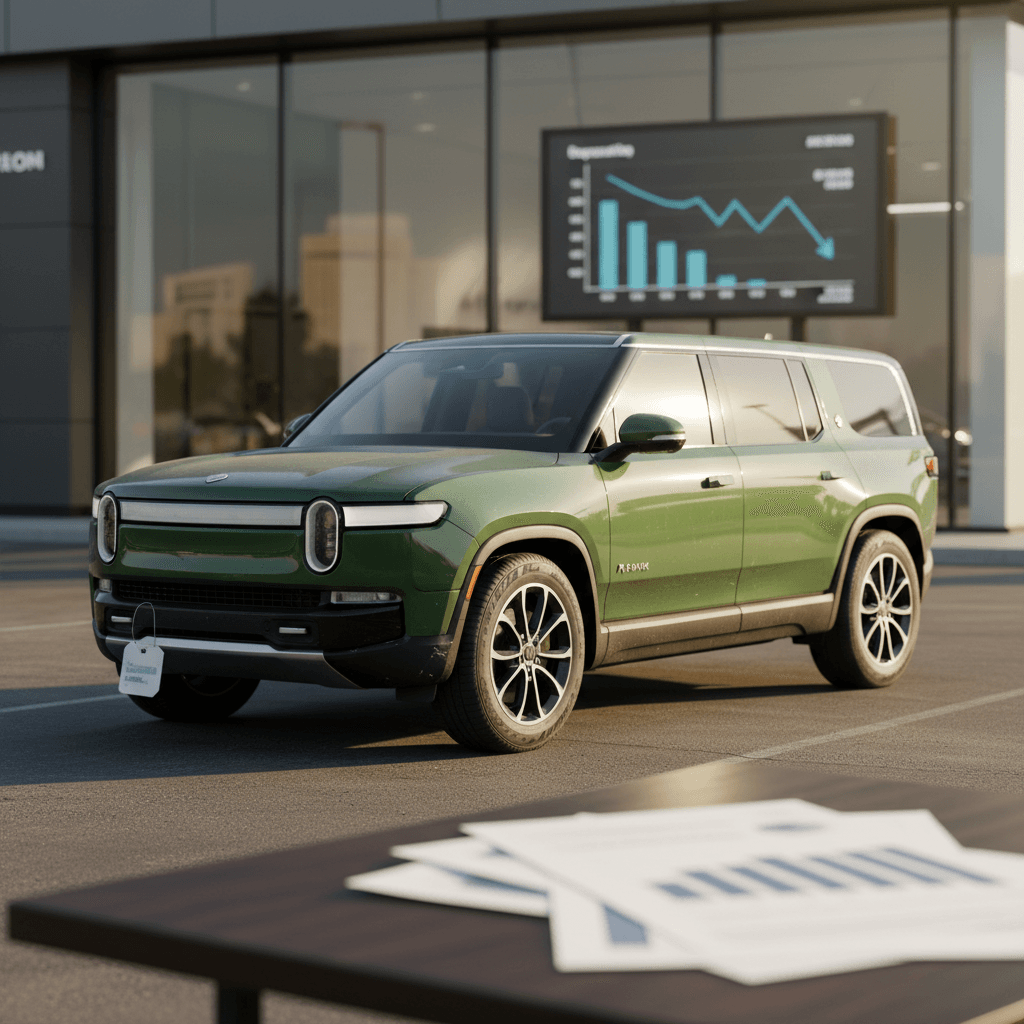
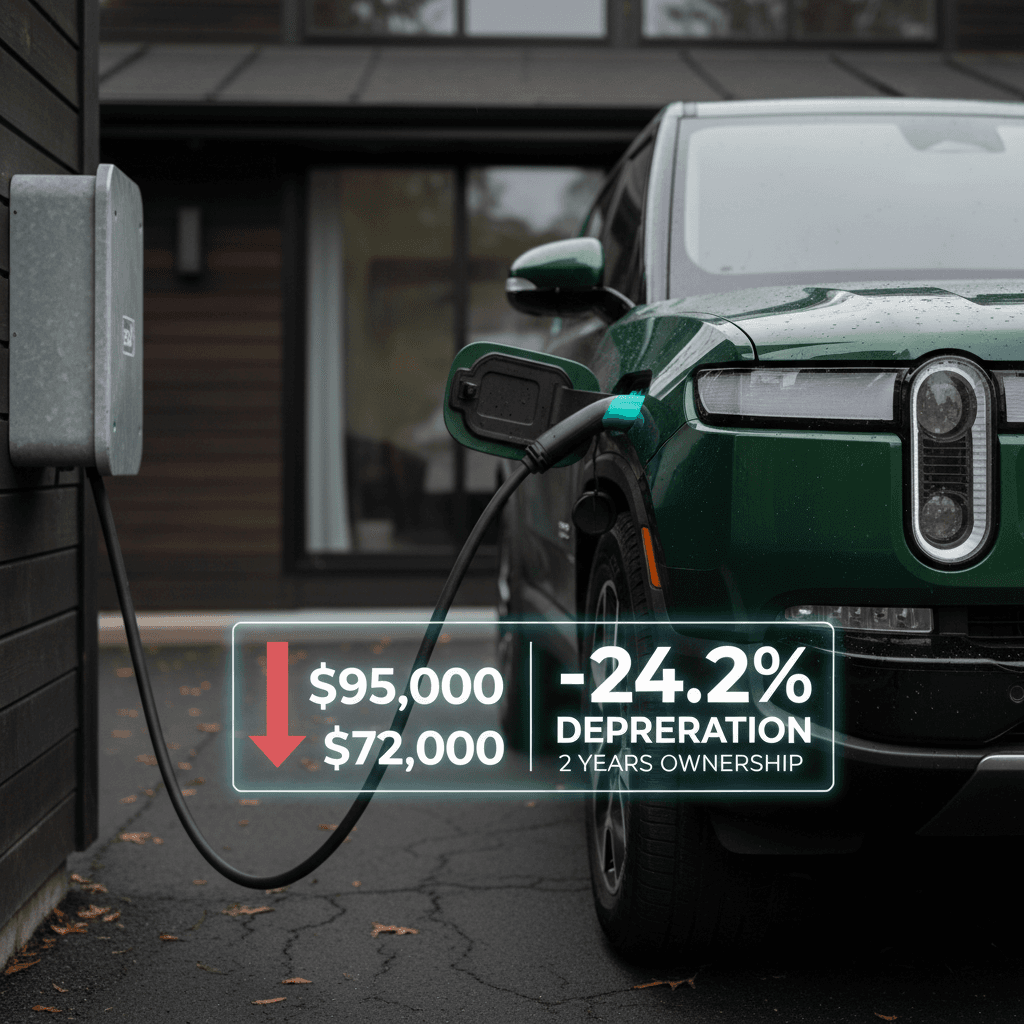
If you zoom out beyond a single model‑year, the big story with the Rivian R1S is aggressive early depreciation. Analyses of three‑ to five‑year‑old R1S examples suggest values can fall more than 50% in the first three years and around 70% or so over five years, worse than gas SUVs, and even slightly steeper than the luxury electric‑SUV average.
How Rivian R1S depreciation compares
Why your KBB value may be dropping faster than expected
Versus gas SUVs
Versus luxury EV SUVs
What it means for you
Upside for used‑EV shoppers
7 factors that move Rivian R1S KBB value up or down
Key value drivers for your Rivian R1S
1. Model year and hardware updates
Newer model years often bring efficiency and hardware improvements, like revised drive units and software, that support stronger KBB and market values. Early‑build R1S SUVs can see bigger discounts if shoppers perceive them as “version one” products.
2. Battery size and drivetrain
Larger battery packs, dual‑ or quad‑motor setups, and higher EPA range ratings usually raise both KBB and real‑world value. Shoppers gravitate toward longer‑range specs and all‑wheel‑drive variants for an SUV of this size.
3. Mileage and use patterns
Like any vehicle, lower miles help value, but for EVs the relationship between miles and battery health isn’t perfectly linear. A gently used but regularly driven R1S with a healthy pack can be more attractive than an ultra‑low‑mile one that mostly sat.
4. Cosmetic and accident history
KBB adjusts for condition, but it can’t see every panel scratch. Accident history, repainting, and obvious wear will push offers below book value, especially on a premium EV where buyers expect top‑shelf presentation.
5. Software and recall status
Up‑to‑date software, completed recalls and active driver‑assist features reassure buyers and lenders. Open recalls or outdated software can drag offers below KBB, because someone has to invest time to bring the SUV current.
6. Local supply and demand
If your region is flooded with off‑lease or over‑equity R1S units, KBB’s national numbers may overshoot what local dealers are willing to pay. In markets where Rivian stores and charging are scarce, demand can be softer.
7. Interest rates and incentives
Higher borrowing costs and shifting EV incentives ripple directly into used values. When new EVs get price cuts or richer incentives, late‑model used prices often have to follow, sometimes faster than KBB can update.
How to check your Rivian R1S KBB value (step‑by‑step)
Whether you’re selling your R1S or just sanity‑checking a dealer offer, here’s a clean workflow for getting a realistic range using KBB and a few other tools.
- Gather your VIN, exact trim, options, and mileage. The more accurately you describe the vehicle, the better the valuation will fit.
- Go to KBB and select the Rivian R1S, then plug in your year, trim, mileage, ZIP code, and honest condition rating.
- Review the three key numbers: trade‑in value, private‑party value, and dealer retail. Those form your basic pricing ladder.
- Compare KBB’s private‑party and trade‑in values with live listings on major used‑car sites and Rivian‑focused forums. Pay attention to model year, options and mileage in those comps.
- Check how long similar R1S listings have been sitting. Long days‑on‑market at a given price point suggest real‑world value is lower than asking.
- Layer in a battery‑health assessment, if you have one. A strong pack can justify a premium relative to KBB on the right buyer; a weak pack should push you toward the lower end of the range.
- Adjust your expectations based on how quickly you need to sell. If you want to move the vehicle in days, price below the midpoint between KBB and local comps. If you have time, you can test the upper end first.
Where Recharged fits in
Shopping for a used Rivian R1S: using KBB the smart way
If you’re on the other side of the deal, shopping for a used R1S, KBB is just as useful, but in a different way. Instead of treating it as a price target, think of it as a sanity check to keep you from overpaying in a fast‑changing EV market.
Use KBB to spot overpriced listings
If a used Rivian R1S is listed well above KBB’s dealer retail value and comparable vehicles on other sites, the seller is likely testing an ambitious number. That doesn’t automatically make it a bad buy, rare specs and perfect history can warrant a premium, but it should trigger deeper questions and a careful inspection.
Use KBB to understand negotiation room
If a dealer’s asking price is near KBB retail and your research shows slower‑moving inventory or newer price cuts on the new R1S, you have a solid case to negotiate closer to private‑party value instead. Bringing printouts or screenshots of KBB and comparable listings keeps that conversation grounded in data.
Buying a used Rivian R1S through Recharged
How we go beyond a generic book value
Verified battery health
Transparent pricing
Nationwide access
Ready to find your next EV?
Browse VehiclesBattery health: the one thing KBB can’t really see
KBB’s models assume an average relationship between age, miles and condition. For internal‑combustion vehicles, that works reasonably well. For EVs like the Rivian R1S, the wild card is battery health, and that’s something KBB can’t directly measure.
Two R1S SUVs with the same year and mileage can have very different real‑world range if one lived in a hot climate, spent lots of time at DC fast chargers, or rarely charged above 80%, while the other followed a more battery‑friendly pattern. To KBB, they look identical. To you, and to long‑term ownership costs, they’re not.
Why this matters for value
That’s why Recharged bakes a Recharged Score battery‑health assessment into every vehicle we sell. You see the pack’s current usable capacity and performance, not just the odometer reading. If you’re buying or selling an R1S outside of Recharged, consider investing in an independent battery report to support your price, especially if you believe your pack is in better‑than‑average shape.
What to do when KBB value and listing price don’t match
With a niche EV like the Rivian R1S, it’s common to see meaningful gaps between KBB values and actual asking prices. Sometimes KBB is higher, sometimes the market is. The key is knowing why they differ and whether that difference is justified.
When numbers don’t line up, walk through this list
Check how fresh your data is
Values and listings can move quickly after a new‑vehicle price cut or news cycle. Make sure you’re looking at KBB numbers and comps that reflect the same timeframe.
Factor in incentives and financing
If new R1S models are discounted or supported by lower APR financing, late‑model used prices often have to bend. KBB’s curve may not instantly reflect those shifts.
Look for hidden negatives or positives
A below‑KBB listing could reflect accident history, open recalls, unusual wear or a weak battery. An above‑KBB listing might have rare specs, fresh tires and recent software updates.
Decide if you’re paying for convenience
Buying locally, avoiding a fly‑and‑drive, or working with a trusted seller can justify a small premium. Just be clear with yourself why you’re choosing that path.
Red flag to watch for
FAQ: Rivian R1S KBB value and resale
Frequently asked questions about Rivian R1S KBB value
Bottom line: how to use KBB value on a Rivian R1S
For a vehicle like the Rivian R1S, there’s no single “correct” number, only a range where a willing buyer and seller can actually meet. Kelley Blue Book value is a critical reference point in that range, but it’s only one input. To make smart decisions, you need to combine KBB’s guidance with live listing data, a clear view of depreciation trends and, above all, objective battery‑health information.
If you’re selling, use KBB to frame your expectations and then test the market with real offers. If you’re buying, lean on KBB to flag outliers and anchor negotiations, but never ignore what current inventory is telling you. And if you want a streamlined path, whether you’re moving out of your R1S or into a used one, Recharged can back every decision with transparent pricing, expert EV support and a Recharged Score battery‑health report, so the number you see actually matches the SUV you’re getting.