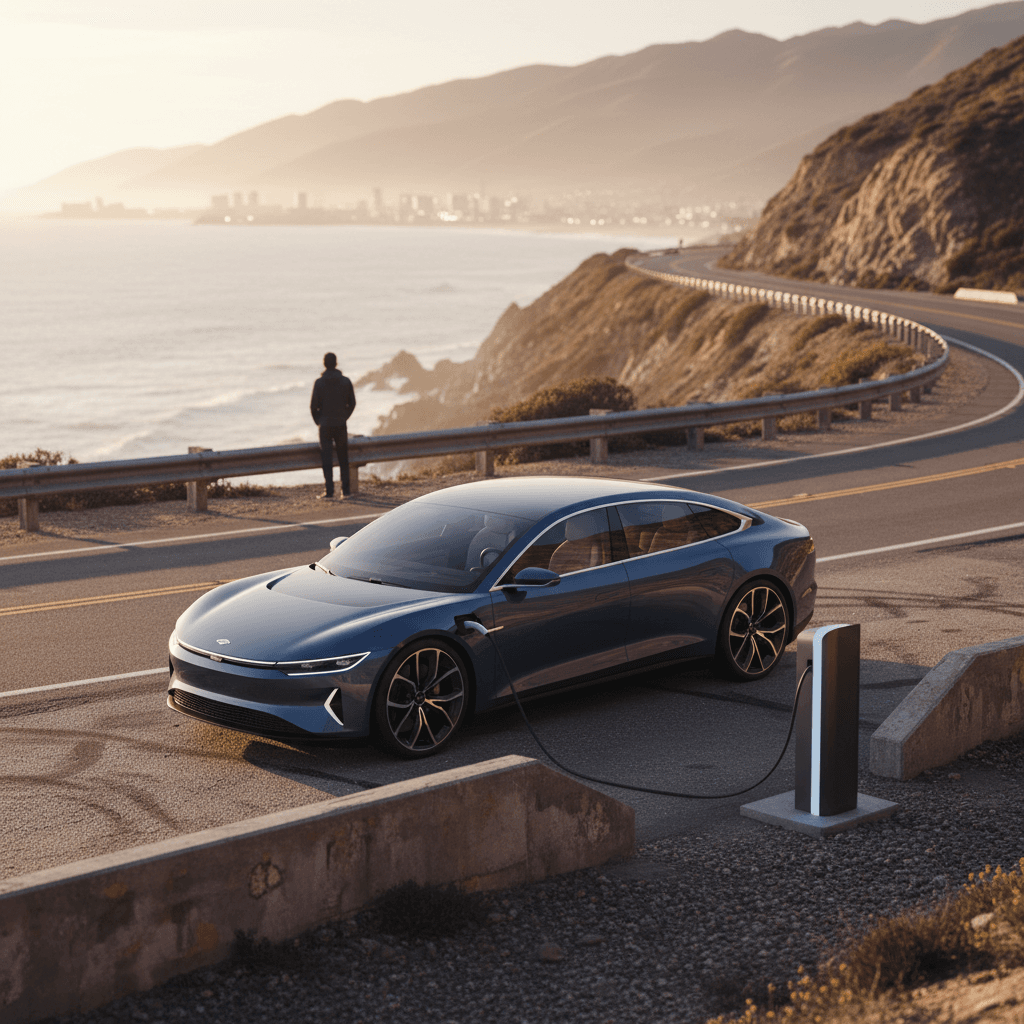
If you drive 50–150 miles a day, the **best electric car for a long commute** isn’t just the one with the biggest battery. The right EV is the one that covers your round‑trip with a buffer, keeps you comfortable for hours, and doesn’t hammer your budget with payment or charging costs. This guide walks you through how to choose the right commuter EV, plus specific models worth a look, especially on the used market.
What counts as a “long commute”?
How to choose an electric car for a long commute
1. Real‑world range, not just brochure numbers
EPA range is a good starting point, but **highway speeds, winter temps, and HVAC use** can trim 20–35% off the sticker number. A car rated at 300 miles might deliver 200–240 miles at 70–75 mph in cold weather. For a long commute, you want a car that can comfortably do **at least 2× your daily round trip** without going to 0% every day.
2. Efficiency and cost per mile
For commuters, efficiency (mi/kWh) matters as much as range. A highly efficient EV, think **3.5–4.5 miles per kWh**, can cut your daily fuel bill by a third compared with a heavy, power‑hungry model. Over 15,000–20,000 miles a year, that adds up.
- Battery health and warranty coverage, especially on a used EV
- Ride comfort, seat support, and cabin noise at 70+ mph
- Driver‑assist features like adaptive cruise and lane centering
- Charging access at home and/or at work
- Total cost of ownership: payment + electricity + maintenance
Think in round‑trips, not just range numbers
How much range do you really need for your commute?
Range needs for common U.S. commutes
If you’re driving **60–80 miles a day**, even a compact EV with a 220–250‑mile rating can work well. Once you’re routinely over **100 miles a day**, life gets easier in something rated **250–320 miles or more**, because you’re not flirting with low state of charge every evening.
Minimum practical EPA range by daily commute distance
Use this as a conservative planning tool assuming mixed highway driving and seasonal weather.
| Daily round trip | Comfortable EPA range | Why it works |
|---|---|---|
| Up to 50 miles | 180+ miles | Plenty of buffer even with winter losses. |
| 60–80 miles | 220–260+ miles | You won’t need to charge to 100% every night. |
| 90–120 miles | 250–300+ miles | Gives room for detours and bad weather. |
| 130–150 miles | 300–340+ miles | Long‑range pack recommended; workplace charging is a bonus. |
Assumes home charging most nights and occasional side trips or errands.
Beware “just enough” range in winter
Best electric cars for a long commute (2025–2026)
There is no single **best electric car for a long commute**, it depends on your budget, range needs, and whether you’re shopping new or used. Below is a short list of models that consistently stand out for range, efficiency, and everyday livability. Many are excellent finds on the used market, where Recharged focuses.
Top EV picks by commuter profile
From budget‑friendly used options to long‑range highway cruisers.
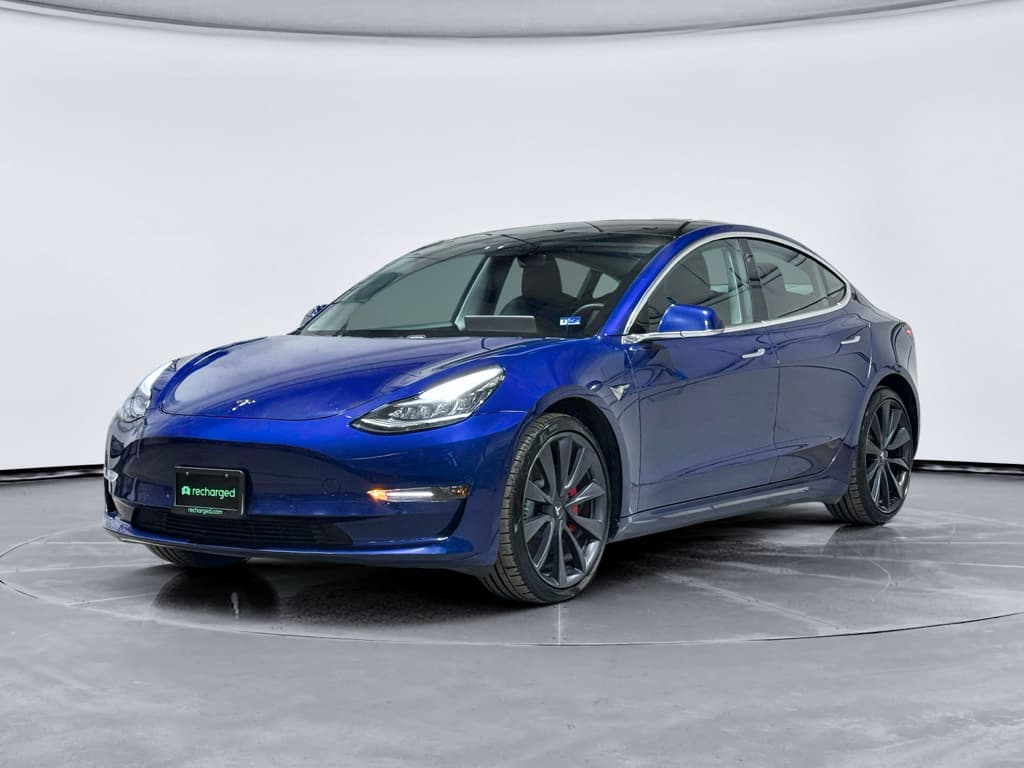
Best overall commuter: Tesla Model 3 Long Range
Why it works: Real‑world 280–330 miles of range, excellent efficiency (often 3.5–4.0 mi/kWh), and strong driver‑assist features make the Model 3 LR a benchmark commuter sedan.
- Ideal daily commute: Up to ~140 miles round trip with comfortable buffer.
- Used market: Plenty of 2018–2023 cars with remaining battery warranty, often at attractive prices compared with new long‑range EVs.
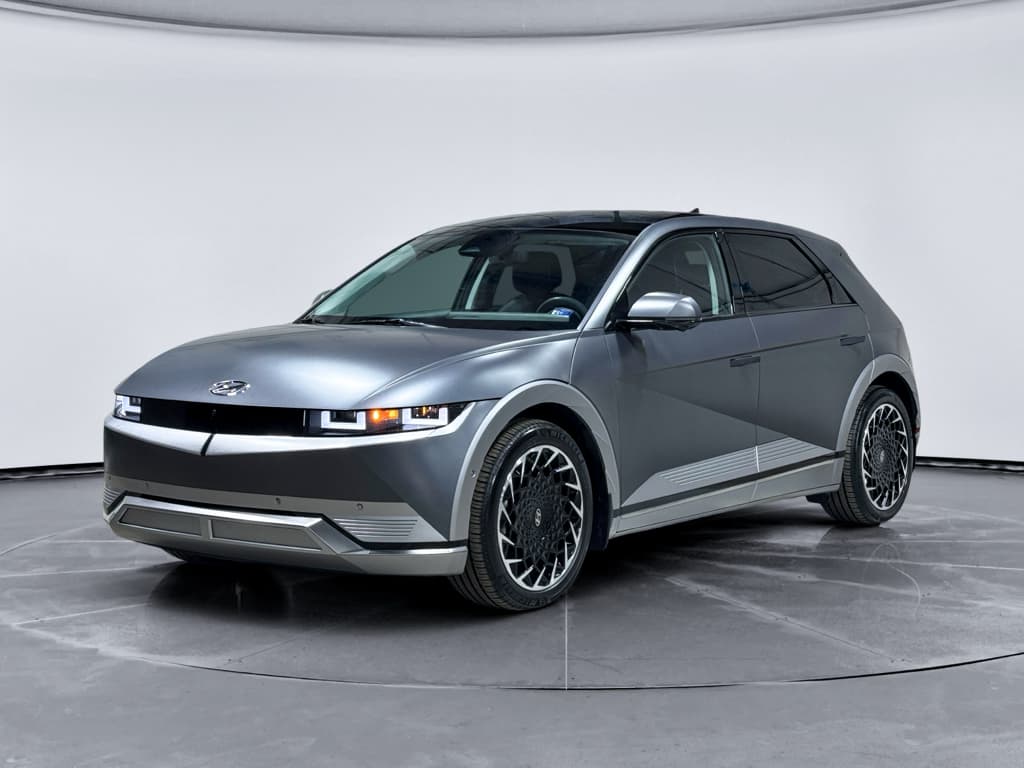
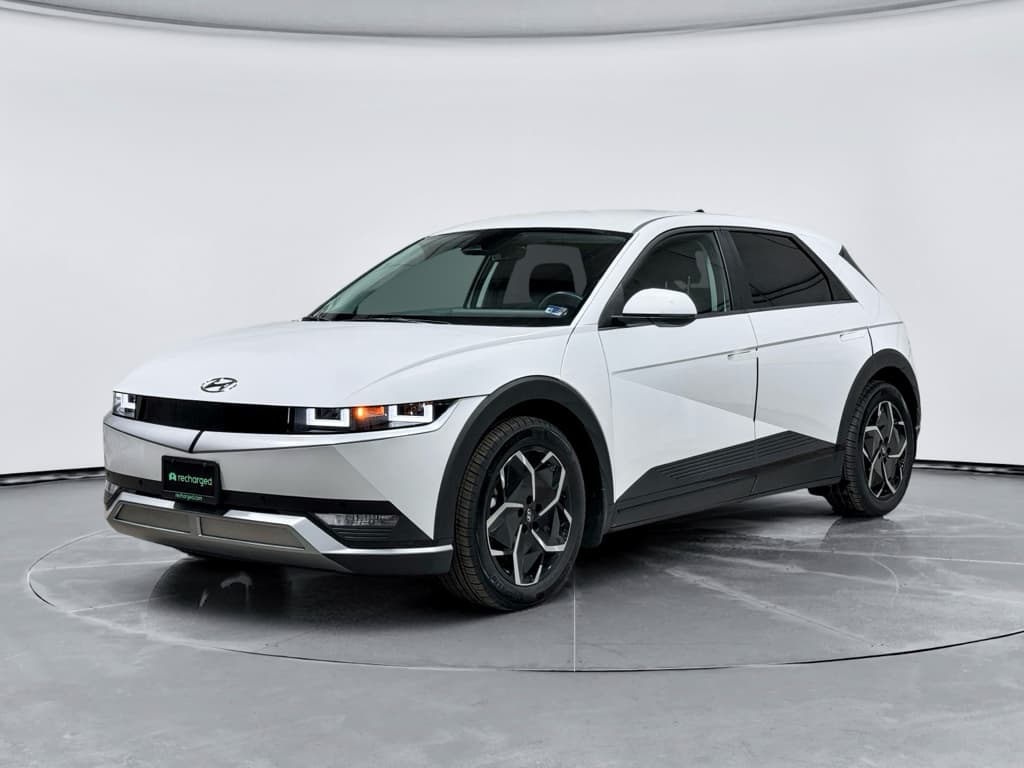
Best small crossover: Hyundai Ioniq 5 & Kia EV6
Why they work: Both share a highly efficient 800‑volt platform with **fast DC charging** and good real‑world range. Comfy cabins, quiet at speed, and strong tech.
- Ideal daily commute: 80–130 miles round trip.
- Used market: 2022–2024 models are hitting attractive prices, especially in rear‑wheel‑drive trims.
Highway cruiser: Hyundai Ioniq 6
Why it works: One of the **most efficient EVs on sale**, with many testers seeing well over 4 mi/kWh in real use. Sleek aerodynamics mean less range loss at 70–75 mph.
- Ideal daily commute: 100–150 miles round trip, especially if you do mostly highway.
- Comfort notes: Quiet cabin and relaxed ride compared with sportier EVs.
More good long‑commute EV options
If you need extra space or want something less sedan‑like.
Tesla Model Y Long Range
Best for: Drivers who want SUV practicality plus solid range. The Model Y LR is widely available used, offers **300+ miles EPA** in many trims, and pairs well with Tesla’s dense Supercharger network for the occasional road trip.
For commuters, the higher ride height and large cargo space make it an easy daily family hauler.
Chevrolet Bolt EUV / Bolt EV (for shorter long commutes)
Best for: Budget‑minded commuters doing roughly **60–90 miles a day**. The Bolt twins are extremely efficient and often some of the most affordable used EVs on the market.
Just know that real‑world highway range is more modest, so they’re better for long but not extreme commutes, especially in colder climates.
Comfort‑first picks: VW ID.4, Nissan Ariya, Volvo XC40 Recharge
Best for: Commuters who prioritize a cushy, quiet ride over razor‑sharp efficiency. These crossovers offer respectable range, relaxed driving manners, and supportive seating for longer stints.
They shine in mixed suburban/highway duty where comfort and features carry as much weight as range.
How Recharged can help you narrow it down
Ready to find your next EV?
Browse VehiclesComfort, noise, and features that matter when you’re in the car every day
When you spend 90 minutes or more in the car daily, range is only half the picture. The **best electric car for a long commute** is one you’re happy to sit in, day after day. That means paying attention to cabin comfort, seating, noise, and driver‑assist tech in the same way you’d scrutinize a battery spec sheet.
Daily‑commute comfort checklist
Supportive seats for your back and legs
Look for **height and lumbar adjustment**, a tilt‑telescoping steering wheel, and enough thigh support. A 30‑minute test drive often isn’t long enough, if you can, try to get an extended drive that mimics your real commute.
Quiet cabin and low wind noise
EVs are naturally quiet, so **road and wind noise stand out** more. On your test drive, pay attention at 65–75 mph on typical pavement. That’s where some budget models can feel tiring over time.
Adaptive cruise and lane centering
For heavy traffic or long freeway stretches, **adaptive cruise control and lane‑keeping assist** take a lot of mental load out of the drive. Tesla Autopilot, Hyundai/Kia Highway Driving Assist, and many newer systems work well for commuting when used attentively.
Heated seats & steering wheel for cold climates
Cabin heat is one of the bigger range hits on cold days. **Heated surfaces use far less energy** than blasting the climate control, which lets you stay comfortable without dramatically cutting range.
Good visibility and simple controls
Large glass areas, clear mirrors, and controls that don’t bury basics in three layers of touchscreen menus all matter when you’re driving the same route, half‑awake, at 6:30 a.m.
Charging strategy for long commutes
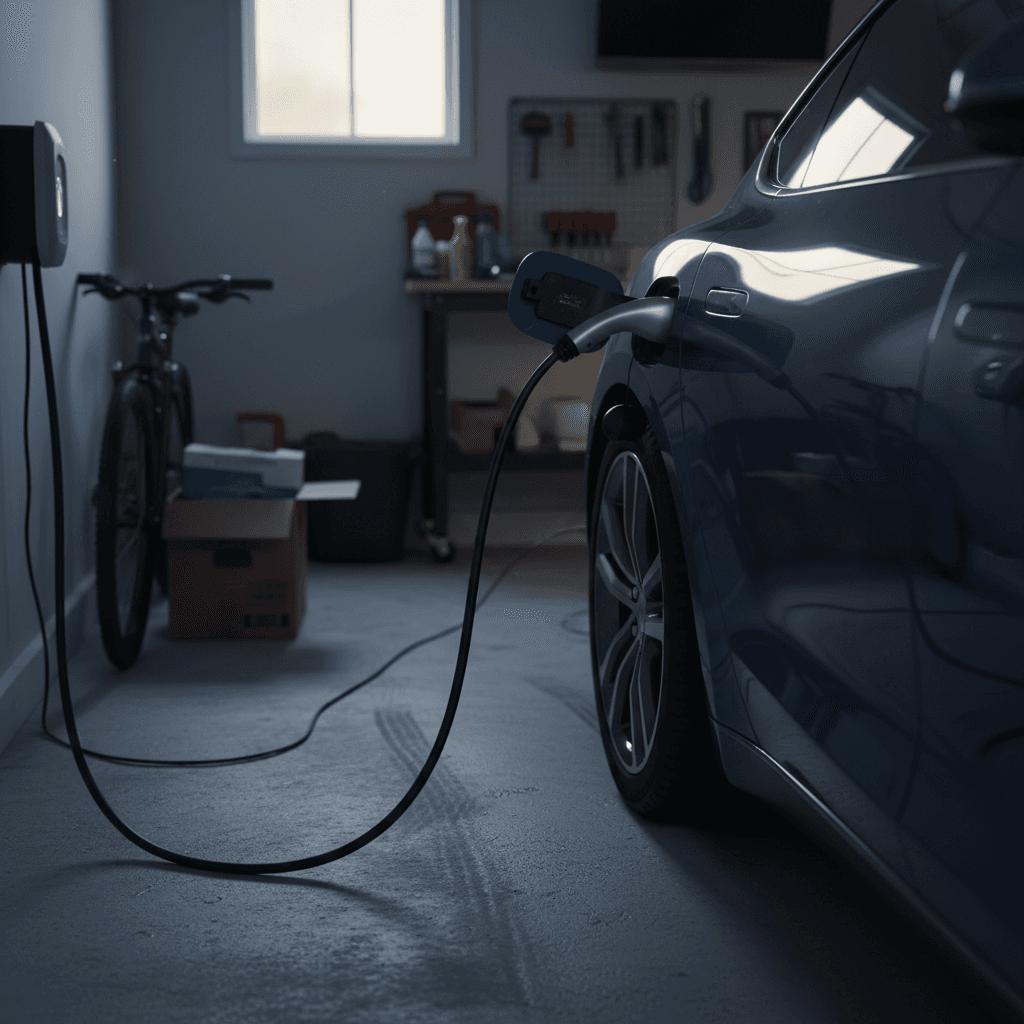
For a long daily commute, the most stress‑free setup is **Level 2 home charging** (a 240‑volt circuit) and, if possible, some access at work. That way, you start most days near full and rarely need public charging unless you’re stacking errands or road trips on top of your workday.
Typical long‑commute charging setups
Match your daily miles to the right home/work charging plan.
Home Level 1 + conservative driving
Who it fits: 40–60 mile daily commuters who can’t install Level 2 yet.
- Uses a standard 120‑volt outlet.
- Adds roughly 3–5 miles of range per hour.
- Works best with efficient EVs and moderate distances.
Home Level 2 (most ideal)
Who it fits: Most drivers doing **60–150 miles a day**.
- 240‑volt circuit adds ~20–40 miles of range per hour, depending on the car.
- Overnight, you can easily refill a full day’s commute.
- Lets you charge to ~80–90% and avoid living at 100% every day.
Workplace charging backup
Who it fits: Drivers with **very long commutes (120–150 miles)** or limited home options.
- Topping up a few hours at work on Level 2 makes borderline commutes easy.
- Also provides a safety net in winter when range shrinks.
Don’t depend on DC fast charging every day
If you’re buying through Recharged and aren’t sure what you need, EV specialists can help you map your **commute miles to a charging plan**, estimate your nightly energy use, and even coordinate home‑charging installation partners in many areas.
What you’ll actually spend per mile on a long EV commute
When you’re piling on 15,000–20,000 miles a year, **fuel cost per mile** matters a lot. The headline math in 2025 is still straightforward: for most U.S. drivers charging at home, an EV is significantly cheaper to “fuel” than a comparable gas car, especially if your EV is efficient.
Sample fuel cost per mile: EV vs gas for a long commute
Illustrative 2025 numbers for a commuter driving 15,000 miles per year.
| Vehicle type & efficiency | Energy price assumption | Fuel cost per mile | Annual fuel cost (15,000 mi) |
|---|---|---|---|
| Typical gas car (26 mpg) | $3.15/gal gas | ≈ $0.12/mi | ≈ $1,800 |
| Efficient EV commuter (4.0 mi/kWh) | $0.17/kWh home electricity | ≈ $0.043/mi | ≈ $650 |
| Less efficient EV (3.0 mi/kWh) | $0.17/kWh home electricity | ≈ $0.057/mi | ≈ $850 |
Actual costs depend on your local electricity and gasoline prices.
The real impact on your budget
Buying a used EV for a long commute
A lot of the best commuter EVs, Model 3, Model Y, Bolt, Ioniq 5, EV6, are now plentiful on the **used** market. That’s good news if you want a long‑range, feature‑rich car without new‑car pricing. The trade‑off is that you need to look harder at **battery health, warranty, and prior use**.
Key used‑EV questions for long‑distance commuters
How strong is the remaining battery health?
Ask for hard data, not just a dash gauge. Recharged’s **Recharged Score Report** uses professional diagnostics to show actual battery health and expected range so you’re not guessing before committing to 80‑mile days.
Is the car still under battery warranty?
Most OEMs back the battery for **8 years or 100,000+ miles**. A younger car or one with lower mileage may give you more peace of mind if you’re planning to rack up serious miles quickly.
Was it road‑tripped or fast‑charged heavily?
Long‑distance road‑trip use with frequent DC fast charging doesn’t automatically ruin a pack, but for a commuter, a car that lived mostly on **home Level 2** is a nice bonus.
Does it have the driver‑assist tech you want?
On some models, adaptive cruise and lane‑keeping were optional packages. Confirm they’re included instead of assuming every used EV has them.
What’s the real‑world range on your route?
Whenever possible, take a **test drive that mimics your commute**, speed, elevation, and climate. Pay attention to energy consumption (kWh/mi) instead of just watching the remaining‑miles estimate.
Leverage data, not just impressions
Checklist: is this EV right for your commute?
10‑minute fit test for long‑commute EVs
1. Daily miles vs. practical range
Multiply your daily round trip by **1.5–2.0**. Does the car’s realistic range (EPA minus 20–30%) still clear that number?
2. Home charging plan
Do you have **at least a 120‑volt outlet** near parking and a path to upgrading to Level 2, or reliable workplace charging?
3. Comfort at highway speeds
On a test drive, spend time at **your actual cruising speed**. Are noise levels, seat comfort, and ride quality acceptable for 60–90 minutes?
4. Driver‑assist that truly helps
Try adaptive cruise and lane centering in traffic. Do they reduce fatigue or feel jumpy and intrusive?
5. Total monthly cost, not just payment
Add your estimated **electricity cost per month** to your payment and insurance. Compare that to your current gas + payment to see real savings.
6. Battery health and warranty headroom
Confirm you’ll have several years of **battery warranty coverage left** at your expected mileage, and review any third‑party battery report you can get, like Recharged’s Score Report.
FAQ: Long commutes in an electric car
Frequently asked questions about long EV commutes
If you’re logging serious miles every day, the **best electric car for a long commute** is the one that threads a few needles at once: enough real‑world range to make winter a non‑issue, a cabin you’re happy to live in, charging that fits your routine, and running costs that make your spreadsheet smile. Whether that ends up being a used Model 3, an Ioniq 5, a Bolt, or something else entirely, focusing on **range headroom, battery health, comfort, and charging access** will steer you to the right fit. And if you’re shopping used, Recharged can put hard numbers behind those decisions so the car you drive home is one you’ll trust for tens of thousands of commute miles to come.