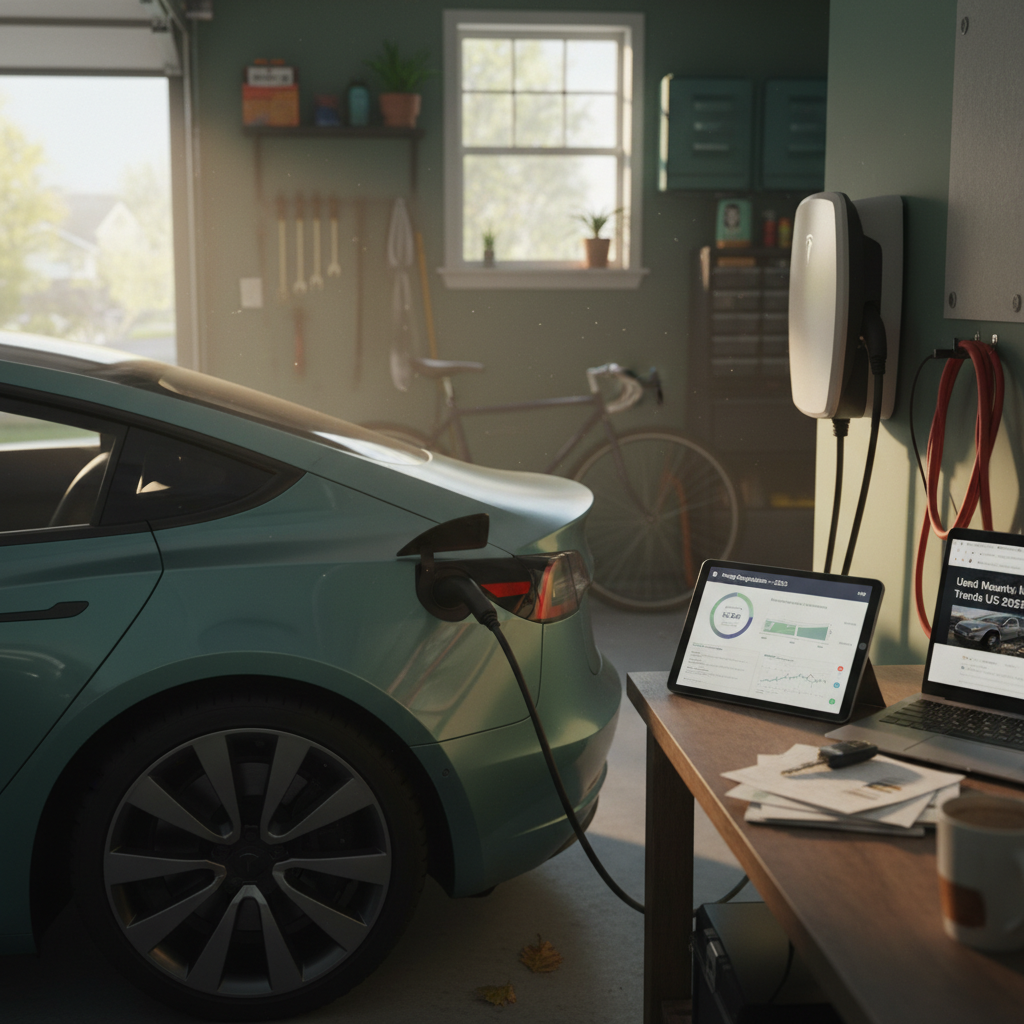
Ask three EV nerds what the best electric car battery is and you’ll get four answers. Some will shout “Tesla,” others swear by Hyundai and Kia, and a growing chorus says, “Give me LFP and leave me alone.” The truth is more interesting: in 2025, “best battery” isn’t one pack or one brand. It’s the battery that matches how you actually live with your car.
Quick Take
What Does “Best Electric Car Battery” Actually Mean?
When people ask about the best electric car battery, they’re usually mixing up a few different questions:
- Which EV goes the farthest on a charge?
- Which batteries last the longest before they noticeably degrade?
- Which brands stand behind their packs with strong warranties?
- Which cars can fast‑charge the quickest on a road trip?
- Which batteries are safest and cheapest to live with long term?
Engineering “best”
From an engineer’s perspective, the best battery has high energy density, excellent cycle life, strong safety performance, and remains stable across temperature extremes. That’s why labs and suppliers are obsessing over newer NMC blends, LFP packs, and the holy grail: solid-state cells.
Owner “best”
From your perspective, the best battery is the one that:
- Doesn’t lose range quickly
- Charges fast enough that road trips aren’t a chore
- Is covered by a clear warranty
- Doesn’t torpedo resale value
How to Read This Guide
EV Battery Chemistries: LFP, NMC and What They Mean for You
Underneath the marketing, nearly every modern EV still uses some flavor of lithium‑ion. The two dominant chemistries on the road today are NMC (nickel‑manganese‑cobalt) and LFP (lithium‑iron‑phosphate), and they behave differently in the real world.
LFP vs NMC: Which Is the “Best” Battery Chemistry?
Two mainstream choices; different strengths.
LFP (Lithium‑Iron‑Phosphate)
- Pros: Excellent cycle life, very stable chemistry, low fire risk, tolerates daily 100% charging better, often cheaper.
- Cons: Lower energy density (heavier for the same range), can lose some punch in cold weather.
- Great for: City driving, fleet duty, owners who always fast‑charge to 100%.
NMC (Nickel‑Manganese‑Cobalt) & Relatives
- Pros: Higher energy density (more miles per kWh), strong performance, good fast‑charging potential.
- Cons: More expensive materials, slightly more sensitive to heat and high‑SOC storage.
- Great for: Long‑range highway cars, performance EVs, road‑trip warriors.
Don’t Judge by Chemistry Alone

Which Brands Currently Have the Best Electric Car Batteries?
Every brand will tell you they’ve cracked the battery code. A more honest look in 2025: several automakers are building consistently excellent packs, judged by range, efficiency, low degradation, and strong warranties.
Battery Standouts in 2025 (Big Picture)
Hyundai / Kia / Genesis: Warranties and Real‑World Durability
If you forced me to hand out a single “best mainstream battery program” award in 2025, it would likely go to Hyundai Motor Group, Hyundai, Kia, Genesis. Their E‑GMP‑based EVs (IONIQ 5/6, EV6, EV9, GV60, etc.) pair competitive range and charging performance with some of the industry’s strongest battery warranties, often 10 years with a capacity guarantee around 70%.
Tesla: Efficiency and Charging Network
Tesla still builds some of the most efficient EVs on the road. The Model 3 Long Range and Model Y deliver robust real‑world range from relatively modest‑size packs, and their NCA/NMC chemistries have aged well in the field. Meanwhile, Tesla’s increasing use of LFP packs in rear‑wheel‑drive models trades a bit of range for longevity and simplicity, very attractive if you mostly drive in town and charge to 100% frequently.
Mercedes, BMW, and the Premium Set
Brands like Mercedes‑Benz, BMW, Audi, and Porsche are pushing the envelope on fast‑charging and high‑performance packs. The latest Porsche Taycan, for instance, has become a DC fast‑charging benchmark, hitting extremely high charge rates while software carefully protects long‑term health. These aren’t cheap batteries or cheap cars, but they show where the technology is headed.
Rivian, Ford, GM and the Truck Crowd
In the truck world, Rivian, Ford, and GM are hauling very large battery packs around. Here the question isn’t just energy density; it’s thermal management while towing, repeated fast‑charging on long routes, and how gracefully the pack ages under heavy loads. Rivian in particular has earned praise for transparent software tools that show battery conditioning and state of charge, which matters when you’re planning a 500‑mile towing day.
So Which Brand Is "Best" Right Now?
Range vs Longevity: How to Think About Battery Life
Advertised range sells cars; stable range keeps people happy five years later. When you’re trying to pick the best electric car battery, you’re really balancing three things: initial range, how quickly that range declines, and how gracefully the car fast‑charges as the pack ages.
Range vs Longevity: What Matters Most for You?
Use this to decide whether you should prioritize maximum range or slower degradation.
| Driver Type | Top Priority | Ideal Chemistry | What to Look For |
|---|---|---|---|
| High‑mileage commuter (60+ mi/day) | Slow degradation | LFP or well‑cooled NMC | Big capacity buffer, strong warranty, good efficiency |
| Occasional road‑tripper | Balanced range + longevity | Modern NMC | Good DC fast‑charge curve, 250–300+ mile rated range |
| Frequent road‑tripper | Fast charging + range | High‑end NMC | 400V/800V architectures, proven fast‑charging behavior |
| City driver, low miles | Simplicity + low cost | LFP | Smaller pack OK, focus on durability and warranty |
| Towing / adventure | Thermal management | Robust NMC | Truck‑specific packs with good cooling and detailed monitoring |
Different drivers should optimize for different battery strengths.
Real‑World Test: The 80% Rule
Battery Warranties: Where the Rubber Meets the Road
Replacing an EV pack can run from the mid‑four figures to truly eye‑watering money. The best battery, therefore, is also the one with the best safety net. By 2025, most mainstream EVs in the U.S. carry at least 8 years / 100,000 miles of battery coverage, typically with a promise that the pack will retain around 70% of its original capacity over that period.
Battery Warranty Leaders in 2025
Not all warranties are created equal.
Hyundai / Kia / Genesis
Standout coverage, often 10 years with a clear capacity guarantee. If you’re anxious about long‑term battery life, these brands are a safe bet.
Tesla
Coverage varies by model but typically offers 8 years with generous mileage caps and a 70% capacity guarantee. Strong track record in the field.
Others
Most other brands cluster around 8 years / 100,000 miles. The details, capacity thresholds, exclusions, matter, so read the fine print before you sign.
Warranty Fine Print to Check
Degradation: What Actually Happens to EV Batteries Over Time?
The scary stories you’ve heard, "the battery will be useless in five years", mostly date back to early, poorly cooled packs. Modern EV batteries are aging far more gracefully. Large real‑world datasets show many packs losing well under 10% capacity in the first 5–6 years if they’re not abused.
- Battery degradation is front‑loaded: you often lose the first few percent relatively quickly, then the curve flattens.
- Heat is the enemy. Hot climates and frequent DC fast‑charging can accelerate wear, especially on packs with weak cooling.
- Living at very high or very low state of charge for long periods (parked at 100% for weeks) isn’t ideal.
- LFP packs tend to be more tolerant of daily 100% charging than older NMC designs.
The Real Battery Killers
Solid-State Batteries: The Future “Best” EV Battery?
Every EV presentation these days includes a slide about solid‑state batteries: higher energy density, faster charging, improved safety. Automakers and suppliers from Toyota and Nissan to BYD, Stellantis and SVOLT are racing to get them from lab bench to street.
- Several companies plan demonstration fleets with semi‑solid or all‑solid‑state packs in the 2026–2028 window.
- Chinese giants like BYD and CATL are publicly targeting limited all‑solid‑state EV production around 2027, scaling into the 2030s.
- Others, like Hyundai/Kia, are more conservative, pointing to 2030+ for solid‑state tech in customer cars.
So Should You Wait for Solid‑State?
Choosing the Best Battery for You: Key Use Cases
Instead of chasing a mythical “best electric car battery,” match a battery’s strengths to how you actually drive. Here’s how that breaks down in the real world.
Best Battery by Driver Type
Daily commuter, mostly urban or suburban
You’ll get along beautifully with an <strong>LFP‑equipped</strong> car or a modest‑size NMC pack. Prioritize reliability, warranty, and a comfortable buffer above your daily miles, not headline range.
Road‑trip enthusiast
Look for a <strong>high‑efficiency NMC pack</strong> with proven fast‑charging behavior, cars based on 800‑volt architectures or very strong charge curves are your friend.
Occasional long trips, mostly short hops
You don’t need the biggest pack on the market. Choose a car where an 80% charge comfortably covers your longest routine drive and focus on comfort, charging network, and warranty.
Towing and outdoor adventure
You want the <strong>most robust cooling system</strong> you can find and a brand that communicates clearly about range while towing. Bigger pack, lower stress.
Budget‑conscious used EV buyer
Your best battery is a <strong>well‑documented one</strong>. Prioritize cars with a clean battery health report, decent remaining warranty, and a verified history of sane charging behavior.
How Recharged Evaluates Battery Health on Used EVs
On the used market, two identical cars can have very different batteries hiding under the floor. That’s why Recharged bakes battery health into everything we do, so you’re not buying an EV on vibes and guesswork.
Inside the Recharged Score Battery Health Check
What we look at before a used EV ever hits our site.
Verified State of Health
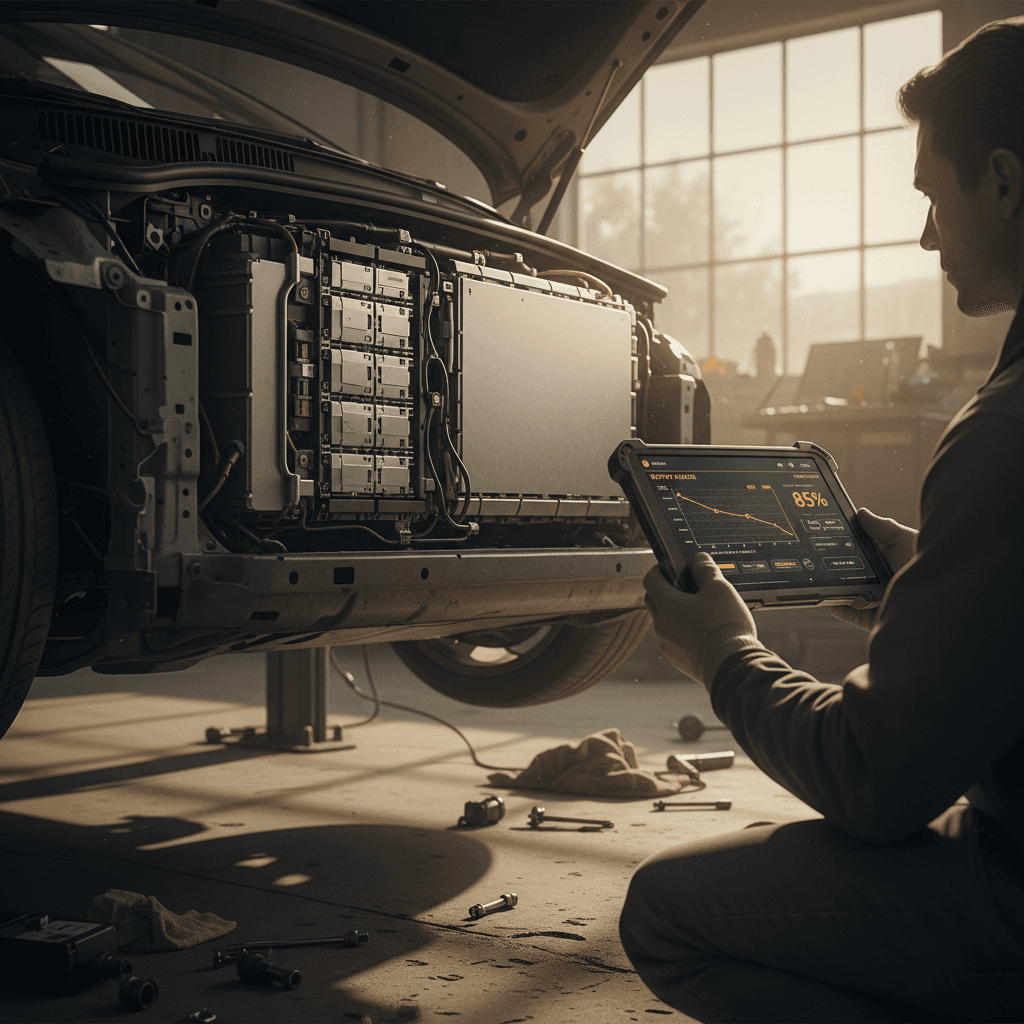
We pull pack data through diagnostics and OEM‑grade tools to estimate remaining capacity, not just miles on the odometer.
Thermal & Charging History
Where possible, we consider how the car’s been charged and driven, high‑heat fast‑charge abuse leaves a signature.
Transparent Report
Every vehicle gets a Recharged Score Report summarizing battery health, fair market pricing, and our expert notes in plain English.
Ready to find your next EV?
Browse VehiclesWhy This Matters for You
FAQ: Best Electric Car Battery in 2025
Frequently Asked Questions
The Bottom Line on the Best EV Battery
In 2025, the “best electric car battery” isn’t a single pack, a single automaker, or a future solid‑state miracle that’s always three years away. It’s a modern lithium‑ion battery, LFP or NMC, from a brand that backs it with a strong warranty, cools it properly, and tells the truth about its state of health. For you, the smart play is simple: choose a battery that comfortably fits your life on 80% charge, with room for degradation, and insist on real data when you’re buying used.
That’s where Recharged comes in. Every EV we sell includes a Recharged Score Report with verified battery diagnostics, fair market pricing, and EV‑specialist support from first click to delivery. You bring your driving habits; we’ll help you find the battery, and the car, that actually match them.