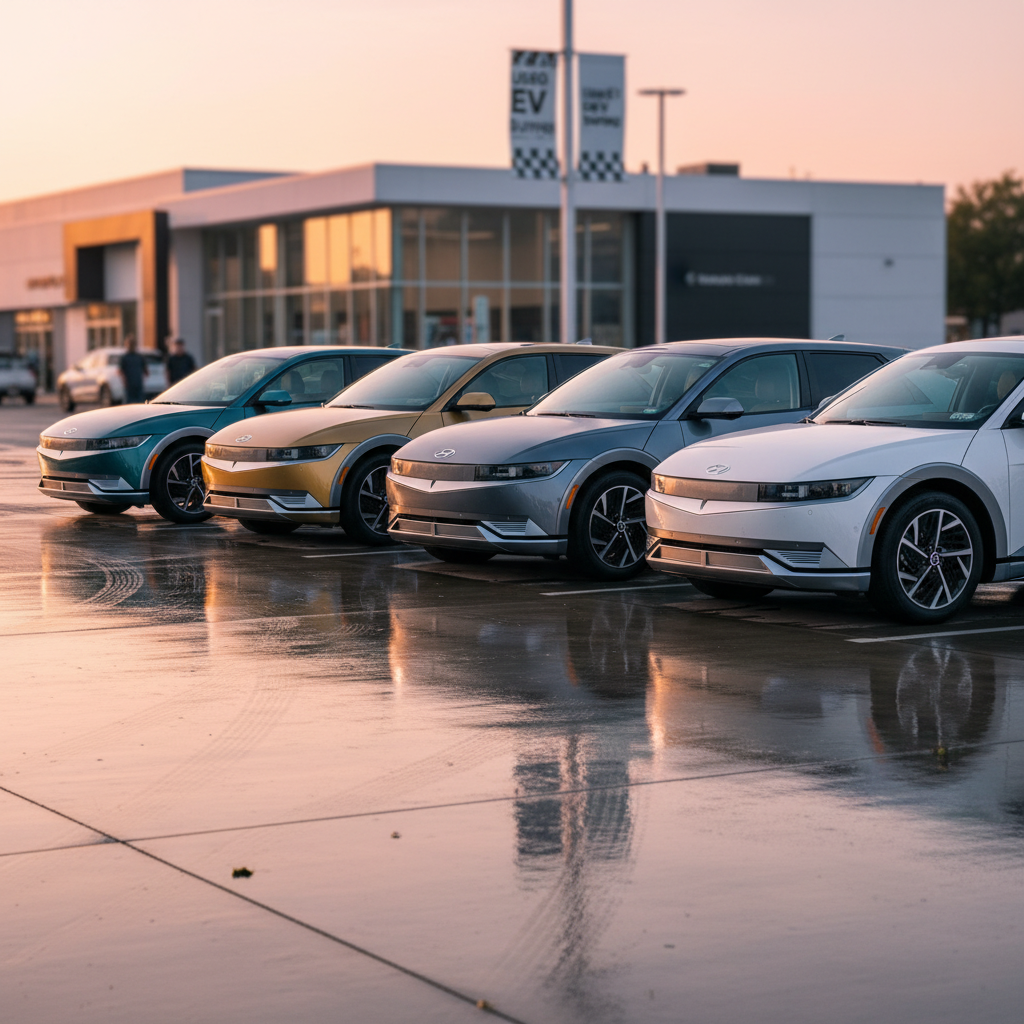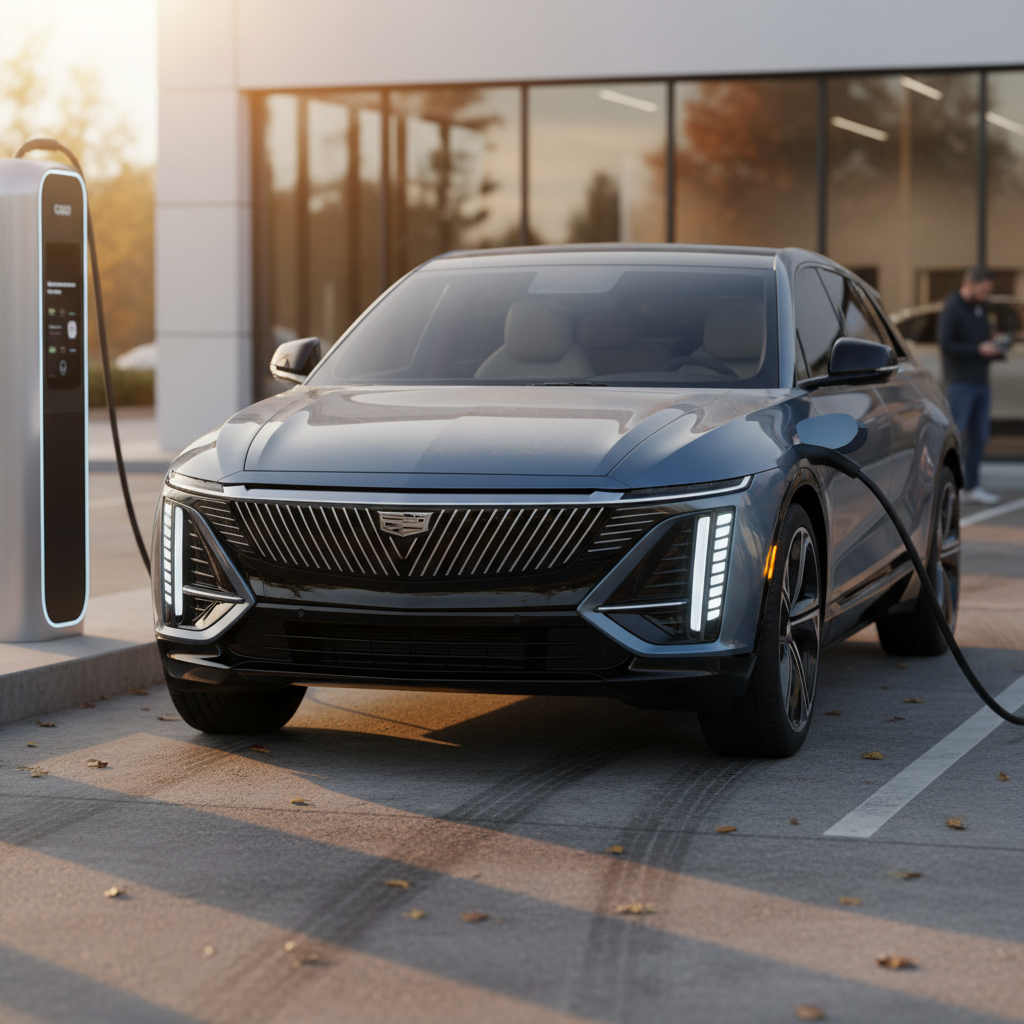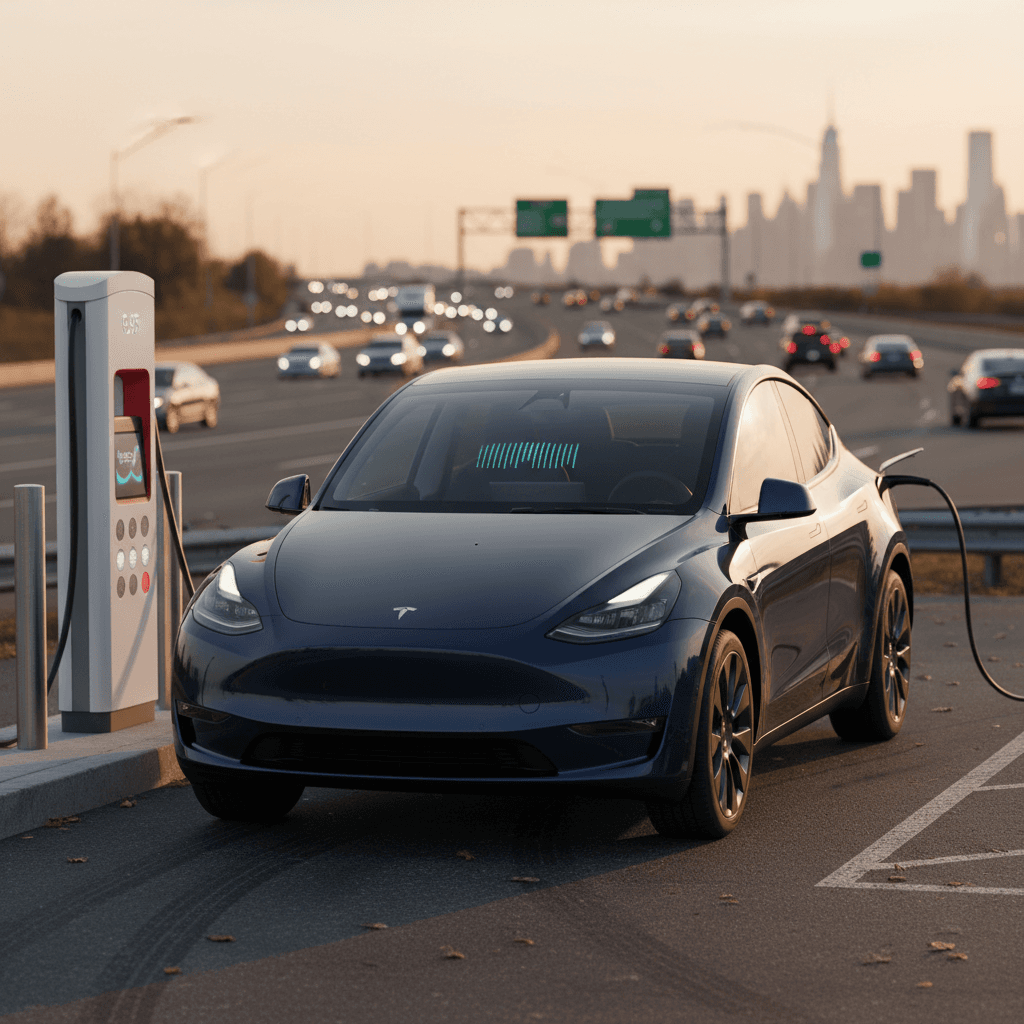
If you’re planning an electric road trip up or down the East Coast, you’re probably asking the same question as everyone else: what are the best charging stops along I‑95? The good news is that from Miami to Maine, I‑95 has quietly become one of the most EV‑friendly corridors in the country, if you know where to stop and how to plan.
What this guide covers
Why I‑95 Is Finally EV‑Friendly
For years, long‑distance EV travel on I‑95 meant careful planning and a strong stomach for risk. That’s changed. Tesla built out its Supercharger network early along major interstates, and other players, Electrify America, EVgo, ChargePoint, and now oil‑company spin‑offs like BP Pulse, have followed. Today, I‑95 is one of the most developed fast‑charging corridors in the U.S., with dozens of sites in every East Coast state, usually anchored at malls, travel plazas, or big‑box retail.
Fast Charging Along the I‑95 Corridor (Big Picture)
Use apps, not blog lists, for live data
Major Charging Networks Along I‑95
Key Fast‑Charging Networks on I‑95
You’ll see these logos again and again along the corridor
Tesla Supercharger (NACS)
The densest, most reliable network along I‑95. Originally Tesla‑only, many sites now support non‑Tesla EVs using the North American Charging Standard (NACS). Power typically ranges from 150–250 kW, with some new V4 sites capable of more.
If you drive a non‑Tesla, check whether your vehicle has a built‑in NACS port or if you’ll need an adapter.
Electrify America (CCS/CHAdeMO)
Electrify America’s first build‑out explicitly targeted interstate corridors like I‑95, placing sites at Walmarts, shopping malls, and travel plazas. Many locations offer 4–10 stalls up to 150–350 kW, supporting most CCS EVs and some CHAdeMO.
Other Networks (EVgo, ChargePoint, BP, etc.)
EVgo and ChargePoint fill in urban gaps along the corridor, downtowns, grocery stores, and parking garages. Newer entrants like BP Pulse are adding ultra‑fast hubs at travel centers and restaurants in the Southeast.
Connectors You’ll See
- NACS (Tesla / J3400): Becoming the de‑facto standard; used by Tesla and rapidly adopted by Ford, GM, Rivian, Hyundai and others.
- CCS1: The current default on most non‑Tesla EVs; widely supported at Electrify America, EVgo, and many others.
- CHAdeMO: Legacy fast‑charge standard (older Leafs); support is waning but still exists at some EA and EVgo sites.
What That Means For You
If you own a newer non‑Tesla EV (especially 2025+), you may have a NACS port and can treat Tesla Superchargers as a primary network. If you drive an older CCS‑only model, you’ll lean more on Electrify America and EVgo while using adapter‑compatible Tesla sites where allowed.
Best I‑95 Charging Stops by Region
Rather than pretending there’s a single “top 10” list that never changes, it’s more useful to think in regional segments with a few standout hubs in each. Below are examples of consistently useful stops along I‑95, chosen for a mix of charger density, reliability reputation, and on‑site amenities. Always verify details in a live app before you go, operators add, move, and upgrade sites constantly.
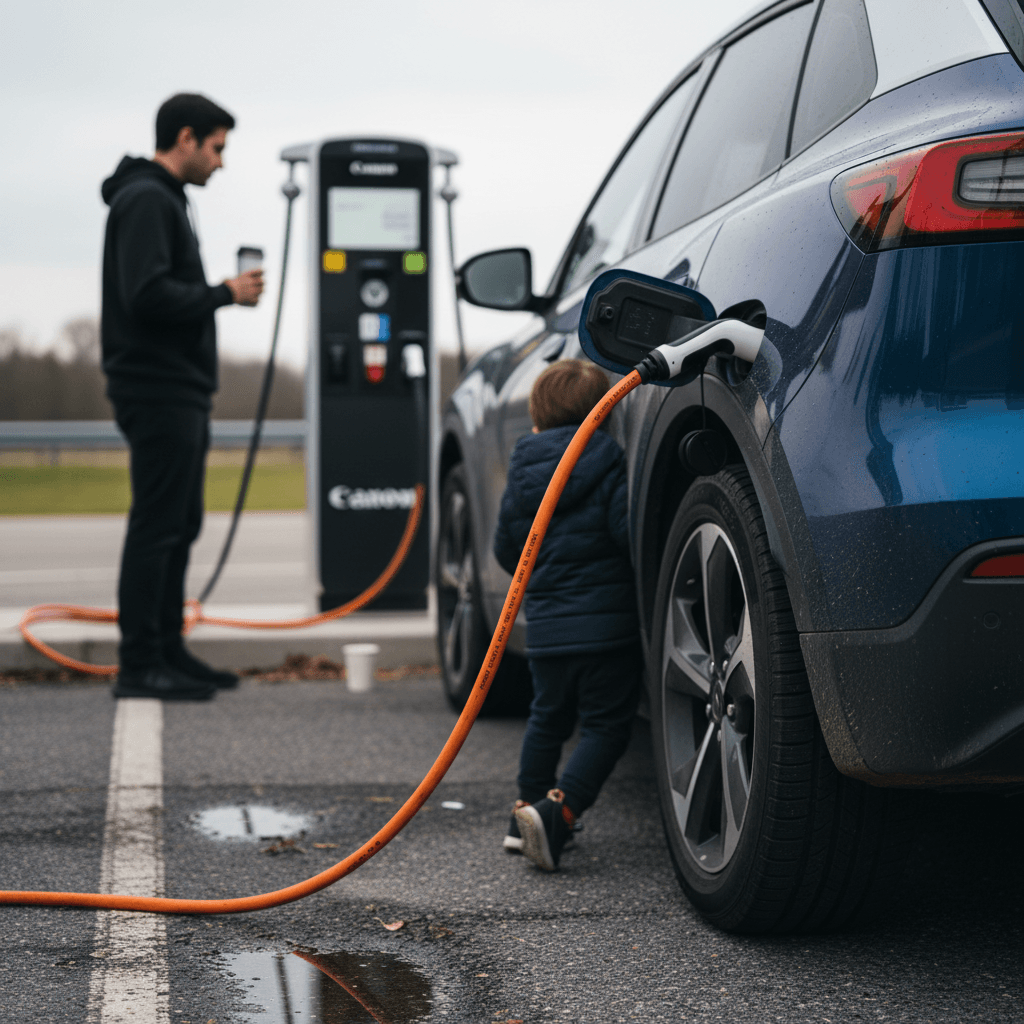
Southeast: Florida to the Carolinas
- Orlando, FL (I‑4 / I‑95 access) – A major charging cluster with multiple high‑power sites, including Electrify America’s NACS/CCS pilot station at The Florida Mall and numerous Tesla Superchargers plus hotel‑based Level 2 options. Great place to top off before or after tackling long rural stretches in Georgia and the Carolinas.
- Jacksonville, FL & Kingsland/Brunswick, GA – The Florida–Georgia border area offers a string of DC fast chargers near outlet malls, restaurants, and truck‑stop style travel centers, ideal for a meal stop and big battery refill heading north or south.
- Savannah, GA / Pooler – A natural break point between Florida and the Carolinas with Tesla and non‑Tesla fast chargers clustered around shopping centers and airport‑adjacent retail; popular with vacation traffic.
- Florence & Fayetteville, NC – Classic I‑95 waypoints with growing DC fast‑charge options at national chains. You’ll typically find food, Wi‑Fi, and restrooms within the same parking lot.
Mid‑Atlantic: Virginia, D.C., and the Northeast Gateway
Between Richmond and the Delaware Memorial Bridge, you’re almost never more than a short detour from a fast charger. The trick is prioritizing bigger sites at malls and outlet centers over lone chargers tucked behind a bank.
- Richmond, VA area – As both a state capital and an EV hub, Richmond has multiple fast‑charging clusters near I‑95 with easy access to food and shopping. It’s also home turf for Recharged’s Experience Center if you want to see used EVs in person.
- Fredericksburg & Woodbridge, VA – Heavy commuter zones where Tesla Superchargers, Electrify America, and others converge at big retail centers. They’re ideal buffer stops before you hit D.C. congestion.
- Baltimore suburbs (White Marsh, Columbia) – Look for large charging hubs at outlet malls and shopping plazas east and west of the city to avoid downtown traffic while still staying close to I‑95.
- Christiana Mall / Newark, DE area – A classic I‑95 waypoint with multiple charging options and substantial amenities. Many drivers plan their day around a meal or shopping break here while the car fast‑charges.
New York Metro and Southern New England
The New York–Connecticut–Rhode Island section of I‑95 combines intense traffic with dense charging, but exits can be confusing and lots can be crowded. Prioritize well‑signed, high‑stall sites when possible.
- New Jersey Turnpike service areas – Many plazas along this stretch now feature DC fast chargers plus full‑service food courts, restrooms, and 24/7 operations. They’re designed for exactly the kind of stop you’re making.
- Stamford Town Center, CT – A large mall hub near I‑95 with dozens of new high‑power Tesla Superchargers and compatibility for NACS‑equipped non‑Tesla EVs. The attached mall gives you plenty of ways to use a 20–40 minute charging window.
- Milford, CT – Connecticut Turnpike (I‑95 N and S) – Long‑standing Supercharger sites right off the highway combined with additional networks nearby. These are workhorse stops for Boston–New York–D.C. traffic.
- Providence, RI suburbs and South Shore MA malls – EVgo, Electrify America, and others are quietly building dense coverage in shopping‑center garages and lots. These make good lunch or coffee stops before pushing into Boston or further north.
Northern New England: Boston to Maine
North of Boston, the density drops but the corridor is still navigable if you plan ahead, especially if you’re in a Tesla or NACS‑equipped EV.
- Boston suburbs (Braintree, Woburn, Peabody) – Numerous fast‑charging sites in mall garages and big‑box parking lots provide a final full charge before you head toward New Hampshire and Maine.
- Portsmouth, NH & Portland, ME – Well‑placed coastal hubs with a mix of Tesla and CCS fast charging. They serve both locals and I‑95 vacation traffic heading to beach towns and national parks.
- Bangor and beyond – Infrastructure thins out. If you’re pushing deep into Maine, over‑charge at earlier hubs and use PlugShare to confirm each site before you commit. In some areas, Level 2 at hotels or campgrounds becomes a strategic overnight tool rather than a backup.
Be cautious with “secret” stations
How to Choose the Right Charging Stop
On a gas road trip, you stop wherever is convenient. On an EV road trip, you’re better off being slightly choosy: the right stop can save you time, reduce stress, and make the day feel like a break rather than a grind.
Checklist: Is This a “Good” I‑95 Charging Stop?
1. At least 4–6 fast‑charge stalls
Avoid lonely single‑stall sites if you can. More plugs mean less risk of waiting, especially on holiday weekends when I‑95 is packed.
2. 150 kW or higher available
For most modern EVs, 150 kW+ is the sweet spot. Ultra‑fast 250–350 kW is even better if your car can use it, but 50 kW or less will make stops drag.
3. Food, restrooms, and shade nearby
The best stops double as real breaks: bathrooms, coffee, Wi‑Fi, and a place to stretch. Malls, travel plazas, and large retailers usually win here.
4. Good recent reliability reviews
Before you exit, skim PlugShare or the network’s own app. If half the stalls have been down for weeks, pick a different site or at least have a backup.
5. Easy in, easy out
Favor sites that are directly off I‑95 or at simple interchanges. Getting lost in suburban side streets to hunt for a charger is the fastest way to wreck your mood.
6. Backup within 20–30 miles
Particularly in New England and rural stretches, confirm there’s a second fast‑charging option not too far away in case your first choice is congested or down.
Planning an I‑95 EV Road Trip
The single biggest mistake drivers make is trying to “wing it” the way they do in a gas car. I‑95 has plenty of chargers, but traffic, weather, and reliability quirks all add friction. A bit of planning turns a white‑knuckle range‑anxiety slog into a smooth, predictable day.
Three Essential Tools for I‑95 EV Trip Planning
Use them together for a smoother drive
1. A route planner (e.g., ABRP)
Start with A Better Routeplanner or your car’s built‑in planner to get a first‑pass route and charging schedule based on your battery size, weather, and speed. This gives you realistic expectations for how often you’ll stop.
2. Network apps (Tesla, EA, EVgo)
Once you have a rough plan, check individual network apps for station status, pricing, and stall availability. This is where you’ll catch temporarily offline sites before they mess up your timing.
3. Community reviews (PlugShare)
Finally, sanity‑check key stops on PlugShare. Real users will warn you about construction, broken hardware, confusing parking garages, or unusually busy stations along I‑95.
How Often to Stop
For most modern EVs with 220–300 miles of highway range, a relaxed I‑95 strategy is to stop every 120–160 miles for a 20–40 minute session. That typically keeps you in the 10–70% state‑of‑charge window where fast charging is quickest, avoids deep discharges, and lines up naturally with bathroom and food breaks.
Where to Book Overnight
If your trip includes overnight stays, strongly consider hotels with Level 2 charging or overnight‑friendly public chargers nearby. Arriving with 10–20% and leaving with 80–100% after an 8‑hour stay saves you an entire DC fast‑charge stop the next morning.
Aim for flexible, not razor‑thin, margins
Charging Times and Costs on I‑95
Fast‑charging on I‑95 is still more expensive than plugging in at home, but it’s usually cheaper than gas for an equivalent vehicle, and much faster than most people expect when they use the right chargers.
Typical Fast‑Charging Stop on I‑95
Approximate times and costs for a mid‑size EV on DC fast charging
| Scenario | Energy Added | Time at 150 kW | Estimated Cost* | Approx. Highway Miles |
|---|---|---|---|---|
| Short top‑off | 20 kWh | 10–15 min | $8–$10 | 50–60 mi |
| Standard stop | 40 kWh | 20–30 min | $16–$20 | 110–130 mi |
| Deep refill | 60 kWh | 30–45 min | $24–$30 | 160–190 mi |
Assumes a ~70–80 kWh battery and highway consumption in the 2.5–3.0 mi/kWh range. Your numbers will vary by model and conditions.
Pricing fine print
Common I‑95 Charging Pitfalls to Avoid
Even with great infrastructure, the I‑95 corridor has its quirks. Knowing the common failure modes makes them easy to avoid.
- Blindly trusting an in‑dash map. Many built‑in navigation systems lag the real world. Always cross‑check with at least one dedicated charging app.
- Arriving at a tiny site on a holiday weekend. A two‑stall CCS site at a busy outlet mall on Thanksgiving weekend is asking for a multi‑hour wait. On peak‑traffic days, target bigger sites or charge off‑peak hours.
- Relying on one fragile charger in rural New England. Beyond Portland, ME and northern New Hampshire, treat every fast‑charge site as potentially single‑point‑of‑failure and plan a backup, even if it adds a bit of distance.
- Ignoring temperature. Very cold or very hot days will cut your effective range. On winter trips, shorten legs and favor stops where you can warm up inside while the car charges.
- Parking nose‑in with a trailer or cargo rack. If you’re towing or have bikes on the back, practice how you’ll position the car at different charger layouts; you don’t want to block multiple stalls when it’s busy.
Don’t count on “just one more exit” at low state of charge
How Recharged Helps You Get Road‑Trip‑Ready
The best I‑95 charging plan starts before you leave the driveway, with an EV that has healthy range, predictable charging behavior, and the right connector for the networks you’ll rely on. That’s where Recharged comes in.
Road‑Trip Advantages of Buying a Used EV Through Recharged
Less guesswork, more confidence on I‑95
Verified battery health
Every vehicle on Recharged includes a Recharged Score Report with an in‑depth battery assessment, so you know how much real‑world range you can expect when planning those 120–160 mile legs between I‑95 fast‑chargers.
Transparent pricing & financing
Our digital marketplace combines fair‑market pricing, optional trade‑in or consignment, and EV‑friendly financing. That frees up your budget for actual travel instead of surprise fees.
EV‑specialist support
Not sure whether you should prioritize CCS today or NACS for tomorrow? Our EV specialists can help you choose a used EV that matches the networks you’ll use most along I‑95, and explain adapters, connectors, and trip planning in plain language.
Ready to find your next EV?
Browse VehiclesIf you’re near Virginia, you can even visit our Experience Center in Richmond right off the I‑95 corridor to test‑drive used EVs, talk through real charging scenarios, and see how a Recharged‑inspected car behaves on a fast‑charger before you commit.
FAQ: Best Charging Stops Along I‑95
Frequently Asked Questions
I‑95 is no longer the EV gauntlet it once was. With a bit of planning and smart stop selection, you can treat it like what it really is: one of the best‑served electric travel corridors in North America. Choose an EV with healthy range and fast‑charging performance, map your day around a handful of reliable hubs, and treat those charging windows as built‑in breaks, not burdens. And if you’re still shopping for the right EV for those trips, a Recharged‑inspected used EV with a clear battery health report is one of the simplest ways to start your I‑95 adventures with confidence.