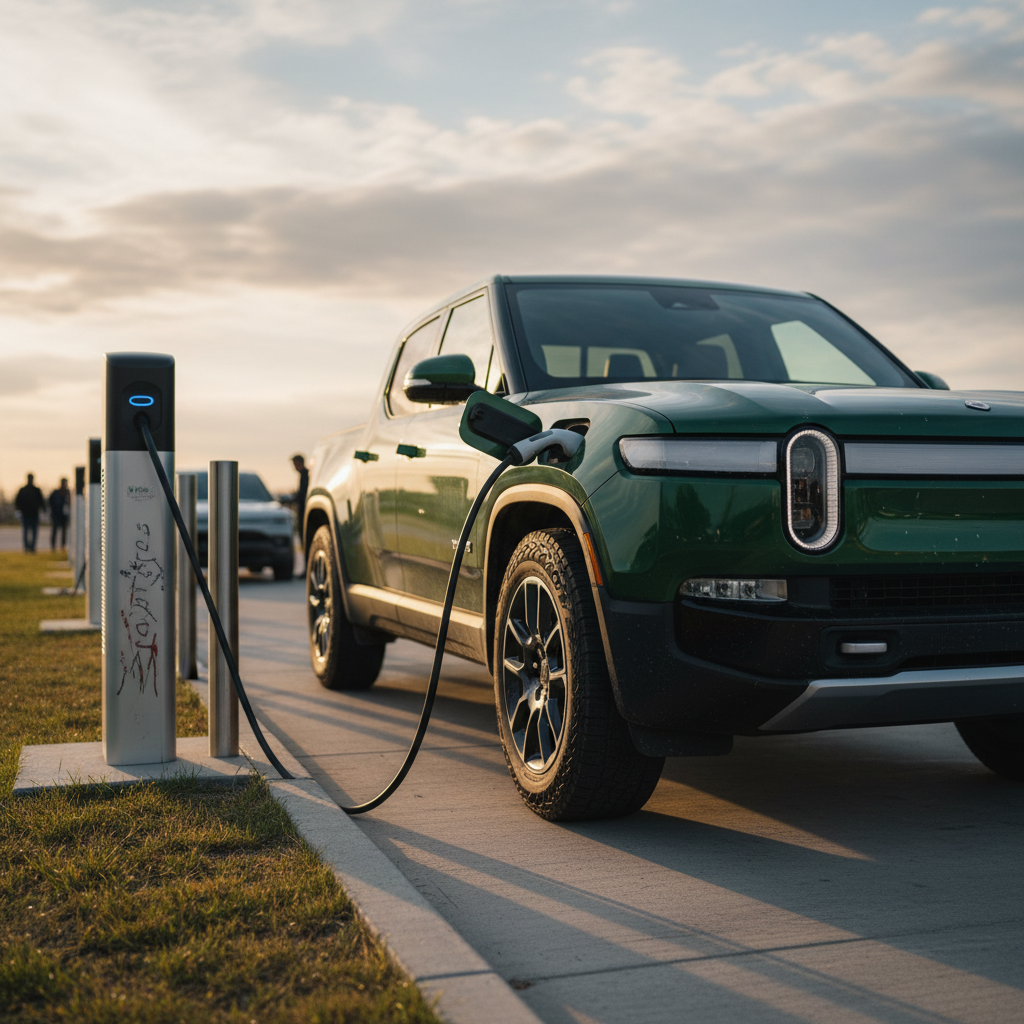
If you own a modern car or electric vehicle, an automotive smart battery charger is one of the cheapest insurance policies you can buy. Whether it’s a weekend sports car, a plug‑in hybrid that sits for days, or a used EV you just picked up from a marketplace like Recharged, a smart charger can prevent dead‑battery headaches and extend your 12‑volt battery’s life by years.
Smart charger vs. old-school trickle charger
Why smart battery chargers matter in 2025
Car batteries & smart chargers at a glance
Modern vehicles are more demanding on their 12‑volt systems than ever. Even EVs rely on a small auxiliary battery to power computers, contactors, and security systems. If that 12‑volt battery dies, the car can refuse to “wake up” even when the high‑voltage pack is healthy. That’s why a compact smart charger or maintainer has become a must‑have garage tool, especially if you own multiple vehicles or store a car through winter.
What is an automotive smart battery charger?
An automotive smart battery charger is an electronic charger designed for 6V or 12V vehicle batteries that automatically adjusts how it charges based on the battery’s condition. Instead of delivering a fixed output, it measures battery voltage, temperature, and sometimes internal resistance and then selects the right charging profile, bulk charge, absorption, float, or repair, without you having to babysit it.
Most consumer smart chargers today are aimed at lead‑acid batteries (flooded, AGM, gel, or maintenance‑free). Increasingly, higher‑end models also support certain lithium iron phosphate (LiFePO₄) 12V packs, provided those packs have an internal battery management system (BMS).
Think of it as a “conversation” with your battery
How smart battery chargers actually work
1. Sensing & diagnosis
When you connect the clamps and plug in the unit, a smart charger first checks the battery’s voltage and sometimes temperature. That tells it whether the battery is deeply discharged, partially charged, or potentially damaged.
Some models, like many from NOCO’s GENIUS line, can even detect batteries that have dropped near 0 volts and use a special Force Mode to attempt recovery.
2. Multi‑stage charging
- Bulk stage: Delivers higher current to bring the battery up to a healthy voltage quickly.
- Absorption stage: Tapers current while holding voltage steady to complete the charge safely.
- Float/maintenance stage: Dribbles just enough current to keep the battery full without overcharging.
- Repair/desulfation (on some models): Pulses energy to help reverse sulfation on neglected batteries.
Internally, most smart chargers are efficient switch‑mode power supplies controlled by a microprocessor. They constantly sample battery feedback and adjust output. The result is a charger you can leave connected for weeks or months in maintainer mode, something you should never do with a basic, unregulated trickle charger.
Key features to look for in a smart car battery charger
Must‑have features in an automotive smart battery charger
These are the specs that actually matter day‑to‑day.
Automatic multi‑stage charging
Look for language like multi‑stage, microprocessor‑controlled, or smart charging profile. The charger should move itself from bulk to absorption to float without you changing settings.
Temperature compensation
Good chargers adjust voltage for hot or cold environments, preventing under‑charging in winter and over‑charging in summer. This is crucial if you park in an unheated garage.
Safety protections
A quality automotive smart battery charger should include spark‑proof connections, reverse‑polarity protection, over‑temperature shutoff, and over‑charge protection.
Right amperage for your use
1–2A is ideal for long‑term maintenance. 5–10A is better if you occasionally need to recover a low battery quickly. Higher isn’t always better if the battery is small.
Battery chemistry support
Check the label. Most smart chargers support 12V lead‑acid (flooded, AGM, gel). If you have a 12V lithium (LiFePO₄) auxiliary battery, you need a charger with an explicit lithium mode.
Connectors & cable length
Detachable leads, quick‑connect pigtails, and long cables make life easier, especially if your battery is buried under trim or you’re routing the lead on an EV.
Don’t assume it works for lithium
Types of automotive smart battery chargers
- Maintenance chargers (1–2A): Often called maintainers or trickle chargers, these are perfect for keeping a healthy battery topped up on a stored car, motorcycle, or boat.
- General‑purpose smart chargers (3–10A): Versatile units that can both maintain and charge moderately discharged batteries overnight or in a few hours.
- Heavy‑duty chargers with engine start: Larger units (often 15A+ with a boost or engine‑start setting) that can help start a deeply discharged battery in a truck, RV, or work vehicle.
- Smart lithium‑specific chargers: Designed specifically for 12V LiFePO₄ or performance batteries, with voltage limits that match lithium chemistry and communication with the pack’s BMS.
Smart 12V charger vs. EV "smart" wallbox
Quick comparison: popular smart battery chargers
Snapshot: popular automotive smart battery chargers in 2025
Specs here are generalized; always confirm exact capabilities and supported chemistries before buying.
| Model example | Best for | Max current | Battery types | 6V support | Notable features |
|---|---|---|---|---|---|
| NOCO GENIUS1 | Long‑term maintenance | 1A | 12V lead‑acid & some LiFePO₄ | Yes | Very compact, maintenance mode, Force Mode for deeply discharged batteries |
| NOCO GENIUS5 | All‑round home use | 5A | 6V/12V lead‑acid & lithium (model‑dependent) | Yes | Desulfation/repair mode, temperature compensation, weather‑resistant housing |
| NOCO GENIUS10 | Faster recovery & multiple vehicles | 10A | 6V/12V lead‑acid & lithium (model‑dependent) | Yes | High output, repair mode, robust safety protections |
| YONHAN 10A Smart Charger | Budget high‑output option | 10A | 12V/24V lead‑acid (AGM, GEL, flooded) | No | Backlit LCD, winter/summer modes, auto‑shutoff and over‑charge protection |
| TowerTop 12V Smart Charger | Value general‑purpose | Up to 15A | 12V lead‑acid | No | Engine start feature, repair mode, automatic float charging |
Representative features of well‑known smart chargers like NOCO GENIUS1/5/10, YONHAN, and TowerTop models.
How to choose the right smart charger for your vehicle
Smart charger buying checklist
1. Confirm your battery type
Check your owner’s manual or battery label. Is it a standard flooded lead‑acid, AGM, gel, or a 12V LiFePO₄? Match the charger’s chemistry settings to that battery.
2. Match charger amps to your use case
If you mainly store the car, a 1–2A maintainer is plenty. If you want to recover low batteries more quickly, look in the 5–10A range. Oversizing a charger for a tiny motorcycle battery is a bad idea.
3. Decide where you’ll use it
Outdoor use or a drafty carport? Choose a weather‑resistant unit with good strain relief on the cords. For tight garages, prioritize compact size and long leads.
4. Look for safety & certifications
Seek chargers with UL/ETL listings, spark‑proof connectors, reverse‑polarity and over‑temperature protection, and clear indicator lights or displays.
5. Consider multi‑vehicle flexibility
If you own a mix of vehicles, say an SUV, motorcycle, and a used EV, pick a charger with multiple modes and detachable quick‑connect harnesses so you can move it easily.
6. Don’t forget ease of use
A simple mode button and clear status LEDs or a legible LCD matter more in daily life than one extra amp of current. You want something you can hand to a family member without a lecture.
Safe setup and usage: step‑by‑step
How to safely use an automotive smart battery charger
1. Read the manual once
Even if you’ve used chargers before, every model is a little different. Confirm compatible chemistries and any special modes (like Force or Repair) before you connect anything.
2. Inspect the battery & area
Ensure the battery isn’t physically damaged or leaking. Park in a ventilated area away from open flames or sparks, especially when charging older flooded batteries.
3. Connect clamps correctly
With the charger unplugged, connect positive (red) to the battery’s positive terminal, then negative (black) to the negative terminal or a clean chassis ground as instructed.
4. Select the right mode
Choose 6V or 12V, battery type (AGM, gel, lithium), and desired mode (normal, cold‑weather, repair/maintain). Many chargers auto‑detect voltage, but don’t rely on that blindly.
5. Plug in and monitor early behavior
Once you plug into the wall, watch the charger for the first few minutes to confirm it’s reading the battery correctly and not throwing error lights.
6. Let the smart charger do its job
After the initial check, you can usually walk away. For maintenance, leave the unit connected; it will switch to float mode automatically. Unplug from AC before removing the clamps.
Never use a smart charger to "fix" a damaged battery
Common mistakes to avoid with smart chargers
- Leaving a basic, non‑smart charger connected for days: That can slowly cook a battery. Only smart chargers with float/maintenance modes are safe for long‑term connection.
- Using the wrong chemistry mode: Charging an AGM or lithium battery on a generic “wet” setting can shorten its life or, in extreme cases, create a safety issue.
- Connecting to the wrong terminals: Modern chargers have reverse‑polarity protection, but you can still confuse the charger or blow a fuse. Double‑check red to +, black to −.
- Ignoring temperature: Charging a frozen or extremely hot battery is asking for trouble. Let the battery come back toward room temperature first.
- Trying repair mode on every problem: Desulfation and repair modes are for specific situations, not everyday use. If the battery fails repeatedly, replacement is usually cheaper than chasing miracles.
FAQ: Automotive smart battery chargers
Frequently asked questions about smart car battery chargers
How a smart charger fits into buying a used EV
When you’re shopping for a used EV, you’re rightly focused on high‑voltage battery health, range, and charging speeds. But the humble 12‑volt battery is still a common failure point, especially as vehicles age. That’s where a smart charger becomes part of a bigger ownership toolkit.
At Recharged, every vehicle comes with a Recharged Score Report that includes verified battery health and fair‑market pricing guidance. Pairing that insight with a small automotive smart battery charger lets you keep both the high‑voltage pack and the 12‑volt system in good shape. If you’re buying sight‑unseen and having the car delivered, adding a charger to your first‑week checklist is a small step that can prevent that frustrating “dead battery on day three” moment.
Financing your EV and budgeting for tools
Ready to find your next EV?
Browse VehiclesBottom line: Is an automotive smart battery charger worth it?
For most owners, the answer is yes. A quality automotive smart battery charger costs less than a tow bill and far less than an unexpected battery replacement. It takes the guesswork out of charging, protects sensitive modern electronics, and keeps seldom‑driven vehicles ready to go.
If you’re already driving an EV, or you’re considering a used one from a digital retailer like Recharged, think of a smart charger as part of your long‑term ownership plan. It complements good battery‑health diagnostics, extends the life of your 12‑volt system, and gives you one less thing to worry about when you press the start button. And that peace of mind is exactly what smart charging is supposed to deliver.