If you’re eyeing an Audi Q8 e-tron on the used market, you’re probably wondering what actually goes wrong with these big electric SUVs, and what it costs to fix. The good news: most issues are manageable if you know what to look for. This guide walks through the most common Audi Q8 e-tron problems and fixes, with a special focus on shoppers considering a used model.
Model naming 101
Overview: How reliable is the Audi Q8 e-tron?
Overall, the 2024 Audi Q8 e-tron scores better-than-average reliability in third‑party surveys, especially compared with early 2019–2020 e-tron models. Major battery failures are rare, but owners report patterns of charging quirks, software glitches, faster‑than‑expected brake wear, and occasional air‑suspension issues. None of these are automatic deal‑breakers, but they’re exactly what you want to check on a used example.
Audi Q8 e-tron at a glance
Used‑EV buyer tip
Quick reference: common Q8 e-tron problems
Most common Audi Q8 e-tron problems and typical fixes
Use this as a quick scan before we dive into each issue in detail.
| System | Typical symptoms | Likely cause | Typical fix |
|---|---|---|---|
| Battery & range | Range lower than expected, big drops in cold weather | Normal EV behavior plus aging battery or outdated software | Software updates, tire/pressure optimization, realistic range planning |
| Charging (home) | Won’t start at home, red light at charge port | 12V battery weak, onboard charger fault, charger incompatibility | 12V battery test/replace, HV charger diagnosis, charger firmware update |
| Charging (DC fast) | Fails to start or cuts out on CCS fast chargers | Plug & Charge config, station handshake issues, software bugs | Disable Plug & Charge, try app/RFID start, dealer software update |
| Brakes | Shudder or vibration, fast pad/rotor wear | Heavy vehicle, potential rotor warping | Resurface/replace rotors & pads; check for warranty support |
| Software & screens | Frozen MMI, glitchy camera, driver‑assist false alarms | Software bugs, camera module issues | Software update or module replacement under warranty/recall |
| Suspension | Uneven ride height, bouncy or harsh ride | Air spring or compressor wear, ride‑height sensor faults | Leak test, air spring/compressor or sensor replacement |
| Interior hardware | Sticky door latches, seat motor issues, rattles | Electric latch design quirks, worn trim/actuators | Latch adjustment/replacement, trim refit, seat motor repair |
Patterns pulled from owner reports, repair databases, and EV‑focused service guidance.
Battery and range issues
The good news: large‑scale high‑voltage battery failures on Q8 e-tron models are uncommon so far. But owners do report concerns about range and, on earlier e-tron models, occasional thermal or charging‑system faults that can knock out regenerative braking or trigger dashboard warnings.
Typical battery‑related complaints
What owners notice first, and what it usually means.
“Range is way lower than the window sticker”
EPA range figures assume mild weather and careful driving. High speeds, cold temps, big wheels, and roof racks can all shave 20–30% off real‑world range.
“Huge range drop in winter”
Like most EVs, the Q8 e-tron loses noticeable range in cold weather. Pre‑conditioning the cabin and battery while plugged in helps a lot.
“Electric system malfunction” warnings
On earlier e-tron SUVs, some owners see HV battery or thermal system warnings, sometimes tied to regen braking cutting out. These require professional diagnosis right away.
When to stop driving
How to sanity‑check a Q8 e-tron’s battery health
1. Compare indicated range to charge level
At 100% charge, note the indicated range. For many Q8 e-tron SUVs, something roughly in the 230–280‑mile ballpark (depending on wheel size and model year) in mild weather is normal. Much lower may justify a deeper check.
2. Look for battery or HV warnings
Scan the dash history and ask the owner about any high‑voltage, charging, or thermal alerts, even if they cleared themselves. Recurrent warnings are a red flag on a used car.
3. Check for recent software updates
Audi regularly refines battery management and range estimation through software updates. Ask when the car last received a dealer software campaign and whether any charging or battery‑related TSBs were applied.
4. Get a third‑party battery health report
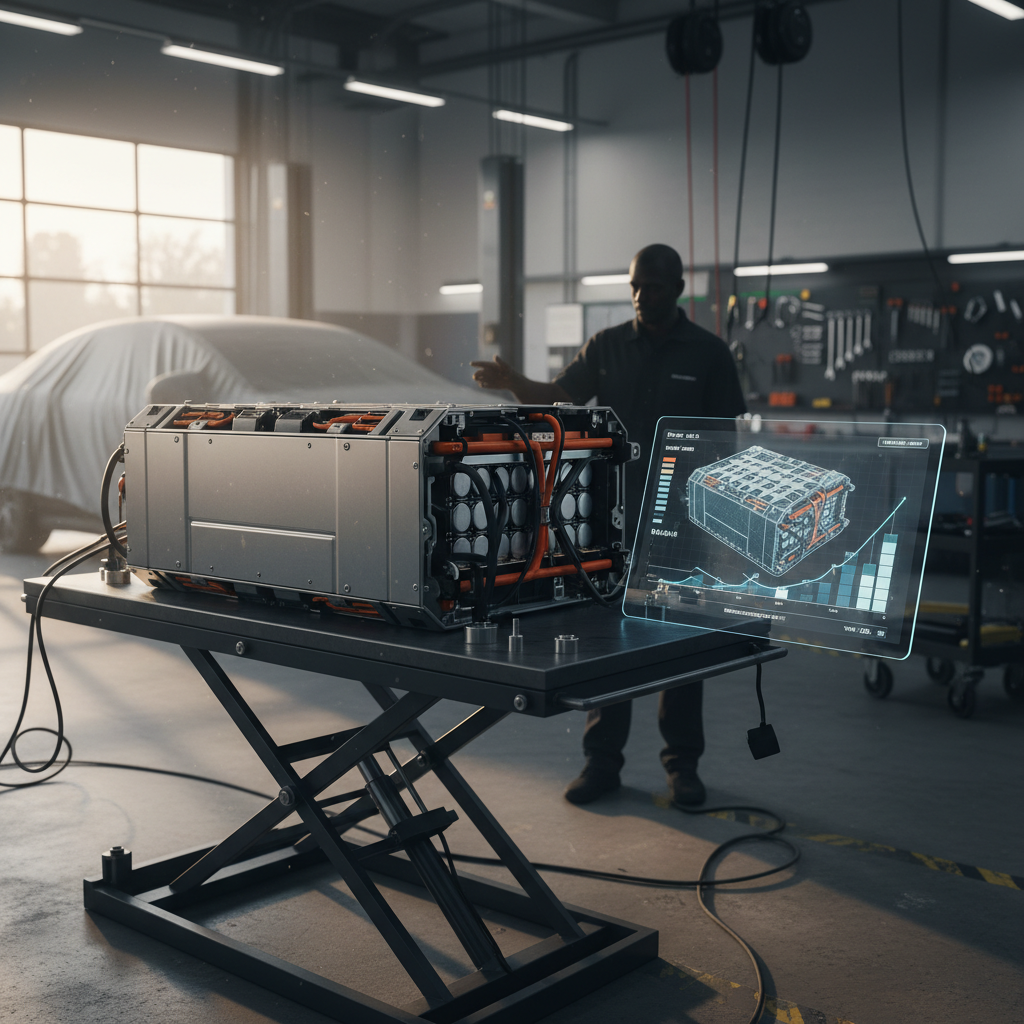
If you’re serious about a used Q8 e-tron, consider a professional battery health test. At Recharged, every vehicle comes with a Recharged Score Report that includes verified pack health, so you’re not guessing about degradation.
Charging problems (home and DC fast)
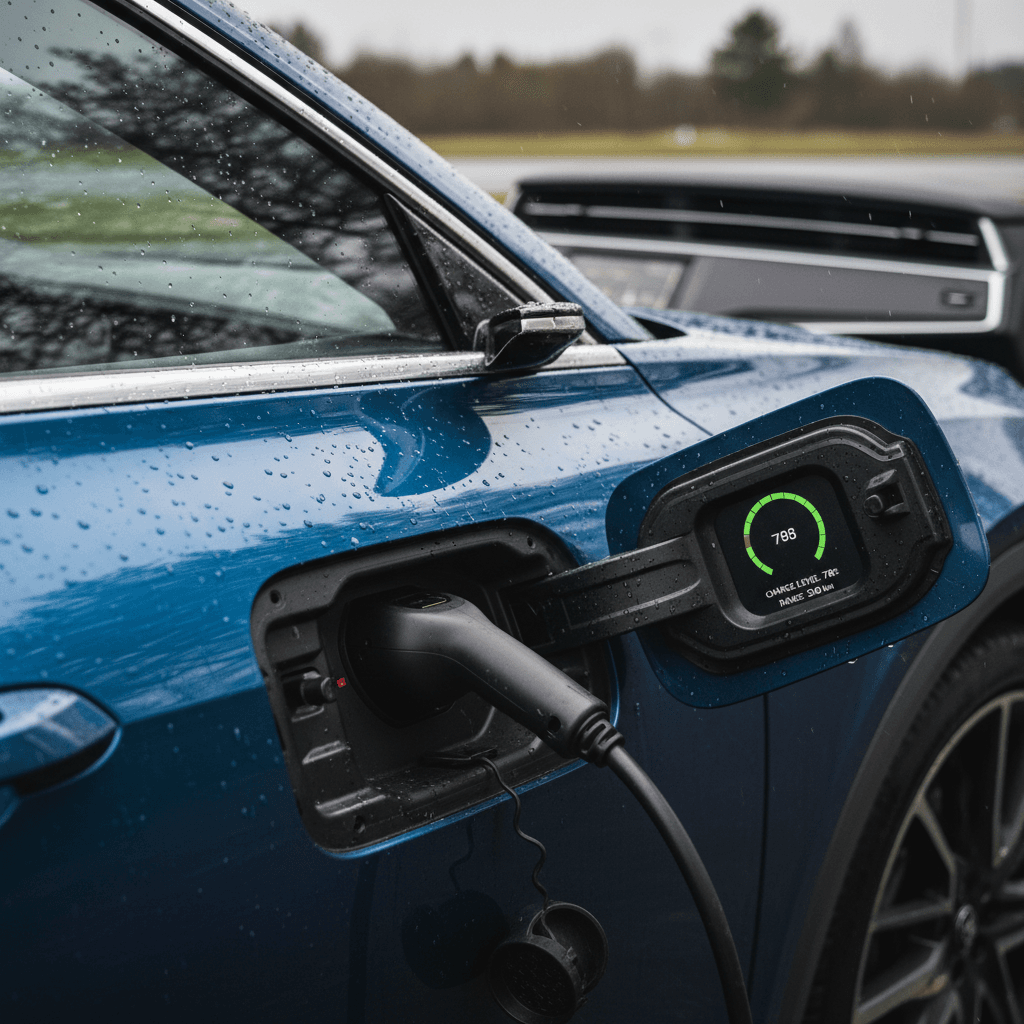
Charging quirks are among the most common Audi e-tron and Q8 e-tron complaints. The pattern: the car charges fine in some places but refuses to charge, or aborts the session, at others. Because your charging experience is half the ownership story, it’s worth unpacking the main failure modes.
1. Won’t charge or stops charging at home
Typical symptoms include a blinking yellow or red light at the charge port, MMI messages like “Charging error,” or the car refusing to lock onto the connector.
- Weak or aging 12V battery can prevent the HV system from waking up to charge.
- Some wallboxes need a firmware update to fully support Audi’s charging behavior.
- In rarer cases, the onboard AC charger or charge‑port lock actuator is at fault.
2. Trouble DC fast charging on CCS
Q8 e-tron owners occasionally report the car handshaking endlessly with a public fast charger and then timing out. Often, the car charges fine elsewhere.
- Plug & Charge or app‑based billing can fail while the hardware is okay.
- Certain stations are finicky with specific EVs, trying another provider can instantly “fix” the issue.
- Outdated vehicle software can also cause failed sessions.
Easy charging resets to try
DIY steps if your Q8 e-tron won’t charge
1. Test multiple chargers
Try a different Level 2 charger and a different DC fast‑charging brand if possible. If the car charges fine elsewhere, the issue is likely with your home unit or that specific public station.
2. Check the 12V battery
A weak 12V battery can cause bizarre charging behavior even when the main pack is fine. If the car is a few years old, have the 12V tested and consider replacing it proactively.
3. Inspect the charge port and cable
Look for debris, corrosion, or signs of moisture in the port and on the plug. Make sure the connector locks firmly into place; intermittent locking can trigger red fault lights.
4. Update your home charger firmware
Open your charger’s app and check for firmware updates. Several wallbox brands have rolled out patches specifically to improve compatibility with Audi e-tron and Q8 e-tron models.
5. Ask Audi to check for TSBs
Dealers can check for technical service bulletins related to charging issues, onboard charger faults, and Plug & Charge behavior. These may be covered under warranty.
Brake wear, vibration, and brake feel
The Q8 e-tron is a heavy luxury SUV, and that mass shows up in the braking system. Owners of both e-tron and Q8 e-tron variants report faster‑than‑expected pad and rotor wear, and in some cases recurrent brake vibration even after replacement.
Common Q8 e-tron brake complaints
What you might feel through the pedal or steering wheel.
Shudder when braking from highway speeds
A pulsing pedal or shaking steering wheel when slowing from 60–70 mph often points to warped or unevenly worn rotors.
Rotors and pads replaced very early
Some owners report full brake jobs around 10–15k miles. On a heavy EV that relies partly on friction brakes (especially if regen is modest), this can happen.
Inconsistent brake feel vs. regen
Because the Q8 e-tron blends regen with friction braking, you might notice changes in pedal feel after certain software updates or if regen is limited by battery temperature.
Don’t ignore brake vibration
- Have a shop measure rotor thickness and run‑out rather than guessing.
- Ask whether the car has already had rotors and pads replaced under warranty.
- If replacements are needed, use high‑quality parts and make sure wheels are torqued evenly to reduce the chance of warping.
Software and electronics glitches
Like most modern luxury EVs, the Q8 e-tron leans hard on software. Owners report infotainment freezes, occasional camera glitches, lane‑keeping behavior they don’t trust, and over‑sensitive automatic emergency braking. Recently, a large software‑related recall also targeted rear‑view camera behavior on various Audi EVs, including e-tron variants.
Infotainment and driver‑assist quirks
- MMI screen freezing or rebooting while driving.
- Lane‑keeping assist tugging aggressively at the wheel or failing to read poor lane markings.
- Forward‑collision warning or automatic emergency braking triggering when there’s no apparent obstacle.
Some owners simply disable lane assist every drive because of the feel. It’s worth spending time in a test drive to see if you’re comfortable with the behavior, or if a software update smooths it out.
Camera and instrument‑cluster issues
- Rear‑view camera not displaying an image when reversing.
- Virtual cockpit instrument cluster going blank or losing some information.
- Backup camera image lagging significantly.
These are often addressed through software updates or, in some cases, a recall or TSB. Always ask a dealer to check your VIN for open campaigns.
Best fix: stay current on software
Suspension and ride comfort issues
Higher‑trim Q8 e-tron models use adaptive air suspension. It delivers the cushy, adjustable ride you’d expect in a six‑figure SUV, but it also adds complexity. Over time, owners can see air spring leaks, noisy compressors, or ride‑height sensor faults that leave the vehicle sitting unevenly or riding poorly.
Signs of air‑suspension trouble
You can spot several of these in a quick walk‑around.
Uneven ride height
One corner of the car sits visibly lower after being parked overnight. That’s a classic sign of a small leak in an air spring or line.
Compressor running often
If you hear the compressor cycling frequently or running for a long time after start‑up, it may be working overtime to mask a leak.
Suspension warnings in the cluster
Messages about adaptive suspension or ride height need prompt diagnosis, it’s usually a sensor, but ignoring it can lead to bigger bills.
Air‑suspension repairs on a Q8 e-tron are not cheap, think hundreds for sensors, and four figures for air springs or a compressor. On a used example that’s out of warranty, you want to catch early signs and factor potential repairs into your budget or purchase price.
Interior hardware and trim complaints
Mechanically, interior issues are minor, but they’re the things that drive you nuts every day. Q8 e-tron owners sometimes report noisy trim, finicky electric door latches, seat controls that hesitate, and infotainment/radio behavior that doesn’t match expectations.
- Front passenger or rear doors that don’t fully unlatch on the first pull from inside.
- Rattles from door panels or the cargo area over rough pavement.
- Seat motors that move slowly or intermittently.
- Radio or media toggling sources when your phone connects.
Why this matters for used buyers
Recalls you should know about
As of early 2026, the broader e-tron and Q8 e-tron family has seen several software and safety‑related recalls, including rear‑view camera behavior and, on some 2024 Q8 e-tron models, brake‑line inspection campaigns. Future campaigns are possible as the fleet ages.
Examples of recall themes affecting e-tron and Q8 e-tron models
Always run a VIN‑specific recall check; this table is illustrative, not exhaustive.
| Area | Typical concern | What the fix looks like |
|---|---|---|
| Rear‑view camera | Image may not appear or may cut out when shifting into reverse | Software update to camera/infotainment modules |
| Instrument cluster | Digital cockpit may fail to display speed or warning lights correctly | Instrument‑panel software update or module replacement |
| Brake system | Improperly torqued brake‑line fittings on a limited batch of vehicles | Inspection and replacement of affected lines, with new brake fluid |
| High‑voltage system | Various software campaigns to refine charging, cooling, or range estimation | Dealer‑installed software updates, sometimes combined with hardware checks |
Any open recall work should be performed free of charge at an Audi dealer.
Always run a VIN check
Pre‑purchase checklist for a used Q8 e-tron
When you’re staring at a six‑figure EV that’s now priced like a midsize crossover, it’s easy to get starry‑eyed. Slow down. A structured pre‑purchase check can mean the difference between a great deal and a money pit.
10 checks before you buy a used Audi Q8 e-tron
1. Confirm battery warranty status
Ask for the in‑service date so you know how much of the 8‑year/100,000‑mile high‑voltage battery warranty remains. A car that’s three years old with low miles is in the sweet spot.
2. Review service and recall history
Look for evidence of regular maintenance, software updates, and completed recalls. A thin or missing history on a complex EV should knock the price down, or send you elsewhere.
3. Test Level 2 and DC fast charging
If possible, plug into both a home‑style Level 2 charger and a CCS fast charger during the test drive. Watch for error messages, aborted sessions, or unusually low charging speeds.
4. Listen and feel for brake issues
On a safe road, brake firmly from highway speed. Any shudder, pulsing pedal, or severe steering‑wheel vibration suggests rotor work in your near future.
5. Check for suspension sag or noise
Park on level ground and compare wheel‑arch gaps. Uneven ride height or compressor noise on start‑up can hint at air‑suspension repairs coming up.
6. Run every electronic feature
Test cameras, parking sensors, lane‑keeping, adaptive cruise, and all screens. Glitches now may be solved with software, but they can also reveal deeper module issues.
7. Inspect tires and wheels
Uneven tire wear may point to alignment or suspension problems. Bent wheels are especially common on heavy EVs driven in rough climates.
8. Check interior hardware
Open and close every door from inside and out, move all seats, fold the rear bench, and power‑close the tailgate. You’re listening for noises and looking for inconsistent operation.
9. Scan for warning lights after a long drive
Some warnings pop up only once the car is fully warmed. After 20–30 minutes of mixed driving, park and scroll through the instrument‑cluster messages again.
10. Get a professional EV inspection
If you’re not buying from a specialist, pay for an independent EV‑savvy inspection. At Recharged, every used EV gets a Recharged Score battery health diagnostic plus a full mechanical and software review before we list it.
FAQ: Audi Q8 e-tron common problems
Frequently asked questions about Q8 e-tron reliability
Bottom line: should you buy one used?
The Audi Q8 e-tron can be a smart used‑EV buy: you’re getting a quiet, comfortable luxury SUV with a proven battery pack and a lot of tech. But you can’t treat it like any old crossover on a corner lot. Go in with your eyes open about charging quirks, brake wear, software updates, and air‑suspension costs, and insist on a thorough inspection before you sign anything.
If you’d rather skip the guesswork, consider finding a Q8 e-tron, or alternatives like the Mercedes EQE SUV or Tesla Model Y, through a specialist. At Recharged, every used EV includes a Recharged Score battery and charging‑system diagnostic, fair‑market pricing, financing options, and EV‑savvy support from first search to delivery. That way, the only surprises your Audi delivers are the good kind.