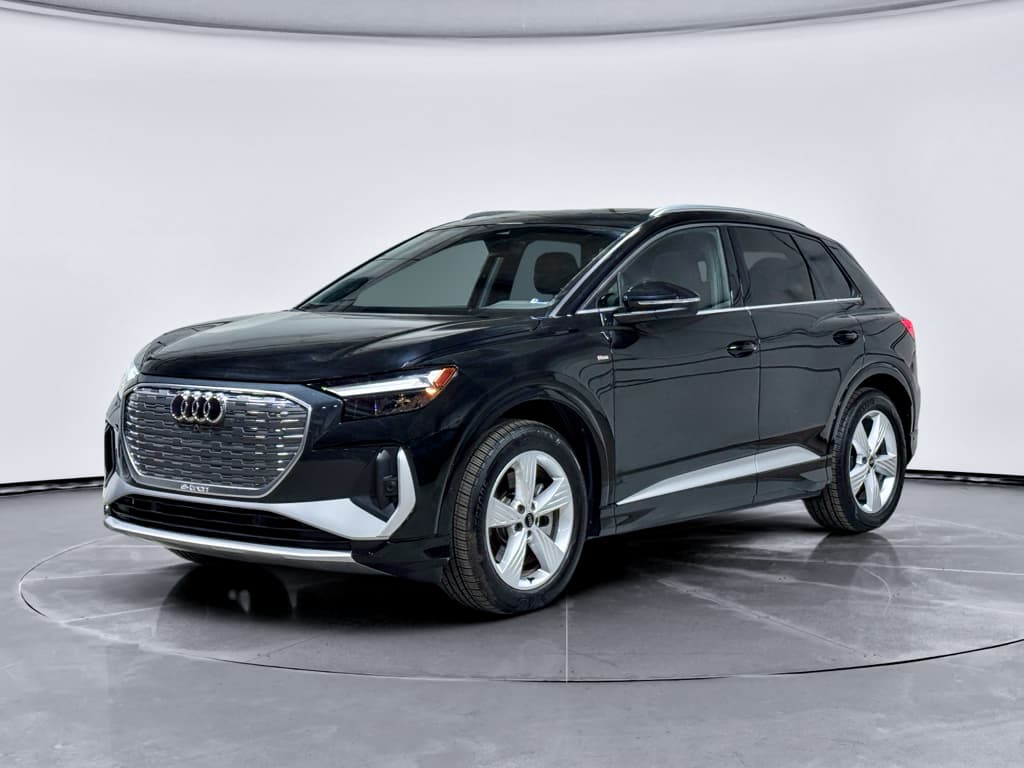
If you own an Audi Q4 e-tron in 2026, you’re probably wondering one thing: what’s this sleek, quiet crossover actually worth when it hits the trade-in lane? EV prices have been on a roller coaster, and the Q4 e-tron has seen steeper-than-average depreciation. This guide breaks down realistic Audi Q4 e-tron trade in value in 2026, what pushes your offer up or down, and how to avoid leaving thousands on the table.
Quick take
Overview: Audi Q4 e-tron trade-in value in 2026
Audi Q4 e-tron 2026 value snapshot (directional)
Those numbers aren’t official appraisals; they’re directional ranges based on current used‑EV data, third‑party valuation tools, and what platforms like Recharged are seeing in the real world. The point isn’t to pin your Q4 e-tron to a single dollar figure, but to give you a realistic lane for 2026 negotiations and show you which levers you can still pull.
How much is my Audi Q4 e-tron worth in 2026?
Start with two truths: EV values move fast, and no two Q4 e-trons are priced alike. That said, by April 2026, U.S. trade-in offers for typical, clean Q4s tend to fall into a few broad buckets:
Illustrative 2026 trade-in ranges by model year (U.S., typical specs)
These are ballpark ranges to frame expectations, assuming clean history, normal wear, and mileage around 10,000–12,000 miles per year. High‑mileage, damaged, or heavily optioned vehicles will fall outside these lanes.
| Model year | Approx. miles in 2026 | Typical trade-in band* | Who pays near the top? |
|---|---|---|---|
| 2025 | 10,000–20,000 | $30,000–$35,000 | Audi dealer CPO intake, strong online EV buyers, or Recharged with excellent battery health |
| 2024 | 20,000–30,000 | $27,000–$32,000 | Well‑optioned Premium Plus/Prestige, spotless history, healthy pack |
| 2023 | 30,000–40,000 | $24,000–$29,000 | Nicely specced, clean Carfax, good tires and brakes |
| 2022 | 40,000–50,000+ | $21,000–$26,000 | One‑owner, no structural damage, solid battery metrics |
Directional 2026 trade-in bands for Audi Q4 e-tron models; not guaranteed offers.
Important disclaimer
If you pull up a mainstream valuation tool and see, for example, a 2024 Q4 e-tron trade‑in around the low‑to‑mid‑$20Ks, don’t be shocked. Some tools lean conservative, and they rarely see your vehicle’s exact options or live battery data. Platforms like Recharged overlay that book value with real‑time EV sales data and a Recharged Score battery‑health report to sharpen the pencil.
Why the Q4 e-tron depreciates the way it does
Audi did not build the Q4 e-tron to be a spreadsheet hero. They built a quiet, jewel‑box crossover with a lovely interior and an Audi badge, and then they let it wade into the most brutal segment in the EV universe: compact luxury SUVs. That’s Model Y country, and Tesla has been carpet‑bombing the market with price cuts and production volume.
- EVs as a class are depreciating faster than comparable gas SUVs as the tech and incentives change underneath them.
- Tesla’s price drops on the Model Y have dragged down resale values for all rival compact EV SUVs, including the Q4 e-tron.
- Range and charging speed arms race: every new generation of EV shows up with more range and faster charging, making three‑ or four‑year‑old packs feel outdated on paper.
- Audi’s broader e-tron family has a reputation for steep depreciation, which colors how dealers and algorithms treat the Q4.
The upside for sellers
Key factors that move your Q4 e-tron trade-in price
Four big levers on your 2026 trade-in offer
You can’t change the market, but you can control how your Q4 shows up in it.
1. Mileage & usage
EV buyers in 2026 are hyper‑sensitive to miles. A 2023 Q4 e-tron with 18,000 miles will almost always appraise higher than the same car with 42,000 miles, even if both look clean.
If you’re closing in on the next big mileage “cliff” (30k, 40k, 50k), it’s worth timing your trade a few months early.
2. Accident & repair history
A single minor bumper tap, properly repaired, usually shaves hundreds off. Structural damage, airbag deployment, or multiple claims can shave thousands.
Anything that spooks retail buyers, frame work, poorly documented repairs, will force trade-in offers down, sometimes below the online book value.
3. Battery & charging health
For ICE cars the engine is the heart; in an EV it’s the battery. If live diagnostics show strong capacity, healthy fast‑charge behavior, and no serious fault codes, your Q4 becomes easier to resell and finance.
That’s why Recharged bakes a Recharged Score battery assessment into every vehicle we buy and sell.
4. Trim, options, and color
Premium Plus and Prestige Q4s with desirable wheels, driver‑assist packages, and neutral colors (white, gray, black, navy) generally draw the best money.
Off‑beat colors or very basic specs can be harder to place, which shows up as softer trade-in bids.
Where you sell matters
Battery health: how buyers actually price your Q4
By 2026, serious buyers are no longer guessing about battery condition, they’re measuring it. For an Audi Q4 e-tron, that means looking beyond the dashboard range estimate and into the pack’s actual state of health and history.
Signals that help your value
- Capacity tests showing only modest degradation versus new.
- Normal fast‑charging curves with no abrupt throttling.
- No recurring high‑voltage or thermal management fault codes.
- Service records for software updates and any recall work.
Signals that hurt your value
- Noticeable range loss compared with the original EPA figure.
- Evidence of chronic DC‑fast‑charging abuse and overheating.
- Unresolved HV battery or charging‑system warnings.
- Gaps in maintenance history or missing recall documentation.
How Recharged handles it
Ready to find your next EV?
Browse Vehicles
2026 trade-in strategies: dealer vs online vs Recharged
If you walk your Q4 e-tron into the nearest dealer and accept the first number they push across the desk, you’re essentially tipping them for convenience. In 2026 you have options, and each comes with a different mix of price, time, and hassle.
Where to sell your Audi Q4 e-tron in 2026
Three common paths, three very different experiences.
1. Local dealer trade-in
Pros:
- Fast and familiar, you’re done in an afternoon.
- Easy if you’re already buying something off the lot.
Cons: Offers are often the lowest; some stores still treat EVs as risky, especially off‑brand used inventory.
2. Generic online buyers
Pros:
- Quick online quotes and at‑home pickup.
- Transparent process, fewer dealership games.
Cons: Many still rely on generic book values and don’t fully credit strong battery health or rare option packages.
3. EV specialist: Recharged
Pros:
- Built specifically around used EVs and plug‑ins.
- Recharged Score diagnostics on battery health and fair‑market pricing.
- Options for instant offer, trade‑in, or consignment to aim for a higher sale price.
- Nationwide, fully digital experience plus an in‑person Experience Center in Richmond, VA.
Cons: If you’re deeply loyal to one local dealer, a specialized marketplace may feel like an extra step, though it can pay for itself in a higher number.
How to prepare your Q4 e-tron for trade-in
You can’t rewrite the depreciation curve, but you can absolutely influence how appraisers see your Q4 e-tron. Think of trade-in prep as storytelling: you’re showing this car was loved, not merely used.
Pre‑trade checklist for your Audi Q4 e-tron
1. Gather every key and document
Have both key fobs, the owner’s manuals, charging cable, service records, and any recall paperwork ready. Missing keys and chargers are easy excuses to chip away at your offer.
2. Fix simple cosmetic issues
Touch up obvious curb rash, replace broken trim pieces, and address small windshield chips before they become big value hits. Skip major cosmetic surgery; you rarely get that money back at trade-in.
3. Detail the interior, de-clutter the trunk
A clean, odor‑free cabin photographs and appraises better. Remove personal items, child seats, and aftermarket accessories before evaluation.
4. Check tires and brakes
Uneven or severely worn tires and brakes are bargaining chips for buyers. If they’re at the end of their life, be ready to negotiate, or replace them if the cost‑to‑value tradeoff makes sense.
5. Resolve warning lights and recalls
No appraiser wants to inherit a dashboard Christmas tree. Address service lights and open recalls in advance; unresolved issues will tank confidence and price.
6. Document range and charging behavior
Before you seek offers, note your typical real‑world range, charge habits, and recent fast‑charging performance. When combined with diagnostics, this builds a strong case for a healthy battery.
Skip the sketchy add-ons
Example scenarios: what different Q4s might bring
To make all of this less abstract, let’s walk through a few fictional, but realistic, 2026 scenarios. These aren’t quotes; they’re sketches of how the market tends to react to different Q4 e-tron stories.
Scenario A: 2024 Q4 e-tron Premium Plus
Details: 18,000 miles, one owner, clean history, neutral color, no accidents, healthy battery metrics.
Likely 2026 trade-in band: upper‑$20Ks to low‑$30Ks.
Audi dealers looking for late‑model CPO inventory and EV‑centric buyers like Recharged will compete hardest for this car.
Scenario B: 2023 Q4 e-tron with cosmetic damage
Details: 32,000 miles, minor rear‑end accident on record, repaired, some wheel rash and interior scuffs.
Likely 2026 trade-in band: mid‑$20Ks, possibly lower at conservative dealers.
Photos and repair documentation matter here. Some buyers will treat any accident as a big red flag, others will price it more rationally.
Scenario C: 2022 Q4 e-tron high mileage
Details: 52,000 miles, road‑warrior commuter, clean history, solid maintenance, slight but noticeable range loss.
Likely 2026 trade-in band: low‑to‑mid‑$20Ks.
Still attractive as an affordable gateway to Audi EV ownership, but mileage and age keep most offers cautious.
Use multiple quotes as leverage
Frequently asked questions: Audi Q4 e-tron trade-in 2026
Audi Q4 e-tron trade-in value 2026 – FAQ
Bottom line: when to trade your Q4 e-tron
The Audi Q4 e-tron is a handsome, quiet antidote to the frenzy of traffic, an EV that feels more like a well‑tailored suit than a science project. In the used market, though, it’s playing by the same ruthless rules as every other luxury EV SUV. By 2026, most examples have shed a large share of their original MSRP, and the difference between a good trade-in number and a bad one comes down to condition, battery health, and how wide you shop your car.
If your Q4 e-tron is low‑mileage, clean, and charging happily, 2026 can be a smart time to move while it still sits in the sweet spot of desirability and usable modern range. Get multiple offers, lean on data instead of hunches, and don’t be shy about walking away from a weak bid. And if you want an EV‑focused partner that actually looks under the skin of your Audi, consider starting with Recharged, where every offer is grounded in verified battery health, transparent pricing, and support from EV specialists who live in this market every day.