If you live in Norfolk, Virginia Beach, Chesapeake, Hampton, Newport News, or anywhere else in Hampton Roads, you’ve probably heard that many EV rebates in Hampton Roads have changed or disappeared. The good news: there are still real ways to lower the cost of going electric in 2026, especially if you’re open to a used EV and smart home charging.
Key takeaway for 2026
Overview: EV rebates in Hampton Roads after 2025 changes
Until late 2025, the centerpiece incentive for Hampton Roads buyers was the federal clean vehicle tax credit, up to $7,500 for new EVs and up to $4,000 for used ones. A new federal law, the One Big Beautiful Bill Act, ended those credits for purchases made after September 30, 2025, and will also phase out some home charging tax credits by June 30, 2026.
EV incentive landscape for Hampton Roads drivers in 2026
So in 2026, your EV savings picture in Hampton Roads looks different than it did even a year ago. You’ll rely less on headline‑grabbing tax credits and more on a mix of smart vehicle choice, utility programs, and lower used‑EV prices. This guide walks through each piece so you can see what’s actually available now, and what’s marketing noise.
Federal EV tax credits in 2026: what’s left
1. New EV tax credit status
For most Hampton Roads buyers, the familiar up to $7,500 new EV credit is no longer available for vehicles purchased after September 30, 2025. The One Big Beautiful Bill Act eliminated the new clean vehicle credit for purchases after that date.
There is a narrow exception: if you signed a binding written contract and made a qualifying payment by Sept. 30, 2025, you may still claim the old credit when the car is delivered, even if that delivery happens in 2026. That’s mainly relevant if you pre‑ordered a new EV months ago.
2. Used EV tax credit status
The federal credit of up to $4,000 (30% of price, capped at $4,000) for used EVs purchased from a dealer also ended for purchases after Sept. 30, 2025.
Practically speaking, that means a used EV you buy in Hampton Roads today won’t qualify for a federal used‑EV tax credit, but prices on many used models have dropped enough that you may still come out ahead compared with when the credit existed.
Watch the home charging tax‑credit sunset
For many Hampton Roads drivers, federal incentives are now more about timing on pre‑existing orders and home charging hardware than about the purchase price of a new or used EV. That puts more weight on state, local, and utility programs, plus the underlying math of EV ownership.
Virginia state incentives for EVs and charging
Unlike some other states, Virginia doesn’t currently offer a long‑running, statewide point‑of‑sale rebate on EVs themselves in 2026. A planned state EV rebate program tied to federal funding has been slow to roll out, and recent federal policy changes have added uncertainty. That said, there are still a few ways state‑level decisions put money back in your pocket.
How Virginia policy still helps EV drivers in 2026
These aren’t always labeled as EV rebates, but they still affect your wallet.
One‑time tax rebate checks
Virginia has periodically issued one‑time tax rebate checks (up to a few hundred dollars per filer) when the state runs a surplus. These aren’t EV‑specific, but they can effectively offset part of your EV purchase or home charger cost if you time things right.
Improved standard deduction & credits
Recent changes to state income tax rules, like higher standard deductions and a stronger Earned Income Tax Credit, can improve your overall tax picture, freeing up monthly budget for an EV payment or home charging.
Charging along Virginia highways
Virginia is investing over $100 million in DC fast chargers along corridors like I‑64 and I‑95. That’s not cash in hand, but it reduces range anxiety and makes it more realistic to rely on an EV as your primary car in Hampton Roads.
HOV and other perks are changing
Dominion Energy programs for Hampton Roads EV owners
Most Hampton Roads residents get their electricity from Dominion Energy Virginia, and that’s where some of the most meaningful remaining “rebates” live. They’re not always labeled as EV rebates, but they absolutely affect your total cost of ownership.
Dominion Energy programs that matter if you drive an EV
These programs are generally available across Dominion’s Virginia service territory, including Hampton Roads. Always confirm current eligibility and terms before you enroll.
| Program | What it does | Typical benefit | Who it’s for |
|---|---|---|---|
| EV Charger Rewards | Pays you to let Dominion shift your home charging to off‑peak times via a connected Level 2 charger. | One‑time $125 enrollment rebate plus about $40/year for staying enrolled, on top of lower off‑peak energy costs. | Homeowners or renters in single‑family homes with a qualifying smart Level 2 charger. |
| Residential Charger Program | Turnkey home charger installation with costs spread over your electric bill instead of paid up front. | Fixed payment around $40.27/month for 5 years instead of a large lump‑sum install cost. | Dominion customers who own a freestanding single‑family home and want a hassle‑free install. |
| Off‑Peak Plan / Time‑of‑Use rates | Offers cheaper electricity prices at night and higher prices during peak hours. | Can cut home charging energy costs significantly if you charge mostly overnight. | Drivers who can regularly plug in during off‑peak hours. |
Program details can change; use this as a roadmap, then verify specifics on Dominion’s site or by phone.

How to double‑dip on home charging
Local Hampton Roads programs, grants, and perks
Local governments around Hampton Roads, Norfolk, Virginia Beach, Chesapeake, Hampton, Newport News, Portsmouth, Suffolk, and surrounding counties, don’t currently offer large, permanent EV purchase rebates. But they do influence how easy and inexpensive EV ownership feels day to day.
What Hampton Roads is actually doing for EV drivers
Think in terms of infrastructure and convenience, not just checks.
Public charging expansion
Cities across the region have been installing Level 2 and DC fast chargers in public lots, garages, and near major corridors. Much of this is funded by state and federal grants funneled through the Hampton Roads Planning District Commission.
Even without a line item on your tax return, more fast chargers around I‑64, the Downtown and Midtown Tunnels, and key bridges lowers your need for a second gas car.
Transit and rideshare pilots
Hampton Roads Transit and localities are testing on‑demand microtransit and electrified routes. These efforts don’t directly rebate your EV, but they signal a broader shift away from gasoline‑only transportation, which supports public charging growth and EV‑friendly zoning.
City‑specific perks change often
Used EV rebates & savings strategies in Hampton Roads
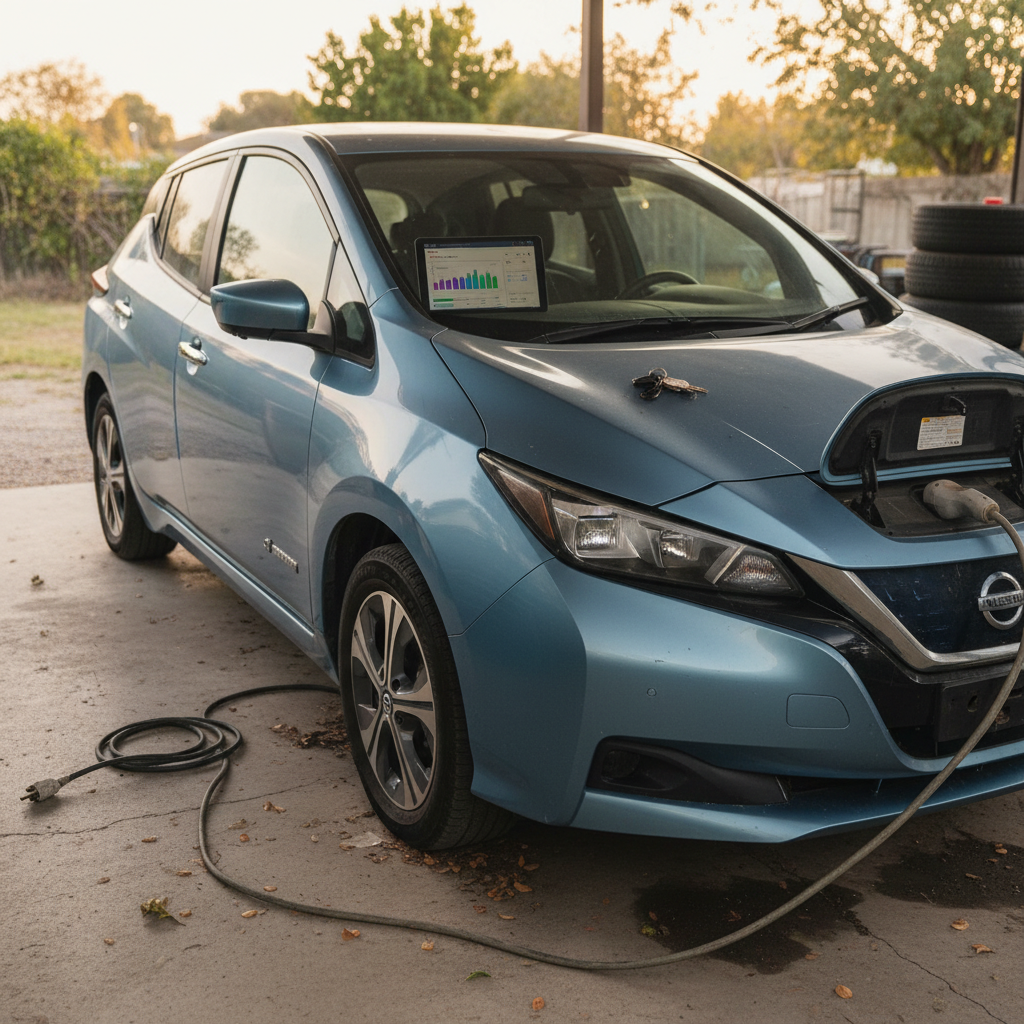
With the federal used EV tax credit gone for purchases after September 30, 2025, many Hampton Roads shoppers are asking: is a used EV still worth it? In a word, yes, if you buy carefully. Depreciation has effectively taken the place of the old $4,000 credit on many models, and that’s especially true in coastal markets like Hampton Roads where inventory is healthy.
1. Let depreciation work for you
Early‑generation EVs and even some 2–4‑year‑old models have dropped 30–40% or more from their original MSRP. That price drop is bigger than the old used‑EV tax credit in many cases.
If you’re shopping used, focus on models with proven reliability, widespread service support in Virginia, and robust battery warranties still in force.
2. Make battery health your “hidden rebate”
The number one risk with a used EV is an unknown or weak battery. That’s exactly why Recharged includes a Recharged Score Report with verified battery health on every vehicle.
Knowing the battery is strong lets you confidently buy a slightly higher‑mileage car at a discount instead of paying a premium for low miles. That price difference is often worth more than yesterday’s tax credit.
Where Recharged fits in
How to stack rebates, financing, and energy savings
Even with federal credits scaled back, you can still build a powerful savings stack as a Hampton Roads driver. Think beyond a single rebate and look at the total picture over the first 3–5 years you own the car.
Four pillars of EV savings in Hampton Roads
Most households can tap at least three of these, even in 2026.
1. Purchase price
Used EV prices have softened. A fair‑market price backed by a battery‑health report can save you thousands up front versus a comparable new car.
2. Fuel savings
Charging at home, especially on off‑peak rates, typically costs the equivalent of $1 or so per “gallon” of electricity for many commutes, compared with $3–$4 gasoline.
3. Maintenance savings
EVs skip oil changes and have fewer moving parts. Over several years, you’re mostly looking at tires, cabin filters, and brake fluid, often hundreds, not thousands, in routine maintenance.
4. Incentives & programs
Dominion rebates and time‑of‑use plans, occasional state tax rebates, and even employer charging benefits can all chip away at your total cost.
At Recharged, we see this play out every day: a Hampton Roads buyer who misses out on yesterday’s tax credit still ends up saving money over five years thanks to a fair used‑EV price, smarter financing, and a good home‑charging setup.
Checklist: how to actually claim your EV rebates
Step‑by‑step: claiming EV and charging incentives in Hampton Roads
1. Confirm your utility and eligibility
Log into your Dominion Energy account and confirm you’re in their Virginia service territory. Check whether you live in a qualifying single‑family home for programs like EV Charger Rewards and the Residential Charger Program.
2. Decide on new vs. used
Given the post‑2025 federal changes, many Hampton Roads households will get the best value from a <strong>used EV with verified battery health</strong> plus utility incentives. Talk with an EV‑focused retailer like Recharged if you’re unsure which route fits your budget.
3. Plan your home charging
Before you buy, decide where the car will charge. If you own your home, explore Dominion’s Residential Charger Program or a traditional install plus EV Charger Rewards. If you rent, confirm access to a 120V outlet or shared charging at your building.
4. Gather documentation
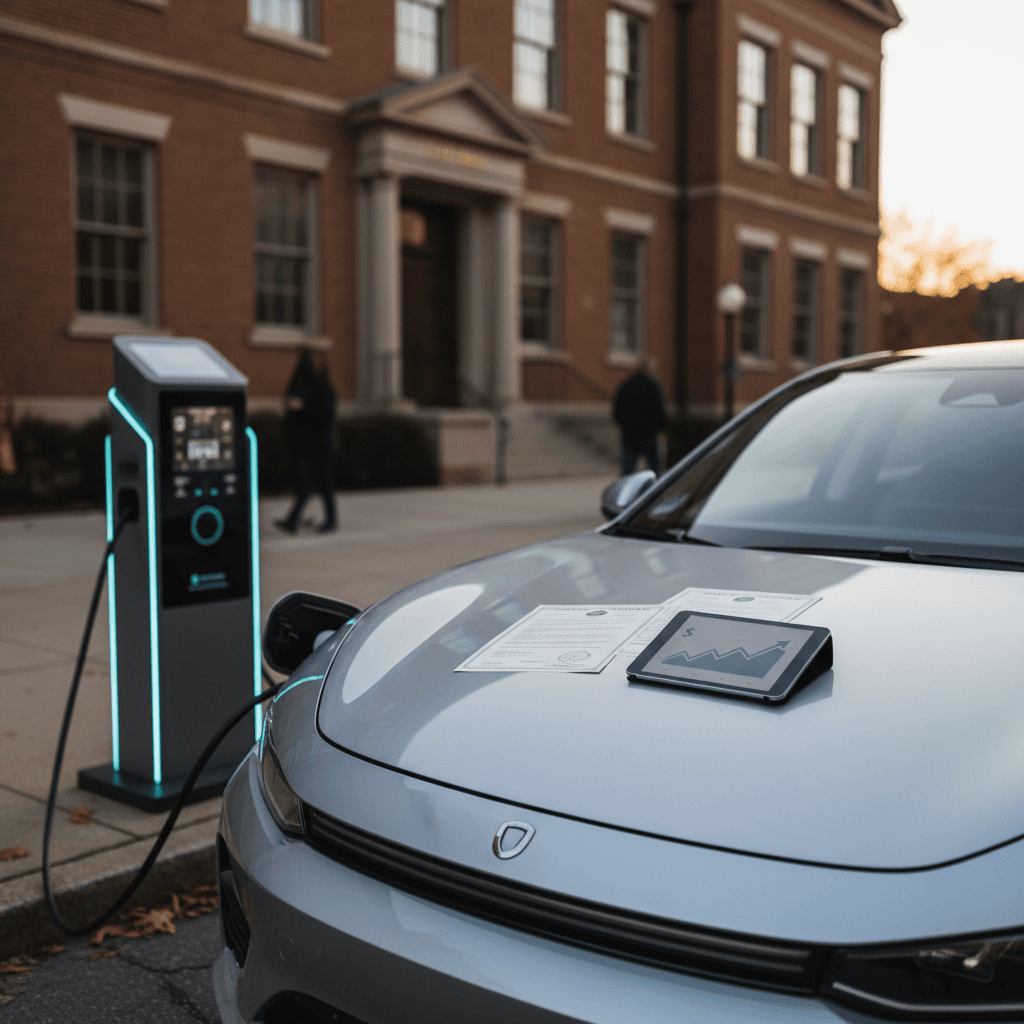
Keep copies of your EV purchase or lease agreement, charger purchase receipt, installation invoice, and any enrollment confirmations from Dominion. These are essential if you plan to claim remaining federal home‑charging credits or utility rebates.
5. Time your installation
If you want to use the federal home‑charging tax credit before it sunsets, coordinate with your electrician so the charger is installed and placed in service before June 30, 2026. Recharged can coordinate with vetted electricians if you buy through the platform.
6. File tax forms and rebate applications
When tax time comes, work with a tax professional or use reputable software to claim any eligible credits. For Dominion programs, submit online applications (often within a set window, such as 120 days after purchase) to secure your enrollment rebate.
Avoid these common rebate mistakes
FAQ: EV rebates and incentives in Hampton Roads
Frequently asked questions about EV rebates in Hampton Roads
Bottom line and next steps for Hampton Roads drivers
The incentive landscape has changed, but the fundamentals of EV value in Hampton Roads have not. In 2026, you’ll lean less on a giant federal check and more on a smart combination of right‑priced vehicle, verified battery health, utility programs, and home‑charging strategy.
If you’re comparing your options, start by deciding whether a new or used EV makes sense for your budget and driving pattern. Then look at Dominion’s offerings, your home‑charging setup, and the real‑world fuel and maintenance savings you can expect. From there, a transparent used‑EV marketplace like Recharged can help you zero in on the right car, show you its battery health, and guide you through financing and incentives so you don’t leave money on the table.
The era of easy, headline‑grabbing EV rebates may be fading, but that doesn’t mean EV ownership stopped making financial sense. For many Hampton Roads households, it simply means taking a more thoughtful, data‑driven approach, and that’s exactly the kind of homework that pays off for years after you drive home.