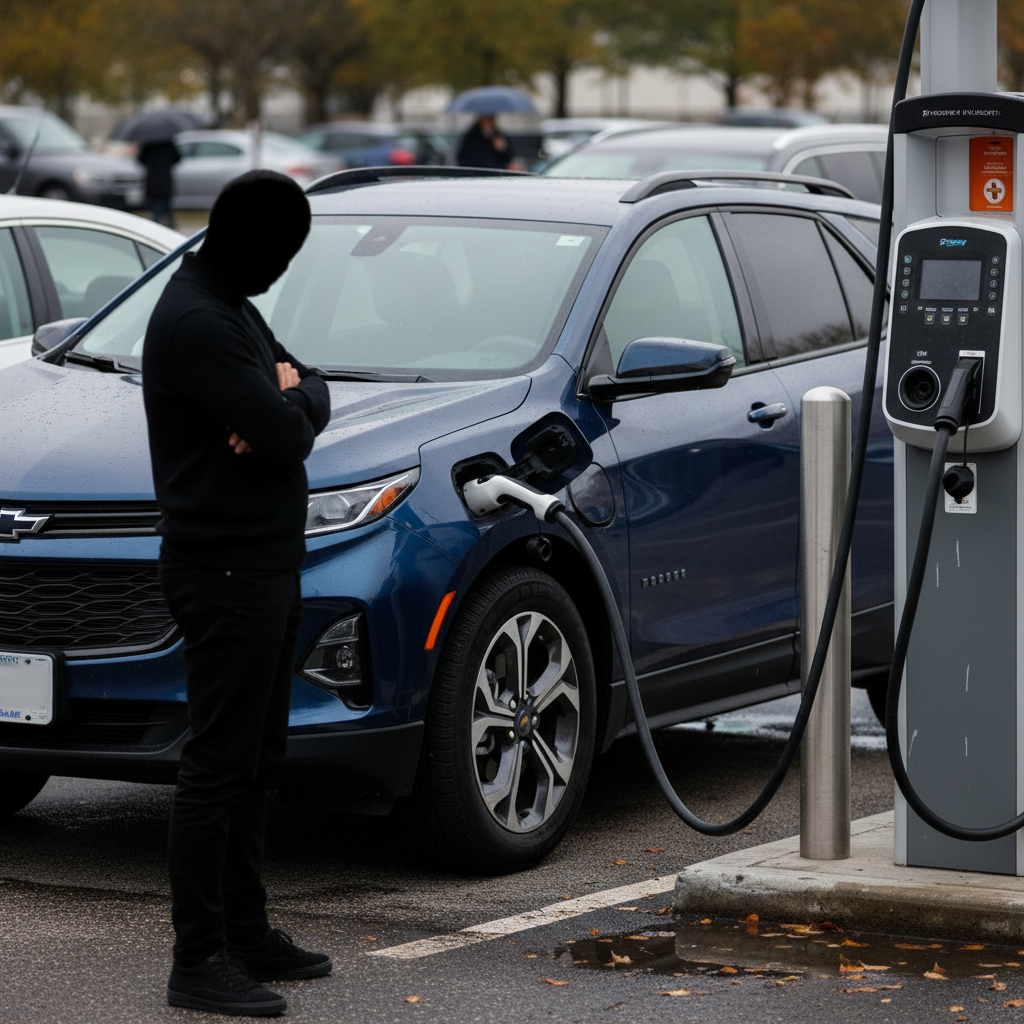
You don’t buy an Audi Q4 e-tron just to save a buck; you buy it because you want quiet, all-electric Audi polish in a right-sized SUV. But the romance has to square with the spreadsheet. Understanding the Audi Q4 e-tron long term ownership cost, depreciation, charging, insurance, and maintenance, will tell you whether this compact luxury EV is a smart long-haul partner or a five-year fling.
Quick take
Why Audi Q4 e-tron ownership costs matter
The Q4 e-tron sits in a competitive neighborhood: Tesla Model Y, Mercedes EQB, Volvo XC40 Recharge, and now the Cadillac Optiq are all loitering on the same cul-de-sac. That means your total cost of ownership, not just the monthly payment, has to make sense over 5–8 years. EVs shift spending away from fuel and routine maintenance toward higher purchase price, faster early depreciation, and potentially higher insurance. If you’re considering a used Q4 e-tron through a marketplace like Recharged, those curves look very different than buying new off the showroom floor.
Audi Q4 e-tron: 5-year cost snapshot (new)
Five-year cost to own: what the numbers say
Let’s start with a reality check. Using a 2025 Audi Q4 e-tron as our reference point, Kelley Blue Book pegs the 5-year cost to own at about $68,078 assuming average U.S. driving and purchase patterns. That includes both out-of-pocket costs and depreciation.
Estimated 5-year cost to own – 2025 Audi Q4 e-tron (new)
Approximate Kelley Blue Book projections for a new Q4 e-tron over 5 years.
| Category | 5-year total (approx.) | What it covers |
|---|---|---|
| Depreciation | $33,155 | Loss in value from new purchase price. |
| Charging ("Fuel") | $2,426 | Electricity for ~15,000 miles per year at EPA efficiency. |
| Insurance | $14,675 | KBB estimate over 5 years for full coverage. |
| Financing interest | $6,743 | Interest on a typical new-car loan. |
| State fees & taxes | $6,848 | Sales tax, registration, and other state-level fees. |
| Maintenance | $2,668 | Scheduled service and wear items. |
| Repairs | $1,563 | Out-of-warranty fixes in years 4–5. |
Your actual numbers will vary with mileage, driving style, electricity rates, and local taxes, but this gives a useful baseline.
Remember the fine print
Depreciation: how fast does a Q4 e-tron lose value?
On paper, depreciation is the villain of the Q4 e-tron story. KBB’s 5-year estimate of roughly $33,155 in value loss means the car sheds about half its buy-in over a typical loan term. That’s not catastrophic by luxury-EV standards, but it’s not heroic either; early EVs and niche luxury models almost always see sharp first-owner depreciation.
What this looks like in real life
- A new Q4 e-tron in the low–mid $50,000s can be worth under $20,000 after 5 years.
- The biggest drop happens in years 1–3, then the curve flattens.
- Market perception of range and tech matters: newer rivals with more range or flashier screens can pressure resale values.
Why used buyers have the advantage
- If you buy a 2–3-year-old Q4 e-tron, much of that initial depreciation is already “baked in.”
- You’re paying more for the battery and hardware you actually get, not for day-one new-car mystique.
- A strong battery diagnostic, like the Recharged Score on every vehicle at Recharged, turns depreciation from a fear factor into a bargaining chip.
Where Recharged changes the math
Ready to find your next EV?
Browse VehiclesEnergy costs: electricity vs gasoline
Energy is where the Q4 e-tron quietly pays you back. The 2024 Q4 40 e-tron is rated at about 33 kWh per 100 miles, or roughly 3 miles per kWh. That’s not hyper-miler territory, but it’s competitive for a square-shouldered luxury SUV.
Home charging vs gasoline: ballpark comparison
Assuming 12,000 miles per year and U.S. average energy prices.
Home charging at $0.16/kWh
At ~3 mi/kWh, you’ll use around 4,000 kWh per year.
- Annual electricity: ≈ $640
- 5-year electricity: ≈ $3,200
Your actual bill depends on time-of-use rates and how often you fast-charge.
Public DC fast charging
At $0.35–$0.50/kWh typical for many fast chargers:
- Annual electricity: $1,400–$2,000
- 5-year electricity: $7,000–$10,000
Fast charging is a convenience feature, not a lifestyle; use it like espresso, not water.
Comparable gas SUV at 25 mpg
At $3.75/gal and 12,000 mi/yr:
- ~480 gallons per year
- Annual fuel: ≈ $1,800
- 5-year fuel: ≈ $9,000
Higher gas prices widen the gap in the Q4’s favor.
Optimize your charging mix

Insurance cost for an Audi Q4 e-tron
If depreciation is the villain, insurance is the silent partner. Audi insurance isn’t cheap in general, and EV hardware nudges premiums higher. One national analysis puts the Audi Q4 e-tron’s average full-coverage premium around $2,700 per year for a 40-year-old driver with a clean record, slightly above the mainstream but right in line for a compact luxury SUV.
What drives Q4 e-tron insurance cost
- High parts and labor prices for Audi bodywork and electronics.
- Battery and high-voltage components push up potential claim severity.
- Advanced driver-assistance systems lower some risk but are expensive to repair when they fail.
Ways to keep premiums in check
- Shop multiple insurers; EV pricing varies more than you’d expect.
- Ask about EV or low-mileage discounts if you commute less.
- Consider slightly higher deductibles paired with a solid emergency fund.
- Bundle home and auto to offset the Audi tax.
Watch your ZIP code
Maintenance and repairs on a Q4 e-tron
On the surface, the Q4 e-tron’s maintenance costs look refreshingly dull. Over 5 years, KBB estimates about $2,668 in maintenance and another $1,563 in repairs, a far cry from a turbocharged German crossover that lives at the dealership espresso bar.
- No oil changes, spark plugs, or timing belts.
- Regenerative braking stretches brake pad and rotor life, especially in city driving.
- Tire wear can be higher than a comparable gas SUV because instant torque tempts your right foot.
- Brake fluid and cabin filter changes are still on the schedule, and high-voltage system checks must be done by qualified technicians.
Service cadence, in broad strokes
Other ownership costs: taxes, fees, and financing
The “boring” line items, sales tax, registration, EV fees, and financing interest, still matter. For a new Q4 e-tron, they can add up to nearly $13,500 over 5 years in typical KBB scenarios.
Where the extra money goes
Often overlooked costs that add friction to Q4 e-tron ownership.
Sales tax & registration
Depending on your state, expect thousands in one-time sales tax and several hundred dollars in initial and ongoing registration fees.
A lower purchase price on a used Q4 means smaller tax checks to the state.
EV-specific fees
Some states add annual road-use fees for EVs to replace lost gas-tax revenue.
Check your DMV; this can be $100–$300 per year in certain states.
Financing interest
KBB’s 5-year model includes around $6,700 in loan interest for a typical new-car loan.
Better credit, shorter terms, and buying used can knock this down substantially.
New vs. used Q4 e-tron: which has better long-term economics?
From a pure cost-of-ownership standpoint, the Q4 e-tron is like most luxury EVs: it makes more sense as a used purchase, as long as the battery checks out. You’re letting the first owner eat the steepest depreciation while you keep most of the running-cost advantage that comes with electric drive.
Buying new
- Pros: Full warranty, latest software and hardware, your choice of spec and color, access to the latest driver-assistance features.
- Cons: Highest depreciation hit, larger tax bill, and often higher insurance and finance costs.
New makes sense if you plan to keep the vehicle 8–10 years and are comfortable riding out early depreciation.
Buying used (2–4 years old)
- Pros: Price already shaved dramatically, lower sales tax and fees, similar energy and maintenance costs, and often still within factory warranty.
- Cons: Battery health and charging history can be opaque if you’re buying blindly.
This is precisely the gap a platform like Recharged is designed to fill, by pairing used EVs with battery diagnostics, transparent pricing, and nationwide delivery.
Used Q4 e-tron cost checklist
Verify battery health
Ask for a quantitative battery report, not just “it charges fine.” Recharged includes a Recharged Score on every vehicle, so you can see how much usable capacity remains.
Check DC fast-charging history
Heavy, frequent DC fast charging can accelerate degradation. Favor cars that mostly charged at home or AC public stations.
Review service history
Look for regular brake fluid changes, recalls performed, and software updates; gaps can point to deferred maintenance.
Compare interest rates
Used EV financing can be slightly higher than new, but a much lower principal balance usually more than compensates.
Budget for tires
Factor a set of quality tires into your 3–5-year plan; EV-appropriate rubber isn’t cheap but pays off in safety and efficiency.
How the Q4 e-tron compares to other luxury EV SUVs
In 2026, the Q4 e-tron lives in a crowded, high-expectation segment. The Cadillac Optiq is muscling in with more range and power at similar money; the Tesla Model Y still owns the charging-infrastructure story; Volvo and Mercedes chase with their own flavors of Scandinavian calm and Germanic seriousness. Cost-wise, the Q4 tends to land mid-pack: not the cheapest to run, not the most expensive, but depending on deals and your local energy prices, it can be a quiet bargain.
Ownership-cost flavor vs key competitors (high level)
How a typical Audi Q4 e-tron stacks up conceptually against popular luxury EV SUVs.
| Model | Range & efficiency | Depreciation feel | Running-cost notes |
|---|---|---|---|
| Audi Q4 e-tron | Competitive but not segment-leading range; decent efficiency for its size. | Moderate–fast in early years, typical luxury-EV curve. | Insurance a bit high; charging costs low if you stay on home Level 2. |
| Tesla Model Y | More range and access to a vast Supercharger network. | Historically strong resale, but plenty of supply can soften values. | Energy costs similar; insurance can be volatile by state. |
| Cadillac Optiq | Longer range and more power for similar price. | Too new for definitive data, but value-focused positioning may help. | If GM’s Ultium reliability holds, running costs should be competitive. |
| Volvo XC40 Recharge | Lower efficiency and range. | Depreciation fairly steep on early Volvo EVs. | Higher energy use nudges up electricity cost per mile. |
These are directional comparisons, not precise dollar-for-dollar rankings.
Where the Q4 earns its keep
Tips to reduce your Audi Q4 e-tron long-term costs
You can’t control the global EV market or the whims of your state insurance commissioner, but you do have meaningful levers to pull. A few smart choices can shave thousands off the Q4 e-tron’s lifetime tab.
Practical ways to lower Q4 e-tron ownership cost
Prioritize home Level 2 charging
Install a properly sized 240V charger if you can and use scheduled charging to hit off-peak rates. This turns the Q4 into a cheap commuter, not a fast-charging addict.
Right-size your spec
Big wheels, max-option packages, and rare colors can inflate purchase price without improving resale proportionally. Buy the Q4 you’ll enjoy, but know which boxes are financially irrational.
Shop insurance before you sign
Get quotes for the specific model year and trim you’re considering; don’t assume it’ll mirror your current SUV. If the premium is a gut punch, adjust trim or consider used.
Lean on regenerative braking
Use higher regen settings around town to preserve pads and rotors. It feels odd at first but quickly becomes second nature, and reduces maintenance.
Consider certified or curated used
A vetted used Q4 e-tron from an EV-focused retailer like Recharged, with a Recharged Score battery report and nationwide delivery, can deliver luxury-EV comfort without the new-car depreciation hit.
When a cheap Q4 e-tron isn’t actually cheap
FAQ: Audi Q4 e-tron long-term ownership cost
Common questions about Q4 e-tron ownership costs
Bottom line: is the Audi Q4 e-tron worth it long term?
Viewed strictly as a number on a spreadsheet, the Audi Q4 e-tron is a solid but not sensational long-term value when bought new. Depreciation and insurance bite hard, while electricity and maintenance go easy. Where the Q4 e-tron shines is as a well-vetted used EV: the first owner has already paid for the privilege of novelty, and you get the calm, quiet Audi experience with a significantly lower total cost of ownership.
If you want a compact luxury EV that feels familiar rather than futuristic-for-futurism’s-sake, and you’re willing to be smart about how you charge and where you buy, a Q4 e-tron can be a very rational indulgence. And if you’re shopping used, starting with a Recharged listing, complete with Recharged Score battery health diagnostics, fair pricing, financing, trade-in options, and white-glove delivery, stacks the odds in favor of both your heart and your wallet.