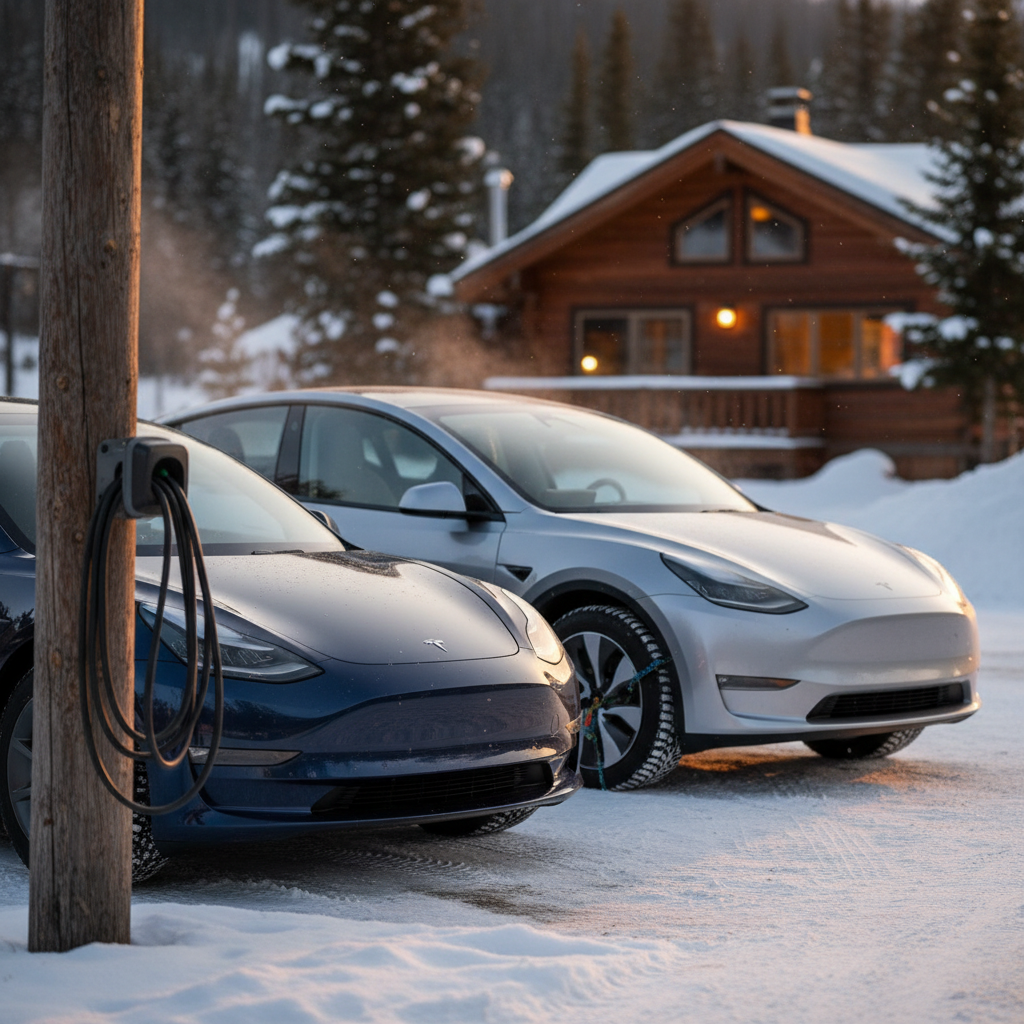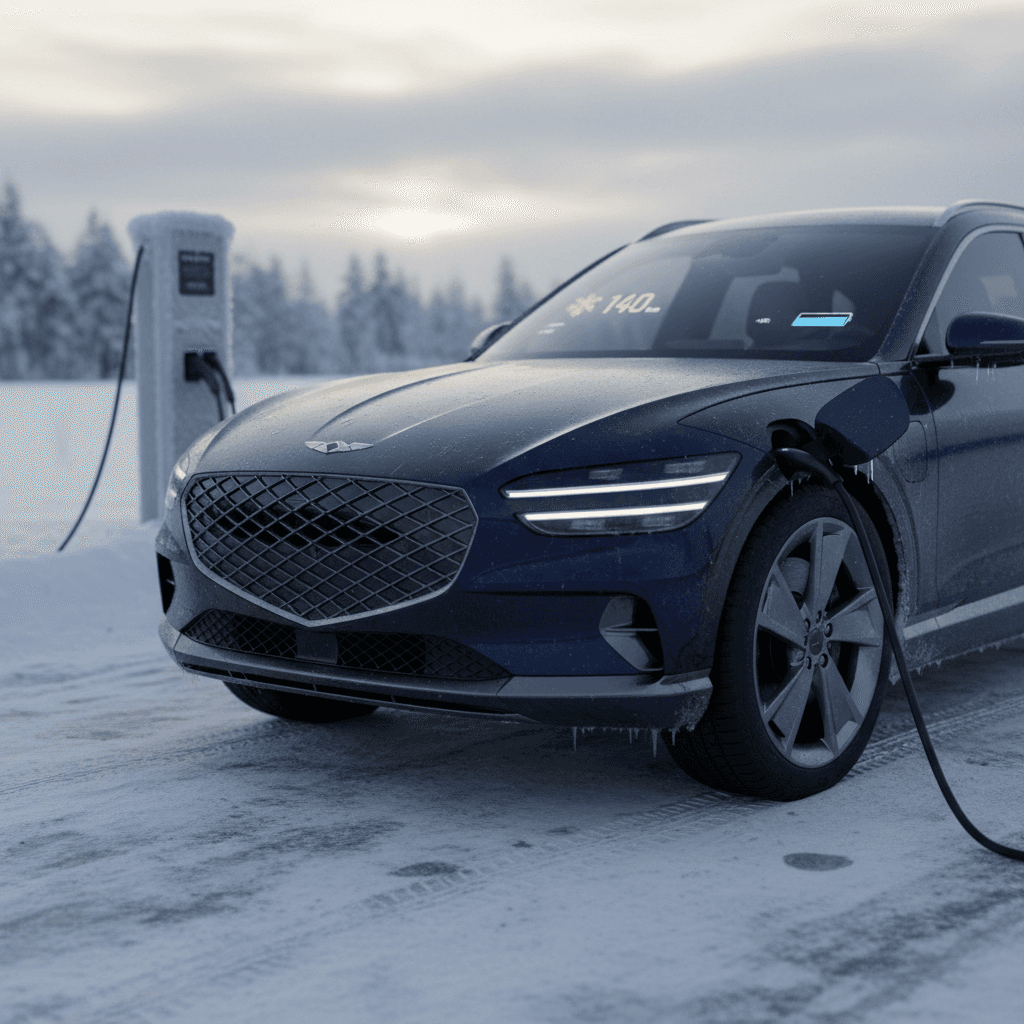
If you live somewhere with real winters, you’ve probably seen scary stories about Lexus RZ winter range loss. An EPA-rated 220-mile crossover that suddenly looks like a 130–150 mile car once the temperature drops is enough to give anyone range anxiety. Let’s separate drama from data and look at what actually happens to the RZ’s range in cold weather, and what you can do about it.
Cold truth about EVs
Lexus RZ winter range loss: the short version
- Early U.S. models (2023–2025 RZ 450e AWD) carry a 71.4 kWh pack with about 64 kWh usable and an EPA rating of 196–220 miles, depending on wheels.
- Independent range databases and simulations suggest that in real cold (around 14°F) you’re typically looking at 25–35% winter range loss versus mild weather driving.
- On a 2025 RZ 450e, that means roughly 140–165 miles of real-world winter range on the highway and potentially 180–200 miles if you’re mostly in the city at lower speeds.
- Later, updated RZ variants (rolling out for 2026 and beyond) add more efficient batteries and slightly higher EPA range figures; winter loss in percentage terms is similar, but you start from a bigger number.
- Heat pump HVAC, good seat and steering wheel heaters, and Lexus’ focus on efficiency help, but the RZ still trails class leaders if you regularly need 200+ winter highway miles between charges.
If that sounds disappointing, the upside is that winter range loss is predictable and manageable. With smart preconditioning, charging habits, and some driving adjustments, you can claw back a surprising amount of usable range from your RZ once the temperature drops.
Lexus RZ battery, EPA range, and why it looks good on paper
To understand Lexus RZ winter range loss, you have to start with the basics: battery size, efficiency, and official range ratings.
Lexus RZ battery and official range ratings
Key numbers for the RZ’s battery pack and rated range before weather or driving style enter the picture.
| Model years / variant | Usable battery capacity | EPA combined range (best-case) | Typical real-world mild weather range* |
|---|---|---|---|
| 2023–2025 RZ 450e AWD (18" wheels) | ~64 kWh | 220 miles | ~200–210 miles |
| 2023–2025 RZ 450e AWD (20" wheels) | ~64 kWh | 196 miles | ~180–195 miles |
| 2026+ updated RZ 450e (U.S. estimate) | ~68 kWh usable | ~260 miles (targeted) | ~230–240 miles |
| Future RZ 350e FWD-style trims | similar or slightly smaller | ~300 miles (targeted) | ~260–270 miles |
Figures are representative U.S. specs; exact numbers vary by model year, trim, and wheel choice.
Why usable kWh matters more than EPA range
On paper, the RZ looks reasonably efficient: combined energy use is around 31 kWh/100 miles for the 18-inch wheel models, which is competitive among luxury EV crossovers. The catch is that the battery itself is smaller than many rivals, so a similar percentage of winter loss translates into fewer usable miles.
How much range the Lexus RZ actually loses in winter
Measuring winter range loss is tricky, because no two drives or climates are the same. But we can triangulate using simulated data, owner reports, and how other EVs behave in similar conditions.
Lexus RZ 450e: mild vs cold-weather estimates
A widely cited EV range database estimates that in cold-weather highway driving, the RZ 450e can drop from roughly 190 miles of range at mild temperatures to about 147 miles at winter temperatures at similar speeds. That’s roughly a 22–25% hit. In city driving, the same data suggests a fall from roughly 295 miles (mild) to 203 miles (cold), or about 30% loss, but city numbers are inflated by lower speeds and more regenerative braking.
When the hit can be worse
City vs highway: why your Lexus RZ winter range swings so much
City / suburban driving
At lower speeds, the RZ benefits from:
- Less aerodynamic drag (cold air is denser, but speed is low).
- Frequent regen braking recovering energy instead of wasting it as heat.
- More time for the pack and cabin to warm up and stay warm.
Result: Winter range loss in mixed urban driving is often “only” 20–25%, assuming trips longer than 20–30 minutes.
Highway driving
On the interstate, everything stacks against you:
- Higher drag at 70–75 mph in dense cold air.
- Continuous heater load to keep the cabin at 70°F.
- Less opportunity for regen; you’re mostly on the throttle.
Result: Expect 25–35% range loss in a 2023–2025 RZ 450e at typical U.S. highway speeds in winter, especially with 20-inch wheels.
If your driving is 90% highway at 75 mph, your Lexus RZ winter range loss will look worse than your neighbor’s, even if you’re in identical cars. The RZ is tuned more for smoothness and refinement than hypermiler efficiency, and you’ll feel that at speed in January.
2023–2025 RZ 450e vs 2026+ updated RZ: winter range differences
Lexus has already heard the critique: great cabin, short legs. For the 2026 model year and beyond, the RZ lineup gets a revised battery pack and efficiency tweaks that lift EPA range and slightly improve winter behavior.
How the updated RZ changes the winter math
Same basic shape, different starting points.
2023–2025 RZ 450e
Usable battery: ~64 kWh
EPA range: 196–220 miles
Winter takeaway: Solid for daily use, but winter highway trips require careful planning and frequent DC fast charging.
2026+ RZ 450e
Usable battery: ~68 kWh
EPA range: ~260 miles
Winter takeaway: Same basic percentage loss, but ~20–30 extra miles of usable winter range versus early cars.
High-range trims (e.g., RZ 350e-style)
Focus: FWD efficiency rather than outright power.
EPA range: targeting ~300 miles.
Winter takeaway: Better choice if you routinely face 150–180 mile winter legs with limited charging.
Shopping used vs new
What helps the Lexus RZ in cold weather (and what doesn’t)
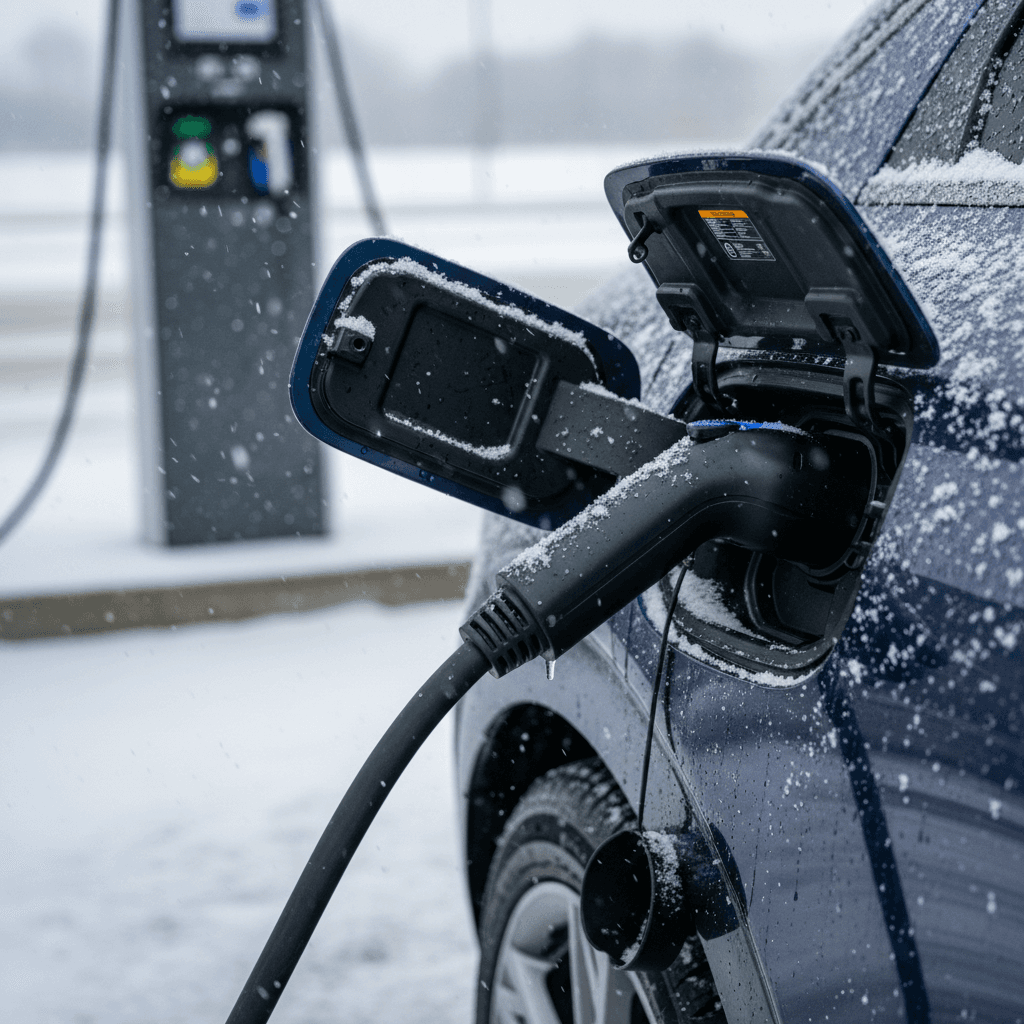
Cold-weather pros and cons for the Lexus RZ
The hardware that helps, and the compromises you can’t code around.
Things that help the RZ in winter
- Standard heat pump: More efficient than a simple resistive heater once everything is warmed up.
- Heated seats & steering wheel: Let you lower cabin temperature while still feeling comfortable.
- DIRECT4 AWD: Confident traction on snow and slush when paired with proper winter tires.
- Decent efficiency: In mild weather, the RZ’s kWh/100 mi number is competitive, so the percentage loss starts from a good baseline.
Things that hurt the RZ in winter
- Modest battery size: Roughly 64–68 kWh usable makes every lost winter mile more noticeable.
- 150 kW DC fast charge limit: Adequate, but slower than some rivals when you’re hopping charger to charger in the cold.
- 6.6 kW (early cars) onboard AC charger: Long full-charge times if you’re topping up from low state-of-charge overnight.
- Conservative range estimator: The guess-o-meter can spook new EV drivers by dropping aggressively when you switch the heater on.
Don’t confuse winter loss with permanent degradation
10 practical ways to cut Lexus RZ winter range loss
Winter range playbook for Lexus RZ owners
1. Precondition while plugged in
Use the Lexus app or in-car timer to warm the cabin and battery while you’re still connected to home or workplace charging. You’re effectively using grid power instead of burning through stored energy.
2. Rely on seat and wheel heaters
Set the cabin temperature a bit lower, say 66–68°F, and lean on the heated seats and steering wheel. They use much less energy than trying to heat all the air in the cabin.
3. Avoid short, repeated cold starts
If possible, batch errands into one longer trip instead of multiple five-minute drives. The RZ pays an efficiency penalty every time it has to reheat a cold battery and cabin from scratch.
4. Watch your highway speed
In the RZ, dropping from 75 mph to 65 mph in winter can easily save 10–15% of your consumption. That’s the difference between arriving comfortably and sweating the last 20 miles.
5. Use Eco or Range-focused drive modes
Eco mode softens throttle response and can tame energy-hungry climate control. It won’t magically add miles, but it nudges every system toward efficiency.
6. Keep tires properly inflated
Cold air drops tire pressure. Even a few PSI below spec increases rolling resistance and hurts both range and traction. Check pressures more often in winter.
7. Park indoors or in the sun
A garage, or even a sunny spot, keeps the pack and cabin warmer to start, reducing how much energy the RZ spends just getting up to temperature.
8. Don’t obsess over 100% charges
For daily use, charging to 70–80% is usually enough and is better for long-term battery health. Save 100% charges for truly long winter trips.
9. Learn what your car’s range meter really means
Treat the RZ’s range prediction as a forecast, not a promise. Reset the trip computer on a cold day, drive 30–40 miles, and compare prediction vs reality so you know how conservative it is for your routes.
10. Update navigation for charger-aware routing
Use the built-in nav or a third-party app that understands EVs. Let it plan stops based on realistic winter consumption instead of the EPA fantasy land.
Planning winter road trips in a Lexus RZ
Can you road-trip a Lexus RZ in the winter? Yes, but you have to respect its limits. Think of it as a beautifully finished, quiet electric Lexus first, and a long-haul grand tourer second.
Rule-of-thumb winter planning numbers
Conservative planning assumptions for winter trips in a Lexus RZ starting from 90–100% charge.
| Model / conditions | Planning range (one leg) | Recommended SOC window | Charging strategy |
|---|---|---|---|
| 2023–2025 RZ 450e, mostly highway, 20–30°F | ~130–150 miles | 10–90% | Plan DC fast chargers every 100–120 miles; arrive with 10–20% buffer. |
| 2023–2025 RZ 450e, mixed driving, above 20°F | ~150–170 miles | 10–90% | Home charge overnight; one mid-day DC stop for longer days. |
| 2026+ RZ with higher EPA range, mostly highway | ~160–185 miles | 10–90% | Similar stops, but with more options to skip every other charger. |
| Any RZ, severe cold near 0°F, strong headwinds | ~110–130 miles | 10–90% | Treat this as worst case; keep charger density high and buffers large. |
These are intentionally cautious; experienced drivers may safely stretch them with good planning.
Don’t cut it close in sub-freezing weather
Buying a used Lexus RZ? Winter-specific checks
If you’re shopping the used market, the RZ can be a smart buy, especially given its comfort and the fact that early models were dinged for range, which can depress resale prices. But in cold climates you should go in with eyes open about both winter range loss and long-term battery health.
Cold-climate checklist for a used Lexus RZ
1. Get an independent battery health report
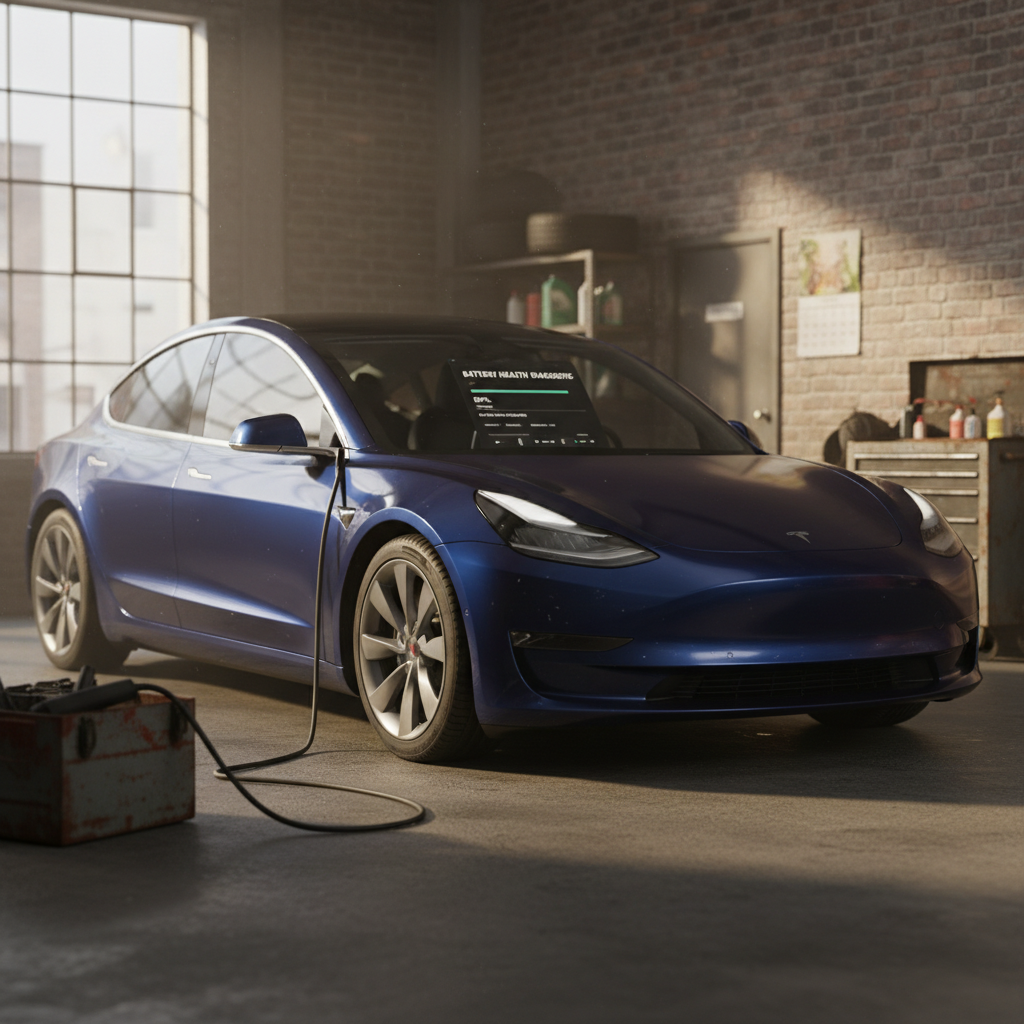
A healthy pack is your foundation. At Recharged, every used EV comes with a <strong>Recharged Score</strong> battery health report, so you can see real capacity and fast-charging history before you commit.
2. Test drive on a genuinely cold day
If possible, schedule a drive when temps are near or below freezing. Start at a known state of charge, drive 20–30 miles at your typical speeds, and compare consumption and SOC drop to what you’ve researched.
3. Verify heat pump and heaters work perfectly
A weak cabin heater or failed seat heater will push you to crank cabin temps higher, burning more energy. Make sure the heat comes on quickly and evenly, and all seat and wheel heaters function.
4. Check for winter tires or a second wheel set
True winter tires transform how the RZ feels in snow but also can add a small consumption penalty. If the car includes a winter wheel set, factor that into pricing and your range expectations.
5. Confirm home charging options
In cold climates, reliable Level 2 home charging is practically non-negotiable. If you don’t have a 240V solution yet, budget for an installation and a quality EVSE when you’re pricing that used RZ.
6. Compare your use case to the RZ’s strengths
If you regularly do 180-mile winter highway legs with no convenient chargers, the RZ 450e may not be the right tool. If your life is mostly 40–70 mile days with occasional weekend trips, it can be an excellent fit.
Where Recharged fits in
Ready to find your next EV?
Browse VehiclesLexus RZ winter range loss: FAQ
Common questions about Lexus RZ winter range loss
So, should you buy a Lexus RZ if you live somewhere cold?
If your mental image of an EV involves four-hour winter freeway stints between charges, the Lexus RZ, especially early RZ 450e models, will feel compromised. Its modest battery, conservative range estimator, and merely average DC fast charging make winter range loss very visible.
But if what you actually do is 30–80 miles a day, mostly with home charging, the RZ plays to its strengths: hushed cabin, Lexus-grade comfort, confident AWD, and enough range, even with a 25–30% winter haircut, to handle real life with room to spare. The later RZ variants simply add more insurance on top of that.
The key is honesty about your use case. Map your longest winter days, sketch in realistic charger stops, and decide whether the RZ’s blend of refinement and range works for you. And if you’re shopping used, working with a platform like Recharged, where every car includes verified battery health, fair pricing, and EV-savvy guidance, turns winter range from a nagging worry into just another spec you can plan around.