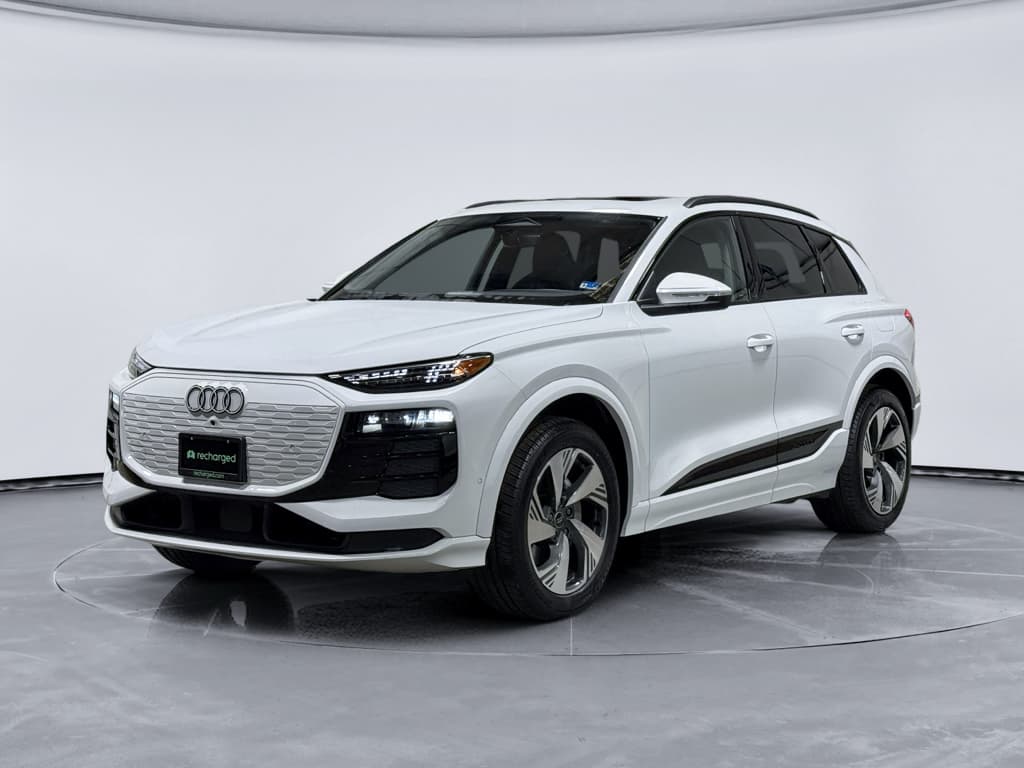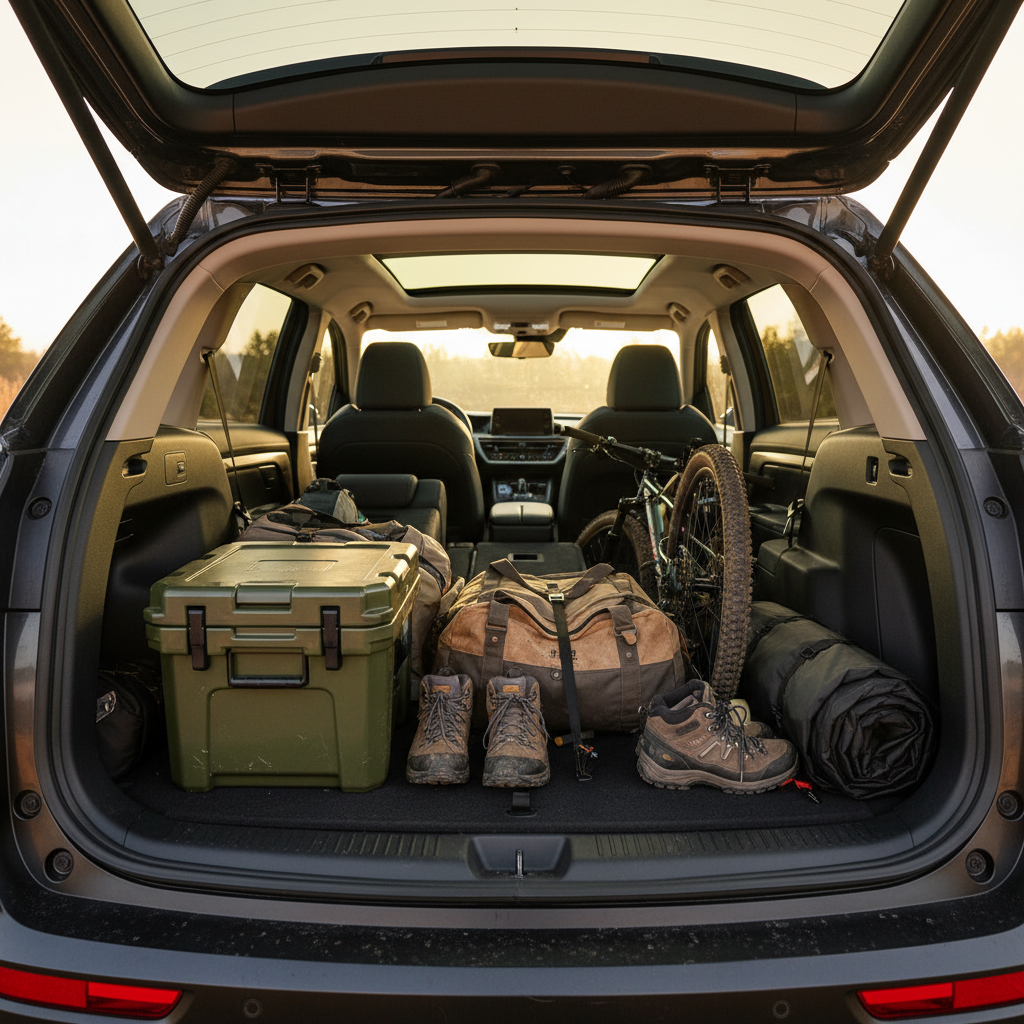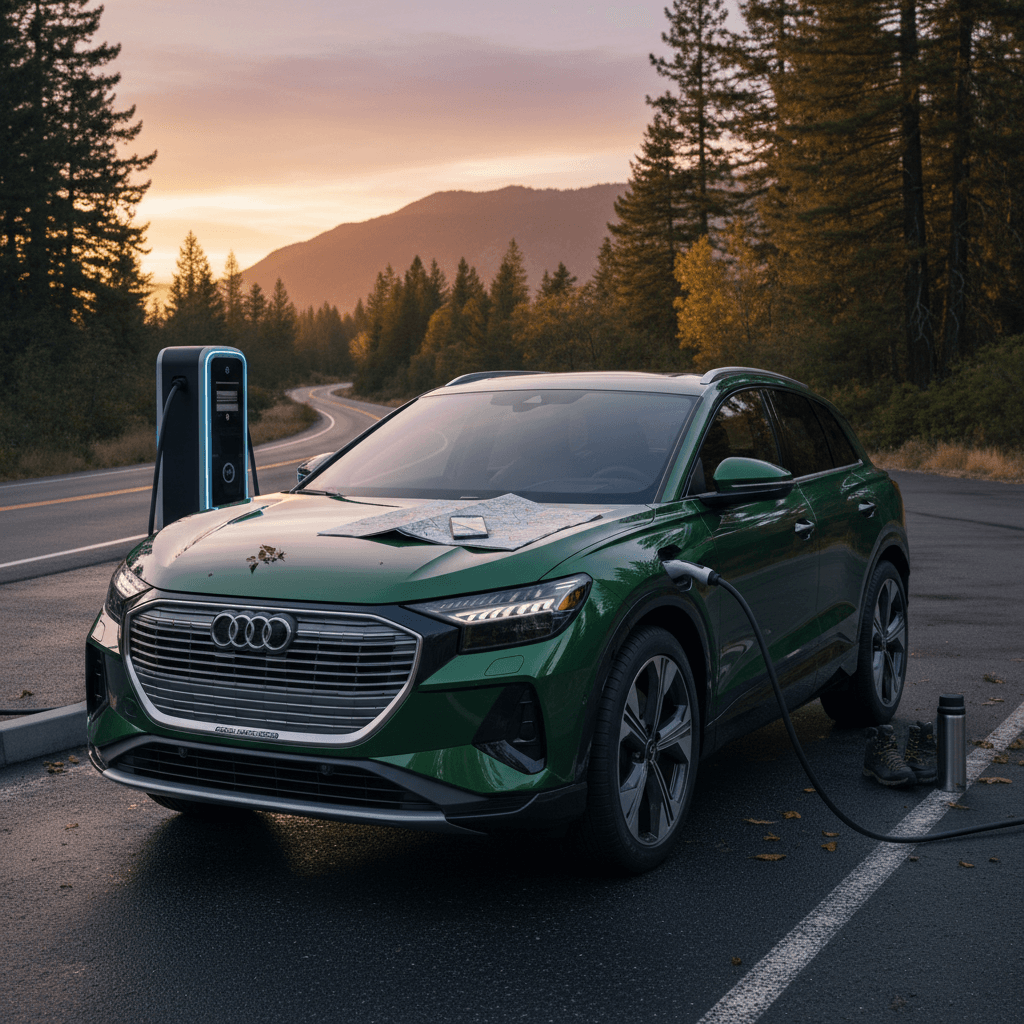
If you own or are considering an Audi Q4 e-tron, long-distance driving is probably high on your priority list. The good news is that the Q4 can be a genuinely capable road-trip EV, as long as you understand its real-world range, how to work with its DC fast-charging curve, and how to plan your stops. This guide walks you step by step through Audi Q4 e-tron long distance driving tips, based on real highway data and how the car’s charging hardware actually behaves.
Who this guide is for
Why the Audi Q4 e-tron Works for Long Trips
Audi Q4 e-tron Long-Trip Fundamentals
On paper, the Q4 e-tron doesn’t chase headline range numbers like some larger luxury EVs, but it combines a usable battery size, reasonably quick DC fast charging, and a quiet, comfortable chassis. That combination matters more on a real road trip than an optimistic EPA sticker. When you plan your stops around the car’s 10–80% "sweet spot" and use Audi’s thermal preconditioning for DC fast charging, you can make steady, predictable progress across long distances.
Think in legs, not in total distance
Know Your Q4 e-tron Range and Variants
Before you can plan smart stops, you need to know which Q4 e-tron you have, because range and charging behavior differ slightly between variants and model years. In North America, most Q4 e-tron models are built on the VW Group MEB platform using an 82 kWh (77 kWh usable) pack, with newer trims adding an updated charging profile and, in some markets, a slightly smaller but more energy-dense pack.
Typical Audi Q4 e-tron Variants (U.S.-focused overview)
Approximate EPA range figures and drivetrain layout; always verify exact specs for your model year.
| Variant | Drivetrain | Approx. EPA Range (mi) | Battery (usable kWh) | Notes |
|---|---|---|---|---|
| Q4 40 e-tron (RWD / similar "45" in some markets) | Single-motor RWD | 260–288 | ~77 | Most efficient highway option; newer variants may get slightly more range and faster DC charging. |
| Q4 50 / 55 e-tron quattro | Dual-motor AWD | 240–260 | ~77 | More traction and power, but slightly lower range at speed. |
| Q4 Sportback e-tron | RWD or AWD | A few miles more than SUV | ~77 | Sleeker aero profile helps a bit at highway speeds. |
| Early Q4 35 e-tron (not common in U.S.) | Lower-capacity pack | Below 230 | ~52–55 | More of a city car; road-trip strategy is similar, but legs are shorter. |
EPA ratings are laboratory estimates. Expect lower range at 70–75 mph, in cold weather, or with roof loads.
Don’t assume your EPA rating equals highway range
Real-World Highway Range: What to Expect
Real-world testing on U.S. highways, including independent 70–75 mph runs and Recharged’s own Q4 road-trip evaluations, consistently shows that the Q4 e-tron is respectable but not class-leading on efficiency. In mild weather on flat interstate at 70 mph, many owners see around 2.7–3.0 mi/kWh. That translates to roughly 210–230 miles of comfortable highway range from 100% to a low state of charge, but for planning purposes you should work with a smaller usable window.
- In good conditions (50–70°F, no strong wind), a Q4 40 or similar RWD variant can realistically do about 170–190 miles between DC fast-charge stops if you run from ~10% to ~80%.
- AWD quattro versions tend to sit closer to 150–175 miles per 10–80% leg at typical U.S. highway speeds.
- Add a roof box, big 20–21" wheels, heavy cargo, or winter temperatures, and your effective leg length can drop toward 120–150 miles.
Use energy consumption, not just the guess-o-meter
Smart Charging Strategy for Long-Distance Drives
The single biggest Audi Q4 e-tron long distance driving tip is this: optimize how and when you DC fast charge. The Q4’s DC fast-charging curve is strongest at low state of charge (SoC) and a well-conditioned battery; it tapers significantly as you approach 80–90%.
DC Fast-Charging Best Practices for the Q4 e-tron
Plan your stops to live in the 10–80% sweet spot.
Arrive Low, Not Empty
Plan to hit DC fast chargers around 10–20% SoC, not 40–50%. The Q4’s charging curve is much faster at lower SoC, especially on newer 40/45/50/55 variants that can reach higher peak power.
Stop at Capable Stations
Look for DC stations rated at 150 kW or higher. Earlier Q4s peak around 125–135 kW; newer trims can hit ~165 kW, but you only see that if the charger can deliver it and your battery is warm.
Charge 10–80%, Then Go
Time is usually best spent charging from 10–80%. Above 80%, the Q4’s charge rate falls off sharply, so it’s often faster overall to unplug and drive to the next stop rather than wait for a near-100% charge.
Use thermal preconditioning before fast charging
Ideal Q4 e-tron DC Fast-Charging Session: Step-by-Step
1. Start your trip at 80–90% from home AC
For a long day, leave home or your hotel with a near-full battery from Level 2 charging. This avoids wasting time at a slow 80–100% DC top-off at the start of the day.
2. Drive the first leg down to ~15%
Let your SoC fall toward 10–20% before your first DC stop. This maximizes time spent at the highest charge power and minimizes taper.
3. Navigate to the charger in advance
Set the charger as your destination 20–30 minutes before arrival so the Q4 can warm or cool the battery into the ideal temperature window for fast charging.
4. Plug into the highest-power available stall
Pick a 150 kW+ CCS stall if possible, avoid broken or clearly throttled units, and avoid sharing power on split cabinets when you can.
5. Monitor the charging curve, not just SoC
You’ll see peak power delivered early, then a gradual taper. Once power falls below ~60–70 kW and you’re above 70–80% SoC, the time-per-mile added gets less attractive.
6. Unplug around 75–80% and move on
Use that charge to cover your next 130–180 mile leg rather than waiting for the last 20%. Your total trip time is usually lower even if you make one extra short stop.
Avoid "surfing" between 5% and 100% every day
Route Planning Tools and Settings
Good route planning turns the Q4 e-tron into an easy-going road-trip partner rather than a range-anxiety machine. You have three main tools: Audi’s built-in planner, third-party apps, and basic EV math if networks are sparse on your route.
Audi’s Built-In e-tron Route Planner
- Integrated in the Q4’s navigation, it can suggest charging stops and target SoC along your route.
- On newer software, it can trigger battery preconditioning as you approach a DC fast charger, improving charge speeds.
- Good for mainstream highway routes where charging networks are dense.
Set your target arrival SoC conservatively (for example 10–15%) if you’re new to the route or expect weather/wind to be a factor.
Third-Party Planning Apps
- Apps like A Better Routeplanner (ABRP), PlugShare and others give more control over assumptions and let you see network reliability reports.
- You can dial in your typical consumption (for example 2.8 mi/kWh at 75 mph) so the plan better matches your Q4’s real behavior.
- Use app data to sanity-check the in-car plan, especially on unfamiliar corridors.
Once you’ve chosen stops in the app, set those specific chargers as destinations in your Q4 so you still benefit from preconditioning.
Pad your first plan, then tighten it up
Driving Style, Settings and Weather Effects
Two Q4 e-trons with the same battery size can have very different real-world range depending on how and where they’re driven. On long highway trips, speed and temperature matter more than most owners expect, while driving mode and regen settings are more about feel than pure efficiency.
Key Factors That Shape Q4 e-tron Highway Range
Some you control, some you don’t, but you can plan around all of them.
Speed
Going from 65 to 80 mph can easily cost you 15–25% of your range. If you’re tight on charge between fast chargers, dropping 5 mph is more powerful than any eco mode.
Weather & Climate
Cold batteries and cabin heating dramatically increase consumption. In winter, expect to lose another 10–30% versus mild conditions, especially on short hops that don’t fully warm the pack and cabin.
Load & Aero
Roof boxes, bike racks and heavy cargo all eat into efficiency. If you regularly road-trip with this gear, mentally downgrade your "comfortable" leg length by 20–30 miles.
- Use Efficiency mode if you don’t mind softer throttle response. It won’t magically add 50 miles, but it helps you stay smooth and keep power demand predictable.
- Set regen to a level that feels natural. One-pedal style driving around town can help, but on steady highway stints, regen matters less than simply not wasting energy on unnecessary speed changes.
- In cold weather, precondition the cabin and battery while plugged in before departure. Warming the car off the grid means more of your battery is available for actual driving.
- If you’re facing headwinds, hills, or heavy rain, assume you’ll land at the lower end of your normal leg-range window and adjust stops accordingly.
Watch for "cold soak" after overnight parking
Comfort vs. Efficiency on Road Trips
A classic EV trap is chasing maximum efficiency at the expense of driver fatigue. The Audi Q4 e-tron is at its best when you let it be a comfortable premium crossover while still being deliberate about energy use. Long-distance driving is a marathon, not a hypermiling contest.
Where It’s Worth Saving Energy
- Top speed choice: Cruising at 70 instead of 80 mph makes a major difference in energy use while barely affecting real-world arrival times on multi-stop days.
- Wheel/tire selection: If you road-trip often, consider sticking with more efficient wheel/tire packages instead of wide performance rubber.
- Roof loads: Take off the cargo box or bike rack when you don’t need it; their aero penalty is very real at highway speeds.
Where Comfort Wins
- Climate control: On a 500-mile day, staying alert is more important than squeezing out another 10 miles. Use automatic climate, but precondition when plugged in.
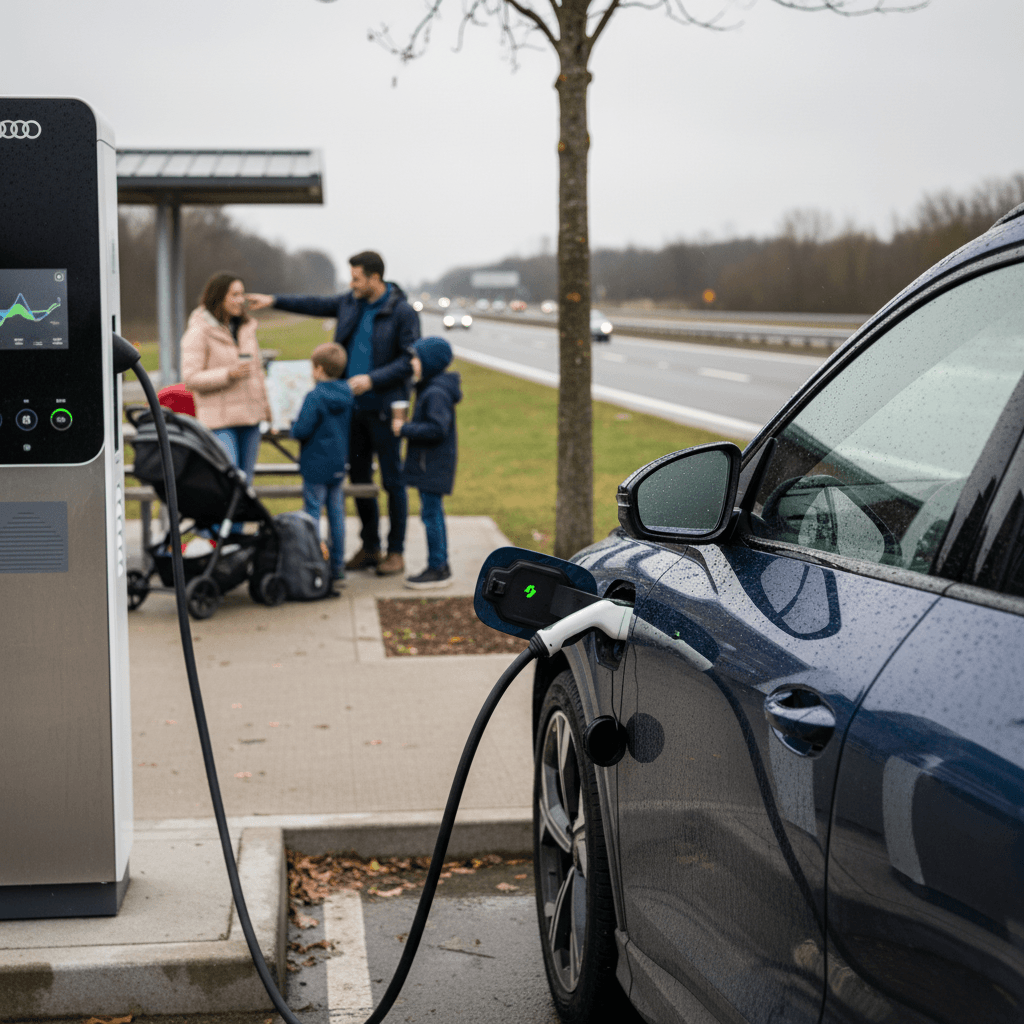
- Break timing: It’s perfectly fine to time charging stops around meals and restroom breaks. The Q4’s DC curve is quick enough that by the time you’ve stretched, you’ll often be at or near 80%.
- Driver fatigue: If slowing down 5 mph means you arrive 10–15 minutes later but significantly less tired, that’s a worthwhile trade.
Protecting Your Battery on Frequent Road Trips
Long-distance driving itself doesn’t have to destroy an EV battery, but certain habits will accelerate wear. Audi’s own guidance for e-tron models emphasizes avoiding staying at 100% for long periods and not living on DC fast charging when you don’t need it. If you use your Q4 e-tron for several road trips a year, it’s wise to adopt a few battery-friendly patterns.
Battery-Health Best Practices for Q4 e-tron Owners
Use 80% as your daily target
For day-to-day commuting, set your charge limit around 80%. Bump to 90–100% only the night before a long trip and depart soon after reaching full.
Prefer AC charging when possible
Level 2 AC at home or work is gentle on the pack. Save DC fast charging for road trips and genuine time-sensitive needs, not everyday top-ups.
Avoid repeated 0–100% swings
On multi-day trips, there’s no need to run down to 0% and then charge to 100% every leg. Use the 10–80% or 15–85% window where possible.
Don’t let the car sit full in the heat
If you arrive at your destination at 100% on a hot day, take the car for a short drive or adjust the limit so it drifts back toward the 70–80% range instead of baking at full charge.
How Recharged helps with battery peace of mind
Ready to find your next EV?
Browse VehiclesUsed Audi Q4 e-tron: What Road-Trippers Should Check
If you’re considering a used Audi Q4 e-tron as your road-trip SUV, you want to know not just that the car drives well today, but that it will still be a capable long-distance partner years from now. That means paying attention to battery health, charging behavior and real-world highway consumption, not just the original window-sticker range.
Road-Trip Checklist for a Used Audi Q4 e-tron
Focus on the items that directly impact long-distance usability.
Battery Health & History
Look for evidence of moderate degradation rather than outliers. Tools like Recharged’s battery diagnostics, service records, and owner charging habits (home AC vs constant DCFC) all help you understand remaining usable capacity.
DC Charging Behavior
Test a DC fast charge if possible. A healthy Q4 should reach high power levels when arriving at low SoC with a warm battery. Persistently low charge rates on a good charger may indicate an issue or outdated software.
Highway Efficiency Test
On a test drive, reset the trip meter and drive a 20–30 mile highway loop at your normal speed. Note the mi/kWh figure; this gives a realistic picture of how many miles you’ll get per charge on your typical routes.
Leverage Recharged’s EV specialists
Audi Q4 e-tron Long-Distance FAQ
Frequently Asked Questions About Q4 e-tron Road Trips
Key Takeaways for a Stress-Free Q4 e-tron Road Trip
The Audi Q4 e-tron is not a range monster, but with the right strategy it’s a very competent long-distance EV. If you keep your highway speeds reasonable, plan 130–180 mile legs between 10–80% SoC, use route planning and battery preconditioning to hit strong DC fast chargers, and treat the battery kindly between trips, you’ll find that most long drives feel straightforward rather than stressful.
If you’re shopping for a Q4 e-tron, especially a used one, to serve as your primary road-trip car, buying through Recharged adds a layer of transparency you won’t get from a traditional lot. Every vehicle includes a Recharged Score Report with verified battery health, plus expert EV guidance, financing options, trade-in support, and nationwide delivery. That means you can focus on choosing the right Audi Q4 e-tron for your long-distance needs, knowing exactly how much real-world range and charging performance you’re paying for.