If you’re researching Audi Q4 e-tron common problems in 2026, you’re probably weighing a used one against rivals like the Tesla Model Y or Hyundai Ioniq 5. The Q4 e-tron has matured into a generally solid premium EV, but it inherits some quirks from its Volkswagen Group roots, especially around software, charging behavior, and a few hardware weak spots. Understanding those patterns is the difference between buying a car you love and inheriting someone else’s headaches.
Quick take
Overview: How the Audi Q4 e-tron Is Holding Up by 2026
The Q4 e-tron launched in Europe for 2021 and reached North America for the 2022 model year, sharing its MEB platform with the VW ID.4. That gives us several years of real‑world data by 2026. Broadly, owners report that the driving hardware, motors, battery packs, and basic structure, have been robust. Where things get messy is the digital layer: the infotainment stack, app connectivity, and charging logic. Throw in a few notable recalls and some typical wear‑and‑tear issues, and you’ve got a car that can be great if you know what to look for.
Audi Q4 e-tron Reliability Snapshot (as of 2026)
How Recharged fits in
1. Software and Tech Glitches: The Most Common Q4 e-tron Problem
If there’s a single theme across owner forums, surveys, and our own experience, it’s this: the Q4 e-tron’s weakest link is software. Audi’s MMI infotainment running on the VW Group’s MEB electronics has improved with each update, but 2022–2024 cars especially can feel one or two generations behind Tesla and the Korean brands in polish.
Typical Q4 e-tron Software & Tech Problems
Annoying more than dangerous, but they can sour ownership if they pile up.
Laggy, glitchy infotainment
Owners frequently report slow boot times, lag when switching menus, and occasional screen freezes or random reboots. Navigation may drop guidance or mis-route after an update until the system is reset.
Unreliable app & connectivity
The myAudi app is a common frustration: vehicles showing as offline, remote pre‑conditioning that doesn’t trigger, and delayed status updates. In some markets, key connected features are missing altogether.
Profile & settings bugs
Some cars randomly forget radio presets, station favorites, or driver profiles. After certain OTA or dealer‑installed updates, owners have had to reconfigure settings from scratch.
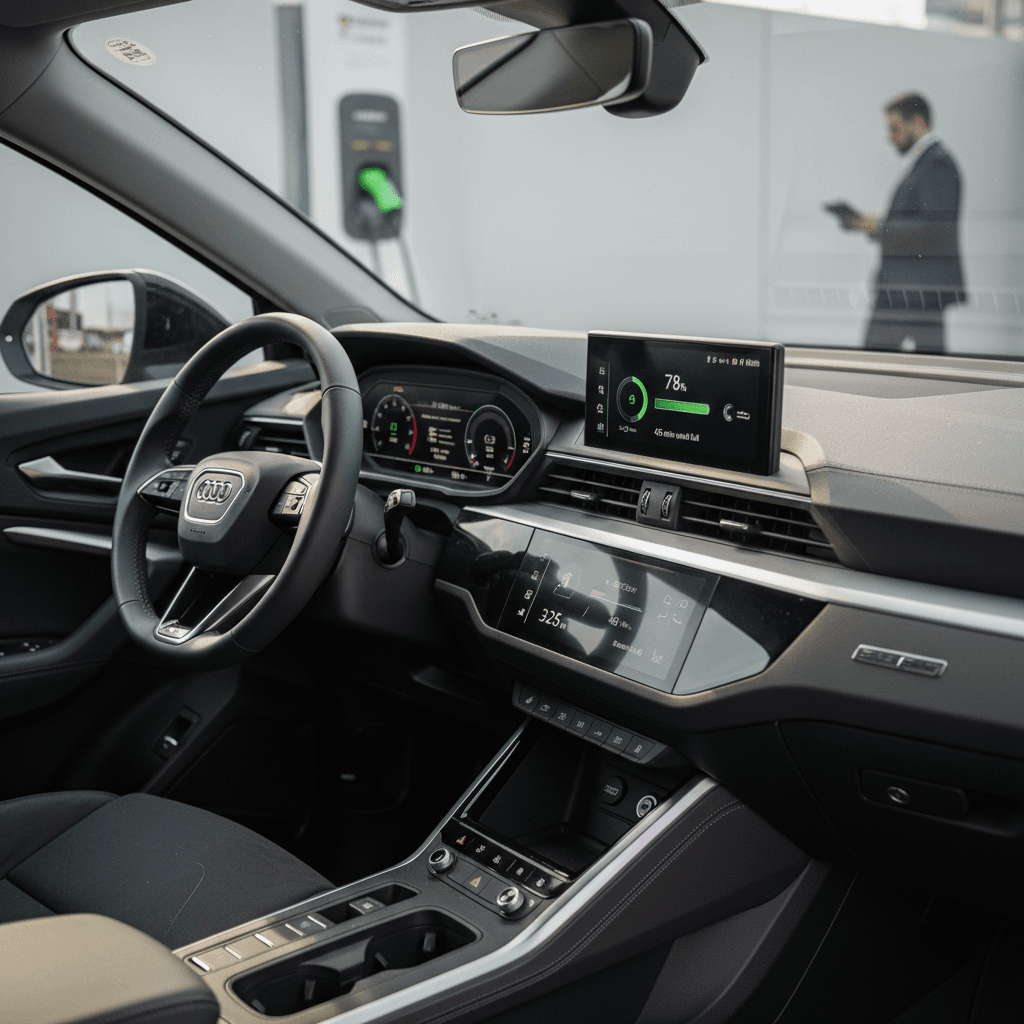
Software updates in late 2024 and 2025 improved charging logic and added features, but they introduced their own bugs. A particularly annoying one: the charge‑limit slider that won’t let you raise the target above 80% unless you follow a specific tap sequence in the car or app. Audi has rolled fixes for many of these, but not every vehicle on the used market will be fully up to date.
Why this matters when you’re buying used
2. Charging Problems: AC Faults, DC Fast-Charge Quirks, and Cables
Charging‑related complaints are one of the most visible Audi Q4 e-tron common problems in 2026. They fall into three broad buckets: AC charging faults, DC fast‑charge behavior, and issues with the included home cable.
- “Charging system fault” messages on AC: Some owners see intermittent fault warnings when plugging into Level 2 public stations or wallboxes. Sometimes charging still proceeds; sometimes it stops and locks the connector until you wait or use the manual release.
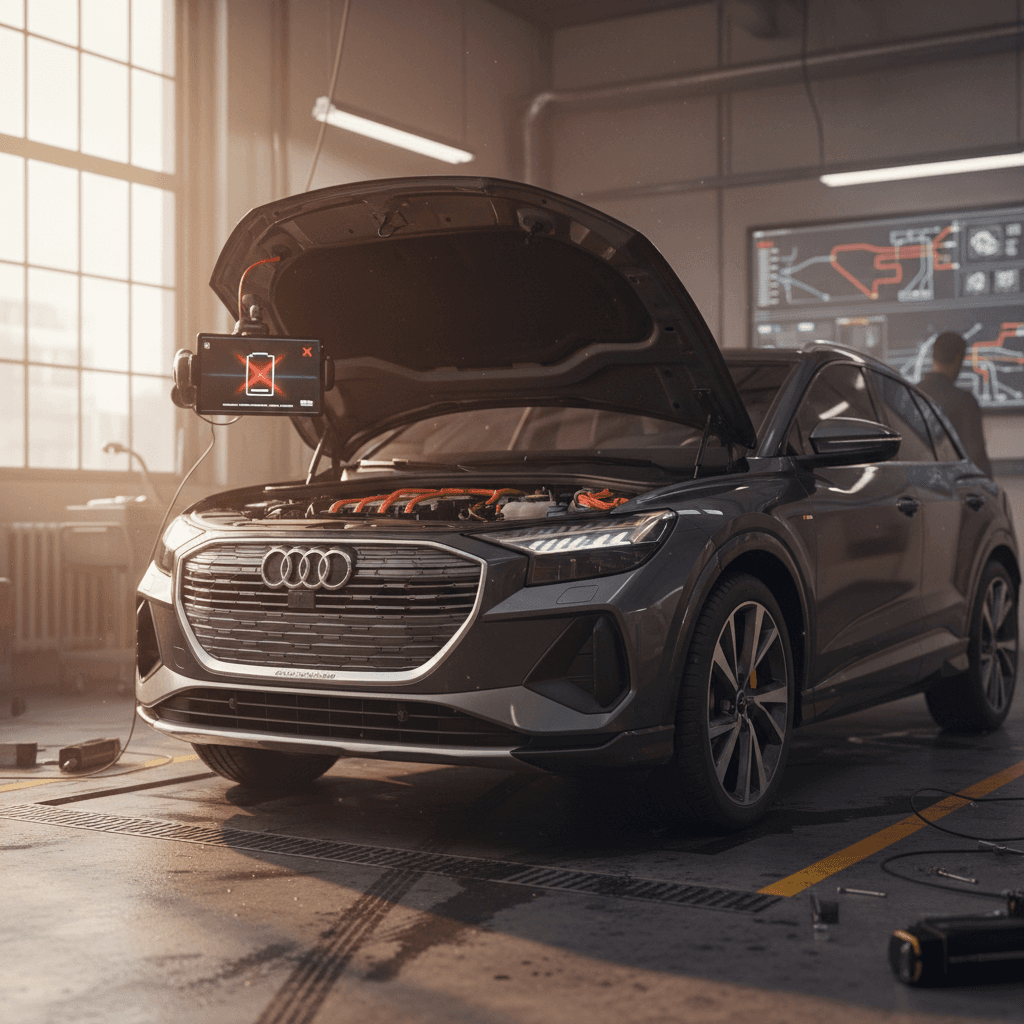
- Home EVSE / cable overheating: There have been reports (and related VW‑group campaigns) involving the included 240 V cable or certain outlets overheating under sustained load, prompting recalls in some markets to address fire risk and fix on‑board charging modules.
- Picky behavior with non‑preferred networks: While Electrify America and other large networks usually work, certain regional AC and DC chargers trigger handshake failures or early session termination more often than rivals like Tesla or Hyundai.
- Fast‑charge speed inconsistency: Especially on earlier software, Q4s may peak at advertised kW briefly but then taper aggressively, particularly if the pack is cold or if you plug in repeatedly on a road trip. Later updates improve this, but only if they’ve actually been installed.
Safety note on charging hardware
Charging Checks to Perform on a Used Q4 e-tron
1. Test AC home-style charging
If possible, plug into a 240 V Level 2 charger and let it run for at least 15–20 minutes. Watch for warning messages, charging stopping early, or the cable feeling excessively hot.
2. Try at least one DC fast charger
On a test drive, stop at a DC fast‑charging station. Confirm the car reaches a reasonable peak rate for its model year and doesn’t immediately drop to very low power without explanation.
3. Inspect the included cable
Check the Audi‑branded portable charging cable for damaged insulation, burned prongs, or warning labels indicating it has been replaced under recall.
4. Review charging history
If the seller has logs or screenshots from public chargers, look for repeated failed sessions or unusually low charge rates, it can hint at deeper charging or software quirks.
3. Battery Health, Range, and Cold-Weather Behavior
The Q4 e-tron’s high‑voltage packs share much of their design with other MEB products that have now racked up serious mileage. The encouraging news for 2026 shoppers is that there’s no broad pattern of pack failures or catastrophic degradation. Most real‑world issues are either normal EV physics or side‑effects of software and thermal‑management logic.
Battery & Range Complaints You’ll Actually Hear About
Mostly about expectations and software, not failing cells.
Cold-weather range drops
Like most EVs, the Q4 can lose 30%+ of rated range in freezing temps with highway driving and cabin heat. Owners new to EVs often mistake this for a "bad battery," but it’s largely normal behavior.
Range estimate swings
The in‑car guess‑o‑meter can be jumpy, especially on short trips or after software updates. That can make the car feel inconsistent even when the underlying battery health is fine.
Battery health anxiety
Because Audi doesn’t expose a simple state‑of‑health percentage to owners, people rely on projected range or third‑party tools, which can be misleading without context.
How Recharged measures Q4 e-tron battery health
Ready to find your next EV?
Browse Vehicles4. Hardware & Build Issues: Door Handles, Suspension, and Brakes
For all the digital drama, the physical Q4 e-tron is mostly conventional Audi: solid structure, familiar MQB‑family switchgear, and a lot of shared components with the ID.4. Still, a few recurring hardware complaints show up often enough to be on your radar.
Common Physical & Mechanical Issues on the Audi Q4 e-tron
Not every Q4 will have these problems, but they’re recurring enough in owner reports to check for.
| Area | Typical Symptom | What to Look/Listen For | Why It Matters |
|---|---|---|---|
| Door handles & latches | Handle sticks, doesn’t present smoothly, or door doesn’t latch on first close | Slow or gritty handle action, doors needing a slam to latch, inconsistent behavior in cold or wet weather | Annoying day‑to‑day and can lead to expensive repairs if mechanisms wear prematurely. |
| Front suspension bushings | Clunks over sharp bumps, vague steering feel, faster wear in cold climates | Low‑speed clunks, looseness over potholes, uneven tire wear on front axle | Worn bushings are a consumable item but can add cost sooner than you’d expect on a premium EV. |
| Brake system tuning | Grabby low‑speed braking, inconsistent regen-to-friction handoff | Jerkiness coming to a stop, especially in stop‑and‑go traffic or after software updates | Annoying in traffic and can accelerate pad/rotor wear if friction brakes are over‑used. |
| Interior trim & rattles | Buzzes from door panels or cargo area over rough roads | Test on coarse pavement; listen around the hatch area and B‑pillars | Not dangerous, but undermines the premium feel buyers expect from Audi. |
Use this table as a focused inspection list when test‑driving a used Audi Q4 e-tron.
Do a “bad‑road” test drive
5. Key Audi Q4 e-tron Recalls Through 2025
Recalls are part of the picture for any modern EV, and the Q4 e-tron is no exception. By early 2026, several campaigns have been launched for 2022–2024 model‑year Q4s. Exact campaigns vary by country and build, but a few themes show up repeatedly:
- Gear‑indicator / rollaway risk: Some 2022–2023 Q4s share a recall with the VW ID.4 for a digital instrument cluster that may not clearly display gear selection, creating a rollaway risk if drivers think the car is in Park when it isn’t.
- High‑voltage battery and on‑board charger issues: Selected vehicles have recalls related to high‑voltage charging electronics that can shut down or trigger fault messages, sometimes stalling the car if the 12 V system isn’t properly supported.
- Charging cable / fire risk campaigns: In certain markets, the portable charging cable has been recalled or replaced due to overheating risks at sustained loads.
- Software stability updates: Some “service campaigns” aren’t labeled as safety recalls but still matter: they update the MMI, gateway modules, and charging logic to reduce faults and improve reliability. These can be just as important as the headline safety recalls.
Always check for open recalls by VIN
6. 2022–2025 Q4 e-tron: Model-Year Differences for Problems
Early builds: 2022–2023
- Rougher software: More reports of laggy MMI, app connection issues, and basic bugs like lost presets or flaky navigation routing.
- More recall exposure: Many high‑voltage, gear‑indicator, and charging‑related campaigns are concentrated on these years.
- Lower charging performance: Earlier software and pack tuning mean more conservative DC fast‑charge behavior and slower real‑world road‑trip charging.
These can still be strong values in 2026, but only if you see clear, consistent service history showing the major recalls and software updates were completed.
Refined updates: 2024–2025
- Improved motors and range on some trims, especially 2024+ dual‑motor variants with better rear‑motor efficiency.
- Charging improvements from factory with updated thermal management and smarter charge curves.
- Fewer early-production bugs thanks to several years of field feedback from the ID.4 and Q4 fleets.
By 2025, the Q4 e-tron is closer to the EV Audi probably wanted to launch originally. If your budget allows, 2024–2025 models tend to be the sweet spot between price, range, and day‑to‑day refinement.
How much weight to give model year vs. condition
7. Buying a Used Audi Q4 e-tron in 2026: Inspection Checklist
When you’re hunting for a used Q4 e-tron in 2026, you want to translate all of this problem data into a practical inspection plan. Here’s a structured way to do that, whether you’re buying locally, online, or through a marketplace like Recharged.
Audi Q4 e-tron Used-Buying Checklist (2026)
1. Confirm software and recall status
Ask the seller for the latest dealer service printout. Look for software update entries and confirmation that any high‑voltage, instrument‑cluster, and charging‑system recalls have been completed.
2. Test all digital features
On your test drive, spend at least 15 minutes on the infotainment system. Pair a phone, use navigation, switch profiles, and try remote functions via the myAudi app. Note any freezes, lag, or repeated error messages.
3. Evaluate real charging behavior
Plug into both an AC Level 2 charger and, ideally, a DC fast charger. Watch for warnings, unexpected stops, or extremely low charge rates that don’t match the state of charge or battery temperature.
4. Inspect battery health indicators
Check displayed range at various states of charge and compare to the original EPA estimate for that trim. Big unexplained gaps warrant a deeper diagnostic scan or a third‑party health report like the Recharged Score.
5. Listen for suspension & brake issues
Drive over rough pavement and do several gentle to firm stops from city speeds. Listen for clunks, feel for brake grab or inconsistent regen, and watch for steering wandering on the highway.
6. Check interior quality and wear
Examine door panels, seat bolsters, and cargo trim for rattles, looseness, or excessive wear. Gently press on known rattle points around the hatch and B‑pillars while driving on rough surfaces.
Why many shoppers use Recharged for Q4 e-trons
8. Repair Costs and Reliability Expectations
Set realistic expectations and the Q4 e-tron can be a satisfying long‑term EV. Go in assuming that you’re buying a software‑heavy German premium SUV, not a stripped‑down appliance. That means more complexity, but also more upside if, big if, the software is up to date and the previous owner wasn’t using you as an exit strategy.
What tends to be manageable
- Most software bugs can be addressed with dealer updates or the occasional hard reset. Frustrating, yes, but rarely catastrophic.
- Suspension and brake wear are standard consumables. If they’re worn, you can factor replacement costs into your offer.
- Interior rattles are often fixable with targeted trim work, annoying more than wallet‑breaking.
What can get expensive
- Out‑of‑warranty high‑voltage or charger repairs can climb quickly into four‑figure bills if entire modules are replaced rather than repaired.
- Complex diagnostics for intermittent failures mean more shop time. Dealers may need multiple visits to chase down software‑driven glitches.
- Cosmetic or feature retrofits to “modernize” an early Q4, like new wheel packages or advanced driver‑assist options, are pricey compared with just buying a newer, better‑equipped example.
Budgeting rule of thumb
Audi Q4 e-tron Common Problems 2026: FAQ
Frequently Asked Questions About Audi Q4 e-tron Problems in 2026
By 2026, the Audi Q4 e-tron has settled into a familiar pattern: it’s a fundamentally solid electric SUV wrapped in sometimes‑finicky software. If you go in expecting perfection from the infotainment and app ecosystem, you’ll probably be disappointed. If you treat those as solvable annoyances and focus on finding a car with healthy battery data, clean charging behavior, and fully updated software and recalls, you can end up with a refined, comfortable EV at a compelling used‑market price. Whether you buy through Recharged or elsewhere, use the problem patterns in this guide as a checklist, not a reason to walk away from a good Q4 e-tron when you find one.