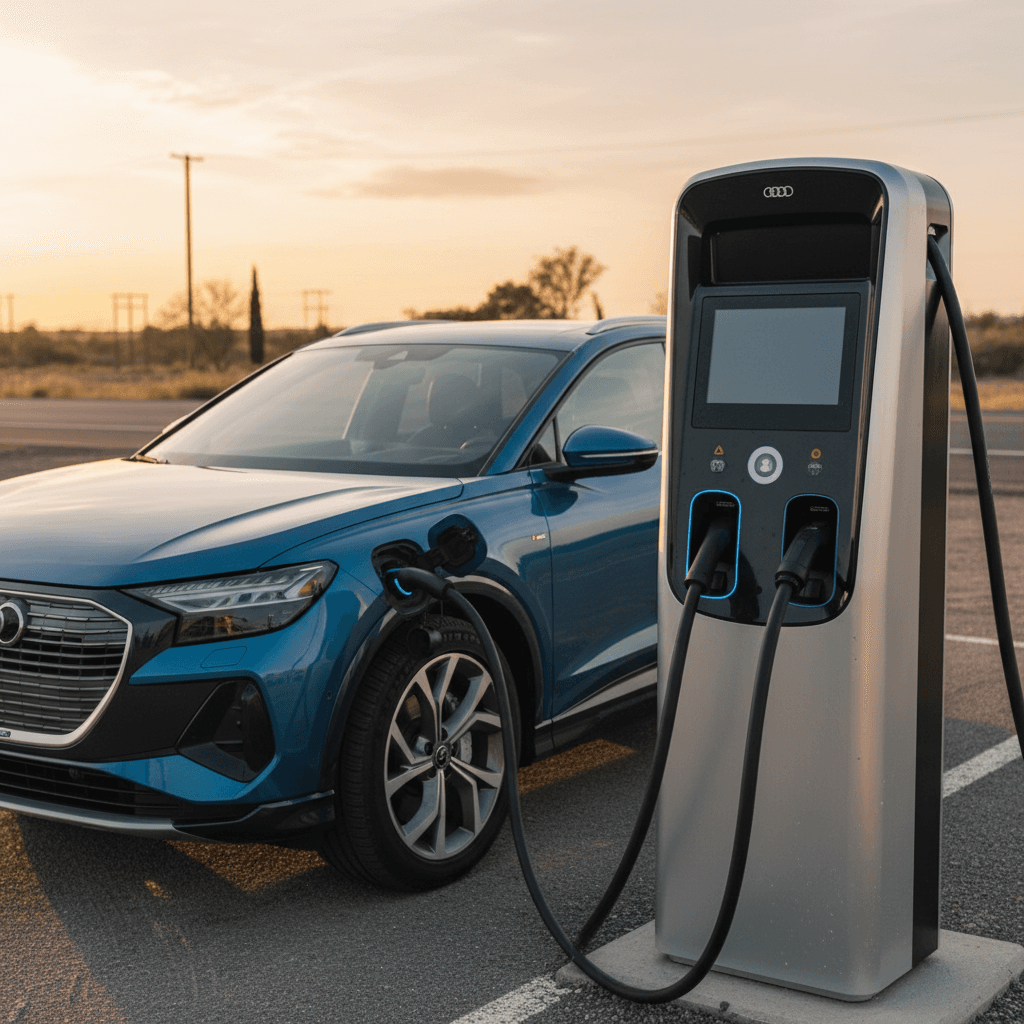
If you’re looking at an Audi Q4 e-tron charging speed test, you’re probably wondering two things: how fast it really charges in the wild, and whether it will feel slow next to a Tesla or a Hyundai/Genesis EV. Let’s walk through what the numbers say, how it behaves at real DC fast chargers, and what that means for daily use and road trips, especially if you’re shopping for a used Q4 e-tron.
Quick takeaway
Audi Q4 e-tron charging overview
The Q4 e-tron rides on the VW Group MEB platform, which means it shares its basic battery and charging hardware with the VW ID.4 and several Skoda models. Most U.S. versions use an 82 kWh pack with about 77 kWh usable and a 400‑volt architecture. That’s important, because 400V cars rarely hit the wild 250–350 kW peaks you see on newer 800V platforms, but they can still charge quickly if the curve is well tuned.
Audi Q4 e-tron core charging stats (recent models)
Model-year matters
Fast-charging specs by Q4 e-tron model
“Audi Q4 e-tron” actually covers several variants, 35, 40, 45, 50 and now 55 e‑tron, plus SUV and Sportback body styles. The basic battery sizes are similar, but DC fast‑charging power differs slightly by model and update year. Here’s a simplified view of what you’ll typically see in the U.S. market and late‑model global cars.
Audi Q4 e-tron DC fast-charging specs (typical)
Approximate manufacturer or test‑based figures for recent Q4 e-tron models. Exact numbers vary by year and market, but this gives you a realistic range for charging‑speed expectations.
| Model | Battery (usable) | Drive | Peak DC kW (approx) | 10–80% time (ideal) | On-board AC (kW) |
|---|---|---|---|---|---|
| Q4 35 e-tron | ~52 kWh | RWD | Up to 100 kW | ~36–38 min | 7.2 |
| Q4 40 e-tron | ~77 kWh | RWD | 125–165 kW | ~24–30 min | 11 |
| Q4 45 e-tron | ~77 kWh | RWD or AWD | 135–165 kW | ~24–30 min | 11 |
| Q4 50 e-tron quattro (earlier) | ~77 kWh | AWD | Up to ~135 kW | ~30–36 min | 11 |
| Q4 55 e-tron quattro (new top trim) | ~77 kWh | AWD | Up to 170–175 kW | ~24–28 min | 11 |
Use this as a guide when comparing test results from different reviews.
Spec sheet vs real charger
Real-world charging speed tests explained
When reviewers run an Audi Q4 e-tron charging speed test, they typically log the car at a DC fast charger from a low state of charge, often 5–10%, up to 80 or 90%. The stopwatch only tells part of the story; the real magic is in the charging curve: how much power the car accepts at each point along the way.
What a good curve looks like
- High peak quickly: Car climbs to peak power (say 165–175 kW) within the first few minutes.
- Flat mid‑section: It holds near peak through 40–60% state of charge.
- Gentle taper: Power slowly ramps down past 70–80% to protect the battery.
How the Q4 e-tron behaves
- Hits its peak in the low state of charge, teens to 20‑something percent, depending on temperature.
- Holds a healthy 120–140 kW for much of the 20–60% band on newer models.
- Tapers more noticeably past 70–75%, which is why road‑trippers usually unplug around 60–70% and drive.
In independent testing, a Q4 Sportback dual‑motor model went from 10–90% in roughly 36 minutes with an average power a touch over 100 kW, right in line with what you’d expect from a well‑sorted 400V system. That’s not as explosive as a Genesis GV60 or Kia EV6 on an 800V platform, but it’s solidly mid‑pack and perfectly workable for family road trips.
Why most tests use 10–80%
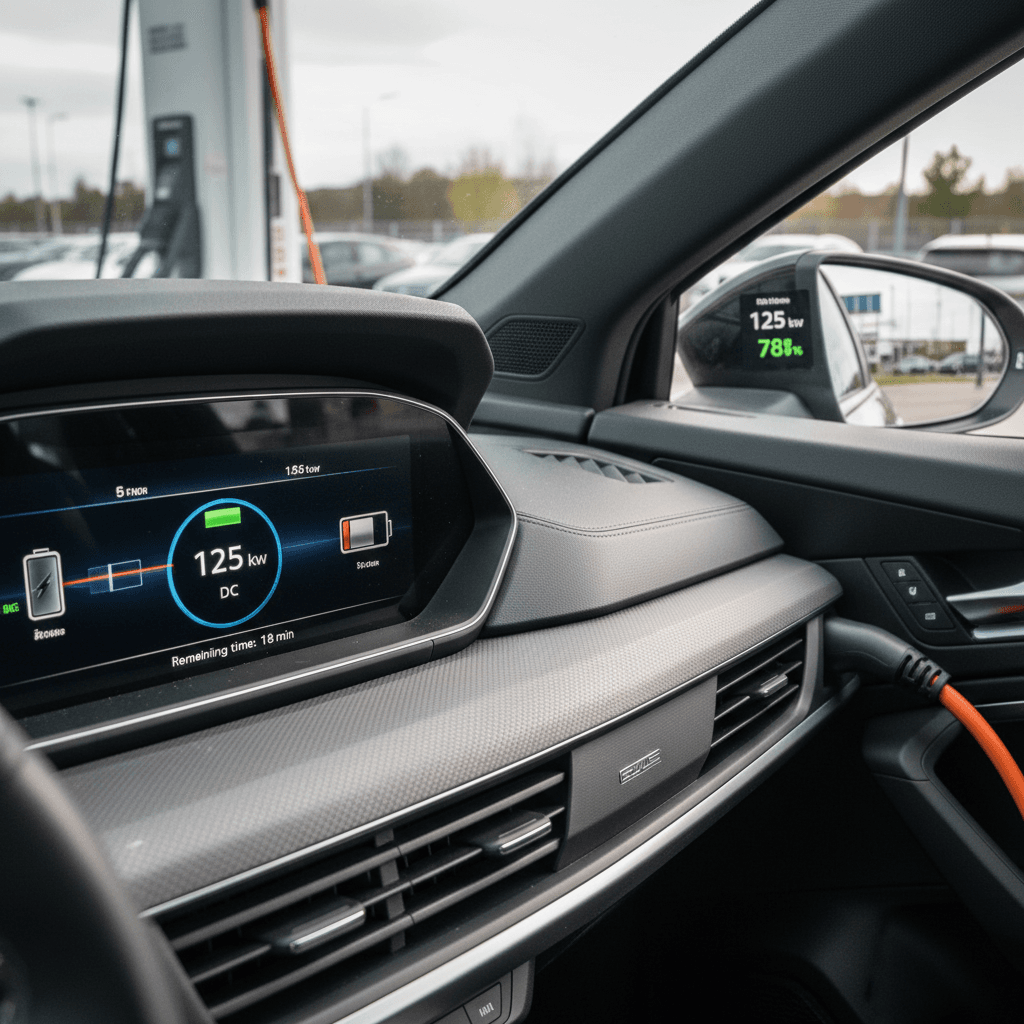
How long does it take to charge an Audi Q4 e-tron?
Let’s translate those specs into the scenarios you actually care about, quick top‑ups around town, deep fast‑charge sessions on the highway, and the occasional “I arrived home on 3% and I’m leaving at 6 a.m.” moment.
Typical Q4 e-tron charging scenarios
Approximate times for a late‑model 40/45/55 e-tron on a healthy battery and decent chargers.
10–80% DC fast charge
~25–35 minutes on a strong 150–175 kW charger.
Plan for the longer end in cold weather or on older hardware.
20–60% highway top-up
~15–20 minutes from an already‑warm battery.
Great window for a restroom break and coffee.
0–100% at home (Level 2)
~7–8 hours on an 11 kW capable 240V circuit.
Perfect for overnight, even from very low state of charge.
If you’re cross‑shopping, a Tesla Model Y or Hyundai Ioniq 5 can trim a few minutes off those DC fast‑charge times, especially from 10–80%. But unless you’re hammering across three states every weekend, the Q4’s charging performance is more than adequate, and very predictable once you learn its sweet spot.
Home charging speed: what to expect overnight
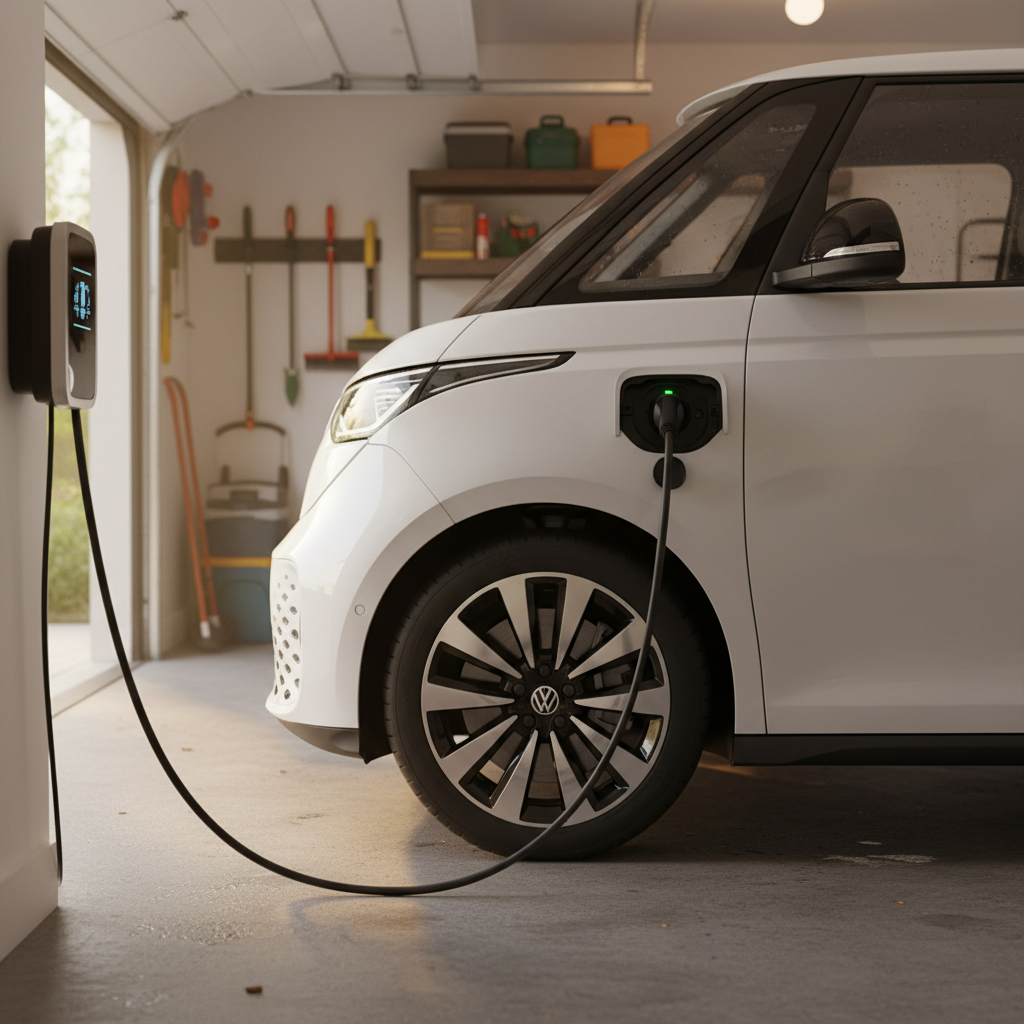
Day to day, home charging is where the Q4 e-tron quietly shines. Every trim comes with an on‑board AC charger around 11 kW, which is about as strong as you’ll find in this segment. That doesn’t mean you’ll always see 11 kW at the wall, but it does give you plenty of headroom if your electrical panel can support it.
Audi Q4 e-tron home charging options
1. Standard 120V outlet (Level 1)
You’ll see roughly 2–3 miles of range per hour. Enough to keep a low‑mileage commuter topped up, but painfully slow if you’re regularly arriving home on a near‑empty battery.
2. 240V 30–40A circuit (Level 2)
This is the sweet spot for most owners. Expect 20–30 miles of range per hour, or a full recharge from nearly empty in about 8–10 hours depending on your exact amperage.
3. Full 48A / 11 kW Level 2
If you can feed the car its max AC rate, you’ll be closer to that ~7‑hour 0–100% window. Handy if you stack lots of miles or want quick turnarounds between long drives.
4. Smart scheduling and off‑peak rates
Use the car’s timer or your wallbox app to charge when power is cheapest. The Q4 e-tron plays nicely with most smart Level 2 chargers and utility time‑of‑use plans.
Safety note on home charging
7 factors that slow your Q4 e-tron charging speed
Fast‑charging tests are done in near‑perfect conditions. Real life is messier. If you’re wondering why your Audi Q4 e-tron charging speed test doesn’t match the brochure, start with these usual suspects.
- Battery temperature that’s too cold or too hot, winter mornings without preconditioning are classic slow‑charge setups.
- Arriving at the charger with a high state of charge (for example, plugging in at 55% instead of 10–20%).
- Weak or overloaded charging hardware that simply can’t deliver 150–175 kW, even if the car can accept it.
- Older Q4 e-tron software that uses a more conservative charging curve than newer updates.
- Frequent short trips that don’t give the battery time to warm up before a fast‑charge session.
- Using an adapter or older CCS hardware where communication between car and charger is finicky.
- Battery aging on higher‑mileage used cars, which can shave a bit off peak power and increase tapering.
Warm it up before you plug in
Road trip strategy: getting the best out of DC fast charging
On paper, a 10–80% time looks clinical. On the road, what matters is how often you have to stop, how long you’re parked, and whether the stops line up with the natural rhythm of your trip. The Q4 e-tron is one of those EVs that rewards a little bit of planning but doesn’t punish you if you wing it.
Simple road-trip rules for the Audi Q4 e-tron
Think in shorter, faster bursts instead of waiting for 100%.
Aim for 10–70%, not 10–100%
Once you push past ~70–80%, the charging curve falls off a cliff. On a highway run, it’s usually faster to unplug around 65–70%, drive, and stop again later.
Stack stops around what you’d do anyway
Plan fast‑charges where you’d normally stop for food or a restroom. A 20‑minute top‑up disappears quickly when you’re stretching your legs.
Use shorter, more frequent stops
With a mid‑pack charging curve like the Q4’s, two 20‑minute stops often beat one 40‑minute slog from 10–95%.
Know your networks
Learn which local DC networks are reliable for you. In many regions, 150 kW+ stations from major players will let the Q4 stay close to its advertised charging speeds.
Good news for 2025+ owners
Used Audi Q4 e-tron charging checklist
If you’re eyeing a used Q4 e-tron, a charging‑speed test is one of the smartest things you can do before you buy. Battery health and software updates don’t show up on a window sticker, but they absolutely show up on a charger screen.
Quick charging & battery check for a used Q4 e-tron
1. Run a short DC fast-charging session
Find a 150 kW+ CCS or Supercharger (if equipped for it), start around 10–20% state of charge, and watch how quickly power ramps up and where it peaks.
2. Note peak kW and plateau
A healthy late‑model Q4 40/45/55 should climb well into triple digits (100–150+ kW) and hold strong through the mid‑range before tapering.
3. Check for software and recall history
Ask for service records and confirm that charging‑related software campaigns and recalls have been completed. These can subtly improve speed and reliability.
4. Look for warning lights or charge faults
Repeated charger communication errors, sudden power drops, or charging‑related warnings on the dash are all reasons to dig deeper before you sign anything.
5. Evaluate home charging behavior
If possible, test the car on a known‑good Level 2 charger. You want to see stable current draw and no random drop‑outs or overheating messages.
6. Get a third-party battery health report
Services like the Recharged Score provide an objective battery‑health diagnostic and pricing guidance so you know whether the car’s range and charging performance match the odometer and the asking price.
How Recharged can help
Audi Q4 e-tron charging speed FAQ
Frequently asked questions about Audi Q4 e-tron charging speeds
Bottom line: Is the Q4 e-tron fast enough to live with?
If you’re chasing leaderboard‑topping charging stats, the Audi Q4 e-tron isn’t the hero of the story, and that’s okay. In the real world, its combination of a usable 77 kWh pack and a well‑sorted 400V charging curve means 25–30‑minute fast charges and effortless overnight home top‑ups. For most families, that’s exactly what you need: predictable, repeatable, drama‑free charging.
If you’re shopping used, pay close attention to how the car behaves on a DC fast charger and lean on tools like the Recharged Score to decode battery health and pricing. Get the right example, and the right home charging setup, and the Q4 e-tron will slot into your life as easily as any gas compact SUV, just with fewer trips to the pump and a lot more quiet miles along the way.