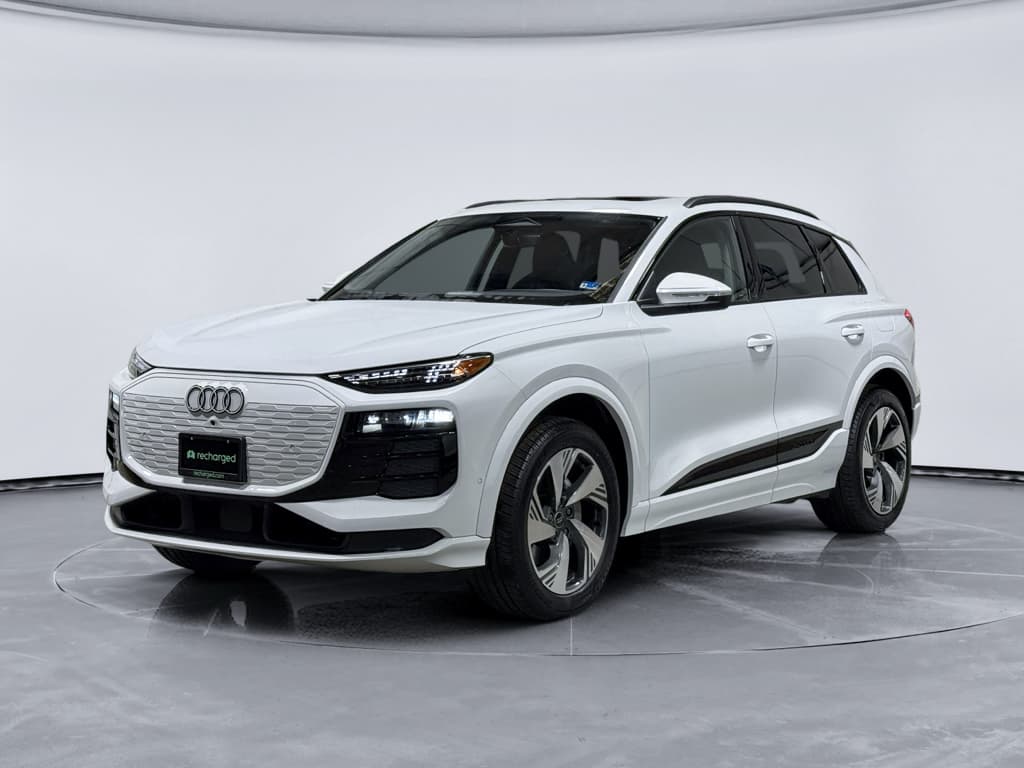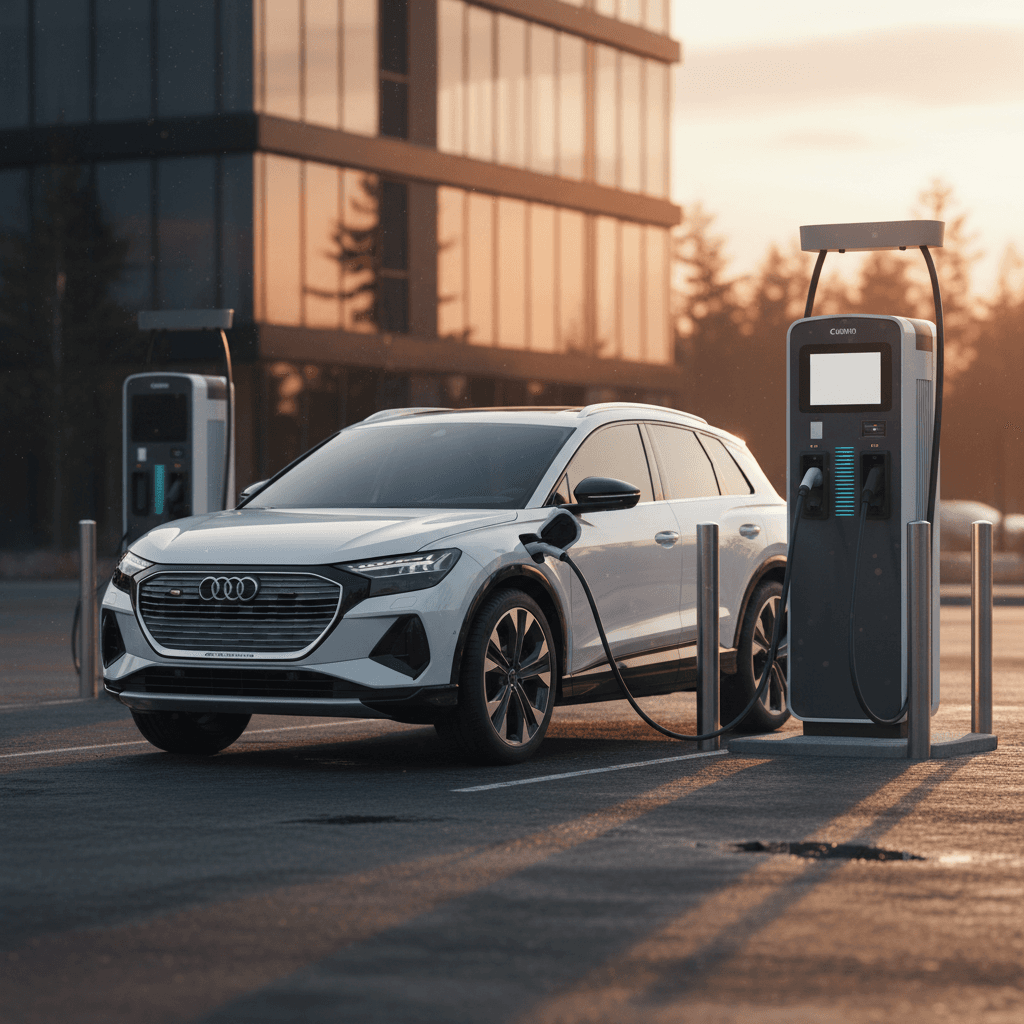
If you’re looking at an Audi Q4 e-tron, especially used, the big practical question is simple: how fast does it actually charge at home and on the road? This Audi Q4 e-tron charging speed guide walks through real-world Level 1, Level 2, and DC fast-charging performance so you know what to expect before you buy, upgrade your home setup, or plan a long trip.
Quick take
Overview: Audi Q4 e-tron charging speeds at a glance
Audi Q4 e-tron charging numbers most drivers care about
Those headline numbers don’t always tell you how it feels to live with the car. The rest of this guide breaks the specs down into real charging times, use cases, and model‑year differences so you can match the Q4 e-tron’s charging performance to your commute, home, and travel plans.
Battery size and onboard charger: what your Q4 e-tron can actually accept
Before talking about charging speeds, it helps to know what battery and onboard charger your Audi Q4 e-tron uses. That sets the ceiling for how much power the car can accept, no matter how big the charger or DC station is.
Audi Q4 e-tron battery and charger basics
Most trims share similar hardware; model-year updates focus on efficiency and DC fast-charging performance.
Battery pack
Most North American Q4 e-tron models (2023 onward) use an 82 kWh gross pack with usable capacity in the high‑70‑kWh range. That’s the energy you’re actually charging.
- Approx. net: ~77 kWh usable
- Enough for ~250–280 miles of EPA range depending on trim and year
Onboard AC charger
The onboard charger in recent model years supports roughly 11–11.5 kW on Level 2, which is the limit for home and workplace AC charging.
- 240V, 48A circuit can deliver full speed
- Many owners see 6–9 kW depending on their wallbox and wiring
Why onboard AC power matters
Home charging: Level 1 vs. Level 2 and how long it really takes
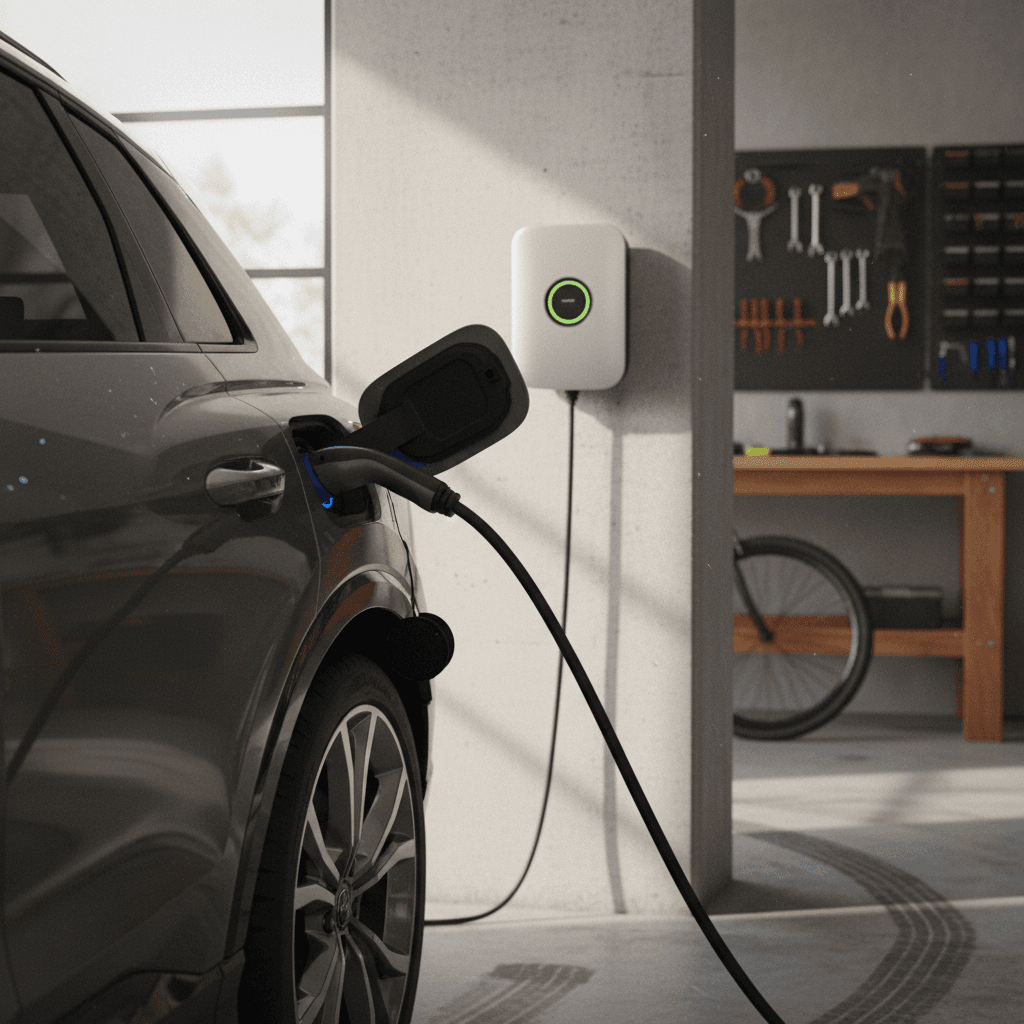
Home charging is where Q4 e-tron ownership either feels effortless or frustrating. The difference usually comes down to whether you rely on Level 1 (120V) or Level 2 (240V) charging, and how far you drive each day.
Approximate Audi Q4 e-tron home charging times
Times are rounded estimates for a Q4 e-tron with ~77 kWh usable battery, assuming normal temps and starting near empty. Real‑world results vary with temperature, taper at high state of charge (SoC), and installation details.
| Charging type | Voltage / amperage | Power (approx.) | Miles of range added per hour | Time 10–100% (approx.) |
|---|---|---|---|---|
| Level 1 (included cord) | 120V / 12A | ~1.4 kW | 3–4 mi/hr | 50+ hours |
| Level 2 – smaller circuit | 240V / 24A | ~5.7 kW | 18–22 mi/hr | 14–16 hours |
| Level 2 – common setup | 240V / 32A | ~7.7 kW | 25–30 mi/hr | 10–12 hours |
| Level 2 – maxing the car | 240V / 48A | ~11 kW | 35–40 mi/hr | 7–8 hours |
Use this as a planning tool, not a lab spec. For most owners, a solid Level 2 setup is the sweet spot.
If you drive under 40–50 miles a day, even a mid‑range Level 2 charger (around 7 kW) will easily refill your daily use during an 8‑hour overnight window. Level 1 can work for very low‑mileage drivers, but it’s slow enough that many Q4 e-tron owners eventually install a dedicated Level 2 solution.
Don’t ignore your electrical panel
DC fast charging: peak kW vs. real 10–80% times
Specs sheets love to tout the highest possible DC fast‑charging number, 135 kW, 150 kW, 165 kW, even 175 kW on newer Q4 e-tron variants. But what you feel on a road trip is the charging curve: how long the car holds higher power before tapering off.
Peak vs. average charging power
On a healthy, warm battery at a capable station, a Q4 e-tron may briefly spike to its advertised peak, say, 135–175 kW depending on model year. But over a full 10–80% session, the average power is lower because the car tapers power as state of charge climbs.
Real‑world testing of earlier Q4 e-tron 50 models has shown average DC rates in the 80–110 kW range across a full session, which lines up with 30–40 minutes for a 10–80% charge. Newer 40/45/55 trims with improved software and higher peaks can shave that closer to the mid‑20‑minute range when everything lines up.
Typical 10–80% times you can plan around
- Early Q4 e-tron 40/50 (≈135–150 kW peak): Plan on ~30–40 minutes for 10–80% under good conditions.
- Updated Q4 e-tron (some 40 and 45 trims, ≈165 kW peak): Ideal 10–80% times around 24–29 minutes when preconditioned.
- Newest Q4 e-tron 45/55 (up to ≈175 kW peak): Audi quotes roughly 10–80% in about 28 minutes on high‑power stations.
If you’re charging from 20–80% instead of 10–80%, you’ll cut several minutes off these numbers.
Road‑trip rule of thumb
Charging speed differences by Q4 e-tron model year
Audi has quietly improved Q4 e-tron charging over time, mainly through better DC fast‑charging performance and efficiency, not massive hardware overhauls. If you’re comparing a 2023 used Q4 to a newer 2025–2026 model, here’s how the charging story typically changes.
Approximate Audi Q4 e-tron charging characteristics by model year (U.S.-oriented)
This focuses on mainstream U.S. Q4 e-tron trims with the larger battery. Exact values vary by trim (40/45/50/55), wheel size, and region, but the pattern holds.
| Model year group | Battery (usable) | Max AC (Level 2) | Peak DC fast (approx.) | Typical 10–80% DC time |
|---|---|---|---|---|
| 2022–early 2023 | ~77 kWh | ~11 kW | ≈135–150 kW | ≈30–40 min |
| Late 2023–2024 updates | ~77 kWh | ~11 kW | ≈150–165 kW | ≈28–35 min |
| 2025+ Q4 40/45/55 | ~77 kWh | ~11 kW | ≈165–175 kW | ≈24–30 min (ideal) |
Use this as a directional guide when shopping used vs. new Q4 e-tron models.
Used Q4 e-tron buyers: what matters most
Six common factors that slow your charging (and how to fix them)
If your Audi Q4 e-tron seems to charge slower than the brochure promised, you’re not alone. Charging speed depends on more than just the car and the number on the charger.
Charging‑speed killers to watch for
1. Cold battery
Lithium‑ion batteries dislike cold. If you DC fast‑charge with a cold pack, say after an overnight highway hotel stop in winter, the Q4 e-tron will limit power to protect itself. Try driving 15–20 minutes before fast‑charging or using built‑in battery preconditioning if your model and nav route support it.
2. High state of charge when you plug in
Fast chargers work fastest between roughly 10–60% state of charge. If you plug in at 60–70% “just to top off,” the car will taper charge power, and your session feels slow. Aim to arrive closer to 10–20% on road trips when possible.
3. Weak or shared charging hardware
Not every DC station can deliver its advertised power, especially older 150 kW sites or locations where multiple cars share cabinets. If one connector says 350 kW and another 150 kW on the same pedestal, choose the higher‑rated one, even though your Q4 won’t use all of it.
4. Hot battery from repeated fast charges
Take multiple back‑to‑back fast‑charge sessions on a scorching summer day and the pack can get hot. The Q4 e-tron will dial power back; you’ll see the rate sag compared with your first stop. Building a slightly longer first or second stop into your route can help.
5. Conservative home electrical setup
If your Level 2 charger is set to 24A on a 30A circuit for safety, you’ll never see the 11 kW your Q4 can accept. That’s not necessarily bad, 5–7 kW is still fine for overnight, but it explains why you might only see 6–7 kW instead of 9–11 kW on the car’s display.
6. Software settings and charge limits
If you cap daily charging at 80% (good for battery health) and plug in already at 70%, the car only has a small SoC window to work with. It may not ramp to full power before tapering again. For planned trips, temporarily raising your limit to 90–100% can make the most of an overnight charge.
Road trip planning: How often you’ll stop and for how long
With a roughly 77 kWh usable battery and efficiency in the low‑to‑mid‑3 mi/kWh range on the highway, most Audi Q4 e-tron trims can comfortably handle 180–220 miles between fast‑charge stops at typical freeway speeds when weather is reasonable.
Sample Q4 e-tron highway day
Assumes mild weather, mostly 70 mph freeway, and high‑power DC chargers available.
Morning leg
Start your day at or near 100% after an overnight Level 2 charge.
- Drive ~200 miles
- Arrive at ~20% SoC
- Battery warm and ready for fast charging
Midday charge
Plug into a 150–350 kW DC fast charger and charge to ~75–80%.
- Newer Q4: ~25–30 minutes
- Earlier Q4: ~30–40 minutes
- Time for a bathroom break and food, not a full sit‑down meal
Afternoon leg
Another 180–220 miles depending on conditions and your exact trim.
- Arrive at next stop or destination near 10–20%
- Repeat if you’re covering 400–500+ miles in a day
Good news for used‑EV shoppers
Home charger shopping checklist for Q4 e-tron owners
If you’re buying a Q4 e-tron, or already own one and are tired of Level 1, picking the right home charger will have more impact on your day‑to‑day experience than chasing a few extra kW on road trips.
What to look for in a Q4 e-tron home charger
1. Amperage that matches your panel
Your Q4 can use up to ~48A (about 11 kW), but your electrical panel might be the limiting factor. A 40A (9.6 kW) or 32A (7.7 kW) unit is often easier to install and still refills a daily commute easily overnight.
2. NEMA plug vs. hardwired
Hardwiring is usually cleaner and can support higher amperage. Plug‑in units are flexible and can be moved if you relocate. If you’re on the fence, talk with an electrician about your home’s wiring and future needs.
3. Cable length and location
Measure from where the charger will mount to your Q4 e-tron’s charge port on the driver‑side rear quarter. A short cable that barely reaches is one of the most common, and annoying, owner complaints.
4. Smart features that matter (or don’t)
Wi‑Fi, load sharing, usage reports, and scheduled charging are handy, but not all owners care. Decide whether you want app control or if a simple, reliable “plug and charge” box is enough.
5. Utility and rebate compatibility
Some utilities offer rebates or time‑of‑use charging rates that require specific charger brands or networked units. Check with your electric company before you buy; it can save you hundreds of dollars.
6. UL listing and warranty
Stick with UL‑listed, well‑reviewed chargers from established brands. A 3–5‑year warranty is a good sign for a device that lives in your garage and handles substantial current every night.
If you’re shopping used, a previous owner might include their portable or wall‑mounted charger. It’s a nice perk, but don’t let an aging or undersized charger be the reason you pass on a good Q4 e-tron with strong battery health and clean history.
How Recharged helps used Audi Q4 e-tron buyers
Charging performance is one of the biggest unknowns when you’re considering a used Audi Q4 e-tron. Two identical model‑year SUVs can behave very differently depending on how they were driven, stored, and charged.
Buying a used Q4 e-tron? Here’s where Recharged fits in.
We built our process around the questions EV shoppers actually have: battery health, charging behavior, and long‑term value.
Recharged Score battery health report
Fair pricing and financing
Nationwide, EV‑savvy support
Ready to find your next EV?
Browse VehiclesIf you already own a Q4 e-tron and are thinking about selling, Recharged can provide an instant offer or consignment option that highlights your battery health and charging history to the next owner, exactly the details EV shoppers care about most.
FAQ: Audi Q4 e-tron charging speed and best practices
Common Audi Q4 e-tron charging questions
Bottom line: matching Q4 e-tron charging speed to your life
The Audi Q4 e-tron’s charging experience is defined less by its headline 135–175 kW DC fast‑charging number and more by how well its ~77 kWh battery and 11 kW AC capability fit into your routine. With a solid Level 2 setup at home, overnight charging is easy, and on the highway you’re typically looking at one 25–40‑minute stop every 200 miles or so, more than workable for most families.
If you’re considering a used Q4 e-tron, focus on verified battery health, realistic DC fast‑charging behavior, and whether the previous owner’s usage pattern matches how you plan to drive. That’s exactly what Recharged’s Score Report, fair‑market pricing, EV‑savvy support, and nationwide delivery are built to answer, so you can move from spec‑sheet anxiety to everyday confidence, whether your next charge is in the driveway or at a fast charger three states away.