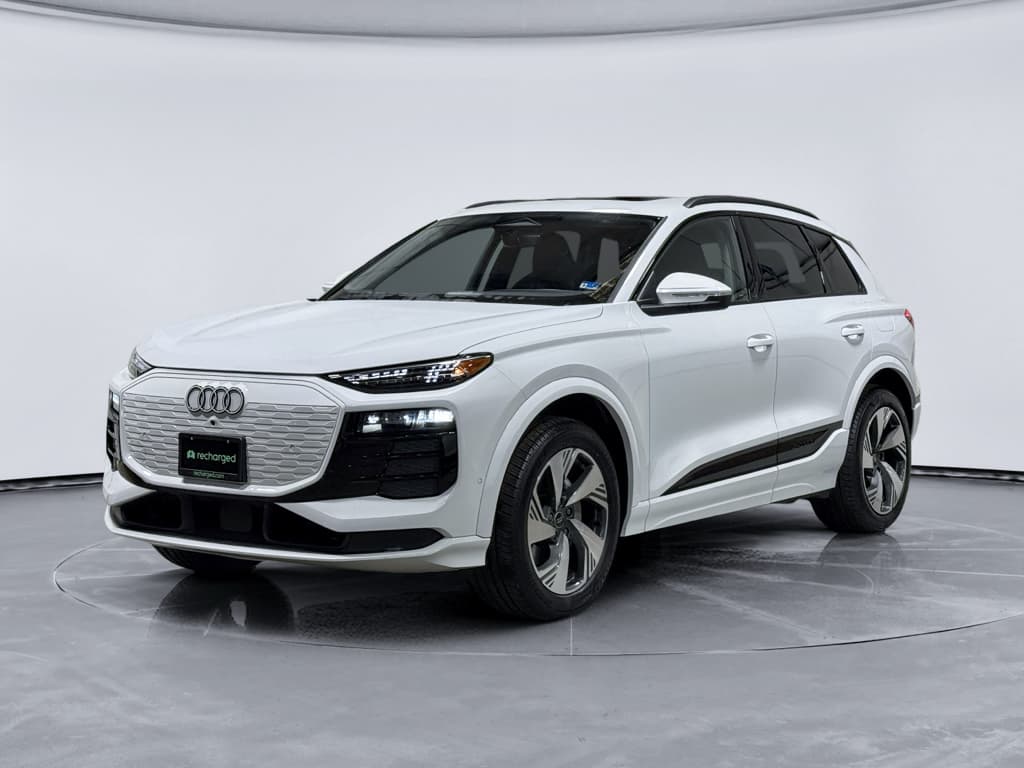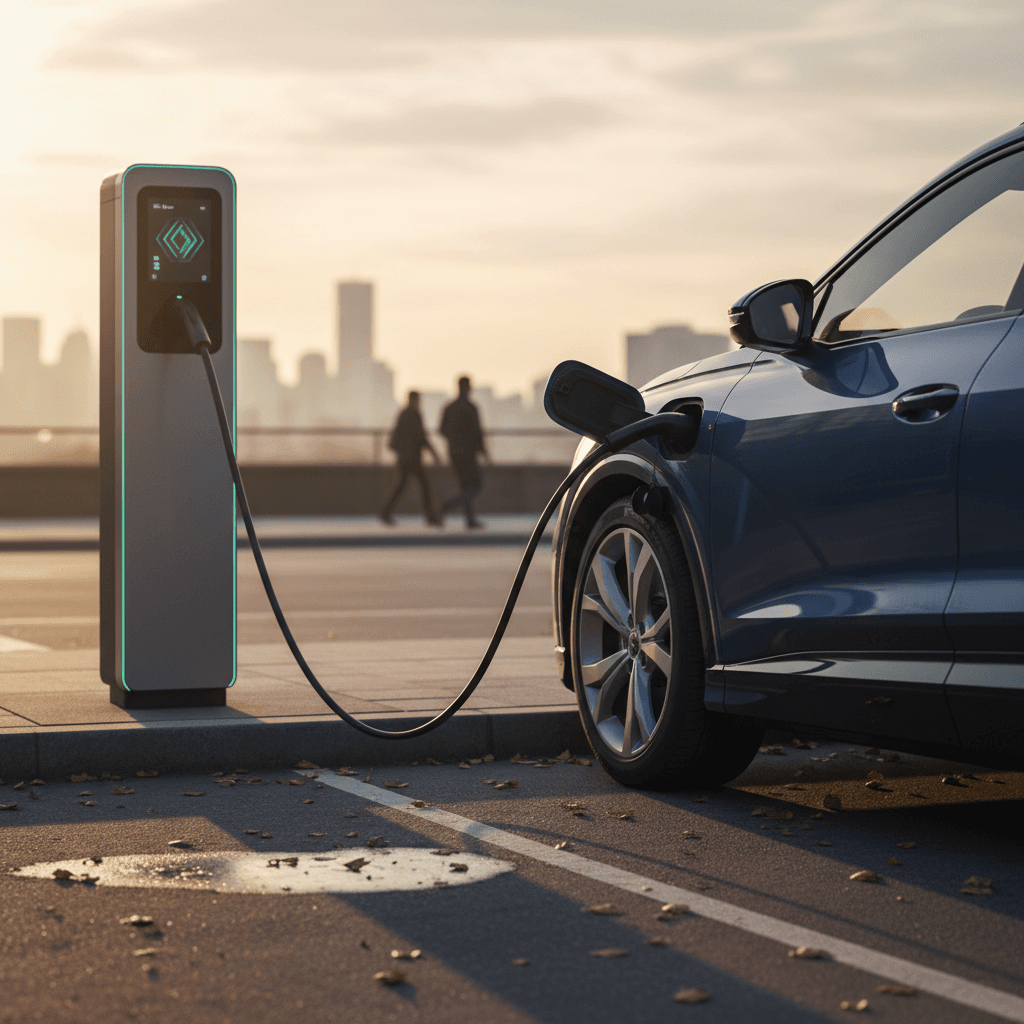
If you’re looking at an Audi Q4 e-tron, you’re probably trying to answer one simple question: what does it really cost per mile to drive this thing? “Charging cost per mile” is the cleanest way to compare your Q4 e-tron to a gas SUV, and to decide whether an electric Audi fits your budget, especially if you’re considering a used one.
Key takeaway up front
Why Audi Q4 e-tron charging cost per mile matters
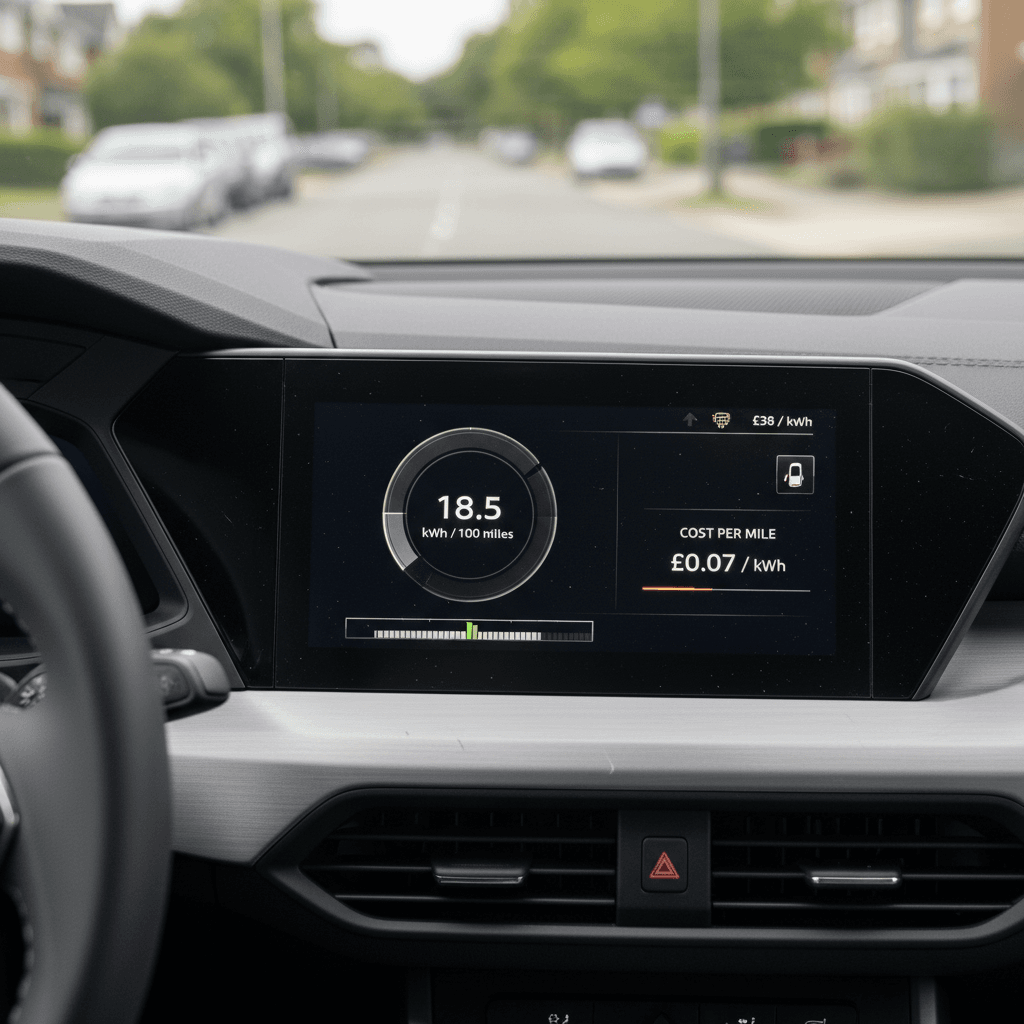
Sticker price gets your attention, but cost per mile is what you live with. It rolls together three things: how efficient the Audi Q4 e-tron is, what you pay per kilowatt‑hour (kWh), and how often you rely on pricier public charging. Once you know your cost per mile, you can compare your Q4 e-tron directly to your old gas SUV or to another EV in your shopping list.
- It shows your true day‑to‑day running cost, not just fuel or electricity in isolation.
- It makes gas vs EV comparisons easy: you’re just comparing cents per mile.
- If you’re shopping used, it helps you see whether a higher‑mileage Q4 e-tron still pencils out.
- You can spot when something’s wrong, if your cost per mile suddenly jumps, it’s a clue to check tires, alignment, or driving habits.
Quick formula you’ll use all article long
Audi Q4 e-tron efficiency: kWh per 100 miles explained
The Audi Q4 e-tron family is a compact luxury SUV with a usable battery around 77 kWh in U.S. trims. Official efficiency is usually quoted in kWh per 100 miles or MPGe, but the charging cost math is easier if we stick with kWh/100 mi.
Typical Audi Q4 e-tron efficiency by variant
Representative combined efficiency figures to use for cost-per-mile estimates. Your actual numbers will shift with temperature, speed, and wheel size.
| Model | Drive layout | EPA / test figure* | kWh per 100 miles (rounded) | Miles per kWh (rounded) |
|---|---|---|---|---|
| Q4 40 e-tron (RWD) | Single motor RWD | ~33 kWh/100 mi (EPA combined) | 33 | 3.0 mi/kWh |
| Q4 50 e-tron quattro | Dual motor AWD | ~34–36 kWh/100 mi (EPA & tests) | 35 | 2.9 mi/kWh |
| Owner real-world mixed driving | Typical long‑term averages | 3.1–3.4 mi/kWh reported | 30–32 | 3.2–3.3 mi/kWh |
Use the row that best matches your Q4 e-tron model and driving mix.
What if you don’t know your exact model?
Home charging: Q4 e-tron cost per mile
Let’s start at home, because that’s where most Q4 e-tron owners will do the bulk of their charging. In early 2026, the average U.S. residential electricity price is about 17–19 cents per kWh, with big swings between low‑cost states and high‑cost coastal markets. For simple math, we’ll use $0.18 per kWh as a national middle‑of‑the‑road figure.
Estimated Audi Q4 e-tron home charging cost per mile
If you prefer to think in full‑charge terms, a Q4 e-tron with a 77 kWh pack going from about 10% to 90% at home uses roughly 60 kWh of energy. At $0.18/kWh, that’s around $10.80 for ~180–200 miles, or again, roughly $0.05–$0.06 per mile.
Off‑peak plans matter
Public DC fast charging cost per mile
Now the other side of the story: road trips and those days when you’re running late and the battery is low. Public DC fast charging is dramatically more expensive than home power, but still often cheaper per mile than gasoline, especially for a reasonably efficient EV like the Q4 e-tron.
In 2025–2026, popular U.S. fast‑charging networks typically land in these ranges for non‑members:
- Budget or member pricing: about $0.25–$0.35 per kWh with a monthly subscription on some networks.
- Standard DC fast rates: often $0.40–$0.55 per kWh, depending on location and power level.
- High‑priced urban / peak‑time sites: occasionally $0.60+ per kWh.
Audi Q4 e-tron DC fast charging cost per mile
Approximate cost per mile on public DC fast chargers using 35 kWh/100 mi as a realistic highway figure for a Q4 50 quattro.
| Price per kWh | kWh per 100 miles | Estimated cost per mile | Approx. cost for 200‑mile highway leg |
|---|---|---|---|
| $0.28 (good member rate) | 35 | $0.098/mi | $19.60 |
| $0.40 (typical posted rate) | 35 | $0.14/mi | $28.00 |
| $0.50 (busy corridor) | 35 | $0.175/mi | $35.00 |
| $0.60 (expensive city site) | 35 | $0.21/mi | $42.00 |
Use these as planning numbers for road trips and frequent fast‑charging use.
Don’t road‑trip on DC fast rates alone
EPA ratings vs real-world Q4 e-tron efficiency
On paper, the Q4 e-tron’s EPA numbers look tidy: around 33–36 kWh per 100 miles depending on configuration, which translates to roughly 2.8–3.1 miles per kWh. In the real world, owner reports paint a more nuanced picture.
How your Q4 e-tron efficiency really looks day to day
Why your cost per mile rarely matches the window sticker exactly
City & suburbs
Stop‑and‑go with moderate speeds actually suits the Q4 e-tron. Many owners report 3.3–3.8 mi/kWh in fair weather, especially on 19–20" wheels.
Fast highway driving
Hold 70–75 mph and efficiency can sag closer to 2.6–3.0 mi/kWh, especially with larger wheels and roof racks. That bumps your cost per mile up.
Cold weather
Below‑freezing temps, cabin heat, and short trips can temporarily drag you down into the 2.0–2.5 mi/kWh range until things warm up.
A realistic everyday planning number
Audi Q4 e-tron vs gas SUV: cost per mile comparison
To see where the Q4 e-tron lands financially, you need a foil. Let’s compare it to a typical compact luxury gas SUV that averages 25 mpg on real roads. With U.S. gasoline flirting with $3.00 per gallon in early 2026, here’s the math:
Audi Q4 e-tron vs gas SUV: energy cost per mile
Energy costs only, does not include maintenance, tires, or insurance.
| Vehicle & energy | Assumptions | Energy cost per mile | Cost for 1,000 miles |
|---|---|---|---|
| Audi Q4 e-tron (mostly home) | 33 kWh/100 mi, $0.18/kWh | ≈ $0.059/mi | $59 |
| Audi Q4 e-tron (heavy DC fast) | 35 kWh/100 mi, $0.45/kWh | ≈ $0.158/mi | $158 |
| Gas SUV (25 mpg) | $3.00/gal gasoline | $0.12/mi | $120 |
| Gas SUV (25 mpg, $3.50/gal) | Higher fuel prices | $0.14/mi | $140 |
Your exact numbers will depend on local electricity and fuel prices, but the spread is similar across most U.S. markets.
In plain English: if you can mostly charge your Audi Q4 e-tron at home, you’re likely to cut your “fuel” cost per mile in half versus a similar gas SUV. If you live on DC fast chargers, you give a lot of that advantage back.
6 factors that change your Q4 e-tron cost per mile
What pushes your Audi Q4 e-tron cost per mile up or down
1. Where you charge most often
<strong>Home Level 2 charging at night</strong> is almost always cheapest. Workplace and free public Level 2 can be a bonus. DC fast is your “emergency room,” not your family doctor.
2. Your local electricity rate
Residential power ranges widely, from under 12¢/kWh in some regions to 25¢ or more in others. That alone can <strong>double your cost per mile</strong> for the same Q4 e-tron.
3. Driving mix and speed
Keep highway speeds moderate and your Q4 e-tron rewards you. Sit at 80 mph into a headwind and you’ll watch consumption climb, the same way it does in a gas SUV.
4. Temperature and climate control
Cold weather, short trips, and cranking the heat can add several kWh per 100 miles. Preconditioning while plugged in and using seat heaters helps keep costs in check.
5. Tires, wheels, and roof gear
Big 21" wheels, aggressive tires, and empty roof racks are the enemies of efficiency. If low cost per mile is the goal, lighter wheels and efficient tires make a real difference.
6. Battery health over time
The Q4 e-tron’s battery will naturally lose some capacity over the years, but a healthy pack should still deliver strong efficiency. A battery that’s significantly out of spec can hurt both range and your cost per mile.
Watch out for “cheap” DC fast charging
Practical ways to cut your Audi Q4 e-tron charging costs
Dial in your home charging
- Shop your electricity plan: Many utilities now offer EV or time‑of‑use plans with cheap overnight rates. That’s when your Q4 e-tron should drink.
- Install a Level 2 charger where it’s convenient: A 240V Level 2 setup means you can comfortably charge overnight without babysitting the car.
- Use scheduled charging: Set the car or wallbox to start when your off‑peak window opens so every kWh is as cheap as your plan allows.
Drive and plan like an efficiency pro
- Ease into the throttle: The Q4 e-tron is punchy; using that torque gently pays off at the plug.
- Use navigation with charger stops: Many route planners can prioritize cheaper Level 2 stops when time allows.
- Precondition while plugged in: Heating or cooling the cabin from shore power instead of the battery keeps more energy for driving, lowering cost per mile.
Where Recharged fits in
Ready to find your next EV?
Browse VehiclesCost checklist if you’re buying a used Audi Q4 e-tron
Shopping used is where cost per mile really matters. Two Q4 e-trons that look identical in photos can have very different running costs depending on battery health, wheel setup, and how the previous owner treated their charging routine.
Quick cost‑of‑ownership checklist for a used Q4 e-tron
Ask for long‑term efficiency data
Many Q4 e-tron owners track lifetime mi/kWh. A car showing 3.3–3.5 mi/kWh over tens of thousands of miles has been driven gently enough to keep cost per mile low.
Check wheel and tire setup
Listings with larger wheels and stickier tires will generally be less efficient. If you love the look, just know you’re trading a few tenths of a cent per mile.
Look for DC fast charging habits
Frequent 100% DC fast charging doesn’t automatically ruin a battery, but it’s tougher on the pack. Fewer deep DC fast sessions usually indicate a more home‑charging‑friendly car.
Review battery health documentation
Dealer‑printouts and OEM readouts are helpful, but a <strong>third‑party battery health test</strong>, like the Recharged Score, gives you a clearer picture of how much usable capacity is left.
Estimate your own energy price
Before you fall in love, plug your own kWh rate into the formulas in this guide. A Q4 e-tron that’s cheap to run in Texas might be merely average in California.
Plan your charging mix
If you live in an apartment or rely on public charging, build your budget around the <strong>public DC fast charging cost per mile</strong> numbers, not the home‑charging ones.
FAQ: Audi Q4 e-tron charging cost per mile
Frequently asked questions about Audi Q4 e-tron charging cost per mile
Bottom line: what you should expect to pay per mile
Put it all together and the Audi Q4 e-tron shapes up as a quietly frugal daily driver, as long as electrons, not public fast chargers, do most of the heavy lifting. In much of the U.S., you’re realistically looking at $0.05–$0.07 per mile on home charging, versus $0.12–$0.17 per mile on DC fast depending on rates and driving style.
If you’re cross‑shopping gas SUVs, that usually means cutting your energy cost per mile roughly in half and gaining the flexibility of home “fueling.” And if you’re exploring a used Audi Q4 e-tron, pairing these numbers with a solid battery health report, like the Recharged Score that comes with every vehicle on Recharged, gives you a clear picture of what each mile will really cost for years to come.