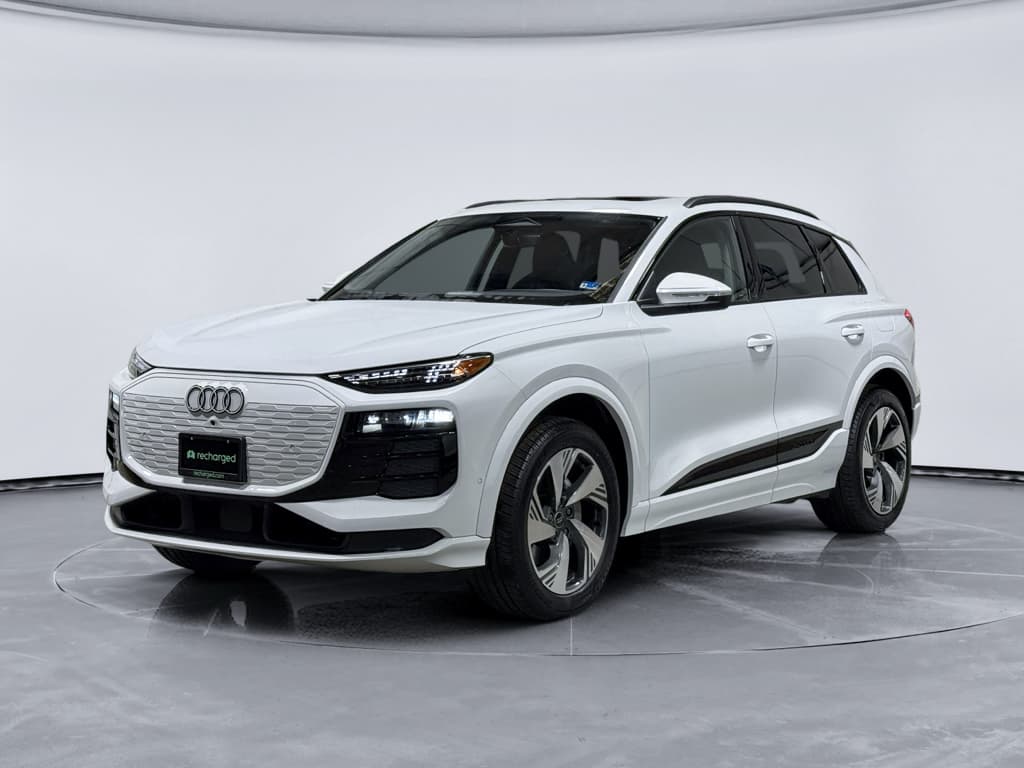
The Audi Q4 e-tron has quickly become one of the most popular compact electric SUVs, sharing its platform with the VW ID.4 but adding a more premium badge and interior. Whether you’re buying new or used, going in with a clear Audi Q4 e-tron buying checklist will help you avoid surprises around battery health, charging, software, and pricing.
Quick context: What you’re shopping for
Why a Q4 e-tron–specific checklist matters
On paper, many compact EV SUVs look similar: similar range, similar DC fast-charging times, and similar prices. But the details of the Audi Q4 e-tron, from its battery options to software updates and recalls, can materially change your ownership experience, especially if you’re buying used. A generic used-car checklist won’t tell you how to evaluate DC fast-charging performance, state of charge behavior, or software version history on this specific model.
- Battery size and trim (40, 45, or 55 e-tron; standard vs quattro) affect range and performance.
- Charging curve, not just peak kW, determines how fast you get from 10–80% on road trips.
- Software updates have improved charging speeds and driver-assistance behavior over time.
- There have been software-based recalls (for example, shifter indication issues) that you’ll want to confirm are addressed on used vehicles.
How Recharged fits in
Step 1: Confirm the right Q4 e-tron trim and battery for you
Start by making sure the specific Audi Q4 e-tron you’re considering actually fits how you drive. Audi offers different powertrains and body styles (SUV vs Sportback), and they don’t all deliver the same range or performance.
Key Q4 e-tron powertrain choices (U.S. overview)
Exact names and specs vary by model year, always verify against the window sticker or build sheet.
Q4 40 e-tron (RWD)
- Single motor, rear-wheel drive
- Smaller battery in some years, modest power
- Best for city commuters and shorter trips
Q4 45 e-tron (RWD)
- Single motor, higher-output battery
- EPA range often at the top of the lineup (around the high-200-mile mark)
- Good efficiency and lower cost than quattro
Q4 55 e-tron quattro (AWD)
- Dual motors, all-wheel drive
- More power and traction, slightly less range (mid-200-mile range)
- Better for snow, performance, and towing light loads
Don’t assume range across trims
Match Q4 e-tron trims to your driving pattern
Use this to narrow which variants you should even test-drive.
| Your use case | Best-fit trims | What to prioritize |
|---|---|---|
| Urban commuting under 50 miles/day | Q4 40 or 45 e-tron | Maximize efficiency and comfort; AWD usually optional. |
| Mixed commuting + weekend trips | Q4 45 or 55 e-tron quattro | Balance range with traction and performance. |
| Frequent highway road trips | Q4 45 e-tron (higher range) | Longer EPA range and efficient charging on CCS DC fast chargers. |
| Snow-belt or unpaved roads | Q4 55 e-tron quattro | AWD traction plus good ground clearance for winter use. |
These are general guidelines, local climate, wheel size, and driving style will nudge your actual range up or down.
Step 2: Check battery health and real-world range
The Q4 e-tron’s lithium-ion pack is designed to last many years, and early reliability data has been encouraging. Still, battery condition is the single most important factor when you’re buying a used EV, because it drives both range and resale value.
Audi Q4 e-tron battery and range snapshots
How to interpret displayed range
Battery health checklist for an Audi Q4 e-tron
1. Ask for a battery health report
Ideally, you’ll get a <strong>formal battery health assessment</strong>. At Recharged, this comes via the Recharged Score, which measures pack health and compares it to similar vehicles. If you’re buying elsewhere, ask the seller for any dealership battery tests or diagnostic printouts.
2. Compare indicated range vs EPA
With the battery around 80–90% state of charge, note the predicted range. It doesn’t have to match EPA numbers exactly, but if it’s consistently 15–20% below EPA ratings in normal weather and driving, ask more questions.
3. Review DC fast-charging history
Heavy, frequent DC fast charging can accelerate wear. Ask the seller how often they fast-charged and whether the car was a road-trip workhorse or mostly charged at home on Level 2.
4. Look for warnings on the dash
On your walk-around and test drive, check for any battery-related warning lights or reduced power messages. Anything related to high-voltage systems should be resolved before you buy.
5. Ask about climate history
Extreme heat can be tough on batteries over time. Ask where the vehicle has lived. A Q4 e-tron that spent its early life in mild climates is generally a better bet than one parked outside in year-round desert heat.
Pro move: Use trip data during your test drive
Step 3: Evaluate charging speed, home setup, and cables
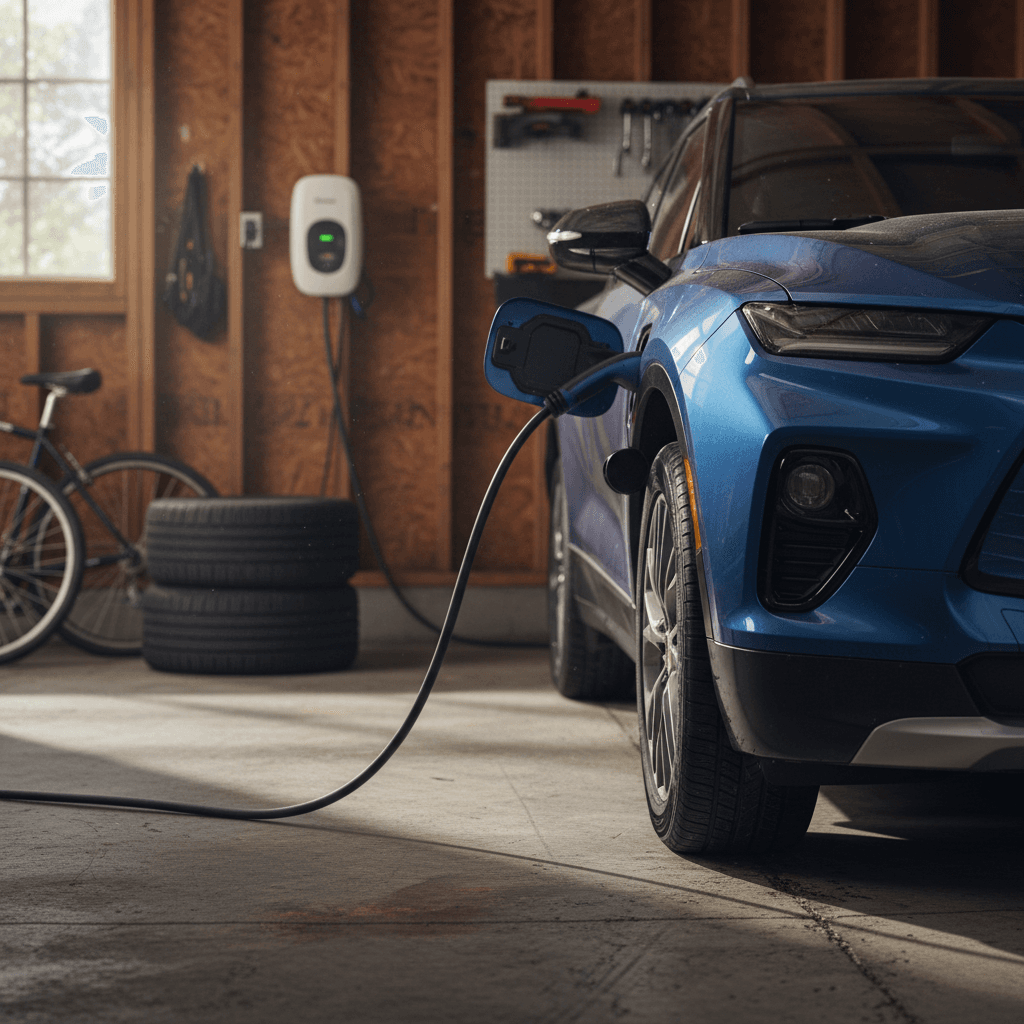
A big part of Q4 e-tron ownership is how and where you’ll charge. Fortunately, the model supports solid DC fast-charging performance and 11 kW Level 2 AC charging. Your buying checklist should confirm the vehicle has the right hardware, and that your home or apartment situation can take advantage of it.
Audi Q4 e-tron charging basics
Know what “normal” looks like so you can spot red flags with a used car.
At home (Level 1 & 2)
- Level 1 (120V): 3–4 miles of range per hour, emergency only.
- Level 2 (240V, up to 11 kW): typically a full charge in about 7–8 hours.
- The Q4 e-tron’s onboard charger tops out around 11 kW, so a 48‑amp home charger is ideal.
On the road (DC fast charging)
- Recent Q4 e-tron models can reach about 10–80% in ~25–30 minutes under good conditions.
- Peak power is only part of the story, the charging curve matters. Expect the fastest speeds when the pack is between roughly 10–60%.
- Use DC fast charging for trips, not daily charging, to help preserve long‑term battery health.
Charging and hardware checklist
1. Confirm charging port type
In North America, the Q4 e-tron uses a <strong>CCS port</strong> for DC fast charging and J1772-compatible AC charging. Make sure the port door works smoothly and the pins are clean and undamaged.
2. Verify included charging equipment
Ask what comes with the car: portable Level 1 cord, any Level 2 wall unit, and extra charging cables. Replacing missing cables or a wallbox can add hundreds of dollars to your true cost.
3. Inspect the charge port door and seals
Open and close the charge door several times. Look for torn rubber seals, misalignment, or signs of impact. Water intrusion here can lead to expensive repairs.
4. Test at a public charger if possible
If the seller agrees, plug into a public Level 2 or DC fast charger during your test drive. Confirm the car starts charging quickly and doesn’t throw communication or charging errors.
5. Plan your home charging setup
Before you buy, confirm whether you have (or can install) a 240V circuit where you park. If not, factor the cost of electrical work or rely more heavily on workplace/public charging.
Apartments and condos deserve extra homework
Step 4: Software, warranty, and recall checks
Like most modern EVs, the Q4 e-tron is as much software as hardware. Over-the-air and dealer updates have tweaked everything from charging behavior to driver-assistance systems. At the same time, the platform has seen software-based recalls, including a U.S. campaign impacting Q4 e-tron and VW ID.4 models for gear indicator behavior.
Software, warranty, and recall checklist
1. Run the VIN through recall tools
Use the NHTSA website or an Audi dealer to check the VIN for open recalls, including any <strong>software updates tied to shifter indication or safety systems</strong>. Insist that required recall work be completed before you take delivery.
2. Confirm in-service date and warranty
Ask for the original in-service date to understand how much of the <strong>high-voltage battery and drivetrain warranty</strong> remains. Many EV components are covered for 8 years or around 100,000 miles, but you need the exact terms for the model year you’re buying.
3. Ask about software update history
Has the car received regular updates? Did the owner skip any recommended dealer campaigns? Consistent updates are a good sign that the vehicle has been maintained with care.
4. Check key fob and app functionality
Make sure both key fobs work and that the seller removes their account from the Audi app. You should be able to set up <strong>remote preconditioning, charge scheduling, and lock/unlock</strong> from your own phone after purchase.
5. Look for aftermarket modifications
Unapproved software tweaks or hardware mods can complicate warranty coverage. Ask explicitly about any tuning, coding changes, or non-OEM electrical accessories.
Don’t ignore unresolved safety recalls
Step 5: Inspect interior features and EV-specific tech
Beyond battery and charging, part of the Q4 e-tron’s appeal is its Audi-grade cabin. Used buyers often focus on leather wear and infotainment screens, but EV shoppers should add a few extra checks around energy displays and driver-assistance tech.
Comfort and wear items
- Seats and upholstery: Bolsters, stitching, and any discoloration from sun or spills.
- Steering wheel and switchgear: Look for peeling coatings or sticky buttons, especially on higher-mileage cars.
- Cargo area and seatbacks: Families and dog owners can leave scratches and stains that don’t show in listing photos.
EV-specific displays and controls
- Energy and range displays: Make sure consumption, remaining range, and state of charge screens all work and are readable.
- Charge scheduling and limits: Verify you can set charge targets (e.g., 80%) and departure times in the infotainment system.
- Driver-assistance systems: Test adaptive cruise, lane-keeping, and parking sensors in a safe environment to confirm proper operation.
Packages and options matter for resale
Step 6: Road-test checklist for an EV SUV
A good test drive for a Q4 e-tron goes beyond “does it feel quick?” You’re looking for noises, vibrations, and behaviors that hint at how the vehicle has been driven and maintained, and how the EV powertrain is aging.
Audi Q4 e-tron test-drive checklist
1. Start with a cold start and low-speed drive
Listen for creaks from the suspension, clunks over bumps, or odd electric-motor sounds. EVs are quiet, so unusual noises are easier to hear, and harder to excuse.
2. Test acceleration and regen
In a safe area, accelerate briskly a few times. The Q4 e-tron should deliver smooth, linear power with no jerks or warning messages. Toggle regenerative braking modes and see if they behave consistently.
3. Check straight-line tracking and steering
On a straight road, lightly hold the wheel and see if the car tracks true. Pulling, vibration, or an off-center wheel may indicate alignment or suspension issues from curb hits or potholes.
4. Monitor energy use during the drive
Watch the consumption readout. Extremely high energy use in mild weather and calm driving could hint at underinflated tires, alignment problems, or a battery not performing as expected.
5. Test braking feel and one-pedal driving
Ensure the brakes feel strong and consistent, with no grinding or pulsing. In higher regen settings, you should be able to slow smoothly without abrupt transitions.
6. Try parking maneuvers
Check cameras, parking sensors, and steering at full lock in both directions. Listen for clicking or binding noises that could indicate CV joint or steering issues.
Step 7: Pricing, incentives, and total cost of ownership
Once you’ve found a Q4 e-tron that passes the technical checks, it’s time to decide whether the numbers make sense. EV pricing can swing with local incentives, tax credits, and how quickly newer models are rolling out.
Key pricing factors for an Audi Q4 e-tron
Use these levers to decide if a deal is fair, or if you should keep looking.
Vehicle price vs. market
- Compare the listing against similar Q4 e-trons in your region with the same trim, mileage, and options.
- Factor in whether the seller has completed recent recalls, battery tests, or new tires/brakes.
Incentives and tax credits
- Used EV tax credits or state/local rebates may apply based on vehicle price caps and your income.
- Some utilities offer home-charging rebates for installing Level 2 equipment.
Operating and financing costs
- Estimate your monthly payment, insurance, and energy cost versus your current vehicle.
- EVs often have lower maintenance costs than gas SUVs, but tires and insurance can be higher.
How Recharged simplifies the math
Ready to find your next EV?
Browse VehiclesQuick Audi Q4 e-tron buying checklist (print or save)
Use this compressed checklist alongside the deeper explanations above. It’s designed to fit in a notes app or a single printed page when you go see the car.
- Confirm exact trim (40/45/55, quattro or RWD, SUV vs Sportback) and EPA range rating for that configuration.
- Get a battery health report if possible; at minimum, compare indicated range at 80–90% state of charge to official EPA figures and real-world reviews.
- Verify charging hardware: CCS port condition, included cables, portable charger, and any home Level 2 equipment being sold with the car.
- Plan your home or apartment charging solution and estimate your typical charging pattern (overnight Level 2 vs frequent DC fast charging).
- Run the VIN through NHTSA and Audi tools to confirm all safety recalls and software campaigns are complete.
- Check remaining high-voltage battery and drivetrain warranty based on original in-service date and mileage.
- Inspect interior wear (seats, wheel, screens) and confirm EV-specific features like charge scheduling and energy displays work correctly.
- On the test drive, listen for abnormal noises, verify strong and smooth acceleration and braking, and watch energy consumption.
- Benchmark price against other Q4 e-trons with similar trim, miles, and options; adjust for tires, brakes, and completed recalls.
- Decide whether a vehicle with stronger options, better battery documentation, or a certified battery report (like Recharged Score) is worth a small price premium.
FAQ: Audi Q4 e-tron buying questions
Common Audi Q4 e-tron buying questions
Is the Audi Q4 e-tron right for you?
If you want a compact electric SUV with a premium badge, comfortable ride, and solid range, the Audi Q4 e-tron deserves a close look. The key is to treat it like the modern EV it is, not just another used crossover. That means scrutinizing battery health, charging behavior, software, and recall history, alongside the usual interior and cosmetic checks.
Use this Audi Q4 e-tron buying checklist as a step-by-step guide: confirm the right trim and range for your lifestyle, dig into the battery’s condition, verify charging hardware and software updates, and make sure the price lines up with the market and the vehicle’s story. If you’d rather have experts do that heavy lifting, consider shopping Q4 e-tron listings through Recharged, where every used EV comes with a battery-health score, fair pricing, and support from EV specialists from your first question to final delivery.