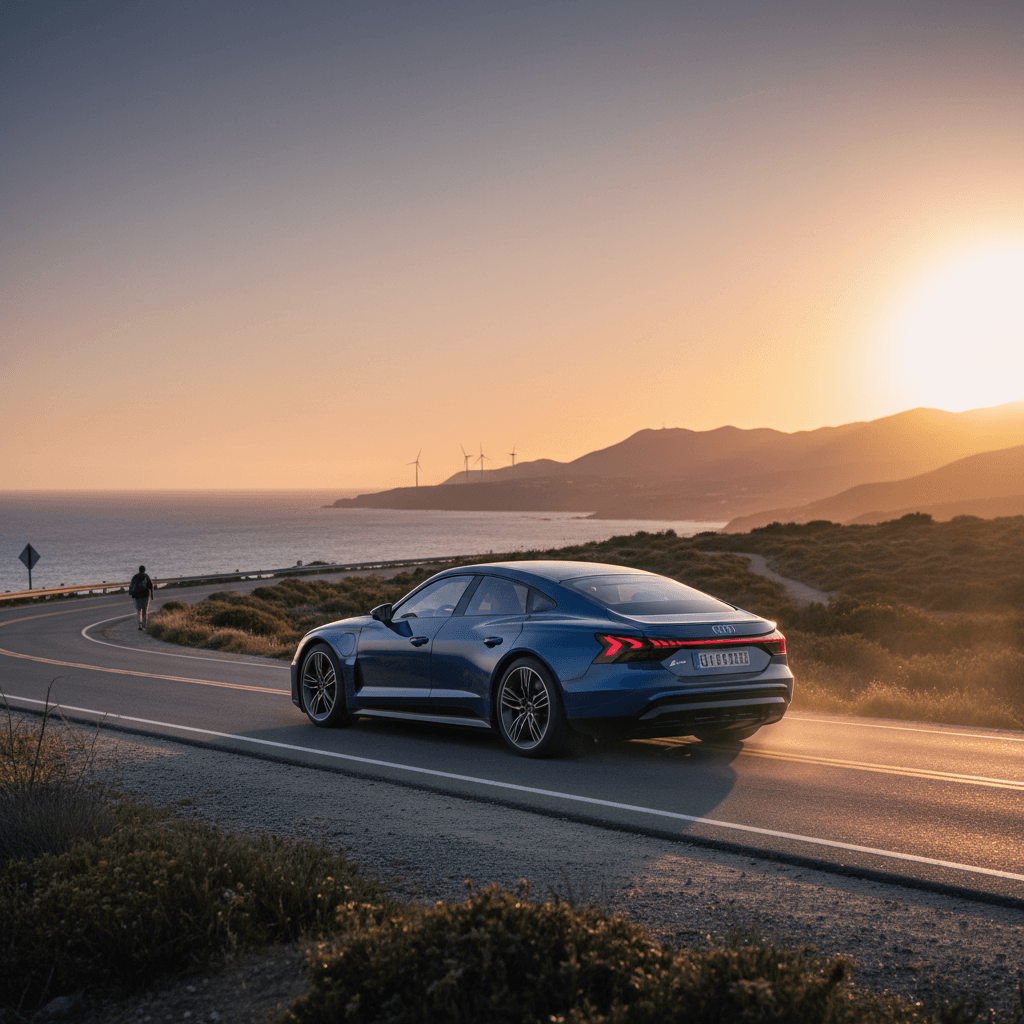
The Audi e-tron GT looks like it was designed for high-speed runs between European capitals: low, wide, and ominously calm at 80 mph. But how does it handle an American-style road trip, three states in a day, bad coffee, and a DC fast charger behind a Wendy’s? In this Audi e-tron GT road trip review, we’ll focus on what actually matters when you’re 400 miles from home: real-world range, charging, comfort, and whether you should consider one, especially used, as your long-distance EV.
The short version
Who this Audi e-tron GT road trip review is for
- Drivers cross‑shopping the Audi e-tron GT with cars like the Tesla Model S, Porsche Taycan, Mercedes EQE/EQS, or Lucid Air for long‑distance use.
- Enthusiasts wondering if the e-tron GT is really a grand tourer or just a fast electric fashion statement.
- Shoppers considering a used Audi e-tron GT and trying to figure out whether the battery, charging performance, and comfort will still feel competitive for multi‑day trips.
- Owners of earlier e-tron SUVs thinking of “trading sideways” into something lower, sleeker, and better to drive on the highway.
We’ll lean heavily on real‑world results from independent tests plus what matters most when you’re actually living with this car over long distances. And because Recharged specializes in used EVs, we’ll also weave in what to look for if you’re eyeing an e-tron GT as a pre‑owned highway weapon.
Audi e-tron GT in a nutshell: Specs that matter on the road
Key Audi e-tron GT numbers for road trips
The e-tron GT rides on the same J1 platform as the Porsche Taycan, with dual motors, all‑wheel drive, an 800‑volt battery pack, and a two‑speed rear gearbox. What that means in plain English: it hits hard off the line but also settles into a very relaxed lope at highway speeds, with low RPMs and high efficiency when you’re cruising.
Model years to know
Real-world range: what you can actually drive between stops
Officially, earlier Audi e-tron GT models carry an EPA rating around 238 miles of range, with European WLTP numbers in the ~300‑mile ballpark. Independent testing has found that, driven sensibly, the car can exceed its US rating and touch the mid‑200s on a full battery in mixed conditions. In cold weather or at very high speeds, you’ll see less; in mild temperatures and moderate highway pace, you can see more.
What you’ll likely see at 70–75 mph
- At typical US interstate speeds with climate control on, most drivers should plan around 200–230 miles per full charge in the earlier 93.4 kWh cars.
- The newer, higher‑capacity battery in S/RS e-tron GT models can push real‑world range closer to the 260–300 mile territory, depending on temperature and elevation.
- Drive it like a hot hatch and you’ll watch that number melt faster than the ice in your drive‑thru drink.
How that feels on an actual trip
- In practice, you’ll be planning charging stops every 150–190 miles to keep a comfortable buffer instead of running the pack to 0%.
- That typically means 2–3 DC fast‑charging sessions on a 600‑mile day, fairly normal for a modern performance EV.
- Because the car charges so quickly from low state of charge, there’s little benefit to nursing it; you’re rewarded for running it down to 10–20% before stopping.
Range reality check
DC fast charging on the highway: where the e-tron GT shines
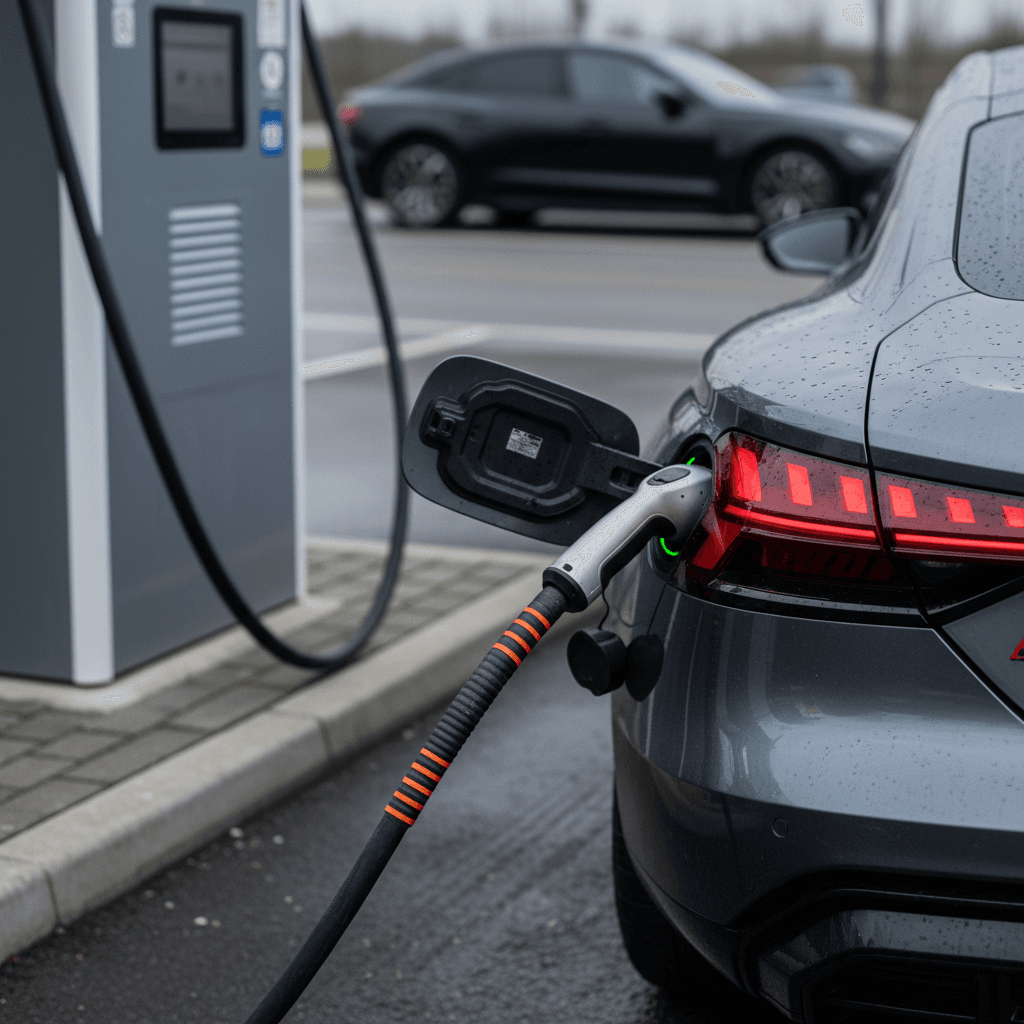
If range is the Audi’s little asterisk, charging speed is its exclamation point. The e-tron GT was one of the early production cars to go all‑in on 800‑volt architecture, enabling very high DC charging rates on compatible stations.
Audi e-tron GT charging experience on a road trip
Approximate times and what they feel like in the real world, assuming you find a healthy, high‑power DC fast charger.
| Scenario | Power level | Battery window | Approx. time | What it feels like |
|---|---|---|---|---|
| Best case ultra‑fast | 270–320 kW DC | 10% → 80% | ~18–23 minutes | Use the restroom, grab a snack, stretch, you’re done. |
| Typical good fast charger | 150 kW DC | 10% → 80% | ~30 minutes | One full coffee break, enough to check emails and doomscroll. |
| Slow DC or shared power | 50 kW DC | 10% → 80% | 60–80 minutes | Lunch stop territory, plan a sit‑down meal. |
| Level 2 at hotel | 11 kW AC | 10% → 100% | 8–10 hours | Plug in overnight and forget about it. |
Times are approximate and depend heavily on charger quality, temperature, and starting state of charge.
Use the right networks
- The e-tron GT holds high charging power for a good chunk of the session, so it’s most efficient to charge between roughly 10% and 60–70% instead of topping to 100%.
- You’ll often add 150–180 miles of usable highway range in 15–20 minutes on a strong charger, perfect for breaking up 3–4 hour stints behind the wheel.
- Because it has ports on both sides in some markets (AC one side, DC the other), pay attention to which side your CCS fast‑charge inlet is on when you pull in so you don’t have to re‑park.
Comfort, noise, and fatigue: Is it true grand touring?
On a long drive, what keeps you sane isn’t 0–60, it’s seats, noise, and ride quality. The Audi e-tron GT delivers a fundamentally grand‑touring experience: quiet at speed, well‑damped, and more relaxed than the spec sheet suggests.
What the e-tron GT is like to live with for 500+ mile days
Less track toy, more stealth bomber.
Seats & driving position
The front seats are classic Audi: firm but supportive, with a low, laid‑back position and plenty of adjustment. After several hours, you arrive feeling tired from driving, not from fighting the furniture.
Noise & refinement
Double‑glazed glass and tight aero mean low wind noise for such a wide car. You do hear some tire roar on coarse pavement, 20–21 inch wheels will do that, but overall refinement is excellent.
Ride & suspension
Air suspension (where fitted) is the hero here. In Comfort it smooths out freeway seams with a heavy, expensive feel, yet the car still hunkers down at speed. Dynamic mode is too stiff for bad highways; save it for on‑ramps.
Watch your ingress and egress
Space, luggage and practicality for two plus bags
Despite the big‑body footprint, the e-tron GT is packaging‑challenged by its own aesthetics. It’s basically a four‑door sports coupe sitting on a big battery. On a road trip, this matters less for front passengers and more for rear‑seat adults and luggage.
Luggage: what actually fits
- Trunk space is useable but not cavernous. Think two large suitcases plus a few soft bags, not a family of four heading to the airport for two weeks.
- There’s a small front trunk (frunk) that’s ideal for charge cables or a duffel, great for keeping the main trunk tidy.
- The trunk opening is sedan‑style, not a hatch, which limits bulky items. If you need wagon practicality, you bought the wrong Audi.
Rear seats: occasional use on long trips
- Legroom is acceptable, but the low roof and sloping rear glass make headroom tight for anyone over about 5'10".
- The footwells are a bit compromised by the battery and floor height, so taller adults will feel more perched than sunk in.
- For two adults up front plus kids or shorter passengers in back, it’s fine for a long weekend. Four tall adults, four big suitcases, and 600 miles? That’s asking a lot.
How the e-tron GT compares to Tesla Model S and Taycan on a road trip
The question behind most Audi e-tron GT road trip conversations is simple: why not just buy a Tesla Model S, or stretch to a Porsche Taycan? Each takes a different approach to the same problem, moving you and some luggage across a continent at high speed with electrons instead of gasoline.
Road trip comparison: Audi e-tron GT vs Tesla Model S vs Porsche Taycan
High‑level view of how these three feel when you’re stacking long highway days back‑to‑back.
| Aspect | Audi e-tron GT | Tesla Model S | Porsche Taycan |
|---|---|---|---|
| Highway range | Good, but not class‑leading; ~200–230 mi realistic for early cars at 70–75 mph. | Excellent; Long Range variants can exceed 300 mi at moderate speeds. | Similar to Audi on like‑for‑like trims; newer long‑range Taycan variants can nudge higher. |
| Charging | 270–320 kW CCS, strong 800‑V fast charging on capable networks. | Supercharger network is still the easiest ownership experience in North America. | Also 800‑V, charges very quickly; CCS like the Audi. |
| Ride & comfort | Soft‑edged grand tourer; quiet, luxurious, less overtly sporty than Taycan. | Comfortable but firmer than you’d expect in some trims; cabin feel is more tech‑forward than plush. | The most sports‑sedan‑like; excellent body control but can be tiring on broken pavement. |
| Interior & UX | Classic Audi: high‑quality materials, intuitive controls, understated luxury. | Big screen, minimalist cabin, great software and trip‑planning tools; finish quality can feel less special. | More cockpit‑like and focused; premium, but more button‑down than the Audi. |
| Practicality | Decent but not huge trunk, plus frunk; rear headroom tight. | Large hatchback trunk and better rear practicality; more of a family road‑trip tool. | Similar compromises to Audi: stylish but not the most spacious. |
| Used pricing | Depreciation has been steep; can be a compelling used buy. | Also depreciates, but strong brand and OTA software help residuals. | Often holds value a bit better than the Audi, but still drops from new. |
Generalized comparison; exact specs depend on trim and model year.
Where the Audi nails it
Road-trip planning tips specific to the e-tron GT
Make your Audi e-tron GT road trip feel effortless
1. Plan for 150–190 mile legs
Use 150–190 miles as your default interval between fast charges rather than the theoretical EPA range. That keeps you in the quick‑charging window and builds in a safety buffer for headwinds, detours, or a busy station.
2. Target high‑power CCS sites
In your route planner, filter for 150+ kW chargers from reputable networks. The car’s 800‑V system really comes alive on these; on 50 kW units, you’re wasting its potential and your time.
3. Arrive low, not high
The e-tron GT charges fastest when the battery is low. Try to arrive at fast chargers with <strong>10–20% state of charge</strong>, not 50%. You’ll get the most miles per minute, and your stops will be shorter.
4. Use hotels with Level 2 charging
Overnight AC charging at 11 kW turns your car into a fully charged ‘fuel tank’ every morning. Many hotels now list EV charging as an amenity, look for those when you book, especially on multi‑day trips.
5. Mind wheel and tire choice
Big 21‑inch wheels may look heroic at the curb, but they’re louder, harsher, and less efficient. If road trip comfort and range matter, consider trims with smaller wheels and more sidewall.
6. Precondition the battery before DC fast charging
If your e-tron GT supports battery preconditioning through navigation, use it. Arriving with a warm pack means you’ll hit higher charge rates faster, especially in cold weather.
Buying a used Audi e-tron GT for road trips: what to watch
The e-tron GT is already appearing in meaningful numbers on the used market, often at a serious discount from its six‑figure MSRP when new. That makes it tempting if you want a luxury EV grand tourer without luxury‑brand sticker shock. But for road‑trip duty, you’ll want to pay close attention to battery health, charging behavior, and tire history.
Used e-tron GT road-trip checklist
What to ask before driving one across three states.
Battery health & range
Have the car’s range and efficiency evaluated. On Recharged, every vehicle comes with a Recharged Score Report that includes verified battery health, so you can see how the pack has aged before you ever hit the highway.
Fast‑charging behavior
Test DC fast charging at least once before purchase if you can. A healthy e-tron GT should ramp quickly to high power on a capable charger. If it’s painfully slow, that could indicate battery conditioning issues or charger problems worth investigating.
Wheel, tire and alignment history
Big, heavy EV + low‑profile tires + previous owner who loved curbs = potential for bent wheels or odd tire wear. On a long trip, that becomes vibration and noise. Inspect wheels and read the tire wear carefully.
Warranty and software updates
Confirm remaining battery warranty and that recall and software updates are current. Updated battery management and charging profiles can improve both range consistency and charging performance on the road.
How Recharged helps here
FAQ: Audi e-tron GT road trip questions answered
Common Audi e-tron GT road trip questions
Bottom line: Is the Audi e-tron GT a good road trip EV?
If your idea of a road trip is a rolling family reunion with bikes, dogs, and a Costco‑grade luggage mound, the Audi e-tron GT is not your car. But if you picture two people, a pair of suitcases, and a long ribbon of interstate, and you care as much about how the journey feels as how far you go between plugs, the e-tron GT makes a deeply compelling case.
You’re trading some raw range and cargo space for speed, charging performance, refinement, and theater. Thanks to its 800‑V architecture, ultra‑quick DC charging, and fundamentally comfortable chassis, it turns the rhythm of an EV road trip, drive, charge, repeat, into something close to what grand touring has always been: an excuse to keep driving a very good car a very long way.
If you’re shopping used, that trade‑off gets even more attractive. A well‑specced e-tron GT with a healthy battery can be a relative bargain grand tourer, especially when you buy through a platform like Recharged that verifies battery health, offers financing and trade‑in options, and can deliver the car right to your driveway. Plan your charging intelligently, pack light, and the e-tron GT will do its part: devour the miles and make you wish the road was just a little bit longer.