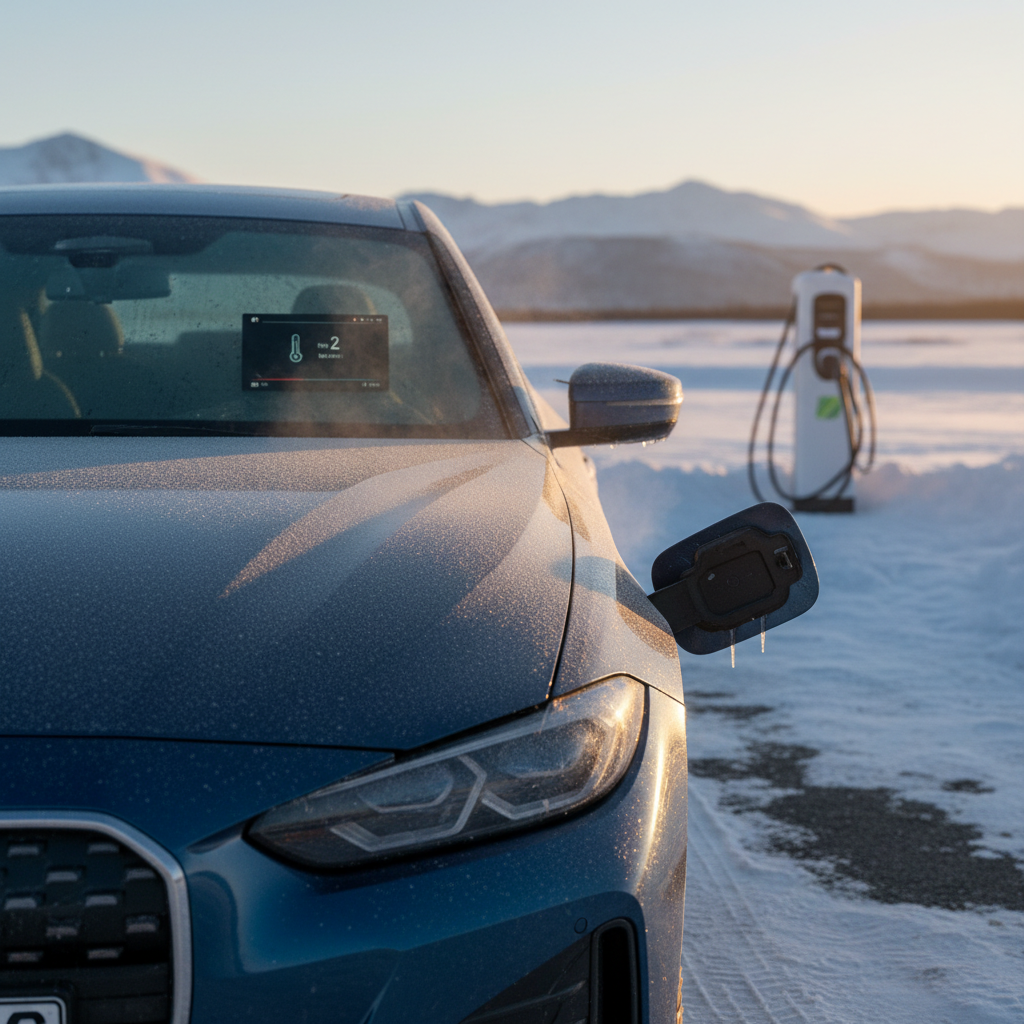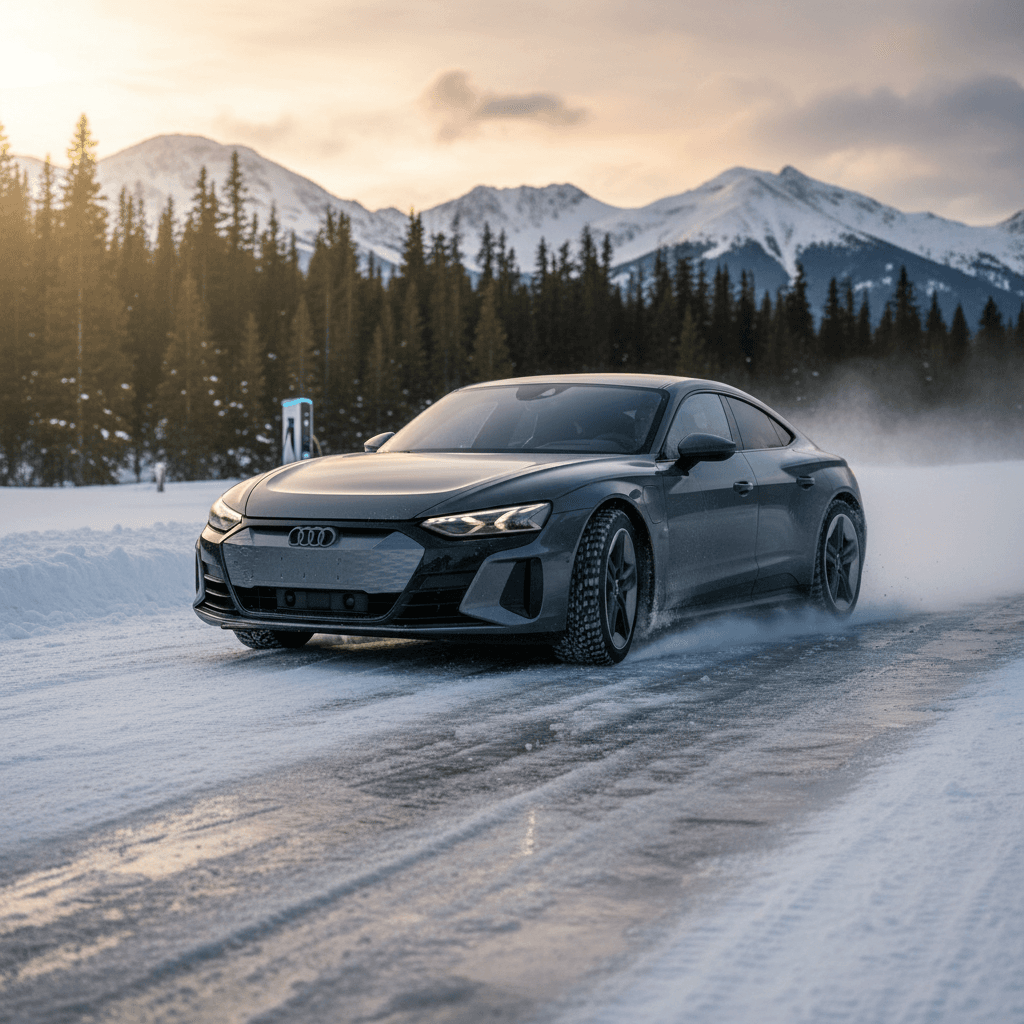
If you’re eyeing an Audi e-tron GT and live where roads turn white for months, the real question isn’t just “is it fast?”, it’s whether the Audi e-tron GT is good in snow and ice. The short answer: with the right tires and expectations, it’s a superb winter highway and plowed-road car, but it’s not a snowplow or a crossover.
Quick verdict
Audi e-tron GT in snow and ice: what to expect
Where it shines
- Excellent traction from dual motors and Audi’s e-quattro all-wheel drive.
- Predictable handling thanks to a very low center of gravity and sophisticated stability control.
- Fine control on ice, instant torque modulation reacts far faster than a traditional AWD system.
- Quiet, warm cabin with effective HVAC and available heat pump on many builds.
Where it’s vulnerable
- Low ride height compared with SUVs, so deep snow can pack under the car.
- Big, wide performance tires from the factory are lousy in real winter conditions.
- Cold-weather range hit of roughly 15–30% in typical freezing temps.
- Heavy curb weight means you need more distance to stop on slick surfaces.
Audi e-tron GT winter basics at a glance
Why the Audi e-tron GT can be excellent in winter
Audi has spent decades building a reputation around quattro winter capability, and the e-tron GT is very much in that tradition. Every e-tron GT uses dual electric motors and a version of Audi’s e-quattro all‑wheel drive with highly responsive traction control. That means the car can shuffle torque front‑to‑rear and side‑to‑side far more quickly than a mechanical AWD system when it senses slip.
Key winter strengths of the e-tron GT
These traits make it feel secure on snow and ice when set up correctly.
Instant, precise torque control
Low center of gravity
Sophisticated stability systems
Think “winter GT,” not “winter SUV”
Where the e-tron GT struggles in snow and ice
Even a very capable EV has tradeoffs. The e-tron GT’s biggest winter weaknesses aren’t about electronic wizardry; they’re physical realities: ride height, weight, and tire choice.
- Ground clearance is modest. With the adaptive air suspension in its normal road settings, you’re in sports‑sedan territory, not crossover height. Deep ruts, plow berms, and unplowed driveways can pack snow under the battery tray and leave you high‑centered.
- Factory tires are performance‑biased. Many cars ship on wide summer or performance all‑seasons (especially 20–21 inch packages). Those prioritize grip on warm asphalt, not braking on ice.
- It’s a heavy car. Curb weight is well over two tons. On snow, that mass helps you bite down through light slush, but it also means more momentum to scrub off if you misjudge stopping distance.
Respect snow depth
Tires: the single biggest factor in snow and ice
Ask e-tron GT owners who actually daily their cars in cold climates and you’ll hear a near‑unanimous theme: tires make or break winter performance. The drivetrain is so capable that once you’re on the right rubber, traction in normal winter weather stops being the limiting factor.
Tire choices for your e-tron GT winter setup
Match the rubber to how harsh and how long your winters are.
Dedicated winter tires
- Massive gains in braking and turn‑in on snow and ice.
- Softer rubber stays flexible below freezing.
- More noise and softer feel in dry conditions.
- Requires wheel/tire swaps twice a year.
All‑weather (severe‑snow rated)
- 3PMSF (mountain/snowflake) rating for legal winter use where required.
- No seasonal swap; acceptable dry performance.
- Not as strong on ice as true winter tires.
- Wear faster than traditional all‑seasons in warm weather.
Standard all‑seasons or summers
- Quieter and more efficient in mild conditions.
- Poor grip below freezing, especially on ice.
- Summer tires can be unsafe in true winter, avoid for snowbelt use.
Simple rule of thumb
Best e-tron GT drive modes and settings for snow
The e-tron GT’s software is doing a lot under the skin, but you still control how aggressive or relaxed its power delivery and traction management feel. In slippery conditions, the goal is smooth, predictable responses, not maximum acceleration.
Recommended settings for snow and ice
Use Comfort or Efficiency, not Dynamic
These modes soften throttle response and reduce peak power, which makes it easier to avoid sudden wheelspin when you touch the accelerator on slick surfaces.
Raise the suspension when it’s rutted
If your car has adaptive air suspension, select a mode that raises ride height slightly for rutted snow, steep driveways, or unplowed side streets, then drop back down on the highway for stability and efficiency.
Dial back regen on very slick surfaces
Strong regenerative braking can unsettle the car if a wheel suddenly loses grip on ice mid‑corner. Many drivers prefer medium or lower regen in the worst conditions so they can modulate braking with the pedal instead.
Use preconditioning when parked outside
If your e-tron GT supports battery and cabin preconditioning, schedule it while plugged in. You’ll start with a warm pack and cabin, improving range and keeping windows defrosted from the moment you pull away.
Let the electronics work
Leave stability and traction control fully enabled for real snow and ice. Audi tunes these systems to keep you pointed straight, even if it means cutting power more than your right foot might like.
Practice in a safe, empty lot
If you’re new to EVs in winter, spend 15–20 minutes in an empty snowy lot learning how the car behaves when it slides. That muscle memory is invaluable when you encounter black ice unexpectedly.
Ground clearance, ice ruts, and steep driveways
No matter how clever the drivetrain is, a low‑slung EV coupe‑sedan will always have limitations in deep snow. The e-tron GT rides lower than an Audi Q8 e-tron or most crossovers, and its long wheelbase makes it easier to high‑center if you try to push through tall drifts or frozen ruts.
Ride height: e-tron GT vs typical winter EV SUV
Approximate ground clearance comparisons to frame realistic expectations.
| EV model | Approx. ground clearance | Winter personality |
|---|---|---|
| Audi e-tron GT | ~4.7 in (varies with air suspension) | Sports sedan – great on plowed roads and packed snow, cautious in deep ruts |
| Audi Q8 e-tron | ~6.7–8.3 in (air suspension) | Electric SUV – better for unplowed drives and deeper snow |
| Typical compact crossover EV | ~6.5–7.5 in | All‑rounder – more forgiveness on rough, snowy back roads |
The e-tron GT sits much lower than SUV‑style EVs, so treat it like a performance sedan in winter.
Watch packed snow under the battery
Cold weather range and charging habits
Mechanically, the e-tron GT is very capable in winter. The bigger lifestyle adjustment comes from range loss in the cold. In typical U.S. winter conditions around freezing, many e-tron GT drivers report roughly 15–25% less usable range than in mild weather, with worst‑case scenarios climbing toward 30–40% on short, cold‑soaked trips.
- Plan on less range when it’s cold. If your mild‑weather highway range is ~230 miles, assume more like 170–190 miles around freezing, and less in sub‑zero temps or at high speeds.
- Short trips hurt efficiency most. Warming the cabin and battery for a 5‑mile drive uses a similar energy burst as for a 25‑mile drive. Clustering errands or letting the car stay warm between stops helps.
- Precondition while plugged in. Heating the cabin and (where supported) the battery from shore power preserves more of your onboard energy for driving.
- Use fast charging strategically. Being able to go from roughly 5–80% in around 20 minutes on a high‑power DC fast charger makes winter road‑tripping realistic, even with a range hit. Just remember that very cold packs will charge more slowly until they warm up.
Home charging for winter sanity
Buying a used e-tron GT for winter: checklist
If you’re considering a used Audi e-tron GT as a four‑season daily, you’re buying both a winter car and an EV learning curve. A bit of upfront diligence goes a long way toward a drama‑free first snowy season.
Winter-focused checks for a used e-tron GT
Confirm it has (or had) proper winter tires
Ask what tires the previous owner ran in winter and whether a second wheel/tire set is included. A car that’s seen serious winters on proper rubber is often better cared for than one that tip‑toed through on summers.
Review battery health and DC fast charge history
Cold climates aren’t inherently bad for batteries, but lots of high‑power fast charging plus frequent deep discharges can accelerate wear. A transparent battery health report, like the Recharged Score, gives you objective data.
Check underbody and suspension for corrosion
Road salt can be hard on any car. Inspect (or have a shop inspect) suspension arms, brake hardware, and the battery tray area for corrosion, damaged shields, or missing fasteners.
Test HVAC, heated seats, and steering wheel
A comfortable, warm cabin is a huge part of winter satisfaction. Make sure seat heaters, steering‑wheel heat, defrost settings, and the main heater all work quickly and quietly.
Verify charging equipment works in the cold
If the car comes with mobile charging gear, test it in a cold garage or outside. Cable flexibility and connector latching become more important when everything’s stiff from the cold.
Confirm software options like preconditioning
Different model years and option packages can change how much you can pre‑heat or pre‑cool. During a test, schedule a departure and confirm the car can warm itself while plugged in.
How Recharged helps winter shoppers
Audi e-tron GT winter driving FAQs
Common questions about the Audi e-tron GT in snow and ice
Bottom line: is the Audi e-tron GT best for snow and ice?
If your idea of winter driving is highway runs to the mountains, commuting on plowed city streets, and the occasional stormy night on packed snow, the Audi e-tron GT is a genuinely impressive snow and ice car. Its electric quattro system, low center of gravity, and careful calibration make it feel calm and predictable when many traditional performance cars would be skating around.
Where it’s not “best” is in deep, unplowed conditions or rough back roads, scenarios that favor taller EVs with more clearance. So the real question isn’t whether the e-tron GT can handle winter (it can), but whether its winter personality fits your roads and your lifestyle.
If you’re cross‑shopping winter‑capable EVs, especially on the used market, pairing the e-tron GT’s strengths with a transparent battery health report and a thoughtful tire and charging plan is what turns it from an exciting purchase into a confident, year‑round daily driver. That’s exactly the gap Recharged is built to close: helping you understand how an EV like the e-tron GT will live not just on paper, but on real snow‑covered roads.