Are electric cars safe to drive, or are you signing up to be a beta tester with a 1,000‑pound battery strapped beneath you? The short answer: modern EVs are at least as safe as gas cars, and sometimes safer, but their risks are different, and you should understand them before you buy, especially if you’re shopping used.
The big picture on EV safety
Are electric cars safe to drive overall?
If you strip away the hype, electric cars are fundamentally safe to drive when they’re properly designed, maintained, and repaired. They must meet the same crash‑test standards as gasoline vehicles, plus additional requirements around high‑voltage safety and battery integrity. In 2024, NHTSA even highlighted that its 5‑Star Safety Ratings testing now routinely includes multiple electric and hybrid models each year, an indication that EVs are no longer niche science projects but part of the mainstream fleet.
What recent data says about EV safety
That doesn’t mean an electric car is magically safer in every scenario. Battery fires are harder to extinguish, repair mistakes can be costly, and recalls still happen, especially as newer tech rolls out. But if you’re wondering whether you’re taking on abnormal danger by driving a modern EV, the evidence says no.
Think of EVs as “different risk, not more risk”
How electric cars perform in crashes
From a pure crash‑physics standpoint, electric cars start with some built‑in advantages. The heavy battery pack is usually mounted in the floor, which lowers the center of gravity and reduces rollover risk. You also get large front and rear crumple zones because there’s no bulky engine sitting in front of you.
Why many EVs crash so well
Design quirks that quietly work in your favor
Low center of gravity
No engine block in front
Advanced active safety
The Insurance Institute for Highway Safety has repeatedly awarded its top safety designations to battery‑electric models, from compact sedans to family SUVs, once they meet stringent crash and collision‑avoidance targets. In real‑world terms, that means if you buy an EV with strong crash ratings, you’re at least as well protected as in an equivalent gas vehicle.
Don’t assume all EVs are equally safe
EV fire risk vs gas cars
EV fires loom large in the public imagination because when they happen, they’re dramatic. Lithium‑ion battery fires burn hot, can re‑ignite, and make for gripping video. But that’s not the same as how often they happen.
How often cars catch fire
Across the U.S. fleet, traditional gasoline vehicles are involved in well over a hundred thousand fires per year. Studies comparing fuel types suggest:
- Gas and diesel cars are dozens of times more likely to be involved in a fire than EVs on a per‑vehicle basis.
- Some insurance and government data sets peg global battery‑electric fire incidence at roughly 1 in 100,000 vehicles annually.
In other words: fires in any passenger vehicle are rare, and fires in EVs are rarer still.
Why EV fires feel scarier
- Thermal runaway in a damaged battery can cascade from cell to cell, making the fire stubborn to extinguish.
- Fire departments may need more water, more time, or even to let the pack burn under control.
- Social media coverage makes each incident highly visible, even though the underlying odds are low.
The risk is small but non‑zero, similar to the way gasoline leaks and engine fires are a small but real risk in conventional cars.
The real hazard: damaged or flooded EVs
Battery safety and thermal runaway explained
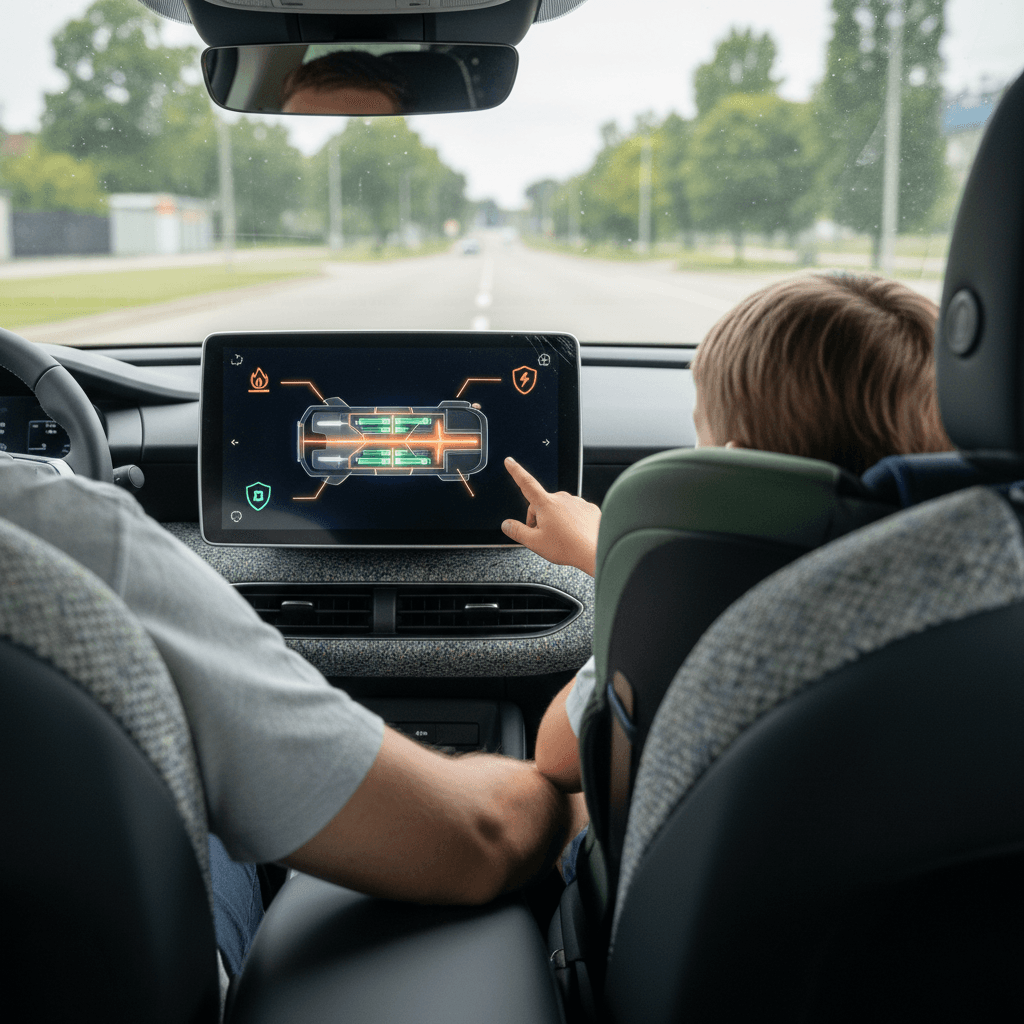
The high‑voltage battery is the part of an EV that gives people the most pause, and understandably so. You’re sitting on a densely packed box of energy. But that box is wrapped in layers of safety engineering.
- Rigid battery casing mounted within the vehicle frame to protect it from intrusion in a crash.
- Cooling systems and software that keep cells within a safe temperature range.
- Battery management systems that shut down high‑voltage circuits in a crash or short circuit.
- Strict federal standards (like NHTSA’s rules on post‑crash electrical isolation and fire resistance) that automakers must meet before selling the car.
Thermal runaway, the chain reaction that can lead to a battery fire, typically requires serious abuse, manufacturing defects, or grossly incorrect repairs. That’s why when battery issues do appear, they often trigger recalls: Nissan, GM, and Stellantis have all recalled plug‑in or electric models over the past few years for potential pack defects, sometimes advising owners not to fast‑charge or to park outside until a fix is installed.
Why certified repairs matter
Everyday safety concerns: charging, rain, and noise
Once you’re past the headlines, most people worry about the everyday stuff: Can I charge in the rain? Will I get shocked? Are quiet EVs more dangerous for pedestrians?
Common EV safety myths, answered
The boring, practical questions you actually live with
Charging in the rain
Shock risk while driving
Quiet at low speeds
Good news for winter and floods (with caveats)
Recalls, defects, and real-world incidents
No technology is flawless, and EV safety stories in the news tend to cluster around battery recalls and isolated but vivid fire incidents. Recently we’ve seen multiple high‑profile recalls of plug‑in and battery‑electric models over battery packs that could overheat or, in rare cases, ignite, often during fast charging or while parked.
The honest way to think about these events is not “EVs are unsafe,” but rather, “this specific design or batch had a defect, and it’s being corrected.” The same thing has happened for decades with fuel tanks, airbags, ignition switches, and countless other components in gas cars.
What you should do about EV recalls
Safety checklist for buying a used electric car
Used EVs are where safety and value intersect, and where you really want objective data. High‑voltage components age differently than engines, and a car that looks pristine can hide an abused battery or a poorly repaired crash.
Ten safety checks before you buy a used EV
1. Verify crash-test ratings
Look up NHTSA star ratings and IIHS results for the specific model and year. Avoid cars with known structural weaknesses or poor small‑overlap crash scores.
2. Pull a full vehicle history report
You want to see prior accidents, flood branding, and title status. A branded or salvage title on an EV deserves extra scrutiny because of battery damage risk.
3. Ask for a battery health report
Battery capacity affects both range and safety margins. With Recharged vehicles, every car includes a Recharged Score with verified battery health, so you’re not guessing how the pack has aged.
4. Inspect for flood or corrosion signs
Look for musty smells, water lines in the trunk, corroded fasteners under seats, or odd electrical gremlins. Flood‑damaged EVs are a hard pass unless they’ve been professionally evaluated and priced accordingly.
5. Confirm no open safety recalls
Use the VIN to check for recalls, especially battery‑related campaigns. Make sure any prior recall work is documented by a dealer or authorized shop.
6. Review charging history and usage
If you can, ask how the car was charged, mostly at home Level 2, or frequent DC fast charging? Heavy fast‑charge use doesn’t automatically make the car unsafe, but it can stress the battery over time.
7. Look underneath for pack damage
On a lift, a technician can inspect the battery enclosure for scrapes or impacts from curbs and debris. A dented battery case is a major red flag.
8. Test all safety systems
On a test drive, confirm that ABS, stability control, lane‑keep, AEB, and airbags show no warning lights. Try the driver‑assistance features in a safe environment.
9. Confirm proper high-voltage service
Ask who has serviced the car and when. Look for documentation from dealers or shops with EV training, not just generic oil‑change places dabbling in high voltage.
10. Get an independent EV inspection if unsure
If you’re buying privately or from a non‑specialist dealer, consider a pre‑purchase inspection by an EV‑savvy shop, or shop from a marketplace like Recharged that already does this legwork.
How Recharged evaluates EV safety for used buyers
Because used EVs are still new territory for many buyers, Recharged was built to take the guesswork, and the hidden risk, out of the process. Every vehicle on the platform comes with a Recharged Score Report that goes beyond basic cosmetics and Carfax bullet points.
What’s inside a Recharged Score Report
Safety and transparency, not just shiny photos
Verified battery health
High-voltage system checks
Fair market pricing
Ready to find your next EV?
Browse VehiclesYou can buy entirely online, use financing, trade in your current car, and get nationwide delivery. If you’re the kind of buyer who reads a deep‑dive on EV safety before clicking “buy,” you are exactly the audience Recharged is built for.
Frequently asked questions about EV safety
EV safety: quick answers to common questions
Bottom line: should you feel safe in an electric car?
If you’ve been wondering, “Are electric cars safe to drive?” the evidence from crash labs, insurance data, and the messy real world all point in the same direction: a well‑designed, properly maintained EV is every bit as safe as a comparable gas car, and often safer. The risks you take on are different, centered around a complex battery rather than a tank of gasoline, but they’re not inherently greater.
The smart move is to choose an EV with strong crash ratings and a clean history, and to buy from a seller who can prove what’s going on under the floor, not just what’s been touched up on the paint. That’s exactly why Recharged includes a Recharged Score Report with verified battery health, recall checks, and expert EV inspections on every car we list. If you want the benefits of electric driving without feeling like a test pilot, that combination of engineering and transparency is what turns an EV from an experiment into a very safe daily driver.