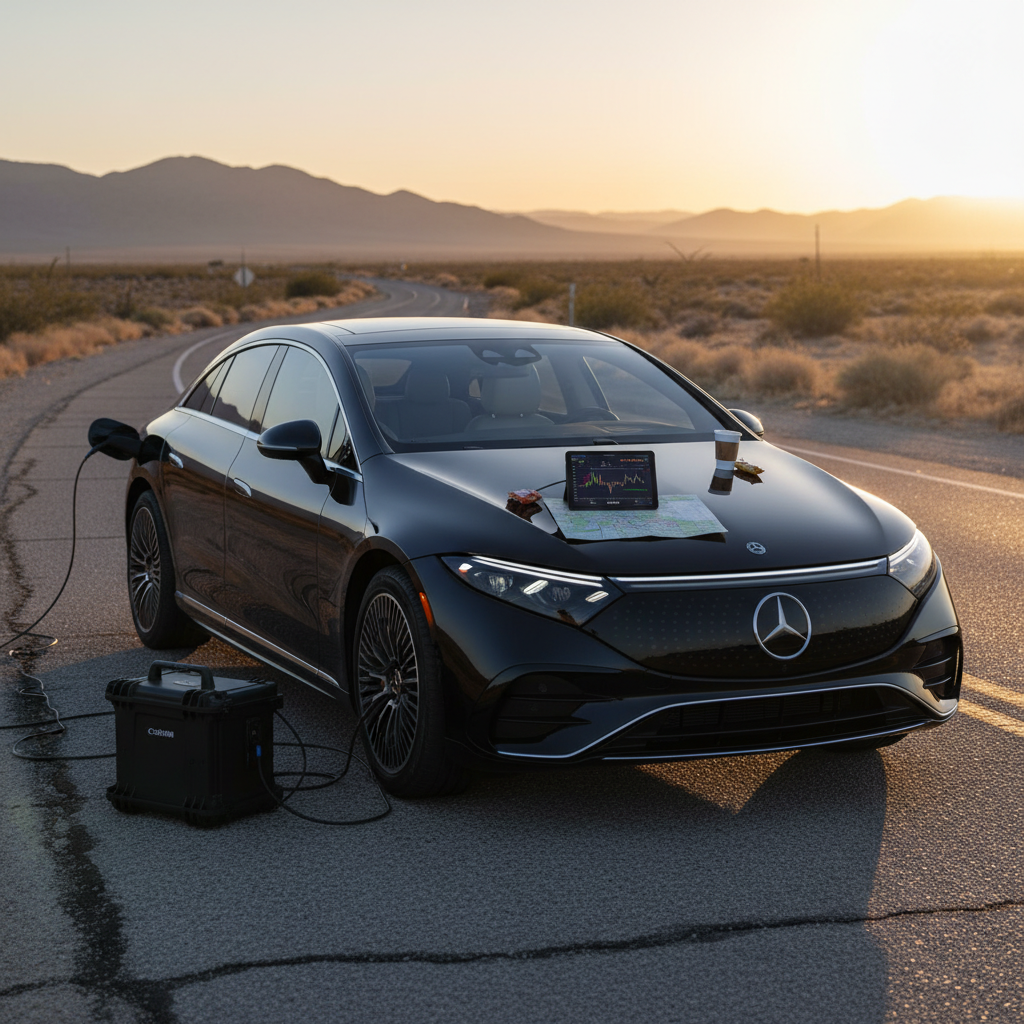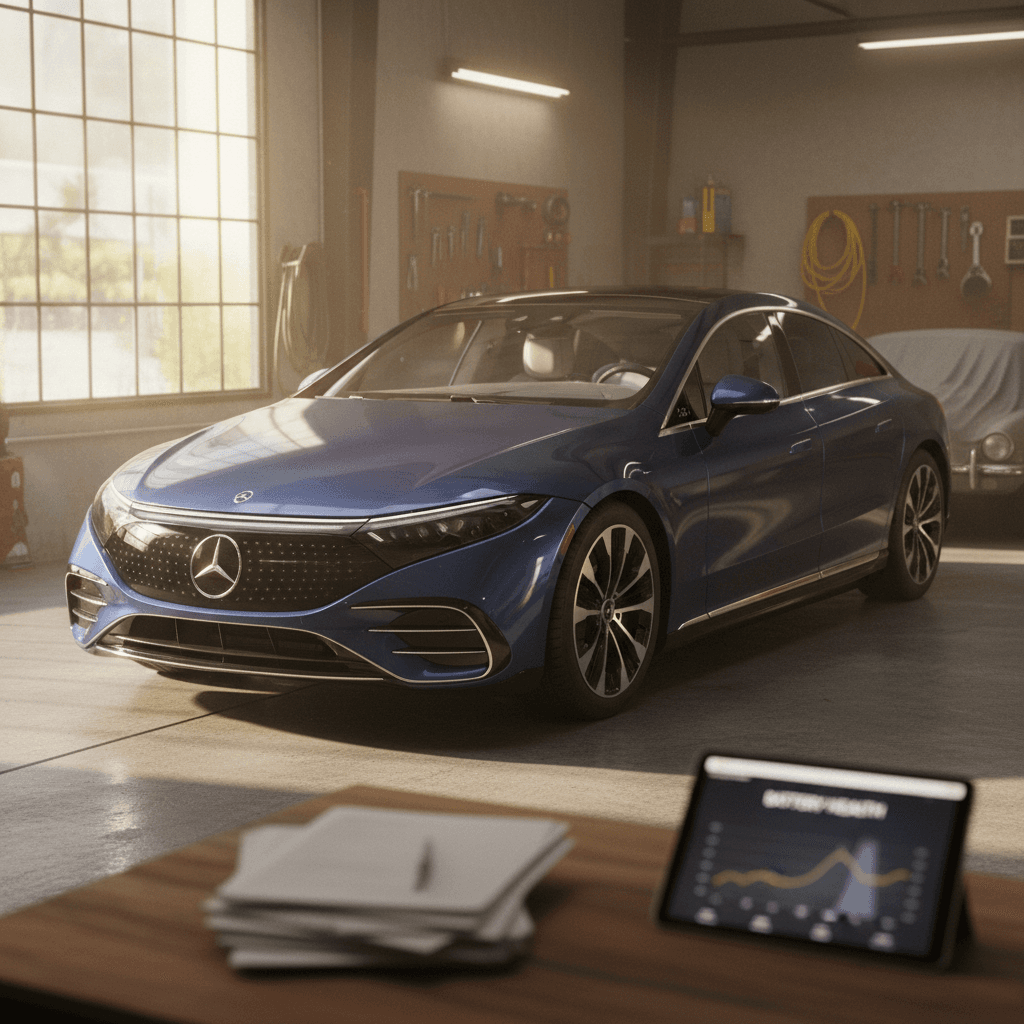
If you’re looking at a 2025 Mercedes EQS on the used market, you’re probably seeing eye‑watering depreciation and wondering if it’s a stealth bargain or a trap. This review looks at the EQS specifically through a used‑buyer lens: what changed for 2025, how it actually drives, how the battery and range hold up, and what you should demand before wiring five figures for a used luxury EV.
Used‑first perspective
Who this 2025 Mercedes EQS used review is for
Three types of shoppers considering a used EQS
If you see yourself in one of these, read on.
S‑Class refugee
You love a traditional Mercedes flagship and want S‑Class comfort without the gas bill. The EQS promises similar isolation and tech in a sleeker, electric package.
First luxury EV
You’re cross‑shopping Tesla Model S, Lucid Air, BMW i7, or EQS and care more about quiet comfort than track times. A used EQS looks like a discount ticket into that world.
Value hunter
You’ve noticed EQS models shedding tens of thousands of dollars in a few years and are asking, “Is this the best arbitrage play in luxury EVs, or is the market trying to tell me something?”
If any of those sound familiar, the rest of this review will help you separate the genuine strengths of a used 2025 EQS from the compromises that explain its dramatic price drops.
2025 EQS: what’s new and why it matters if you buy used
The 2025 Mercedes EQS sedan doesn’t look revolutionary on paper, but its updates are unusually relevant for someone planning to own one outside the warranty sweet spot. Mercedes bumps the battery from roughly 108 kWh to about 118 kWh usable, gives the car a more traditional grille treatment, tweaks the brake feel, and leans harder into rear‑seat comfort.
Key 2025 EQS updates that affect a used buyer
Why the bigger battery matters used
Cosmetic changes are subjective, but the more upright grille and added chrome move the EQS a bit closer to the visual language S‑Class buyers expect. That can matter in resale: early EQS buyers who hated the “one‑bow jellybean” look were vocal, and the 2025 facelift is at least a partial response to that feedback.
Driving experience: quiet speed with some quirks
Main EQS powertrains you’ll see used
- EQS 450+: Single‑motor, rear‑wheel drive. Smooth, efficient, and the range champ. Adequate power rather than thrilling.
- EQS 450 4MATIC: Dual‑motor all‑wheel drive. Better traction in bad weather, slight efficiency hit.
- EQS 580 4MATIC: Dual‑motor performance tune. Rapid in a straight line, still tuned for comfort rather than canyon carving.
- AMG EQS: Serious power and more aggressive damping, but with an ownership cost curve (tires, brakes, insurance) to match.
On‑road character
- Strengths: Extremely quiet, soft‑riding, and isolating; rear‑axle steering makes this big car feel smaller in parking lots.
- Weaknesses: Steering feel is light and detached, and even AMG versions don’t feel as playful as a Taycan or a Model S Plaid.
- Brake feel: 2025 software revisions aim to smooth the blend between regen and friction braking, addressing a common complaint on early cars.
Wheel and tire trap
If you want a serene long‑distance EV that shrugs off bad pavement and shelters passengers from the world outside, a used EQS plays that role extremely well. If you want a hyper‑engaging driver’s car, you’re better off in something like a Porsche Taycan, or accepting that the EQS is a luxury lounge on wheels first and an EV performance statement second.
Range, charging, and battery health on a used EQS
Range is the foundation of any used‑EV decision. Official 2024 EQS ratings ran roughly 277–352 miles depending on trim and wheels; the 2025 pack increase nudges those numbers upward slightly, but the more important story is what happens after a few years of real‑world use.
What to expect from a used 2025 EQS in real use
Approximate real‑world expectations for a healthy EQS battery, assuming moderate climates and mixed driving.
| Scenario | EQS 450+ (RWD) | EQS 450 4MATIC / 580 | Notes |
|---|---|---|---|
| Highway 75 mph | ~260–290 mi | ~230–260 mi | Big aero‑optimized body helps, but high speed and big wheels still hurt range. |
| Mixed commuting | ~300–330 mi | ~260–300 mi | City and suburban driving let regen work in your favor. |
| Cold climate winter | 20–30% less | 20–30% less | Expect more reduction if you do short trips with lots of cabin pre‑heating. |
| Fast‑charge peak | 170–200 kW (brief) | 170–200 kW (brief) | Like most big‑pack EVs, peak is short; average charge rate matters more. |
These are directional, not promises, your results will vary with climate, driving speed, and wheels/tires.
Don’t buy blind on battery health
Battery and charging checks for a used EQS
1. Verify remaining battery warranty
Most EQS packs carry around <strong>8 years / 100,000 miles</strong> of coverage from original in‑service date. Get that date from the build sheet or service records and calculate exactly how much runway is left.
2. Look beyond the dashboard SOH
The in‑car range estimate and state‑of‑health number (if visible) are only part of the story. A third‑party diagnostic such as the <strong>Recharged Score battery health test</strong> uses deeper data and real‑world charge behavior to quantify pack condition.
3. Ask about fast‑charging patterns
Hours spent at 150–200 kW don’t automatically kill a pack, but a car that lived on DC fast charging 100% of the time is a different risk profile than one mostly charged at home.
4. Test a full DC charge session
If possible, watch it charge from a low state of charge on a high‑power DC charger. You’re looking for <strong>stable charging power</strong>, reasonable taper behavior, and no repeated session dropouts or heat‑related throttling.
5. Inspect the charge ports
Check for damage, looseness, or evidence of repeated misalignment. Several owners have reported <strong>charge port hardware issues</strong> that required warranty repairs; you don’t want to inherit one that’s on the edge of failing.
The good news: there’s no widespread pattern of catastrophic EQS battery failures in the U.S. market as of early 2026. The unknown is long‑term degradation beyond the warranty window, which is precisely why independent battery‑health data is so valuable on a used example.
Depreciation: why used EQS prices are so low
By 2025, the Mercedes EQS had become a case study in how quickly early luxury EVs can shed value. In U.S. data, 2023 EQS sedans that often stickered around $100,000 were trading in the low‑to‑mid‑$50,000s by 2025, with some higher‑mileage 2022 cars dipping under $50,000. Market‑wide averages for used EQS listings cluster near the low‑$50k range, while five‑year cost‑to‑own modeling suggests roughly $60,000 in depreciation over that period for a new 2025 EQS.
What depreciation looks like on an EQS
Why the EQS fell so hard in value
For a used buyer, this is precisely where things get interesting. The EQS is, in many ways, a fully realized electric S‑Class alternative that the market has already punished for you. If you ignore short‑term bragging rights about current‑year tech and focus on the driving and comfort experience, you can buy a staggering amount of car for the money.
Reliability and ownership experience
Owner feedback on the EQS is mixed but trending better than the internet’s loudest complaints suggest. You’ll find forum posts from people pursuing buybacks and calling it their last Mercedes, but you’ll also see owners renewing EQS leases or buying a second one because they like the experience that much.
Common EQS ownership themes from early adopters
Patterns that matter when you’re buying used.
1. Mostly solid drivetrains
The core electric bits, motors and inverters, aren’t generating systemic failure patterns in public data. Most serious headaches come from software, electronics, or hardware peripheral to the battery, like charge ports or sensors.
2. Software and UX frustrations
Complaints cluster around the MBUX infotainment system: occasional lag, connectivity issues, and quirks with driver‑assist features. These are fixable annoyances rather than existential threats, but they matter more in a car that leans so heavily on screens.
3. Extended warranty economics
Mercedes EQ extended warranties are expensive, often several thousand dollars for just a few extra years. The math gets especially tricky on high‑trim EQS models with complex hardware like air suspension, rear steering, and the Hyperscreen.
Watch for branded‑title buybacks
As with any first‑generation flagship on a new platform, the EQS is not going to match a Toyota in predicted reliability. What you’re betting on is that by the time it reaches you as a used car, the big bugs have been worked out under the previous owner’s warranty, and that you’re buying from someone who didn’t ignore early warning signs.
2025 Mercedes EQS used vs new – and vs rivals
Used EQS vs new EQS vs key rivals
High‑level comparison for a typical 2025 purchase decision in the U.S.
| Model | Typical transaction price | Key strengths | Key watch‑outs |
|---|---|---|---|
| Used 2023–2025 EQS | ≈$50k–$80k | Huge value vs original MSRP; quiet comfort; big range; rich cabin. | Complex tech; rapid older‑EV depreciation; pricey repairs out of warranty. |
| New 2025 EQS | ≈$100k+ | Latest software and options; full factory warranty; larger battery. | Steep first‑owner depreciation; not a huge leap over a carefully chosen used car. |
| Used Tesla Model S (similar price) | ≈$45k–$75k | Denser fast‑charging network; quicker, sportier feel; stronger brand pull in EV space. | Interior and ride quality trail EQS; build consistency varies; older cars lose some features. |
| Used Lucid Air | ≈$50k–$80k | Exceptional range and efficiency; very quick; airy cabin. | Startup risk perception; service access depends heavily on location. |
| Used BMW i7 / EQE / S‑Class PHEV | ≈$50k–$90k | More traditional luxury sedan shape and feel; strong brand familiarity. | Shorter electric‑only range on PHEVs; similar or worse depreciation on some trims. |
Assumes late‑2025 shopping, with actual prices varying by trim and incentives.
When a used EQS makes the most sense
How to shop a used 2025 EQS: checklist
Used EQS shopping checklist
1. Decide where you are on the risk spectrum
A lightly used, still‑under‑full‑warranty 2025 EQS costs more but lets Mercedes eat more of the risk. An older or higher‑mileage car is cheaper but shifts more unknowns onto you. Be honest about how much financial and downtime risk you’re willing to tolerate.
2. Get a deep battery and charging report
Ask for a <strong>battery health diagnostic</strong> that goes beyond dashboard guesses. At Recharged, every EQS listing includes a <strong>Recharged Score battery report</strong> that quantifies pack health, DC fast‑charging history, and projected range so you’re not guessing.
3. Inspect wheels, tires, and brakes
Oversized wheels and sticky tires look great in photos and eat budgets in the real world. Price out replacement tires and brake components for the exact wheel size you’re buying, and factor that into your total cost of ownership.
4. Test the full tech stack
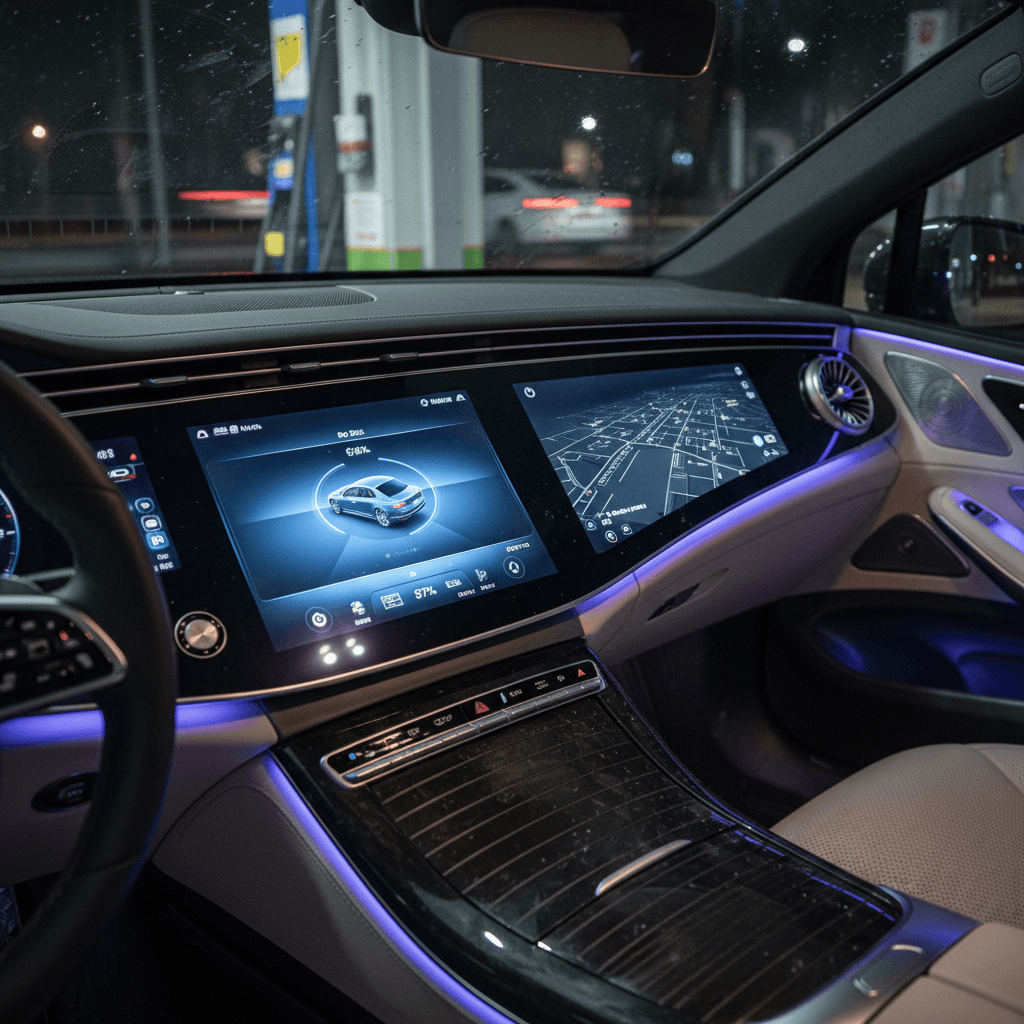
Spend time with the <strong>Hyperscreen, driver‑assist systems, and all four doors’ electronics</strong>. Confirm over‑the‑air update history, navigation, smartphone integration, surround‑view cameras, and parking features all behave as expected.
5. Pull service history and recall status
Ask for a dealer printout showing completed services, technical service bulletins, and recall work. You want to see evidence that the previous owner didn’t ignore warnings or stretch service intervals.
6. Model your exit plan
If you know you’ll sell again in 3–4 years, be realistic: the EQS is unlikely to transform into a resale champion. Buying at already written‑down prices helps, but you should still assume <strong>above‑average further depreciation</strong> vs a mass‑market EV.
How Recharged fits into a used EQS purchase
The challenge with buying a used EQS isn’t figuring out whether it’s a nice car, it is. The challenge is information asymmetry: you don’t see how the previous owner charged it, which software gremlins they lived with, or how quickly the pack is aging in the real world. That’s exactly the gap Recharged was built to close.
What Recharged brings to a used EQS deal
Beyond glossy photos and a Carfax.
Recharged Score battery diagnostics
Every EQS sold through Recharged includes a Recharged Score Report with verified battery health. You see quantified degradation, charge‑rate behavior, and range projections, not just a guess from the dashboard guesstimator.
Transparent pricing and financing
Recharged benchmarks EQS listings against real‑time EV market data so you see whether a car is truly a value or just feels cheap compared with its original MSRP. You can pre‑qualify for financing online with no impact on your credit score.
Nationwide delivery and trade‑in
You can complete the whole process digitally, including trade‑in or instant offer for your current vehicle and nationwide delivery to your driveway. If you’re near Richmond, VA, you can also visit the Recharged Experience Center to see vehicles in person.
Ready to find your next EV?
Browse VehiclesLeverage expert guidance
2025 Mercedes EQS used FAQ
Frequently asked questions about buying a used 2025 EQS
Bottom line: is a used 2025 Mercedes EQS worth it?
If you strip away the noise, the 2025 Mercedes EQS is exactly what you’d expect from Mercedes’ first all‑electric flagship: deeply quiet, unapologetically comfortable, and heavy on tech. The market’s verdict has been harsh, but mostly on the people who bought them new. As a used buyer, you inherit the comfort and capability at a fraction of the original price, as long as you don’t inherit hidden battery or reliability baggage along with it.
If you want an EV that corners like a sports sedan, look elsewhere. But if your priorities are serenity, range, and a cabin that still feels cutting‑edge in 2026, a carefully vetted used EQS is one of the more interesting arbitrage opportunities in luxury cars right now. Pair it with transparent battery diagnostics, like the Recharged Score on every EQS Recharged sells, and you turn a risky science project into a calculated, and often very compelling, bet.