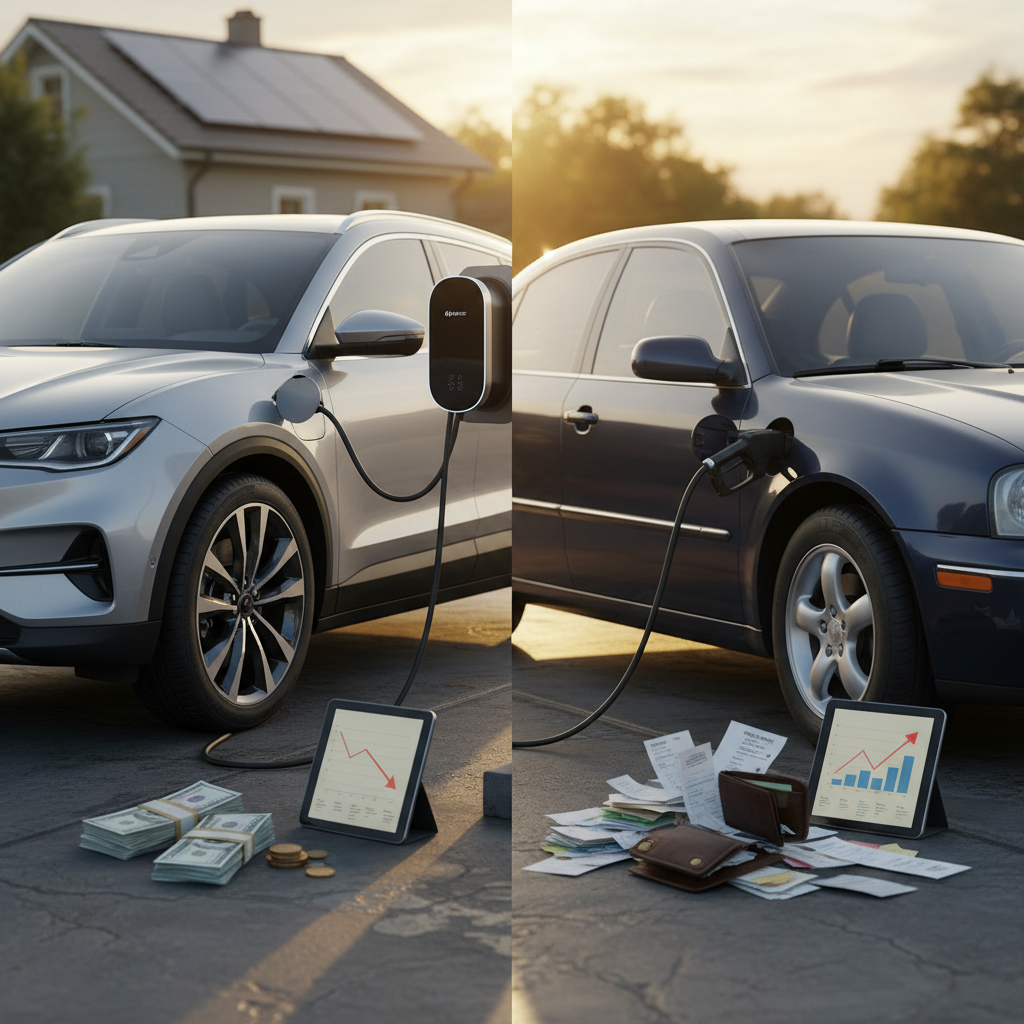
If you’ve heard arguments on both sides, it’s natural to wonder: are electric cars actually better for the environment, or are we just trading one set of problems for another? The honest answer is nuanced, but the big picture is clear, especially in the United States in 2026.
The big-picture takeaway
Short answer: are electric cars actually better for the environment?
- Over their full lifecycle (manufacturing, driving, and end-of-life), EVs almost always emit less greenhouse gas than similar gasoline cars when driven typical U.S. mileages.
- Recent analyses for the U.S. and Europe consistently find roughly 50–70% lower lifetime climate impact for an average-size EV versus a comparable gas car, depending on local electricity and driving habits.
- EVs do start with a “carbon debt” from battery manufacturing, but they usually erase that extra impact within a couple of years of normal driving. After that, they just keep widening the gap.
- EVs are not impact-free. Mining, manufacturing, and electricity generation all have real environmental costs, and in a few specific situations a very efficient hybrid can rival or beat a large, heavy EV.
So yes, if you’re comparing reasonably similar vehicles and plan to keep the car for a normal ownership period, electric cars are actually better for the environment in most of the U.S. The details below explain why, and when the answer is more complicated.
How electric and gasoline cars pollute in different ways
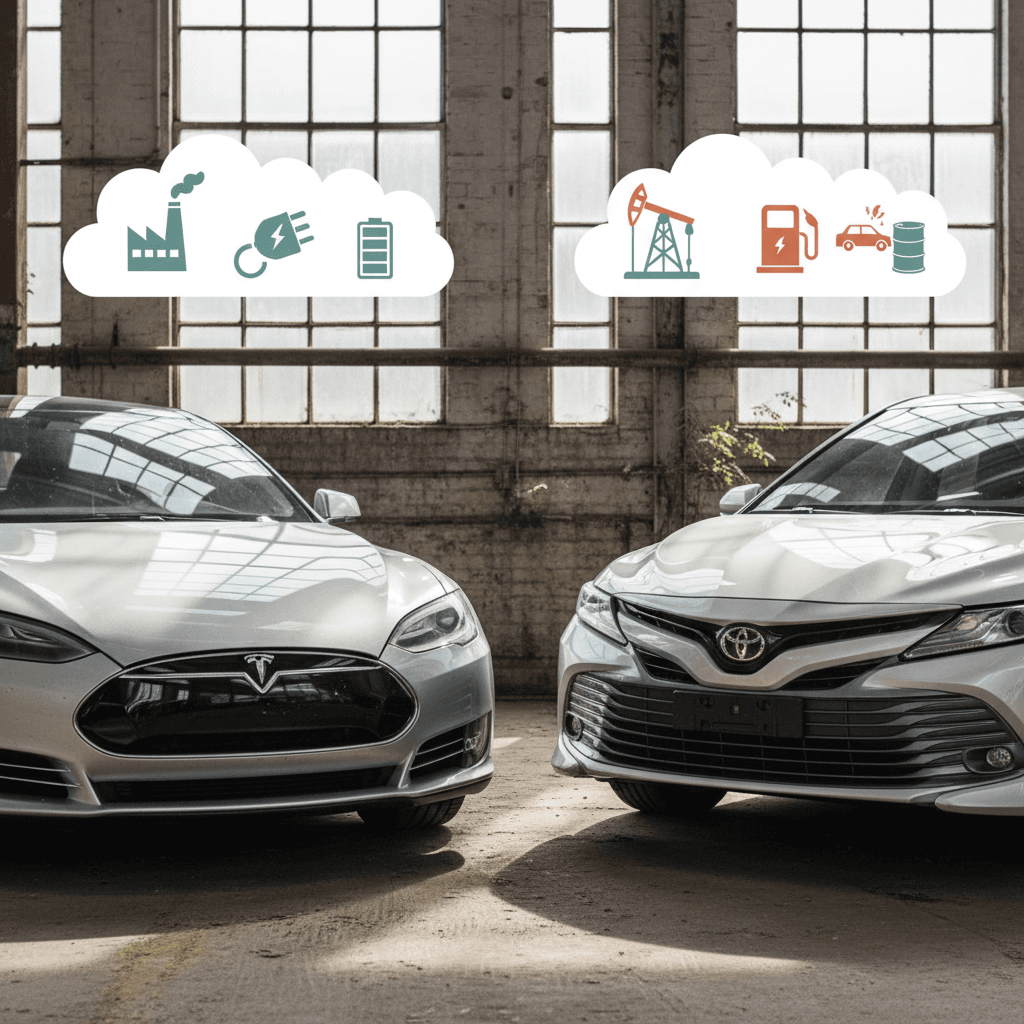
To understand whether EVs are better, you have to compare apples to apples: not just tailpipes, but everything from raw materials to scrappage. Experts call this a lifecycle assessment.
Lifecycle pollution: EV vs. gasoline
Both types of vehicles pollute, just at different stages and places
Electric vehicle (EV)
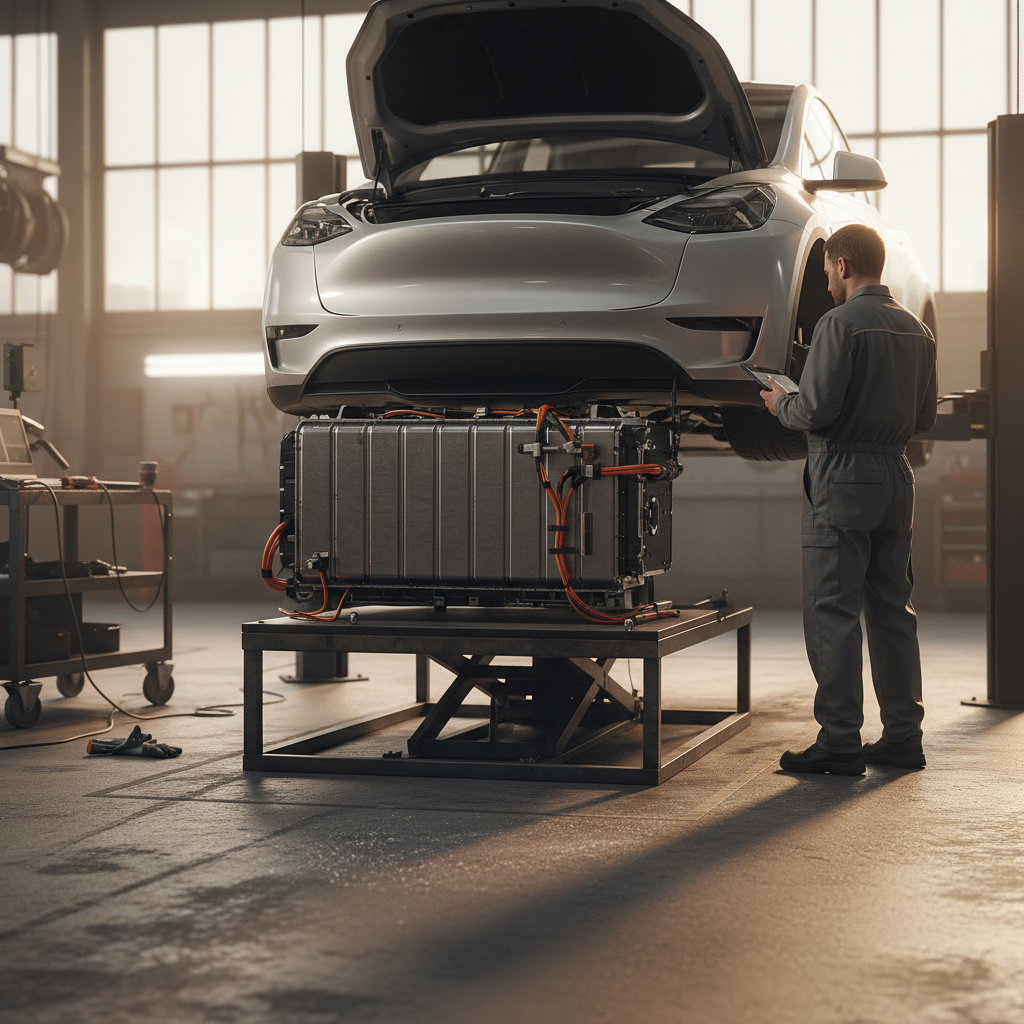
- Upfront: Higher emissions to build, mainly from battery cell production and materials like lithium, nickel, and graphite.
- Use phase: No tailpipe. Emissions come from power plants that generate electricity.
- End of life: Potential for recycling and second-life use of batteries, with growing infrastructure.
Gasoline vehicle
- Upfront: Lower manufacturing emissions because engines and small fuel tanks are less energy-intensive than large batteries.
- Use phase: High, ongoing emissions from burning gasoline plus emissions from oil extraction, refining, and fuel transport.
- End of life: Mature recycling for metals, but fuel burned during life is gone forever.
From a climate perspective, the use phase dominates. Burning gasoline releases CO₂ and other pollutants every mile you drive. An EV’s electricity emissions depend on your grid, but the car itself doesn’t get dirtier as it ages. That’s why most modern studies show EVs pulling ahead over time, often by a wide margin.
The “dirty start”: manufacturing and battery production
One of the strongest criticisms of EVs is that they’re “dirtier to build,” especially the battery. That criticism is valid, up front.
What studies generally find about manufacturing impact
Mining has real local impacts
The key question is whether that higher embodied carbon at the start is offset by cleaner driving later. For modern EVs in the U.S., the answer is generally yes, and fairly quickly.
How much the electricity mix (and where you live) matters
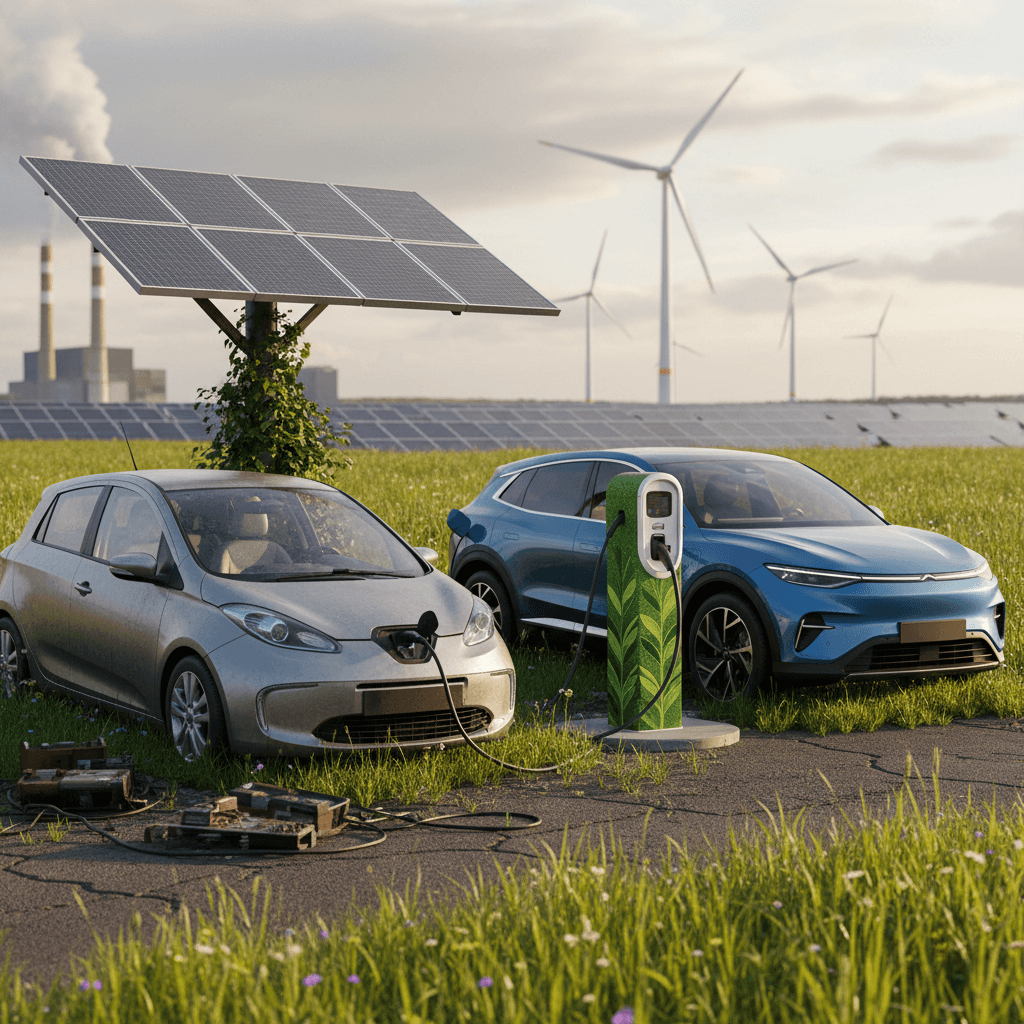
Electric cars are only as clean as the electricity that charges them. In a place dominated by coal, an EV’s climate benefits are smaller than where wind, solar, nuclear, and efficient gas plants dominate. The U.S. grid has been getting cleaner for years, and that trend makes EVs look better every model year.
Cleaner-grid regions
- Parts of the West Coast, Northeast, and upper Midwest now use large shares of renewables, nuclear, or hydro.
- In these regions, driving a typical EV can be equivalent to driving a gas car that gets 60–100+ mpg from a CO₂ standpoint.
- As more solar and wind come online, EVs on these grids will get cleaner automatically over the car’s life.
Coal-heavy or fossil-heavy grids
- In areas where coal still supplies a big share of electricity, an EV’s emissions advantage shrinks, but usually doesn’t disappear.
- Even there, EVs often beat an average gas car, but may not beat the most efficient hybrid yet.
- Grid decarbonization policies mean an EV bought today should see its per-mile emissions fall over 10–15 years, while a gas car’s emissions per mile stay roughly constant.
A practical way to check your own impact
When does an electric car “pay back” its extra emissions?
Because EVs start life with higher factory emissions, most studies talk about a break-even mileage, the point where the EV has emitted less total CO₂ than the comparable gas car. After that, every mile you drive is clear climate “profit” in favor of the EV.
Typical EV vs. gas break-even ranges
Illustrative ranges based on modern lifecycle studies; actual numbers vary by model, driving, and grid.
| Scenario | Example comparison | Approximate break-even mileage | Approximate years of typical driving* |
|---|---|---|---|
| Average U.S. driver on average grid | Compact EV vs. compact gas sedan | 10,000–25,000 miles | 1–3 years |
| Cleaner grid (e.g., renewables-heavy states) | EV vs. similar gas crossover | 5,000–15,000 miles | < 2 years |
| Coal-heavy or fossil-heavy grid | EV vs. efficient gas sedan | 20,000–40,000+ miles | 2–5 years |
| Large luxury EV vs. top-tier hybrid | Big battery EV vs. Prius-like hybrid | Sometimes close or hybrid can win | Depends heavily on grid & miles |
EVs with larger batteries or dirtier electricity take longer to break even, but usually still do so within the first few years of normal use.
About those ranges…
If you’re a typical U.S. driver doing around 12,000 miles per year and plan to keep a car for 8–12 years, a reasonably sized EV on today’s grid is very likely to come out well ahead of a similar gas car over its lifetime. If you hardly drive at all, the climate benefits are smaller and a hybrid can sometimes make more sense.
Beyond CO₂: other environmental pros and cons of EVs
Climate isn’t the only environmental lens. Air quality, noise, local ecosystems, and resource use all matter when you ask whether an electric car is “better for the environment.”
Key non-CO₂ environmental tradeoffs
Where EVs shine and where the tradeoffs are real
Urban air quality
EVs have zero tailpipe emissions, which can sharply cut local nitrogen oxides and particulates on busy streets. That’s a big win for city air quality and public health, especially for children and older adults.
Noise pollution
At low speeds, EVs are typically quieter than gas cars, reducing noise pollution in neighborhoods, parking garages, and city centers. At highway speeds, tire and wind noise dominate for both.
Land & water impacts
Battery material mining can affect water supplies, forests, and local ecosystems. Oil drilling, pipelines, and spills carry their own, often larger, risks. Neither fuel nor batteries are impact-free; they just concentrate impact in different places.
Recycling & second life
EV batteries can increasingly be reused in stationary storage and then recycled for valuable metals. This reduces the need for new mining over time and cuts the footprint of the next generation of batteries.
Upstream fuel emissions
Gasoline brings emissions from oil wells, tankers, refineries, and fuel trucks long before it reaches your tank. EVs trade those for emissions at power plants, which are far easier to monitor and clean up.
Equity & siting
Power plants, refineries, and mines often sit near overburdened communities. A thoughtful EV transition pairs electrification with stronger environmental safeguards and cleaner power so the benefits are shared fairly.
Why used EVs can be the greenest choice
From a lifecycle perspective, the greenest car is almost always the one that already exists. That’s where used EVs become especially interesting.
How a used EV improves the math
If the first owner has already driven enough miles to “pay back” the battery’s carbon debt, your miles are effectively riding on the cleaner side of the curve from day one. That’s one reason the used EV market has become a sweet spot for environmentally conscious shoppers who also want to save money compared with a new car.
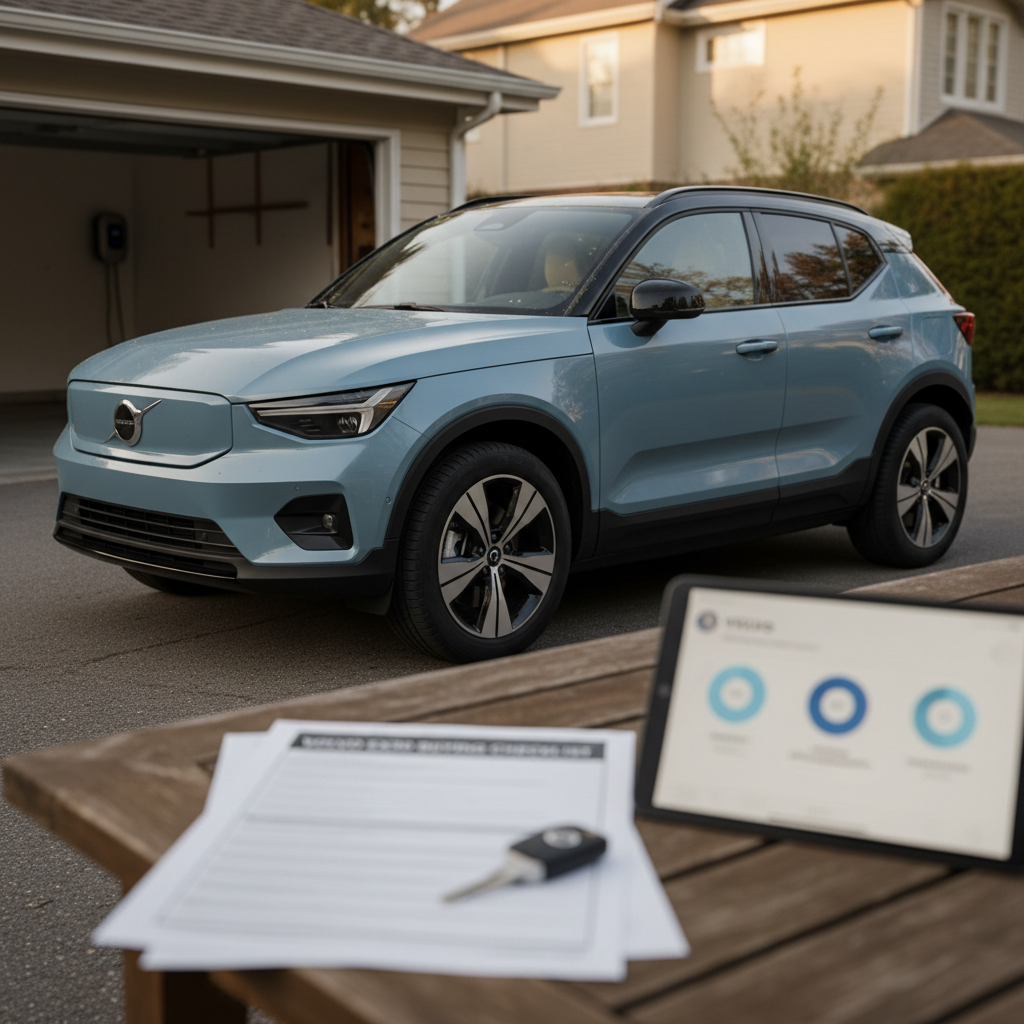
The catch is battery health. You want a used EV that still has solid range for your daily life so you’re not tempted to replace it early. That’s where tools like the Recharged Score battery health report come in, they give you an objective look at real-world battery condition, estimated remaining range, and fair pricing so you can make a smarter, greener decision.
7 ways to make your EV as clean as possible
Practical steps to shrink your EV’s footprint
1. Right-size the car and battery
Avoid buying more vehicle than you need. A modest hatchback or compact crossover with a mid-size battery generally has <strong>lower lifecycle emissions</strong> than a huge luxury SUV with a massive pack.
2. Charge when the grid is cleanest
If your utility offers time-of-use rates or shows grid mix by hour, try to charge during off-peak times when <strong>renewables are strongest</strong> or demand is lower. Smart chargers and apps can automate this.
3. Keep your EV longer
The longer you keep a car, the more you spread out its manufacturing emissions. Holding onto an EV for 10–12 years instead of swapping every 3–4 years is one of the most climate-friendly choices you can make.
4. Drive efficiently
Gentle acceleration, moderate speeds, and proper tire pressure can noticeably reduce your kWh per mile. That means <strong>fewer power plant emissions</strong> (and lower electricity bills) for the same trips.
5. Pair your EV with home solar if possible
If you own a home and can install rooftop solar, pairing it with your EV is one of the most direct ways to cut your driving emissions, often to a fraction of an efficient gas car.
6. Use public transit and biking when practical
An EV is still a 3,000–6,000-pound vehicle. Whenever it’s realistic to walk, bike, or take transit, you’re making an even bigger environmental dent than driving any car, even a very clean one.
7. Choose responsible sellers and service
Look for retailers and marketplaces that <strong>prioritize transparency around battery health, sourcing, and end-of-life options</strong>. At Recharged, for example, every used EV includes a battery health report and expert guidance so you can choose confidently.
When a hybrid or efficient gas car might be better
Electric vehicles aren’t automatically the best environmental choice for every driver on the planet. In a few specific cases, an efficient hybrid or very efficient gas car can be competitive, especially until local grids get cleaner.
- Extremely low-mileage drivers: If you drive only a few thousand miles per year and plan to keep the car a short time, the EV’s manufacturing “carbon debt” may not fully pay back versus a top-tier hybrid.
- Regions with very dirty grids and little near-term improvement: In places still dominated by high-emission coal with weak policies to clean up the grid, an efficient hybrid can be close to or even better than a large, long-range EV on a pure CO₂ basis, at least for now.
- Oversized EVs vs. compact hybrids: Swapping a small, efficient hybrid sedan for a very large electric SUV may not be a net environmental win, especially if most of your driving is short trips in the city.
- Limited charging access: If reliable charging is so scarce that you’d need to keep a second gas car around “just in case,” the combined footprint of two vehicles may outweigh the benefit of going partially electric.
Don’t confuse “not perfect” with “not better”
FAQ: Are electric cars really better for the environment?
Common questions about EVs and the environment
Bottom line: should you feel good about going electric?
When you pull all the data together, the answer is clear: for most drivers in the U.S., electric cars are actually better for the environment than gasoline cars, especially over a normal ownership period. They start with a higher manufacturing footprint, but they make that up and then some as you rack up miles, particularly if you choose a reasonably sized vehicle and charge from a grid that’s getting cleaner every year.
That doesn’t mean EVs are perfect, or that mining and manufacturing impacts can be ignored. It does mean that if you’re ready to go electric, you’re generally moving in the right direction for both the climate and local air quality. And if you want to maximize your impact, a well-chosen used EV with a healthy battery, verified by transparent diagnostics like the Recharged Score, can be one of the most environmentally responsible vehicle choices you can make today.
The smartest move is to treat your next car as part of a bigger picture: how much you drive, how long you’ll keep it, how clean your electricity is, and whether you can reuse a vehicle that already exists. Do that, and you’ll be doing more than just driving an electric car, you’ll be using it in a way that actually delivers the environmental benefits you care about.