If you’ve been wondering about the advantage of electric cars in 2025, you’re not alone. EVs now make up roughly one in ten new cars sold in the United States, and millions of drivers are figuring out whether the switch from gasoline is worth it for their budgets, their daily routines, and the planet. Let’s break down what you actually gain, and a few places where the advantages depend on how and where you drive.
Quick snapshot
Why electric cars are gaining ground
Electric cars are moving from niche to normal
The early days of EVs were all about tech enthusiasts and early adopters. That’s over. Today you can find electric SUVs, pickups, sedans, and crossovers from nearly every major automaker, and federal incentives are built right into the purchase process for many models. At the same time, more used EVs are entering the market, often at prices that undercut comparable gas cars once you factor in fuel and maintenance.
Think in years, not months
Financial advantages: lower running costs over time
The headline advantage of electric cars is simple: they’re cheaper to “fuel” per mile. Electricity is more price‑stable than gasoline, and EVs turn more of that energy into motion instead of heat.
Fuel cost advantage: electricity vs gasoline
What powering 15,000 miles per year can look like
Electric car
Most EVs average about 3–4 miles per kWh. With typical U.S. electricity prices around 13–17 cents/kWh, you’re paying roughly 3–5 cents per mile.
At 15,000 miles per year, that’s in the ballpark of $600–$700 annually for home charging, depending on your local rates and how much you use public fast charging.
Gasoline car
A common gas sedan getting ~30 mpg at about $3.20 per gallon ends up around 10–11 cents per mile.
Drive 15,000 miles a year and you’re looking at roughly $2,200–$2,300 in fuel costs, often about three times what a comparable EV driver spends on electricity.
Where the savings stack up
Upfront prices for new EVs are still often higher than for comparable gasoline models, though incentives narrow the gap. But when you add up electricity, maintenance, and tax credits over several years, many electric cars come out ahead on total cost of ownership, particularly if you drive more than 10,000–12,000 miles each year.
Typical 5‑year EV advantage
- Lower fuel costs: often 50–70% cheaper per mile.
- Less routine maintenance: no oil changes, fewer wear items.
- Tax credits: up to $7,500 for new and up to $4,000 for qualifying used EVs at the point of sale on eligible vehicles.
- Resale appeal: growing demand for used EVs in many markets.
Where gas still competes
- Sticker price: some gas models are still cheaper to buy new.
- Very low annual mileage: if you drive under ~6,000 miles per year, fuel savings matter less.
- High electricity rates: in a few regions, home charging savings are smaller.
- Heavy fast‑charging use: relying mostly on paid fast chargers can erode the fuel‑cost advantage.
Maintenance simplicity: fewer moving parts, fewer surprises
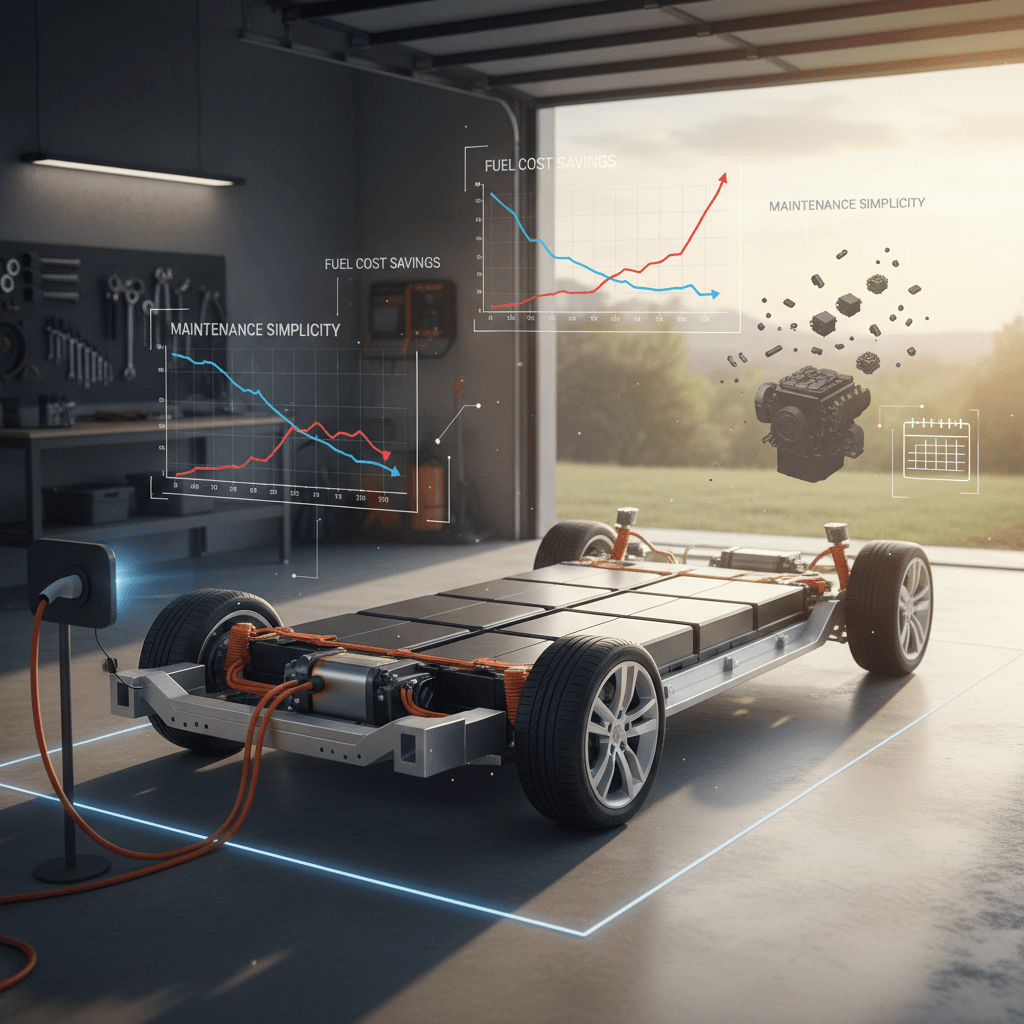
Pop the hood of a modern gas car and you’ll see belts, hoses, a maze of plumbing, and a hot, complicated engine. An EV powertrain looks almost empty by comparison. That’s not a gimmick, that simplicity is a core advantage of electric cars.
- No oil changes, no spark plugs, no exhaust system, and no catalytic converter to replace.
- Electric motors and single‑speed gearboxes have far fewer moving parts than multi‑gear automatic transmissions.
- Regenerative braking slows the car using the electric motor, meaning brake pads and rotors last longer.
- Fewer fluids to worry about, no gasoline, far less transmission or differential fluid service.
What maintenance still matters
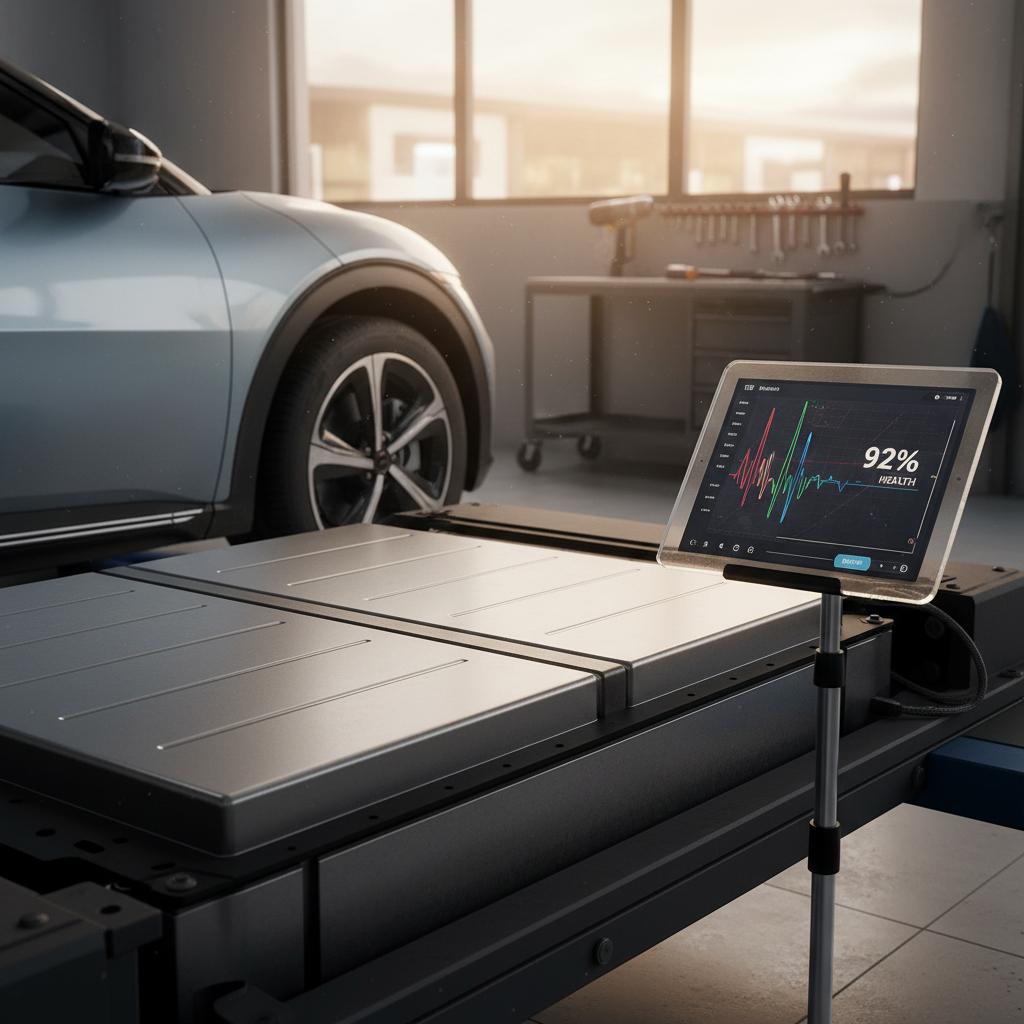
Those lower maintenance needs are especially attractive if you’re considering a used electric car. With a detailed battery health report, like the Recharged Score that comes with every vehicle on Recharged, you can understand how the pack has aged and avoid expensive surprises.
Performance advantages: quiet, instant, and surprisingly quick
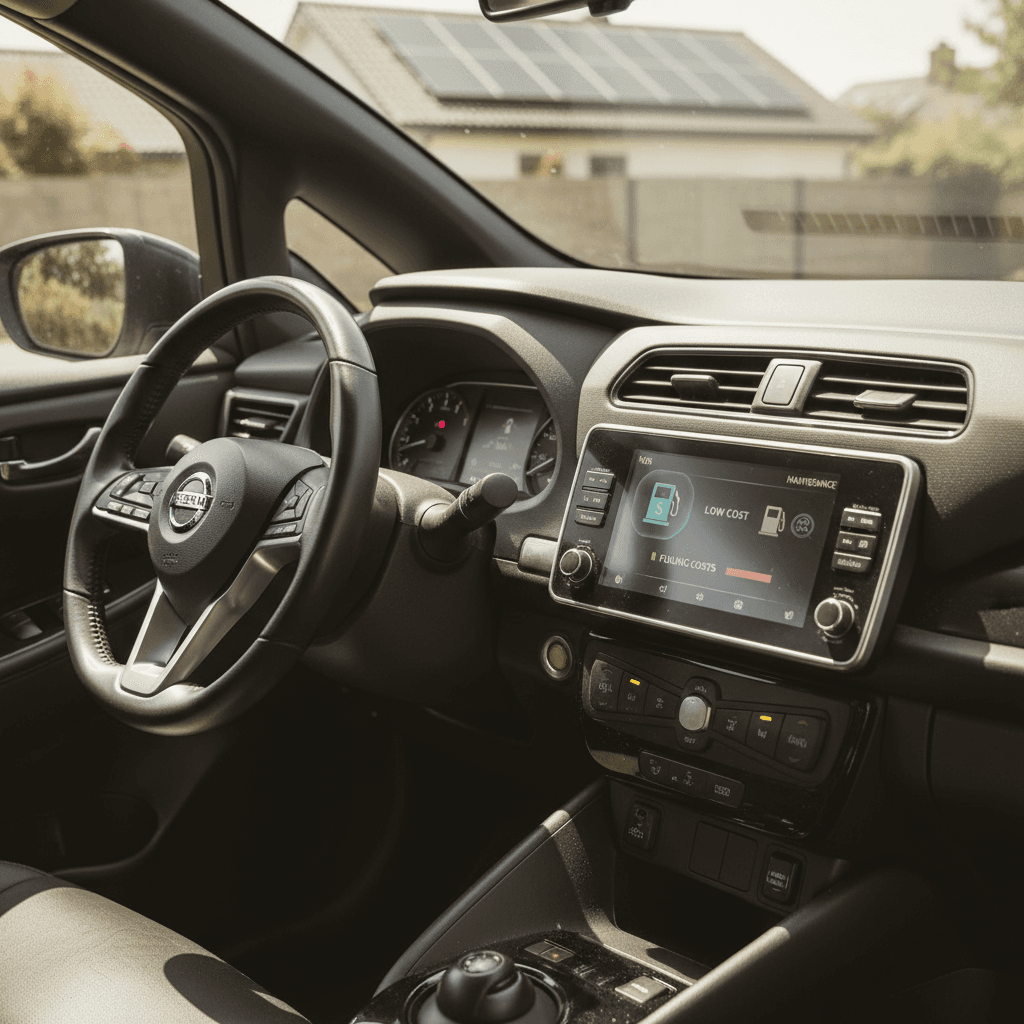
You don’t have to be a performance junkie to appreciate the way an EV drives. The electric motor’s party trick is instant torque: when you press the accelerator, the response is immediate. Even mainstream models feel quicker around town than their 0–60 mph numbers suggest.
How EV performance feels different from gas
Everyday benefits you notice in the first mile
Instant response
No gear changes, no lag. The car simply goes when you ask it to, which is especially helpful for merging, passing, and city traffic.
Quiet cabin
Without an engine rumbling, EVs are noticeably quieter. That reduces fatigue on long drives and makes conversations or podcasts easier to enjoy.
Smooth control
Many EVs offer one‑pedal driving, using regeneration to slow the car when you lift off the accelerator. It quickly becomes second nature.
Weight as both friend and foe
Comfort and convenience: a better daily drive
The next big advantage of electric cars shows up not on a spreadsheet but in your routine. Owning an EV changes how you “fuel” your car and how often you think about gas stations, because in normal use, you mostly don’t.
Everyday EV advantages you feel week after week
1. Home charging = full “tank” every morning
With a Level 2 charger at home or in your building, you simply plug in at night. You start most days with more range than you’ll use, without detouring to a gas station.
2. Less time spent on routine service
Skip oil changes and many common engine services. That’s fewer Saturday mornings in waiting rooms and more time doing literally anything else.
3. Better climate control from the driveway
You can pre‑heat or pre‑cool the cabin while plugged in, using an app. That means defrosted windows and a comfortable cabin before you ever put it in drive.
4. Quieter neighborhoods and parking lots
Low‑speed EV operation is nearly silent from inside, and quieter from outside as well. It’s a small but real quality‑of‑life improvement in dense areas.
5. Tech‑forward cabins
EVs tend to ship with the latest infotainment, driver‑assistance, and over‑the‑air updates. Your car can genuinely improve during ownership.
When convenience depends on charging access
Environmental advantages: cleaner air, less carbon
Another core advantage of electric cars is environmental. EVs produce zero tailpipe emissions, no CO₂, no nitrogen oxides, no soot, right where people live, work, and breathe. That matters for city air quality and for communities along busy roads.
Tailpipe emissions: none
Every mile in an EV is a mile without tailpipe pollution in your neighborhood. For city drivers and families with attached garages, that local air‑quality improvement is a big benefit.
Because most U.S. electricity still comes from a mix of sources, EVs do indirectly cause emissions at power plants, but even on a coal‑heavy grid, they’re typically cleaner over their lifetime than comparable gas cars.
Lifecycle carbon advantage
Building an EV, especially its battery, can generate more CO₂ than building a gas car. But over the life of the vehicle, the much lower emissions while driving usually make up the difference within a few years of typical use.
In regions with cleaner grids (solar, wind, hydro, nuclear), the climate advantage of electric cars grows even stronger over time.
Used EVs and sustainability
Tax credits and policy benefits: what helps lower the cost
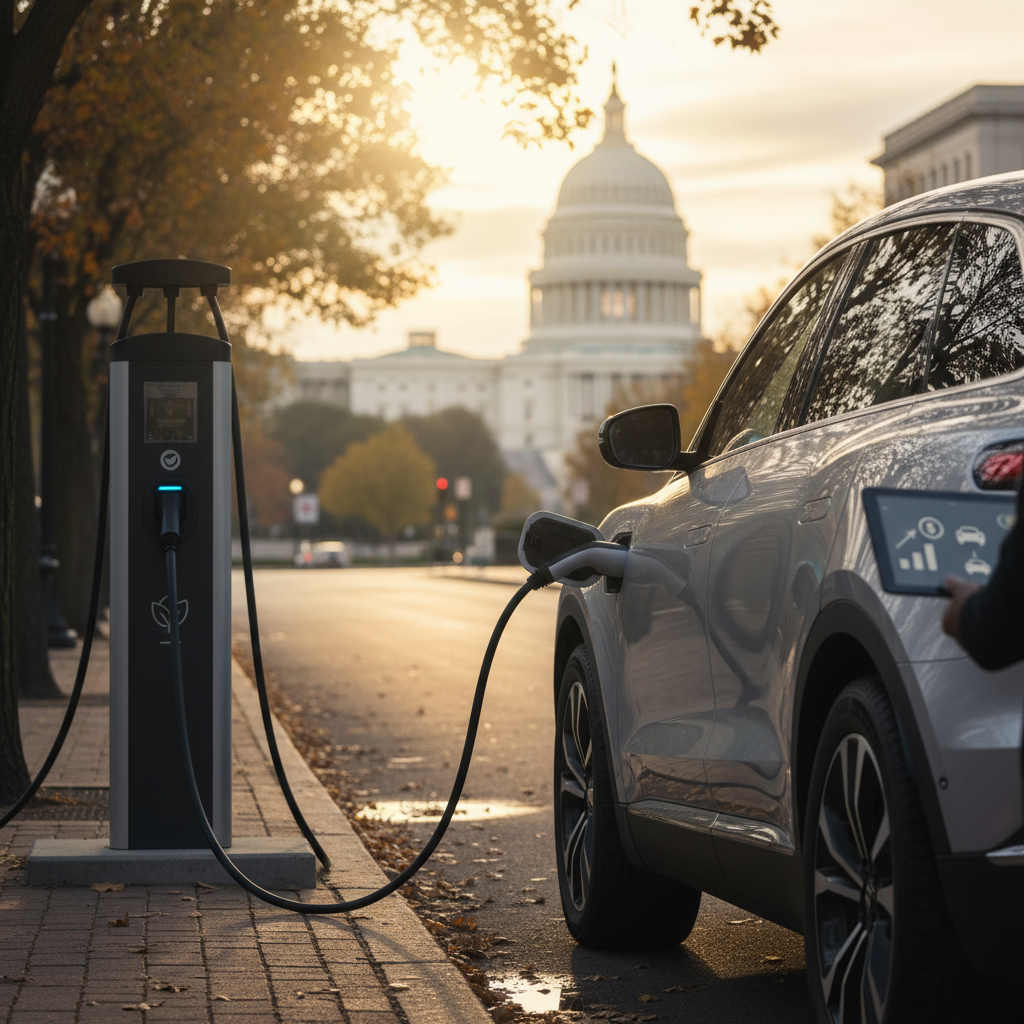
One underappreciated advantage of electric cars is how many financial incentives are baked into the system right now, though they can change as policies shift. As of 2025, many buyers in the U.S. can tap into federal and state benefits that meaningfully reduce the cost of going electric.
Common EV incentives that support the cost advantage
Exact eligibility depends on your income, the vehicle, and where you live, but these are the big buckets to look for.
| Incentive type | Typical value | Who it applies to | Key notes |
|---|---|---|---|
| Federal Clean Vehicle Credit (new) | Up to $7,500 | New EV buyers | Point‑of‑sale discount on qualifying models with price and income limits. |
| Federal Used Clean Vehicle Credit | Up to $4,000 | Used EV buyers | For eligible used EVs purchased from dealers, with price caps and income limits. |
| State rebates/credits | $500–$5,000+ | Varies by state | Some states add stackable rebates, tax credits, or reduced registration fees. |
| Utility incentives | $200–$1,000+ | Homeowners & renters | Many utilities offer credits or rebates for home Level 2 charger installation. |
| HOV lane and parking perks | Varies | Commuters in specific states | Some regions allow EVs to use carpool lanes or enjoy discounted parking. |
Always check current rules before you buy, programs can change from year to year.
Incentives can change
Advantages of buying a used EV
If you’re shopping value first, the used electric car market is where the advantages of EVs get especially interesting. Early depreciation can make 2‑ to 5‑year‑old EVs look like bargains next to new models, and you still get the low running costs and quiet drive.
Key advantages of used electric cars
Why the second owner often gets the sweet spot
Lower upfront price
EVs can depreciate quickly in the first few years, especially when new models with longer range appear. As a second owner, you let the first buyer absorb that initial hit.
Known battery health
Battery diagnostics have improved. With tools like the Recharged Score, you can see verified battery health before you buy, instead of guessing about range loss.
Possible used EV tax credit
Qualifying used EVs purchased from a dealer may be eligible for a federal credit at the point of sale, helping bring the effective cost down even further.
Already “debugged”
Earlier software issues or recalls are often resolved by the time a vehicle hits the used market. You get over‑the‑air updates without paying new‑car pricing.
How Recharged helps
When an EV might not be the right “advantage” for you
No technology is a perfect fit for everyone. To really understand the advantage of electric cars, you also need to be honest about the edge cases where a gasoline or hybrid model might still serve you better today.
- You regularly tow heavy loads long distances with few charging options on your routes.
- You live in a region with very high electricity costs and limited off‑peak pricing, but relatively cheap gasoline.
- You can’t install home or workplace charging, and public chargers near you are scarce or unreliable.
- You drive many hundreds of miles in a day on a regular basis and can’t flex your schedule around charging stops.
- The specific EVs that fit your needs are far more expensive than comparable gas or hybrid options, even after incentives.
Don’t ignore your local charging reality
How to decide if the advantages of electric cars fit your life
By now you can see that the advantage of electric cars isn’t one thing, it’s a bundle of cost, comfort, performance, and environmental benefits that matter differently to different drivers. The right question isn’t “Are EVs better?” but “Are EVs better for me, right now?”
5‑step checklist: Do EV advantages work for you?
1. Calculate your real mileage
Look at the last year of driving (many insurance apps track this). If you’re in the 10,000–15,000‑mile range, the cost advantages of an EV can be significant.
2. Audit your charging options
Can you install a Level 2 charger at home or use one at work? If yes, you unlock the biggest convenience advantage. If not, research public chargers nearby and on your routes.
3. Compare total cost of ownership
Don’t just compare sticker prices. Add fuel, maintenance, and insurance over five years. Tools from automakers, third‑party sites, or your local utility can help.
4. Test‑drive an EV and a gas alternative
Experience the quiet cabin, instant torque, and one‑pedal driving. Then drive a comparable gas or hybrid model. Let your own senses weigh the advantages.
5. Explore used EV options
If new EV prices feel steep, look at <a href="/buy">used electric cars</a>. Platforms like Recharged combine battery health reports, financing, and trade‑in options so you can see the full picture before you commit.
Electric cars aren’t a science‑fiction future anymore, they’re just cars, with a clear set of advantages and a few important caveats. If the way you drive lines up with what EVs do best, the benefits can be compelling: lower running costs, fewer maintenance hassles, a calmer commute, and cleaner air. With more models on the road and a growing used market, you now have the flexibility to choose the electric advantage that fits your life, and your budget.