If you’re considering an Acura ZDX, you’re not just buying an all‑electric luxury SUV, you’re signing up for several years of payments, charging, insurance, and maintenance. Understanding the Acura ZDX long term ownership cost is the difference between a payment that feels comfortable and one that keeps you up at night.
Important context
Why the Acura ZDX’s long‑term costs matter
Luxury EVs like the ZDX typically carry higher sticker prices but lower running costs than comparable gas SUVs. Over 5–10 years, the money you spend (or save) gets spread across several buckets: depreciation, charging, insurance, maintenance and repairs, and any tax incentives you qualify for. Get a handle on each, and you’ll have a realistic picture of what this Acura will actually cost you to own.
- Depreciation: how quickly the ZDX loses value compared with rivals like the Tesla Model Y and BMW iX3‑class SUVs.
- Energy: what you’ll really pay to charge at home versus public DC fast charging.
- Insurance: how luxury‑EV premiums affect your monthly budget.
- Maintenance & repairs: what’s routine, what’s rare, and what’s covered under Acura’s warranties.
- Incentives: federal and state programs that can offset the purchase price, especially on earlier model‑year ZDXs.
Rule of thumb
Acura ZDX price, depreciation and resale value
When it launched for 2024, the Acura ZDX A‑Spec carried an MSRP in the low‑to‑mid‑$60,000s, with Type S models priced in the low‑to‑mid‑$70,000s before destination and options. Aggressive lease programs and incentives, at times effectively knocking five figures off the sticker, signaled that Acura and its dealers were willing to discount heavily to move inventory.
Discontinuation and depreciation
Depreciation snapshot for a luxury EV SUV
- The first owner will shoulder the biggest depreciation hit.
- Second owners (buying at 3–5 years old) can capture strong value if battery health remains high.
- Battery condition and available fast‑charging support will drive resale value more than cosmetic options.
Upside for used buyers
Electricity vs. gas: what you’ll spend to charge a ZDX
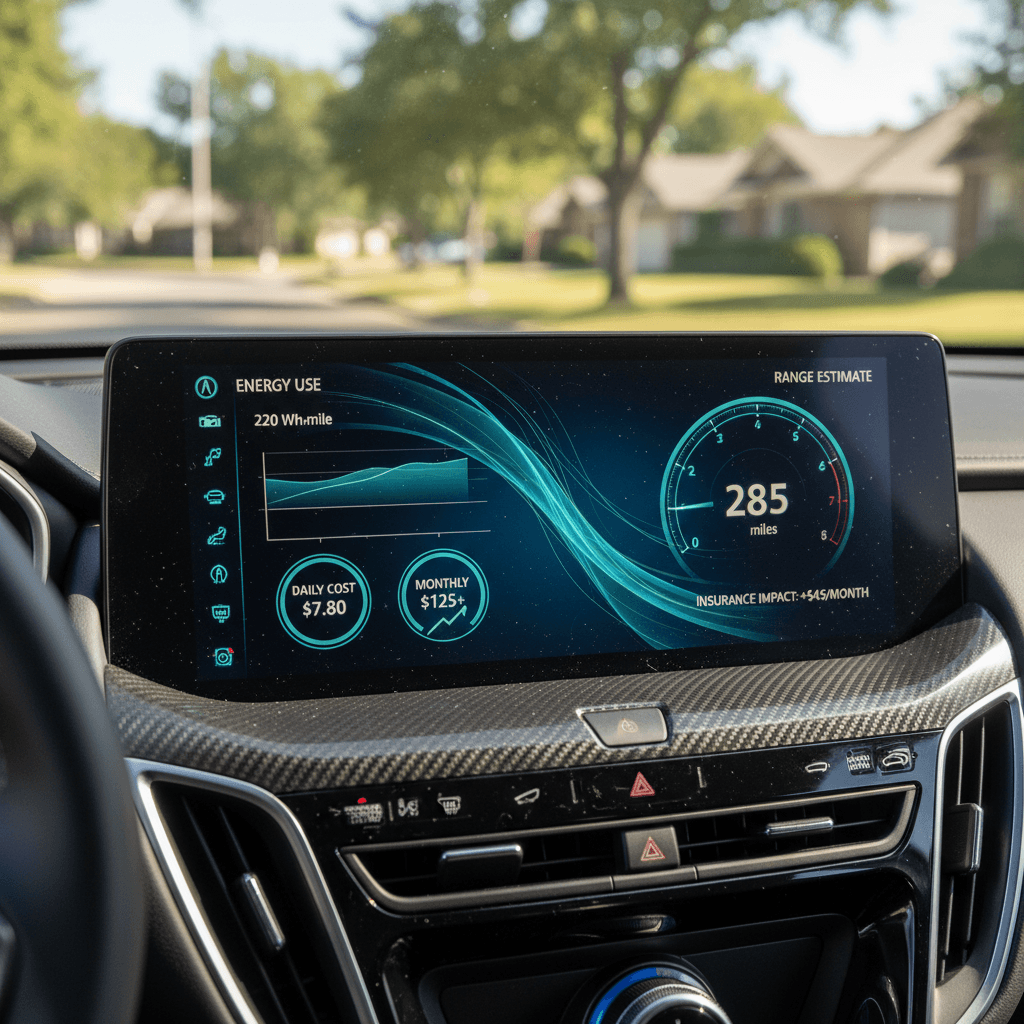
The ZDX’s EPA range is in the low‑300‑mile neighborhood for A‑Spec trims and high‑200s for Type S models, with efficiency around 2.7–3.1 miles per kWh depending on driving style and wheel/tire package. That’s on par with other midsize luxury EV SUVs.
Home charging (Level 2)
If you can charge at home, your ZDX becomes dramatically cheaper to run than a comparable gas SUV.
- Assume ~3.0 mi/kWh and $0.15/kWh U.S. residential average.
- That’s roughly $0.05 per mile.
- Drive 12,000 miles per year and you’ll spend about $600 per year on electricity.
At higher‑rate utilities ($0.25/kWh), you’re still around $1,000 per year, often less than you’d spend on fuel for a comparable gas Acura MDX.
Public DC fast charging
Rely heavily on DC fast charging, and your energy bill climbs quickly.
- At $0.40–$0.50 per kWh, energy cost can jump to $0.14–$0.17 per mile.
- At 12,000 miles per year, that’s roughly $1,700–$2,000 annually.
- Fast charging is great for road trips, but using it as your primary source of energy will erase much of your fuel savings.
The sweet spot is charging mostly at home and using fast chargers as needed on longer trips.
Compare to a gas SUV
Acura ZDX insurance costs
Insurance is one of the most overlooked pieces of the Acura ZDX long‑term ownership cost story. Luxury EVs are packed with expensive electronics and bodywork, and that shows up in premiums.
Estimated annual Acura ZDX insurance costs
Approximate full‑coverage annual premiums for a ZDX‑class EV in the U.S. Your rate will vary based on age, driving record, ZIP code, and coverage limits.
| Scenario | Estimated annual premium | Notes |
|---|---|---|
| Clean‑record driver, mid‑30s | $2,000–$2,600 | Typical range for a luxury Acura SUV; EV and new‑model factors may push toward the high end. |
| Younger driver or urban ZIP | $2,600–$3,400+ | Higher risk areas, more miles, or limited history can all raise premiums. |
| Older driver, suburban, low miles | $1,600–$2,100 | Lower‑risk profile with strong credit and multi‑policy discounts. |
These figures are directional, using Acura and luxury‑EV averages, not quotes for any specific driver.
Surveys of Acura insurance show many Acura models clustering between roughly $2,000 and $2,400 per year on average, with sportier or rarer trims going higher. Early estimates for ZDX‑class coverage fall toward the upper end of that range because it’s an all‑electric, high‑MSRP, relatively low‑volume vehicle.
How to keep ZDX insurance in check
Maintenance, repairs and battery coverage
One of the ZDX’s biggest advantages over a gas SUV is maintenance. There’s no engine oil, spark plugs, or timing belt, and far fewer moving parts overall. But you shouldn’t assume maintenance is free, consumables and inspections still add up over time.
ZDX maintenance: what you will, and won’t, pay for
Electric vehicles shift your spending from engine service to tires, brakes, and software‑related care.
Routine service
- Tire rotations every 5,000–7,500 miles.
- Cabin air filters and brake fluid on schedule.
- Alignment checks, especially if you hit potholes often.
Battery & drive unit
EV batteries are typically covered for 8 years or around 100,000 miles against defects and excessive degradation. ZDX‑class warranties follow this template, making major battery issues unlikely to be out‑of‑pocket in the first ownership decade.
Tires & brakes
Instant torque and heavy curb weight mean more tire wear than a comparable gas SUV. Plan on premium tires every 25,000–40,000 miles depending on driving style. Regenerative braking, however, usually extends brake‑pad life.
Rough annual maintenance budget
Out‑of‑warranty repairs, especially bodywork, electronics, or out‑of‑warranty high‑voltage components, can be costly. That’s where a strong insurance policy and a manufacturer‑backed battery warranty are your safety net in the crucial first 8–10 years.
Tax credits, incentives, and how discontinuation changes things
At launch, many ZDX buyers could take advantage of federal EV tax credits through leasing structures, plus state and local incentives that further reduced their effective cost. Incentive availability has shifted as federal policy evolved in late 2025, but earlier model‑year ZDXs already in circulation often baked those savings into their original transaction price.
- Federal EV credits have become more limited and time‑bound, especially after September 30, 2025.
- State incentives (rebates, reduced registration fees, HOV access) vary widely and change frequently.
- Local utilities in many regions still offer rebates on home Level 2 charger installation, cutting several hundred dollars from your upfront cost.
Don’t assume a tax credit
Sample 5‑year Acura ZDX ownership cost scenarios
Let’s pull the major pieces together. These are simplified, ballpark 5‑year total cost of ownership examples for an Acura ZDX‑class EV in the U.S., assuming 12,000 miles per year. They’re not quotes, but they will give you an anchor for your own calculations.
Five‑year Acura ZDX ownership cost examples
Approximate 5‑year totals for typical ownership patterns. Taxes, fees, and financing interest are excluded for simplicity.
| Item | New ZDX – mostly home charging | New ZDX – mostly fast charging | 3‑yr‑old used ZDX – home charging |
|---|---|---|---|
| Purchase price (effective) | $60,000 | $60,000 | $38,000 |
| 5‑year depreciation (estimate) | -$30,000 | -$30,000 | -$15,000 |
| Energy (electricity) | $3,000 | $8,500 | $3,000 |
| Insurance | $12,000 | $12,000 | $10,000 |
| Maintenance/tires | $3,000 | $3,500 | $3,500 |
| Total 5‑yr cash outlay* | ≈$48,000 | ≈$54,000 | ≈$39,500 |
Depreciation is the largest single cost in nearly every scenario, especially for the first owner of a discontinued luxury EV.
How to read this table
Used Acura ZDX ownership: what changes in years 5–10
If you’re considering a used Acura ZDX, whether in a couple of years or down the road, your cost profile shifts. Depreciation becomes gentler, but questions about battery health, software support, and out‑of‑warranty repairs take center stage.
Key cost checks before you buy a used ZDX
1. Confirm battery health
Ask for a recent battery‑health report or diagnostic. With Recharged, every vehicle comes with a Recharged Score Report that includes verified battery health, so you’re not guessing about the pack’s remaining life.
2. Review warranty timelines
Verify how much remains on the basic and high‑voltage battery warranties. A used ZDX that still has several years of battery coverage left is inherently less risky to own long‑term.
3. Examine charging history
Heavy reliance on DC fast charging can accelerate battery wear. Look for usage records in the vehicle’s apps or service history where possible.
4. Price future tires and brakes
Ask for current tread depths and brake measurements. If the vehicle needs $1,500–$2,000 in rubber soon, build that into your total cost of ownership math.
5. Check software and support
Because the ZDX rides on shared GM/Acura EV architecture, confirm that over‑the‑air updates and service access are still supported in your region, and ask how Acura plans to support the vehicle long term.
Be extra‑careful with salvage or modified EVs
How Recharged helps with Acura ZDX ownership costs
A discontinued luxury EV like the Acura ZDX can be a bargain or a headache. The difference usually comes down to information. At Recharged, we’re built to make EV ownership simple and transparent, especially when you’re shopping used.
Keeping your ZDX costs predictable with Recharged
If you’re considering a used Acura ZDX or a similar luxury EV SUV, here’s how Recharged can stack the deck in your favor.
Verified battery health
Every vehicle on Recharged includes a Recharged Score Report with independent diagnostics on battery health and range. That helps you avoid cars with hidden degradation that can destroy long‑term value.
Fair market pricing & trade‑ins
We benchmark every EV against current market data, depreciation trends, and incentives, so you’re not over‑paying. Have a gas SUV to move on from? We can provide an instant offer or consignment to help fund your ZDX‑class purchase.
Financing & nationwide delivery
Recharged offers EV‑friendly financing, trade‑in support, and nationwide delivery, all handled digitally, with EV‑specialist guidance from start to finish. You can shop, finance, and schedule delivery of your next EV right from your couch.
Ready to find your next EV?
Browse VehiclesWhen you add it all up, the Acura ZDX long term ownership cost is dominated by depreciation, then insurance and energy. For the first owner of a discontinued luxury EV, that can sting. For a smart second or third owner who buys after the big depreciation hit, ideally with a clear battery‑health report and solid warranty coverage remaining, the ZDX can be a compelling, cost‑effective way into a premium electric SUV. Run the numbers carefully, lean on expert tools and reports, and your ownership experience will feel every bit as smooth as the way the ZDX drives.