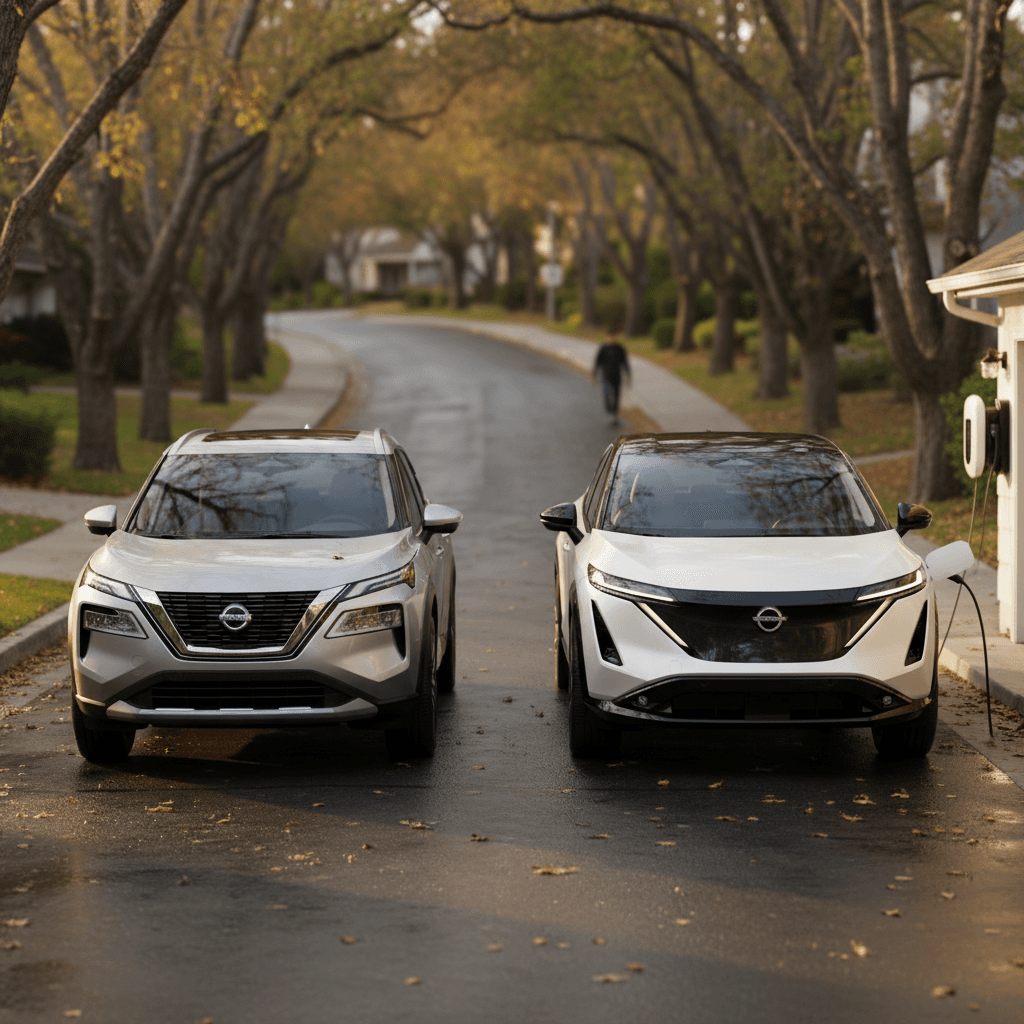
If you own a Nissan Rogue and you’re eyeing the Nissan Ariya, you’re not alone. Many Rogue drivers are curious what really changes when you move from a comfortable, familiar gas SUV to Nissan’s all-electric flagship. This review walks through that switch from a Rogue owner’s point of view, how it drives, what you gain, what you give up, and whether a used Ariya makes sense as your next step.
What this article is (and isn’t)
Rogue to Ariya: Who this review is for
You’ll get the most value from this guide if you currently drive a Rogue (any model year) and are considering a Nissan Ariya as your first EV. Maybe a local dealer is pushing attractive leases, or you’ve seen sharp price drops on used Ariya models. Either way, you’re wondering: “Will this still feel like the versatile, easygoing SUV I’m used to?”
Typical Rogue owners considering an Ariya
If any of these sound like you, keep reading
Suburban commuter
You use your Rogue for commuting, school runs, and weekend errands, with an occasional road trip a few times a year.
Family hauler
Your Rogue carries kids, strollers, sports gear, and Costco runs. You need space, easy loading, and good visibility.
Tired of fuel & maintenance
Gas prices and frequent oil changes are getting old. You’re EV-curious but don’t want to give up SUV practicality.
Tip for test drives
Side-by-side overview: Nissan Rogue vs Nissan Ariya
On paper, the Rogue and Ariya live in a similar footprint, they’re both two-row crossovers aimed squarely at families. But under the skin they’re very different animals. Here’s a quick, Rogue-owner-friendly snapshot of how they compare.
Nissan Rogue vs Nissan Ariya: Key differences for owners
How the Ariya changes your day-to-day experience compared with a gas Rogue.
| Category | Nissan Rogue (gas) | Nissan Ariya (EV) | What you’ll notice as an owner |
|---|---|---|---|
| Powertrain | Turbocharged 4-cyl + CVT | Single- or dual-motor EV, single-speed drive | Instant EV torque, no shifting, no engine noise |
| Fuel/energy | Gasoline, 400–450+ miles per tank | Electric, roughly 205–289 miles of EPA-rated range depending on trim | Shorter range but home charging replaces most gas-station stops |
| Drive options | FWD or AWD | FWD or e-4ORCE dual-motor AWD | AWD stability feels more refined in Ariya, especially in bad weather |
| Interior feel | Practical, conventional SUV cabin | More premium, minimalist, with dual 12.3" screens on most trims | Cabin feels more upscale than a typical mainstream crossover |
| Cargo space | Very competitive, tall load area | Similar floor length; some trims slightly less vertical space | Most Rogue owners won’t feel cramped, but max-box capacity is better in Rogue |
| Refueling/charging time | 5 minutes at a gas pump | 30–40 minutes DC fast charge to ~80% on most Ariya trims | Daily home charging takes longer but happens while you sleep |
| Maintenance | Regular oil changes, transmission service, more moving parts | No oil changes, fewer wear items | Fewer routine visits, but EV-specific repairs can be pricier out of warranty |
Specs are typical of recent U.S. model years; always confirm details for the specific vehicle you’re considering.
Key Nissan Ariya numbers a Rogue owner should know
Used pricing reality check
Driving experience: From CVT gas to quiet EV torque
If you’ve lived with the Rogue’s continuously variable transmission (CVT), you know the sensation: the engine revs climb as you ask for power, there’s a bit of drone, and the SUV gathers speed in a smooth but slightly disconnected way. The Ariya flips that script. It’s quiet, direct, and surprisingly quick, especially in dual‑motor e‑4ORCE form.
What improves when you switch
- Instant torque: Even the front‑drive Ariya with the smaller battery delivers punchy, linear acceleration in city driving.
- No shifting feel: With a single‑speed reduction gear, acceleration feels seamless, no CVT flare, no gear hunting.
- Smoother in traffic: Stop‑and‑go driving becomes less stressful; the Ariya glides off the line with little noise or vibration.
What can feel different (or odd)
- Stronger regen: Lift off the accelerator and the Ariya slows more aggressively than your Rogue unless regen is turned down.
- Quicker off the line: If you’re used to a relaxed Rogue, the Ariya’s response can surprise passengers at first.
- Heavier feel: The battery adds weight, so the Ariya feels more planted but also more substantial in quick maneuvers.
Get used to one-pedal style
Comfort, noise, and interior feel
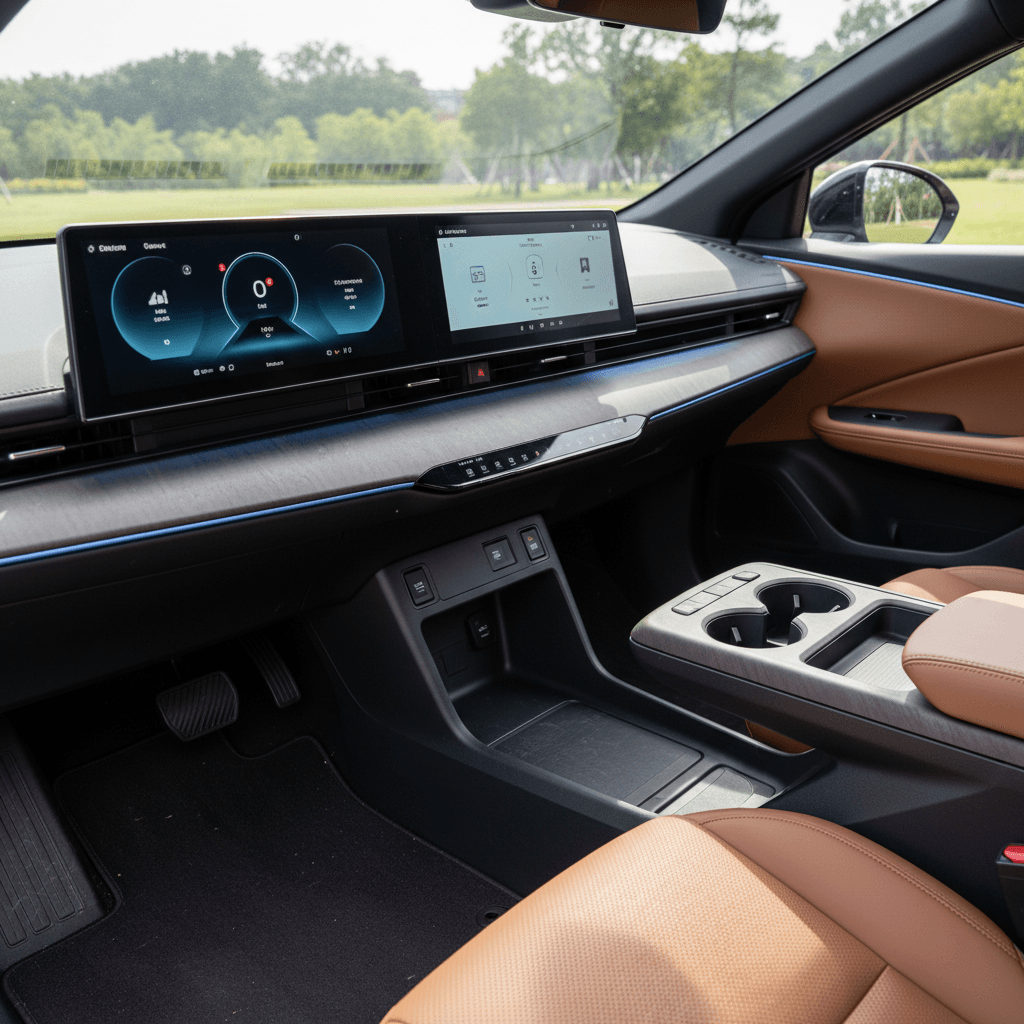
One of the biggest surprises for many Rogue owners is just how premium the Ariya feels inside. The design is cleaner, the materials are generally nicer, and the lack of engine noise makes the cabin feel calmer at most speeds. Several owners who moved to an Ariya from mainstream crossovers comment on how quiet and refined it feels versus similarly priced gas SUVs.
Comfort changes you’ll notice moving from Rogue to Ariya
Seat comfort
Upper trims add features like power memory seats, seat heating (and sometimes ventilation), and better bolstering. If you’ve driven a cloth‑seat Rogue for years, this can feel like a real upgrade.
Noise levels
No engine equals less low‑frequency noise. You’ll still hear wind and tire noise at highway speeds, but overall the Ariya cabin is more serene than most Rogues.
Ambient vibe
Details like interior lighting, a power‑sliding center console, and dual 12.3-inch displays (on most trims) give the Ariya a more “tech lounge” feel compared to the Rogue.
Wheel size vs ride quality
“Love my Ariya… the ride and suspension felt better than a mainstream crossover I was cross‑shopping, and the cabin noise was noticeably lower on the highway.”
Space, practicality, and family duty
Many Rogue buyers choose it because it nails the basics: upright seating, easy access, good cargo room, and solid visibility. The Ariya was designed with that same core buyer in mind, so the transition is gentler than you might expect.
- Front seating: Similar headroom and legroom to a Rogue, but the flat floor and open center area make the cabin feel airier.
- Rear seat: Adults will find knee and headroom comparable to, or slightly better than, many compact crossovers. Car seats fit without drama, though always test-fit your specific seats.
- Cargo area: With the rear seats up, most Rogue owners will find the Ariya’s cargo space adequate for groceries, strollers, and sports gear. If you regularly max out your Rogue with tall boxes, double‑check exact cargo measurements and bring some of your typical items to a test drive.
- Towing: If you use your Rogue for towing, pay close attention, towing capacity and range impact in the Ariya are very different from the gas Rogue. Many Ariya trims are not rated to tow as much, and range will drop under load.
Practical test on shopping day
Range, charging, and road trips after the Rogue
If you’re used to 400-plus miles from a tank in your Rogue, the Ariya’s EPA range numbers may cause a little anxiety at first. Recent Ariya models typically land in the roughly 205–289‑mile range window, depending on battery size, drivetrain, wheel choice, and trim. For daily commuting, that’s usually more than enough, especially if you can charge at home. The big mindset change comes on longer trips.
Daily driving: easier than the Rogue
- Home charging replaces gas stops: With a Level 2 home charger, you’ll usually wake up to a “full tank” every morning.
- Less time at stations: You might only DC fast charge on road trips or if you forget to plug in.
- Predictable costs: Your electricity rate is typically more stable than gasoline prices, so monthly energy costs are easier to budget.
Road trips: more planning required
- Charging takes longer than fueling: Expect a ~30–40‑minute stop to go from about 10% to 80% on a capable fast charger.
- Network coverage varies: Some corridors are well covered with DC fast chargers; rural areas can still be sparse.
- Weather and speed matter: Cold temps and high highway speeds will cut your effective range more than you’re used to in a Rogue.
Plan your first EV road trip
Ownership costs, payments, and resale
The money side of moving from a Rogue to an Ariya has a few layers: your monthly payment, your fuel and maintenance savings, and what happens to the vehicle’s value over time. Because the Ariya launched at relatively high prices and then saw significant price cuts, used models can look like bargains compared with new ones.
How costs change when you leave your Rogue for an Ariya
Fuel & maintenance
Fuel: Electricity usually beats gasoline for cost per mile, especially if you can charge overnight at home on a standard or time-of-use rate.
Maintenance: No oil changes, fewer fluids, and far fewer moving parts mean fewer routine services compared with a Rogue.
Payments & depreciation
Monthly payment: Depending on incentives and used pricing, a well-shopped Ariya can have a similar or lower payment than a newer Rogue, especially if you’re moving from an older, paid-off Rogue into a financed Ariya.
Resale: Early EVs often depreciate faster than equivalent gas models. If you buy used, some of that hit has already happened, which can work in your favor.
Don’t ignore total cost of ownership
Common Ariya quirks Rogue owners notice
No vehicle is perfect, and the Ariya has its own set of quirks that stand out more clearly when you’re coming from a Rogue. Some are simply “EV things,” while others are specific to Nissan’s first modern electric SUV.
- Suspension tuning: Some owners find certain Ariya trims a bit under‑damped or choppy over rough pavement compared with the smoothness they expected. Wheel and tire choice can amplify this, so it’s wise to test on less‑than‑perfect roads.
- Touchscreen-heavy controls: You may miss the Rogue’s simple knobs and buttons. Climate and drive‑mode adjustments often require more touchscreen interaction in the Ariya.
- Driver‑assist behavior: ProPILOT Assist and related systems work well when used correctly, but the feel is different from traditional cruise control. Plan on a learning curve and read the manual, don’t just turn everything on and hope for the best.
- Charging curve reality: On paper, DC fast-charging times look great. In real life, charge speed tapers as the battery fills and can slow in cold weather, so plan your stops around 10–60% or 10–80%, not 0–100%.
- Software updates: Like many modern EVs, software and app integration can occasionally be glitchy or slow to improve. Don’t assume it will be as seamless as your smartphone from day one.
Why a pre‑purchase inspection matters more with EVs
Checklist: Are you ready to switch from Rogue to Ariya?
10-point readiness checklist for Rogue owners
1. Confirm your daily mileage
Add up your typical weekday driving. If you’re under ~120 miles per day, nearly any Ariya trim will be comfortable as long as you can charge regularly.
2. Figure out your home charging plan
Do you have off‑street parking and access to a regular outlet or 240‑volt circuit? Home charging is the single biggest factor in whether an Ariya will feel more convenient than your Rogue.
3. Map your regular road trips
Use an EV route planner to map your favorite weekend or holiday drives. Confirm there are reliable fast chargers along your route at intervals that work for you.
4. Test ride quality on bad roads
Don’t just drive the smooth boulevard near the dealer. Find a rougher section of pavement and compare how the Ariya rides versus your Rogue, especially if the Ariya has larger wheels.
5. Bring your family and gear
Load in car seats, strollers, sports bags, and anything else you regularly carry in your Rogue. Make sure the Ariya’s cargo area and rear seats handle your real‑world loadout.
6. Compare energy and fuel costs
Look up your local electricity rate and estimate monthly charging costs versus what you’re currently spending on gasoline. This can help justify the payment change if you finance or lease an Ariya.
7. Review warranty coverage
Understand remaining factory coverage on the Ariya you’re considering, especially battery and EV component warranties. On a used Ariya, confirm what’s left in years and miles.
8. Check battery health
Ask for documentation on battery capacity and health. A trusted seller or marketplace should provide objective data, not just verbal assurances.
9. Think about your exit plan
How long do you plan to keep the vehicle? If you tend to trade every 2–3 years, consider leasing or buying a used Ariya where most depreciation has already happened.
10. Get an EV‑savvy partner
If this is your first EV, work with a retailer or marketplace that understands electric vehicles. At Recharged, for example, EV specialists can walk you through costs, charging, and trade‑in options for your Rogue.
FAQ: Rogue owner switching to Ariya
Frequently asked questions from Rogue owners
Bottom line: Should a Rogue owner switch to an Ariya?
If you like your Nissan Rogue for its easygoing nature, space, and comfort, the Nissan Ariya will feel familiar in all the right ways, just quieter, smoother, and more upscale. Daily driving gets easier once you’re charging at home, and your fuel and maintenance spending should trend down over time. The trade-offs show up on long trips and in the learning curve around charging and software, not in day‑to‑day usability.
For many Rogue owners, the sweet spot is a well‑priced used Ariya with the larger battery, documented battery health, and remaining warranty coverage. That’s exactly the kind of vehicle Recharged focuses on, used EVs with verified battery diagnostics, fair‑market pricing, and EV‑savvy support from first click to delivery. If you’re ready to see what leaving gas behind looks like in your driveway, consider getting a value for your Rogue and exploring Ariya listings with a full Recharged Score Report in hand before you decide.