If you own a Tesla in 2025, you’ve probably felt the squeeze on service. More EVs on the road, but limited bays and technicians, mean longer waits, only about a quarter of EV owners report same‑day service now, and more are turning to 3rd party Tesla service to keep their cars on the road without the hassle or expense of a packed Service Center.
The big picture
Why 3rd party Tesla service is on the rise
The surge in EV adoption has outpaced service capacity. In recent studies of EV owners, more than 80% needed at least one service visit in the first year, while same‑day service availability dropped from roughly 40% in 2023 to under 30% in 2024. At the same time, more owners report waiting three days or longer for repairs. That pressure is pushing many Tesla drivers to look beyond the official app for help.
EV and Tesla service: 2024–2025 snapshot
Independent EV‑focused shops see an opportunity: shorter waits, lower labor rates, and more flexible scheduling, especially in dense metro areas where Tesla Service Centers are booked out days or weeks in advance.
Tip for busy markets
What “3rd party Tesla service” actually means
Independent EV repair shops
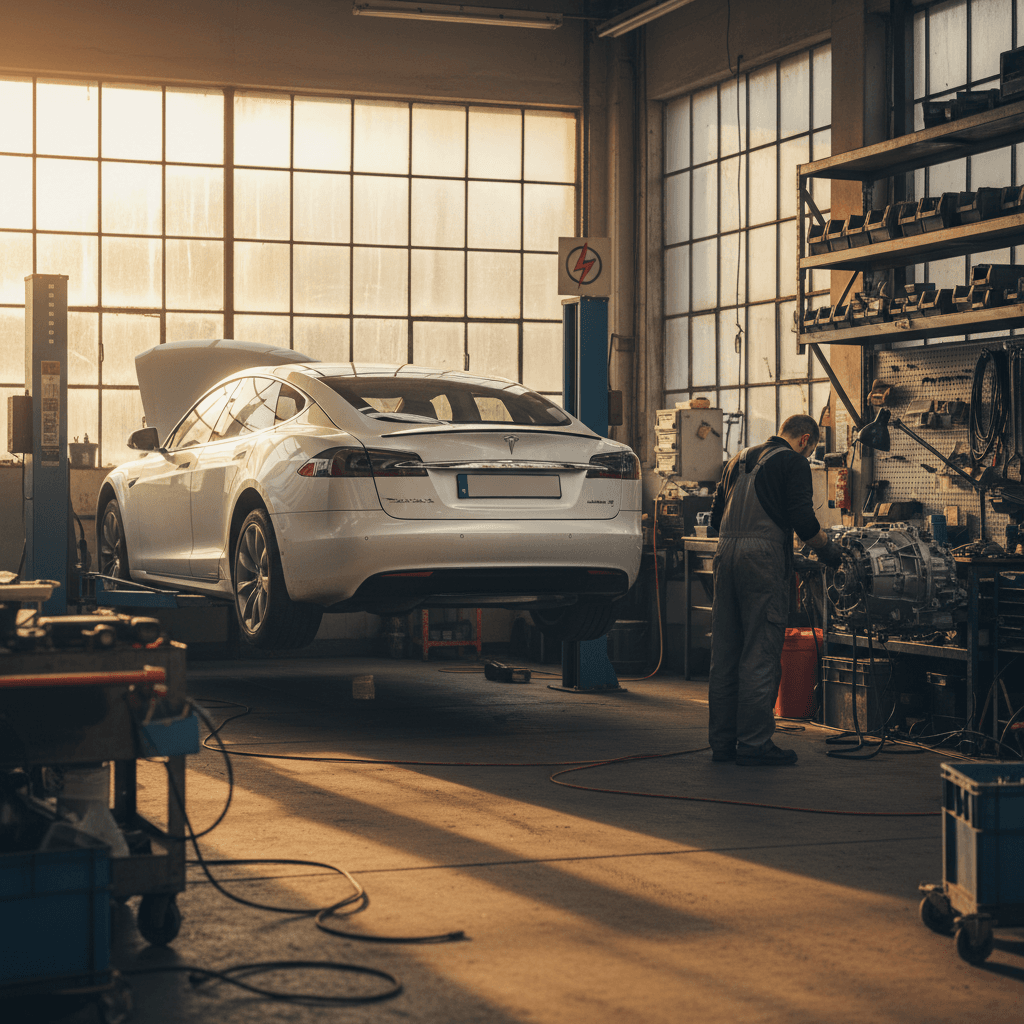
These are standalone garages or small chains that specialize in EVs and often advertise experience with Tesla specifically. Many are founded by former dealership or Tesla techs who’ve invested in high‑voltage training and safety gear.
- Can handle most wear‑and‑tear items
- Capable of advanced diagnostics with the right tooling
- Often lower hourly rates than OEM service
General shops with EV capability
Traditional repair shops that added EV service in the last few years, sometimes through national networks or training programs.
- Best for basics: tires, brakes, alignments, suspension
- May have limited Tesla‑specific knowledge
- Good option in areas without Tesla Service Centers
In everyday language, 3rd party Tesla service can mean anything from a boutique Tesla‑only shop to the tire chain down the street that now supports EVs. The key difference is simple: Tesla doesn’t own or control these operations, so they don’t show up as an option in your Tesla app.
Warranty and software: what Tesla allows
Tesla’s own warranty language is clear on one point: to get warranty-covered repairs, you need to use a Tesla Service Center or Tesla‑authorized facility. For non‑warranty work, Tesla states that you may use a preferred non‑Tesla service center, but it won’t be responsible for issues caused by improper 3rd party repair or maintenance.
- Routine maintenance (tire rotations, cabin air filters, wiper blades, brake pads) can be done by qualified 3rd party shops without voiding your entire vehicle warranty.
- Out‑of‑warranty repairs are fair game for 3rd party Tesla service as long as the shop knows what it’s doing.
- If a 3rd party repair causes damage, for example, incorrect coolant refill leading to drive‑unit issues, Tesla can deny related warranty coverage on that component.
- High‑voltage battery and drive‑unit warranties are separate and typically require Tesla involvement for covered repairs.
Watch the software line
From a legal standpoint, U.S. right‑to‑repair efforts and state‑level data access laws are giving independent shops more room to operate on modern vehicles, including EVs. But Tesla still controls its proprietary software stack and servers, which limits how far 3rd parties can go without Tesla’s cooperation.
What independent Tesla shops can and can’t do
Typical 3rd party Tesla service capabilities
What’s realistic in 2025 for independent shops
Collision & body
- Cosmetic repairs, paint and panel work
- Frame and structural repairs at EV‑certified body shops
- Sensor calibration after bumper or glass work
Many insurance‑preferred collision centers now see Teslas regularly.
Mechanical & wear items
- Tires, alignments, brake pads and rotors
- Control arms, bushings, ball joints
- Suspension knocks, rattles, and clunks
These jobs rarely require factory software access.
Electronics & diagnostics
- Basic diagnostics via OBD‑style tools or Tesla‑specific interfaces
- Replacing 12V/low‑voltage batteries
- Some infotainment or camera repairs
Advanced firmware issues still route back to Tesla.
Hard limitations for 3rd party Tesla service
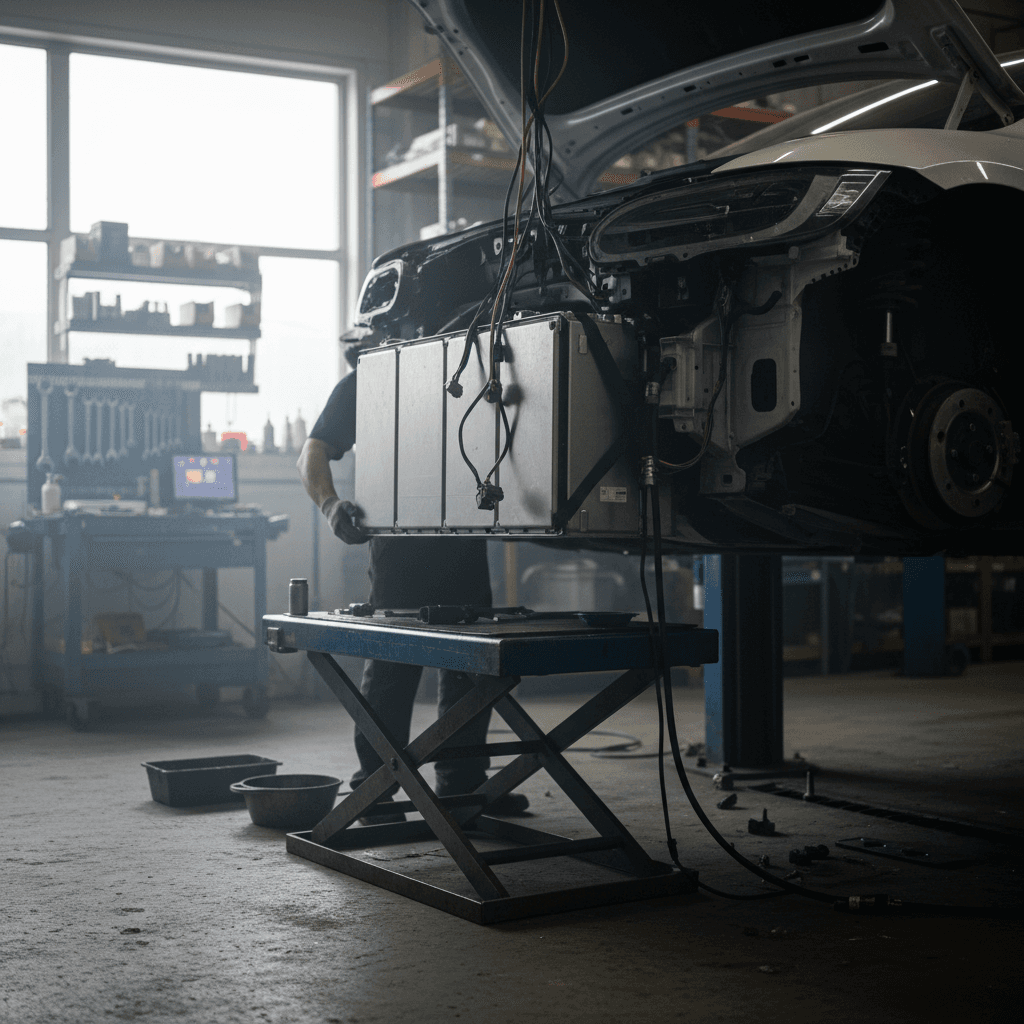
- High‑voltage battery modules: Physical repairs or replacements are complex, require specialized tooling, and may affect safety certification.
- Drive units: Motor and inverter repairs often need Tesla testing or replacement parts that aren’t widely sold to independents.
- Core software: Anything involving firmware changes, OTA updates, or feature activation must run through Tesla.
Gray areas that depend on the shop
- Battery diagnostics: Some independent specialists can perform detailed capacity and thermal checks.
- HV contactors and cooling components: Feasible for shops with high‑voltage training.
- Retrofits and upgrades: Aftermarket suspension, wheels, and paint‑protection "Tesla mods" are commonly done outside Tesla.
Safety first with high voltage
3rd party vs Tesla service: cost and wait time
EV service in general is getting more expensive, but the gap between OEM and independent shops remains meaningful. Surveys in 2024–2025 show that owners are drifting toward aftermarket repair shops not just for price, but for convenience and shorter queues.
Typical Tesla vs 3rd party service experience
Ranges will vary by region, but this gives a directional view of how independent shops compare.
| Service type | Tesla Service Center | 3rd party Tesla specialist | General EV‑capable shop |
|---|---|---|---|
| Labor rate | US$170–$190/hr | US$130–$160/hr | US$110–$140/hr |
| Appointment lead time | 3–7 days (busy metros) | 1–4 days | 1–3 days |
| Same‑day turnaround on minor jobs | Often limited by backlog | More common | Common for simple work |
| Mobile service | Available in many areas | Rare, but some offer it | Rare |
| Battery/drive‑unit warranty work | Yes, if covered | No (diagnose & refer) | No |
Use this as a starting point, always request a written estimate from any shop before work begins.
Where you can really save
How to choose a 3rd party Tesla service shop
Picking the right independent shop matters more with a Tesla than with a conventional gas car. You’re dealing with high‑voltage systems, complex software and, if you ever sell, an increasingly savvy used‑EV buyer who will scrutinize your service records.
Checklist: vetting an independent Tesla service provider
1. Confirm EV and high‑voltage training
Ask what certifications their technicians hold, whether they’ve had Tesla‑specific training, and how often they work on EVs. A serious shop will have clear answers and documentation.
2. Ask exactly what Tesla work they do
Have them list the Tesla jobs they perform regularly, tires and brakes are one thing, but high‑voltage battery work is another. You want a shop that stays within its comfort zone.
3. Check tooling and equipment
Look for evidence of proper lifting equipment for EVs, insulated tools, and diagnostic gear that supports modern EV platforms. Basic OBD scanners alone aren’t enough for a Tesla.
4. Review insurance and warranties
Verify that the shop is insured for EV work and ask how they warranty their labor and parts. Compare that to Tesla’s own parts and service warranty for a fair apples‑to‑apples view.
5. Read EV‑specific reviews
Search reviews that mention Tesla or EVs specifically, not just “great service.” You’re looking for patterns, communication, accuracy of estimates, and whether issues were fixed on the first visit.
6. Clarify data and privacy practices
Modern EVs collect a lot of data. Ask how the shop handles telematics, logging and any third‑party integrations they use. They should be able to describe how your data is protected.
Bring your own service history
When you should still go to a Tesla Service Center
Even as 3rd party Tesla service matures, there are situations where starting with Tesla is simply the smart move, especially while you’re under basic or battery warranty.
- High‑voltage battery warnings, overheating alerts or severe range loss that appears suddenly.
- Drive‑unit noises, power‑loss events or repeated “vehicle may not restart” messages.
- Safety recalls or service campaigns noted in your Tesla app or on Tesla’s website.
- Feature issues tied to software, Autopilot, FSD, connectivity, app pairing, security alerts.
- Warranty‑covered repairs or anything mentioned in the New Vehicle or Battery & Drive Unit Limited Warranty.
Don’t ignore recall work
Used Teslas, 3rd party service and resale value
If you’re driving, or shopping for, a used Tesla, the way previous owners handled service matters. Today’s used‑EV buyers ask tough questions about battery health, software history and who has been under the car.
How 3rd party service can help resale
- Lower total cost of ownership: Documented savings on tires, brakes and suspension without cutting corners.
- Fewer “mystery” gaps: A consistent mix of Tesla and independent invoices looks better than long periods with no records.
- Local familiarity: Reputable regional shops often become a selling point: “Always serviced at X EV Specialist.”
Where buyers get nervous
- Unclear battery work: Any notes about pack opening, module swaps or DIY fixes can spook informed buyers.
- Software tampering: Evidence of unofficial firmware or feature hacking is an immediate red flag.
- No documentation: Cash jobs without invoices make it harder to establish a trustworthy history.
How Recharged fits in
Checklist for your first independent service visit
Step‑by‑step plan for using 3rd party Tesla service
1. Decide if the job is right for a 3rd party
Filter your issue into “Tesla only” (battery, software, recalls) versus “independent friendly” (tires, brakes, suspension, minor bodywork). When in doubt, message Tesla through the app for guidance, then compare with an independent quote.
2. Collect photos, codes and history
Screenshot any warnings in the Tesla app, note when they started, and gather previous invoices. The more context you bring, the less time the shop spends guessing.
3. Get a written estimate from at least two shops
Ask for line‑item estimates, including labor hours, labor rate, parts type (OEM vs aftermarket), environmental fees and taxes. Make sure each shop is quoting the same scope of work.
4. Confirm parts sourcing and warranties
Ask whether the shop uses genuine Tesla parts, high‑quality aftermarket parts, or a mix. Clarify how long each is warranted and how that compares to Tesla’s own parts warranty.
5. Clarify communication and timelines
Before you hand over the key card, confirm how you’ll receive updates (text, email, portal), what “approved estimate” means, and when you can expect the car back if parts arrive on time.
6. Save documentation for future buyers
Keep digital copies of estimates, invoices, and any photos or videos the shop provides. If you later trade into <strong>Recharged</strong> or sell privately, a clean file of 3rd party Tesla service history helps justify value.
FAQ: 3rd party Tesla service
Frequently asked questions about 3rd party Tesla service
Bottom line: make Tesla service work on your terms
Tesla built a vertically integrated ecosystem where sales, software and service all flow through the same pipe. That’s powerful, but it doesn’t mean you’re stuck with one option for every repair. In 2025, 3rd party Tesla service offers a practical middle ground: let Tesla handle warranty, software and high‑voltage issues, while trusted independents tackle tires, brakes, suspension, bodywork and everyday wear.
If you own a used Tesla, or you’re shopping for one, how you blend Tesla and 3rd party service will shape your cost of ownership and eventual resale value. Keep good records, choose shops that understand EVs, and lean on objective data like the Recharged Score to validate battery health when it’s time to sell or trade. That way, you’re not just keeping your Tesla on the road, you’re keeping your options open.