If you own a Tesla, you’ve probably asked yourself at some point whether it’s safe, or even allowed, to use a 3rd party Tesla repair shop instead of the official Service Center. As more Teslas move out of warranty and into the used market, independent EV specialists are stepping in with lower prices and more flexible service options. The rules aren’t always obvious, though, especially around warranty and software.
Big Picture
Why 3rd Party Tesla Repair Is a Hot Topic in 2025
Tesla has sold well over a million vehicles in the U.S., and a growing share of those cars are now on their second or third owner. As these vehicles age past the basic 4‑year/50,000‑mile warranty, repair bills start to matter a lot more, especially for suspension components, screens, and out‑of‑warranty trim or body damage. At the same time, owners have complained for years about long waits, high prices, and limited appointment availability at Tesla Service Centers.
Why Independents Matter More Each Year
Used Tesla Buyers Take Note
How Tesla Service Works Today
Tesla has a hybrid service model built around owned Service Centers, mobile service vans, and a network of Tesla Approved Body Shops for collision work. Factory warranty repairs, high‑voltage work, and most software‑linked issues are designed to be handled inside that ecosystem.
- Basic Vehicle Limited Warranty typically covers 4 years or 50,000 miles for defects in materials or workmanship.
- Battery and drive unit warranties run longer (often 8 years with a mileage cap, depending on model and pack).
- Tesla’s policy documentation stresses that collision repairs should be done at a Tesla Service Center or Tesla Approved Body Shop, using new Tesla parts only.
- Tesla can, in some cases, disable fast charging or flag a vehicle as unsupported if it’s been heavily modified or repaired outside its standards, particularly after serious damage.
Tesla’s Official Stance
What Independent Tesla Shops Can Actually Do
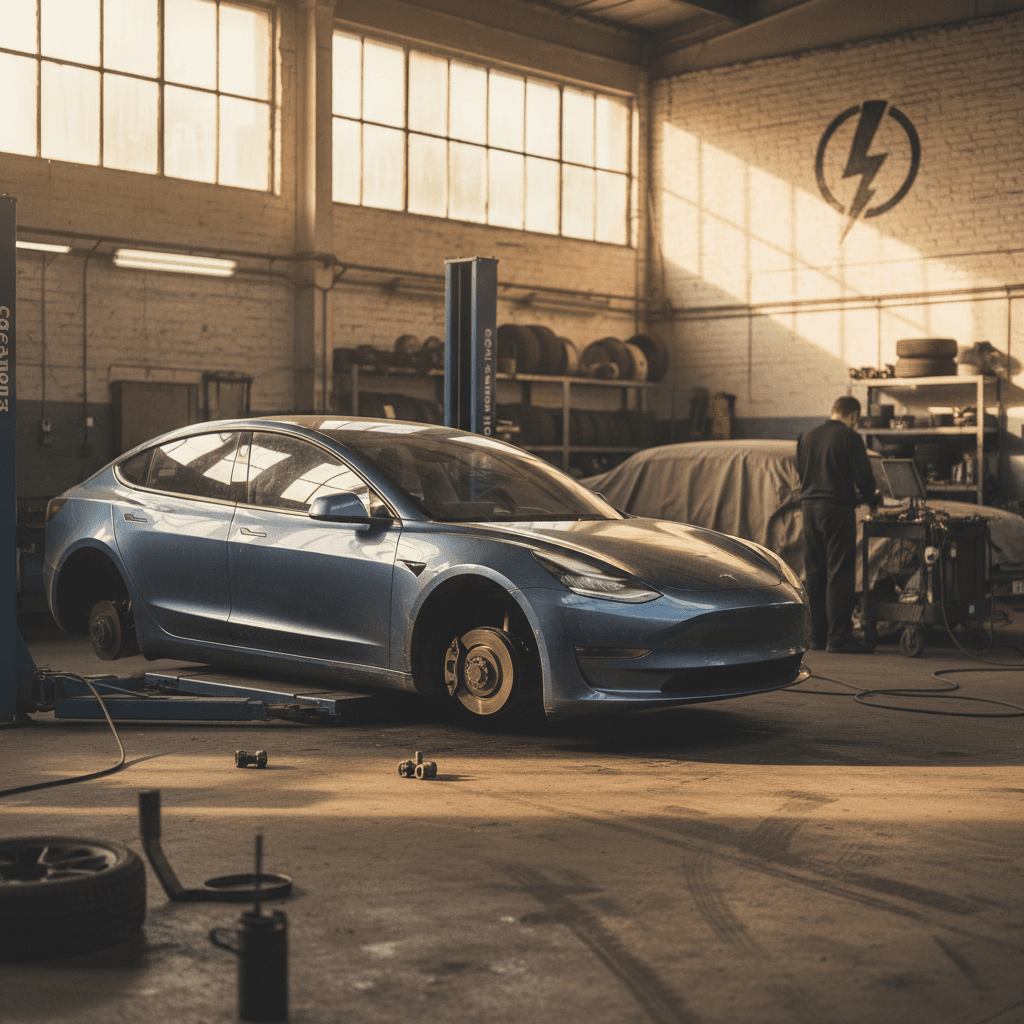
The good news: independent Tesla specialists can now handle a wide range of repairs, especially once your vehicle is out of basic warranty. Tesla has opened more of its electronic parts catalog and documentation to the public, and 3rd party diagnostic tools have improved. That combination gives skilled shops much more room to work than even a few years ago.
Common 3rd Party Tesla Repairs
Where independents make the most sense today
Wear Items & Suspension
- Control arms, bushings, links
- Wheel bearings & hubs
- Brakes, tires, alignments
These are routine on high‑mileage Teslas and don’t always require Tesla‑only equipment.
Interior & Cosmetic Fixes
- Upholstery, trim, minor rattles
- Door handles, window regulators
- Headlights and taillights
Many of these use bolt‑on parts plus standard automotive skills.
Basic Electrical & Charging
- Low‑voltage (12V/16V) battery
- Charge port doors & latches
- Home charging hardware (Wall Connectors, outlets)
High‑voltage work is more restricted, but plenty of peripheral issues are fair game.
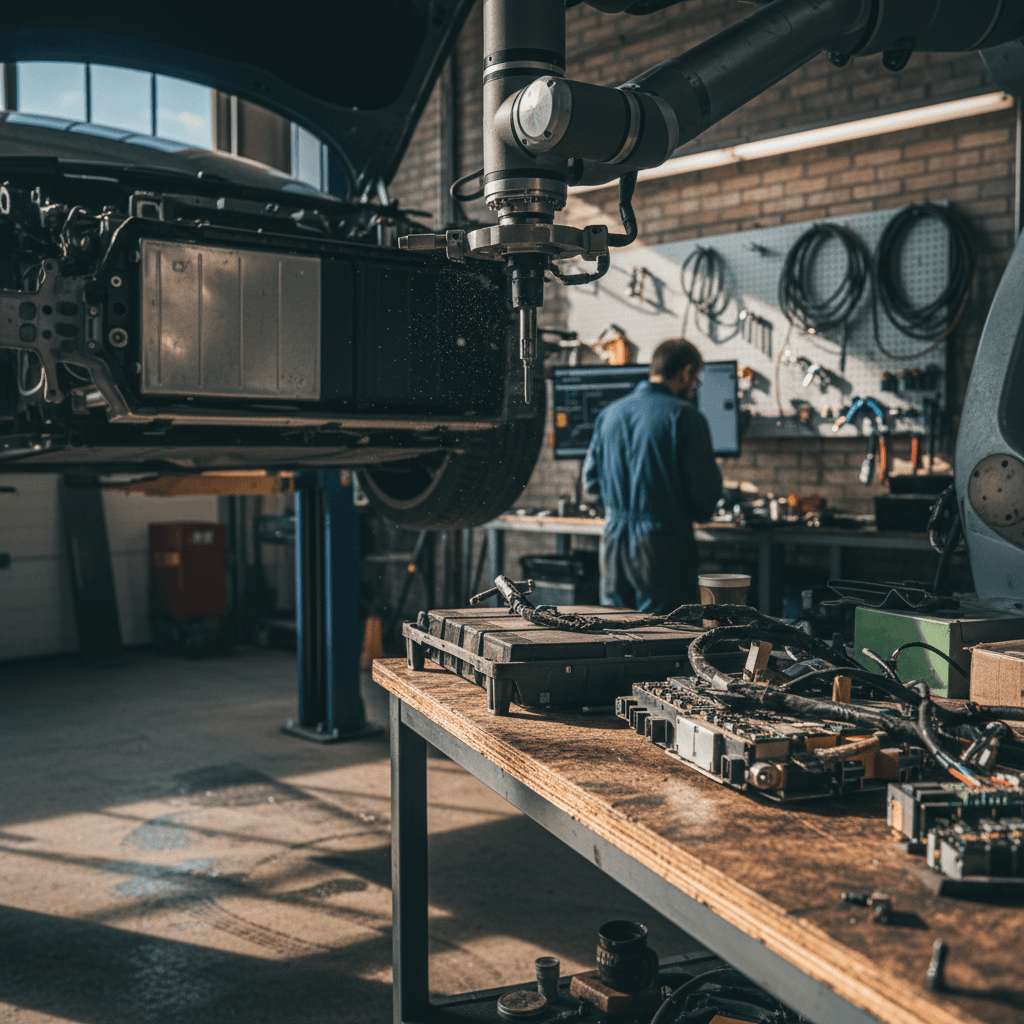
There is also a growing niche of “Tesla‑only” independents, shops started by former Tesla technicians or EV‑savvy specialists. They invest in insulated tools, high‑voltage training, and software interfaces that can read Tesla fault codes and run basic diagnostics without the company’s own internal systems.
Respect the High Voltage
Will 3rd Party Tesla Repair Void Your Warranty?
In the U.S., automakers can’t legally require you to use their service centers for every repair just to keep your warranty. But that doesn’t mean anything goes. The practical rule of thumb is this: a specific repair can be denied coverage if Tesla can show that an aftermarket part or 3rd party work caused the problem.
What Usually Doesn’t Void Warranty
- Oil changes don’t exist, but routine items like cabin air filters or wiper blades from a local shop.
- Brake jobs, tires, alignments done at reputable non‑Tesla shops.
- Cosmetic body repairs that don’t touch structural or high‑voltage areas.
Tesla can still deny coverage for any part directly affected by that work if something is done incorrectly, but your entire warranty doesn’t evaporate just because a 3rd party touched the car.
Where You Can Run Into Trouble
- Using non‑Tesla modules or “repaired” battery packs.
- Structural frame or crash repairs done outside a Tesla Approved Body Shop.
- Aftermarket electronics spliced into factory wiring or safety systems.
If something fails and Tesla sees signs of unapproved repairs or parts, they may decline warranty coverage for those systems or, in rare cases, flag the vehicle for limited support.
Think in Systems, Not Whole‑Car
Cost Comparison: Tesla Service Center vs 3rd Party
Every market is different, but independent surveys and owner reports consistently show that 3rd party shops often charge less per hour than franchise dealers and factory service centers. Teslas are no exception. Labor rates, parts sourcing, and overhead all play a role.
Example Cost Scenarios (Out of Warranty)
Illustrative examples of where 3rd party Tesla repair can change the bill. Actual pricing varies by market and vehicle condition.
| Repair | Tesla Service Center | Independent Tesla Specialist | Notes |
|---|---|---|---|
| Front control arms & alignment | $1,600–$2,000 | $1,100–$1,500 | Same new or OE‑equivalent parts, lower labor and shop fees. |
| Cosmetic wheel rash (per wheel) | $250–$350 | $125–$225 | Mobile wheel repair services can undercut Service Center pricing. |
| Minor bumper scrape (no sensors) | $900–$1,500 | $500–$1,000 | Biggest delta is often paint & body labor. |
| Cabin air filter + brake service | $250–$400 | $150–$275 | Routine maintenance is where local shops shine. |
These examples assume work on an out‑of‑warranty Model 3 or Model Y in a major U.S. metro.
Where Savings Add Up
How to Choose a Good Independent Tesla Shop
Not all 3rd party Tesla repair shops are created equal. You’re looking for a business that understands EV safety, knows Tesla’s quirks, and is honest about where they can’t match Tesla’s own tools or access. A great shop will tell you when Tesla is still the better option.
Checklist: Vetting a 3rd Party Tesla Repair Shop
1. Ask About Tesla & EV Training
Look for technicians with prior Tesla experience or EV‑specific credentials. Many of the best independents are started by former Tesla service techs who know the platform inside out.
2. Confirm High‑Voltage Safety Procedures
Shops should be able to explain lockout/tagout steps, insulated tools, and how they handle work around the battery and orange cables. If they can’t, move on.
3. Check Access to Parts & Documentation
With Tesla’s parts catalog opening up, many shops can now source genuine parts directly. Ask where they buy components and whether they use new Tesla parts, high‑quality aftermarket, or used items.
4. Look for EV‑Aware Insurance Relationships
For body work, verify that the shop has experience billing major insurers for Teslas. That can smooth approval and avoid shortcuts with non‑approved parts.
5. Read EV‑Specific Reviews
Don’t rely on generic Google ratings alone. Look for reviews that mention Teslas specifically and ask local owners’ groups who they trust.
6. Get a Written Estimate & Warranty
A reputable shop will back their work with a clear labor warranty and spell out whether they’re using OEM or aftermarket parts.
Collision Repair & Body Work: Independent vs Tesla
Body work is where Tesla is still the most protective. Official guidance says structural repairs should be done only at Tesla Service Centers or Tesla Approved Body Shops, using new Tesla parts, specific adhesives, and approved equipment. That’s partly about safety and partly about quality control on aluminum and ultra‑high‑strength steel structures.
- For cosmetic repairs, small dents, paintless dent repair, bumper scrapes, skilled independent body shops can be a smart, lower‑cost option.
- For frame pulls, airbag deployments, or damage near the battery pack, it’s safest to stick with a Tesla Approved shop, even if it costs more.
- Some independents can do excellent structural work but may not have full access to Tesla’s repair procedures or post‑repair calibration tools.
Insurance vs Safety Trade‑Off
Software, Diagnostics & the Right-to-Repair Shift
Tesla is as much software company as automaker, and that’s where the traditional repair model breaks down. Many functions, Autopilot, charging behavior, battery conditioning, are controlled by code that Tesla owns and updates over the air. Historically, that meant independent shops were locked out of deeper diagnostics.
Pressure from right‑to‑repair advocates and regulators, plus owner demand, is starting to change that. Tesla has opened more of its parts catalog and made service manuals more accessible. Third‑party tools can now read many Tesla fault codes, clear some alerts, and perform basic calibrations. At the same time, certain operations still require Tesla’s own systems or remote approvals.
What 3rd Party Tools Can and Can’t Do Yet
Rough guide for 2025
Often Possible at 3rd Party Shops
- Read and clear many diagnostic trouble codes (DTCs).
- Check battery and motor temperature data.
- Reset some maintenance indicators.
- Diagnose low‑voltage electrical issues.
Still Mostly Tesla‑Only
- Enabling paid software features or upgrades.
- Pairing some replacement modules to the car.
- Deep battery pack diagnostics and configuration.
- Security‑sensitive features and Autopilot calibration in some cases.
Ask About Software Limits Upfront
When You Should (and Shouldn’t) Use 3rd Party Repair
You don’t need a hard rule that says “always Tesla” or “always independent.” Think in terms of risk, complexity, and whether the repair touches safety‑critical or software‑locked systems. Here’s a practical way to decide.
Good Fits for 3rd Party Tesla Repair
- Out‑of‑warranty suspension noise or clunks.
- Brake jobs, tires, and alignments.
- Cosmetic body damage, wheel rash, interior fixes.
- Basic charging issues related to home hardware or outlets.
- Pre‑purchase inspections on a used Tesla.
These repairs are routine in the broader automotive world and often don’t need Tesla‑exclusive tools.
Better Left to Tesla or Approved Shops
- High‑voltage battery or drive unit warnings.
- Repeated Autopilot or safety‑system faults.
- Serious collision damage, especially near the battery.
- Anything tied to a recall or active safety campaign.
- Software‑linked module replacements on in‑warranty vehicles.
For these, access to Tesla’s internal tools and engineering support can make the difference between guesswork and a proper fix.
FAQ: 3rd Party Tesla Repair
Frequently Asked Questions About Independent Tesla Repair
Where Recharged Fits Into the Picture
If you’re thinking about a used Tesla, the question isn’t just, “Can I get it fixed?” It’s “What will it cost me to keep this car on the road over the next five years?” That’s where Recharged focuses: making used EV ownership simpler, clearer, and less stressful, especially when it comes to repairs and long‑term health.
How Recharged Helps With the Repair Question
Less guesswork, more confidence when you buy a used Tesla
Recharged Score Battery Health
Every vehicle on Recharged comes with a Recharged Score Report that includes verified battery health and high‑voltage diagnostics. That gives you a baseline for what repairs are likely over the next few years.
Fair Market Pricing & History
We factor maintenance history, mileage, and condition into pricing, so you’re not overpaying for a Tesla that may need expensive suspension or cosmetic work right away.
EV‑Specialist Support
Our EV specialists can talk through what 3rd party Tesla repair options look like in your area and how to budget realistically for service after purchase.
Ready to find your next EV?
Browse VehiclesBuying With Repairs in Mind
Bottom Line for Tesla Owners and Used Buyers
3rd party Tesla repair is no longer the wild west it once was. In 2025, more independent shops have the training, parts access, and tools to handle everyday repairs at competitive prices. At the same time, Tesla still controls the deepest layers of software and high‑voltage systems, and its policies around structural repairs and non‑approved parts absolutely matter, especially while any factory warranty remains in play.
Use independents strategically: for routine maintenance, suspension work, cosmetic repairs, and pre‑purchase inspections. Reserve Tesla Service and Tesla Approved Body Shops for high‑voltage issues, complex software faults, and serious crash damage. If you’re shopping for a used Tesla, lean on data, battery health reports, repair history, and expert guidance, so you know exactly what kind of repair ecosystem you’re stepping into before you sign.