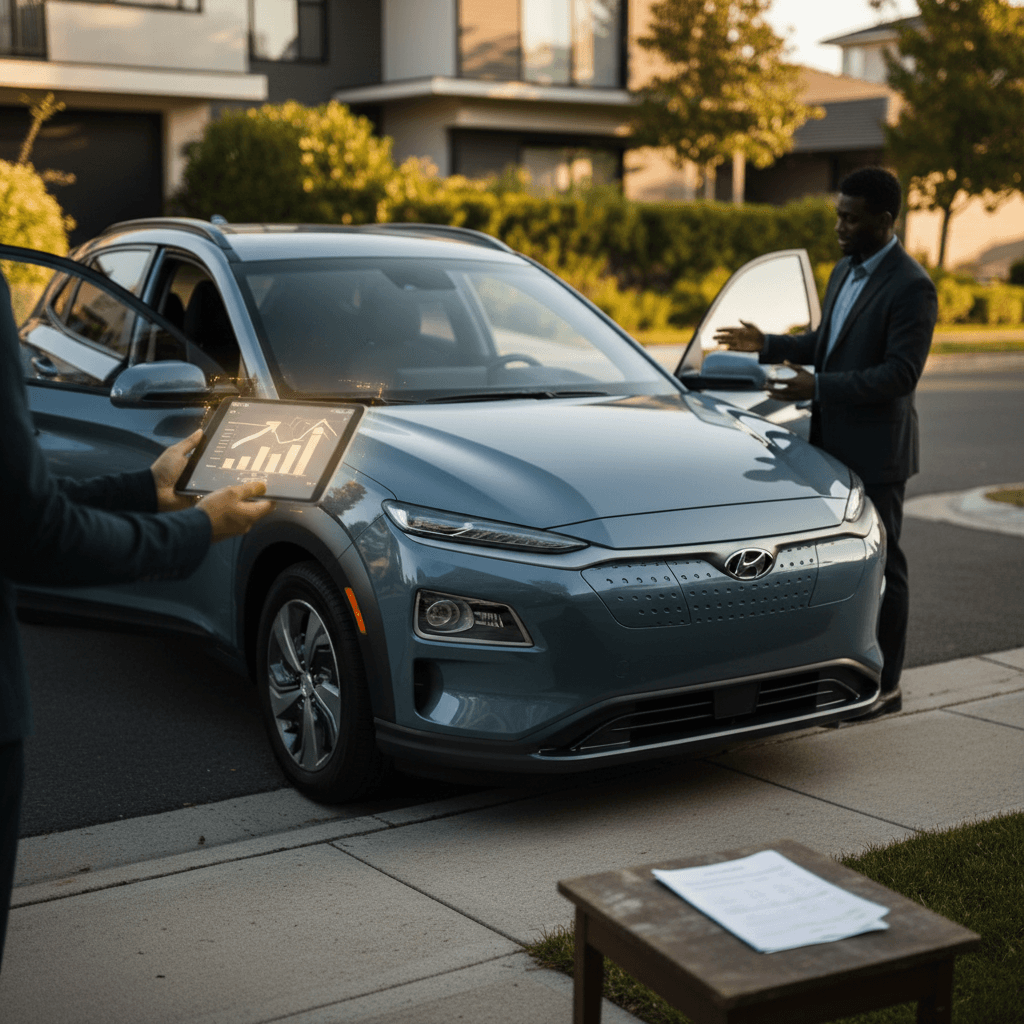
If you’re thinking, “I’m ready to sell my Hyundai Kona Electric, but I don’t want to get ripped off,” you’re not alone. The used EV market in 2025 is volatile: some Kona Electrics sell in days, others sit for weeks, and pricing tools don’t always agree. The good news is that with the right prep and a clear strategy, you can turn your Kona EV into cash without leaving thousands of dollars on the table.
What’s different about selling an EV?
Why Kona Electric Can Be Tricky to Sell Right Now
The Hyundai Kona Electric sits in a weird spot in today’s EV market. On one hand, it’s one of the most efficient small EVs you can buy, and five‑year depreciation studies consistently put it among the stronger‑holding non‑Tesla EVs. On the other hand, newer long‑range crossovers and price cuts on new EVs have pushed many older Kona Electrics into heavy discount territory, especially where incentives favor new cars.
Hyundai Kona Electric Resale at a Glance
Resale values move quickly
Step 1: Figure Out What Your Kona Electric Is Worth
Before you decide whether to trade in, sell privately, or use a marketplace, you need a realistic price range. That means looking at more than one valuation tool and triangulating from live listings, not just a single number from a pricing site.
- Gather the basics: model year, trim (SE/SEL/Limited/Ultimate), mileage, options, and accident history.
- Pull values from multiple sources: KBB, Edmunds, and iSeeCars or CarEdge all publish Kona Electric resale and depreciation data.
- Search real listings near you on Autotrader, Cars.com, Facebook Marketplace, and EV‑focused marketplaces to see what similar Konas are actually being advertised for.
- Note the spread between retail asking prices, instant‑cash offers (CarMax, Carvana, etc.), and dealer trade‑in quotes. Your realistic number usually lands between trade‑in and private‑party retail.
Typical Value Ranges by Sale Type
These are directional patterns, not guarantees. Actual numbers will depend on your specific Kona Electric, local demand, and timing.
| Sale Type | What It Usually Pays | Upside | Downside |
|---|---|---|---|
| Dealer trade‑in | Lowest, but quick | Instant sale, tax credit benefit on new car in some states | Dealer keeps most of the margin |
| Instant online offer (CarMax, etc.) | Slightly above trade‑in | Fast sale without new‑car purchase | Little room to negotiate |
| EV marketplace (like Recharged) | Mid‑range to strong | EV‑savvy buyers, battery health front and center | You’ll pay a marketplace fee or margin |
| Private‑party sale | Highest potential | Can beat dealer retail if you market well | More time, effort, and risk to manage |
Think in terms of bands, not an exact dollar, and update your comps right before you list.
Use value bands, not a single number
Step 2: Get Your Kona EV Ready to Sell
With EVs, buyers are nervous about invisible risks: battery degradation, charging issues, and expensive electronic repairs. Your job is to de‑risk the car in their eyes. A couple hundred dollars and a weekend of work can easily unlock $1,000+ in resale value or a much faster sale.
Kona Electric Sale‑Prep Checklist
1. Fix cheap, visible flaws
Touch up curb rash, replace cracked plastic trim, fix minor windshield chips, and deal with warning lights. A clean dashboard and exterior are table stakes for top‑tier offers.
2. Refresh the interior
Shampoo mats, wipe surfaces, clean the vegan leather or cloth, and remove smells. Used EV shoppers skew detail‑oriented; a tidy cabin reassures them you treated the battery and charging just as carefully.
3. Get fresh maintenance records together
Print or download service history: cabin filter, brake service, tire rotations, software updates, and any warranty work. Highlight anything related to high‑voltage components or charging performance.
4. Check tires and brakes
Uneven tire wear or low tread gives buyers leverage to demand discounts. If your tires are near the wear bars, pricing the car accordingly or replacing them can be the difference between slow and quick interest.
5. Make sure charging gear is included
Gather the OEM charge cable, adapters, and manuals. Missing charging equipment is a red flag for EV shoppers and can easily spook first‑time EV buyers.
6. Clear personal data and accounts
Log out of Blue Link / Bluelink, wipe navigation destinations, remove phone pairings, and reset trip data so buyers can see fresh range numbers on test drives.
Step 3: Choose How to Sell – Trade-In, Private Sale, or Marketplace
Dealer Trade‑In
Best if you value speed and simplicity over every last dollar.
- One‑stop transaction when buying another car.
- In many states, trade‑in value reduces the taxable price of your new vehicle.
- Least money in your pocket; dealers will price in risk on the battery and market swings.
Private‑Party Sale
Best if you want the highest possible price and can invest the time.
- Potential to beat dealer retail if you present the car well.
- You control the narrative on battery health and charging behavior.
- Requires screening buyers, managing test drives, and handling paperwork yourself.
EV Marketplace (Like Recharged)
Best if you want a high‑quality audience without doing everything yourself.
- Buyers are already shopping for used EVs, not just “whatever’s cheap.”
- Battery health is verified and surfaced clearly in a Recharged Score Report.
- You can get expert guidance on pricing, photos, and sale strategy.
Where Recharged fits in
Step 4: Prove Battery Health – It’s Where the Money Is
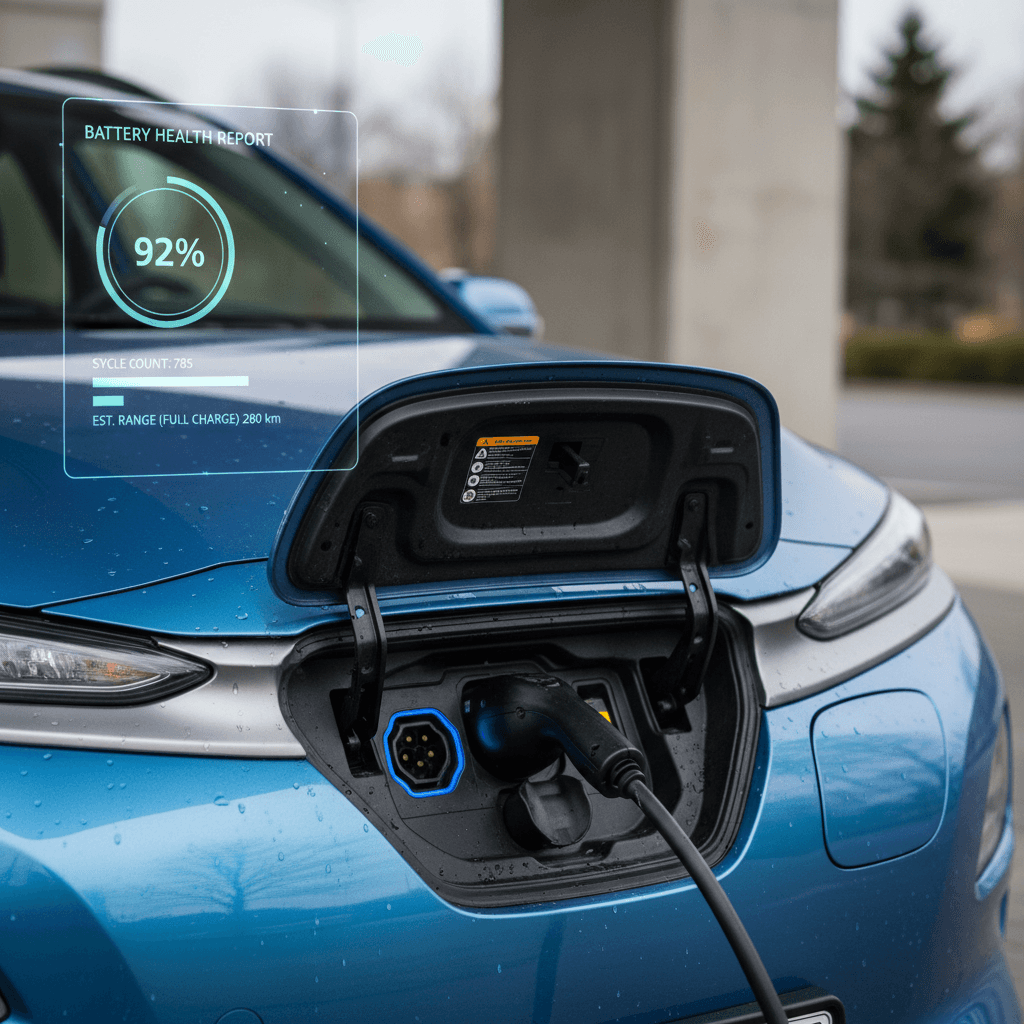
For a gas Kona, a buyer mostly cares about mileage and accident history. For a Kona Electric, the question is, “How much useful battery life is left, and how confident am I in that answer?” If you can credibly answer that, you’ll attract more serious buyers and justify stronger pricing.
Ways to Show Your Kona’s Battery Health
Combine at least two of these for maximum buyer confidence.
In‑Car Range & State of Charge
Show photos of the dash at 100% state of charge and typical range. Buyers know this isn’t perfect, but it gives a baseline and helps them compare to EPA numbers.
Service History & Warranty
Highlight any high‑voltage or charging‑system work and clearly note how much of Hyundai’s battery warranty is left. A Kona with plenty of warranty coverage remaining is easier to sell at a premium.
Independent Battery Diagnostics
Specialist tools can pull deeper data than the dash shows. Recharged, for example, runs a full diagnostic and turns it into an easy‑to‑read Recharged Score Report that breaks down state of health, projected range, and how your Kona compares to others on the market.
Don’t fake or guess battery numbers
Step 5: Create a Listing That Actually Sells
Most Kona Electric listings look the same: copy‑pasted trim names, a few blurry photos, and nothing specific about charging or battery health. That’s exactly why clean, detailed listings stand out and sell faster, even if you’re not the cheapest car on the page.
What to Include in Your Kona Electric Listing
1. Clear, descriptive title
Include year, trim, battery size if relevant, and a selling point. Example: “2022 Hyundai Kona Electric Limited – 1‑Owner, Verified Battery Health, Remaining Warranty.”
2. Honest, specific description
Cover how you used the car (commuter, road trips), typical charging habits (mostly Level 2 at home, etc.), and any issues that were fixed under warranty. Address range expectations in normal driving, not just the EPA number.
3. High‑quality photos
Shoot in daylight, landscape orientation. Get all four corners, interior, infotainment screen, odometer, tire tread, charge port, and a photo of the dash at high state of charge showing estimated range.
4. Battery health and charging details
Call out any independent battery report, remaining warranty, and your home charging setup. If you have a Recharged Score Report, mention it prominently and be willing to share a copy with serious buyers.
5. Transparent history & paperwork
Disclose accidents, open recalls, and provide the title status (clean, lien, rebuilt). Upload or bring service records and the Carfax/AutoCheck if you have them.
6. Grounded pricing explanation
Briefly explain how you priced the car: recent comps, condition, and battery health. Serious buyers respond better when they see that the number came from somewhere rational.
Step 6: Negotiate Smartly and Avoid Common Traps
Negotiating a used EV is a little different from a used gas car. Buyers may ask basic EV questions, fixate on max range, or use scary‑sounding battery myths to push your price down. You don’t need to be a battery engineer, but you should be prepared.
Common Buyer Tactics and How to Respond
Stay calm, answer with facts, and bring the conversation back to value.
“EVs all lose value fast, so I need a huge discount.”
Response: Acknowledge that EV values have come down from the pandemic peak, then pivot: “The Kona Electric actually holds value better than many non‑Tesla EVs, especially with solid battery health and warranty coverage. Here’s the independent report and recent comps that back up my price.”
“What if the battery dies in a few years?”
Response: Point to Hyundai’s battery warranty and your diagnostics: “The high‑voltage battery is still under Hyundai’s warranty, and this report shows its current state of health. You’re not walking into an unknown here.”
“I read these have charging or software problems.”
Response: Be honest about any issues and how they were resolved: “Early Kona Electrics did have some recalls, which were completed on this car. Here are the records and the latest software version. I’ve had no unresolved high‑voltage issues.”
“Your price is too high compared to X listing.”
Response: Compare apples to apples: “That one has higher mileage and no documented battery health. Mine includes verified diagnostics, all charging equipment, and better tires. That’s why I’m priced where I am.”
Decide your walk‑away number in advance
When Selling to Recharged Makes the Most Sense
There’s no single “right” way to sell a Hyundai Kona Electric. But there are situations where using a specialized EV retailer like Recharged is simply more rational than juggling private messages and lowball trade‑in offers.
Good Signals You Should Talk to Recharged
If two or more apply, it’s worth getting an offer.
You value your time highly
If you don’t have days to spend answering messages or meeting strangers in parking lots, Recharged’s digital process, EV‑specialist support, and logistics help can be worth more than squeezing out that last $200.
You want battery health handled by pros
Recharged runs full battery diagnostics and converts them into a Recharged Score Report. That report travels with the car, which makes buyers more confident and supports stronger pricing.
You need help with logistics
If your ideal buyer lives in another state, Recharged can coordinate nationwide delivery, paperwork, and even trade‑in or consignment options so you’re not stuck figuring out transport on your own.
Ready to find your next EV?
Browse VehiclesRecharged isn’t just online
FAQ: Selling a Hyundai Kona Electric
Frequently Asked Questions About Selling a Kona Electric
Bottom Line: How to Sell Your Kona Electric With Confidence
Selling a Hyundai Kona Electric in today’s market is part pricing exercise, part education project. If you anchor your expectations in current data, present a clean car with clear battery‑health documentation, and choose the right sales channel for your time and risk tolerance, you’re already ahead of most listings out there.
You don’t have to navigate this alone. Whether you decide to trade in, sell privately, or work with an EV‑focused marketplace like Recharged, focusing on battery health, transparent history, and realistic pricing will make the process faster, less stressful, and far more profitable than simply typing “sell my Hyundai Kona Electric” into a search box and hoping for the best.