If you’ve gone searching for a 2026 Volkswagen ID. Buzz recalls list, you’ve probably already discovered something odd: in the U.S., there really isn’t a 2026 model-year ID. Buzz. Yet there are recall headlines, NHTSA documents, and dealer chatter that make it sound like the cheerful electric Bus has serious issues. Let’s untangle what’s actually going on so you can make a smart decision, whether you own one already or you’re eyeing a used ID. Buzz down the road.
Quick reality check
Why a 2026 ID. Buzz recalls list is confusing
- They own or are shopping a 2025 ID. Buzz that will still be on the road in calendar year 2026.
- They’ve heard that Volkswagen is “canceling” or “pausing” the Buzz for 2026 and want to know if quality problems are to blame.
ID. Buzz model years in the U.S.: 2025 vs. 2026
Volkswagen ID. Buzz U.S. model-year timeline
How calendar years, model years, and recall timing line up for American-market ID. Buzz vans.
| Calendar year | What’s happening with the ID. Buzz in the U.S. | What owners see |
|---|---|---|
| Late 2024 | First U.S.-spec ID. Buzz vans arrive as 2025 models | Early adopters take delivery of 2025 ID. Buzz |
| 2025 | Full sales year for the 2025 ID. Buzz; first recalls appear | Owners get recall notices and software updates |
| 2026 | No 2026 model-year ID. Buzz for U.S.; VW focuses on leftover 2025 inventory and future refresh | You keep driving a 2025 ID. Buzz, but recalls and service bulletins may be issued during 2026 |
| Mid-2026 / 2027 | VW prepares refreshed Buzz for 2027 model year | Potentially higher range, updated tech, and NACS-native charging on the horizon |
Remember: you may be driving your 2025 ID. Buzz well into 2026 and beyond, so recall headlines will keep using both years.
Don’t confuse calendar year with model year
Confirmed ID. Buzz recalls through 2026
At the time of writing in April 2026, the ID. Buzz has nothing like the long recall list of some early EVs, but one campaign in particular has made headlines in the U.S. You may see slightly different descriptions of it depending on whether you’re reading a Volkswagen bulletin, a dealer memo, or an NHTSA report. Here’s what’s actually in play for American-market vans.
ID. Buzz recall snapshot (U.S., through early 2026)
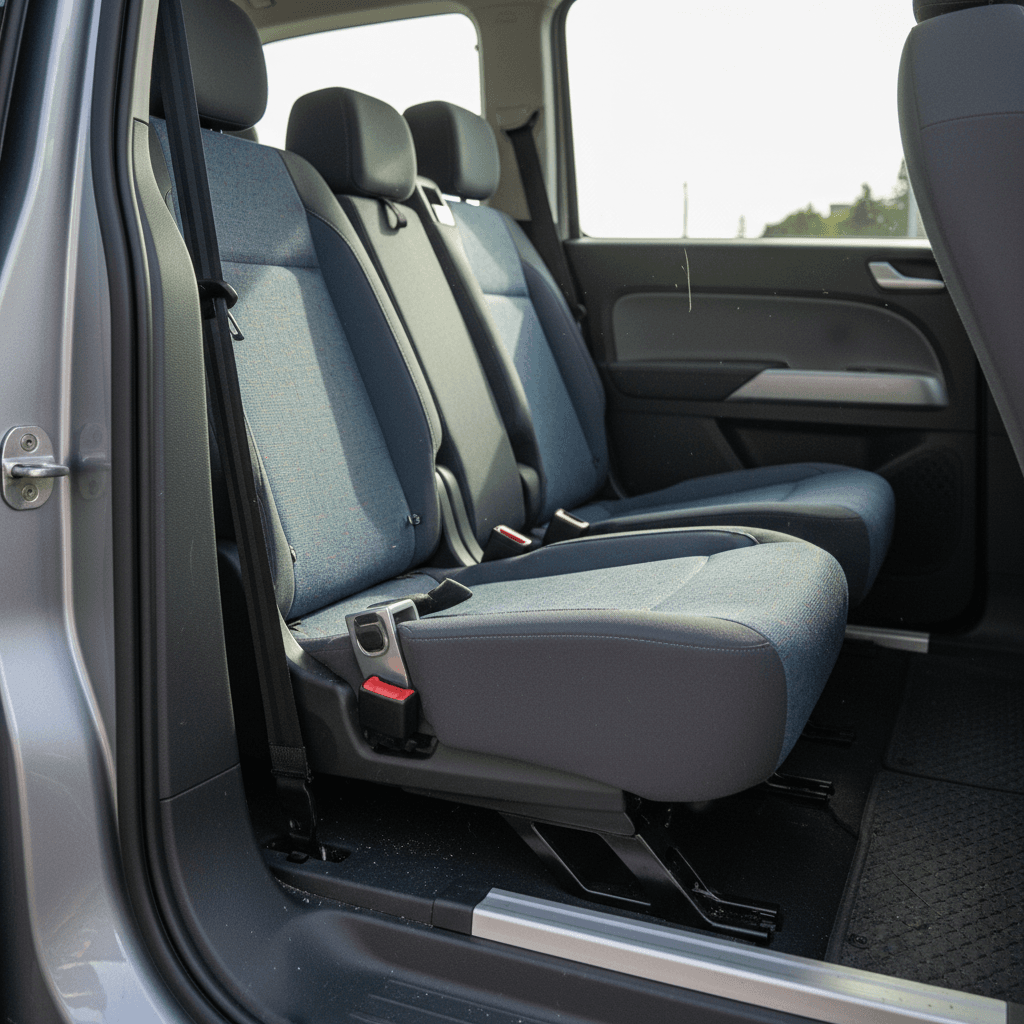
Recall 1: Rear third-row seat width / anchorage issue
- What’s wrong: On certain 2025 ID. Buzz vans, the rearmost bench is too wide relative to its mounting points and belt anchors. In a severe crash, this could, in theory, affect how the seat and restraint system behave.
- Who’s affected: A few thousand 2025 ID. Buzz vans built for the U.S. market, primarily those with the full three-row family layout.
- The fix: Volkswagen is replacing or reworking the rear bench and related hardware at no cost, and in some cases applying updated trim or brackets so the seat meets the exact U.S. spec.
Can I keep using the third row?
Other early-service fixes and software updates
- Infotainment glitches or slow boot-up times.
- Charging logic updates for certain DC fast-charging stations.
- Bug fixes for driver-assistance features (lane keeping, traffic sign recognition, etc.).
How to check if your ID. Buzz has an open recall
With so much noise about 2026, tariffs, and paused production, it’s easy to miss the basics. Forget the rumor mill for a minute; here’s how you confirm, in black and white, whether your specific van is covered by a recall.
Step-by-step: Confirm recall status on your ID. Buzz
1. Grab your 17-character VIN
Your <strong>Vehicle Identification Number (VIN)</strong> is on a small plate at the base of the windshield on the driver’s side, on your registration, and on your insurance card. You’ll need all 17 characters, no spaces, no dashes.
2. Use NHTSA’s official recall lookup
Go to the official NHTSA recall lookup site and enter your VIN. This pulls directly from manufacturer and government data and shows <strong>all open safety recalls</strong> that still need to be performed on your van.
3. Cross-check with Volkswagen’s site
Volkswagen also offers its own VIN-based recall check on its owner site. It sometimes includes <strong>service campaigns</strong> that don’t rise to the level of a formal safety recall but are still worth doing.
4. Call your dealer’s service department
Give them your VIN and ask for a printout of all <strong>open campaigns</strong>. A good service advisor will walk you through which are mandatory safety recalls and which are optional updates or software flashes.
5. Ask about parts and scheduling
For the rear-seat recall or any hardware fix, ask if parts are in stock and how long the repair will take. Many seat-related repairs can be done in a day, but appointment backlogs vary by region.
6. Keep documentation for your records
When the work is done, hang onto the <strong>repair order</strong>. If you later sell the van, or buy a used one, that paper trail helps prove the recall was completed properly.
Pro tip for future used buyers
What these recalls actually mean for safety
It’s tempting to assume that a rear-seat recall automatically makes the ID. Buzz a safety disaster. That simply isn’t borne out by the data so far. The van has earned strong crash-test scores and, in Europe and North America, has been praised for its rigid structure and sophisticated airbag and restraint systems. The rear-bench campaign is about compliance with specific U.S. rules, not about the entire vehicle collapsing around its occupants. Does it matter? Absolutely. Child-seat fit and belt geometry are life-or-death details in a bad crash. But once the repair is done, there’s no reason to believe a remedied ID. Buzz is inherently less safe than its electric crossover cousins.
Good news for families
- High crash ratings and a big energy-absorbing front structure.
- Long wheelbase and low battery placement for stability.
- Modern driver-assistance tech to help avoid crashes in the first place.
Where to stay vigilant
- Make sure seat-related recalls are completed, especially if you use the third row.
- Use appropriate child restraints and follow the manual for seating positions.
- Keep an eye out for future software updates that improve driver assists and charging behavior.
Owning a recalled ID. Buzz: what to do step by step
If you run your VIN and discover that your van is covered by a recall campaign, rear seat or otherwise, treat it like any other important maintenance item. Here’s a clear, no-drama plan.
- Confirm the exact recall number and description in your NHTSA or Volkswagen lookup and save a screenshot.
- Call your preferred Volkswagen dealer and schedule the repair, making sure they understand which campaign you’re asking about.
- Ask whether there are other open campaigns they can perform during the same visit, software updates, charging tweaks, etc.
- Plan transportation for the day; a bench-seat replacement or similar hardware fix may mean your van is in the shop for several hours.
- After the work, go over the repair order and confirm the recall campaign is marked as “completed” with the correct code.
- Take the van for a short test drive with passengers in the affected seats to make sure everything feels normal and secure.
The cost question
Shopping used: how recalls affect ID. Buzz resale
Fast-forward a bit. Maybe you’re not in the market for a brand-new ID. Buzz, but a gently used one is right in your sweet spot, a family hauler with character, without the new-car price. Where do recalls fit into that picture?
Recalls and used ID. Buzz values
What smart shoppers watch for, and how savvy sellers stand out.
Completed recalls = confidence
A van with all recalls completed often feels like the safer bet than one that’s never seen the inside of a service bay. It tells you the previous owner paid attention and took safety seriously.
Open recalls = bargaining power
If you find an ID. Buzz with an open recall, you’re looking at both a safety concern and a negotiating chip. You can insist the seller schedule the repair before delivery, or reflect the hassle in the price.
Documentation matters
Keep (or request) printed repair orders showing each recall campaign, date, and mileage. That paper trail reassures the next owner and supports resale value.
Market perception, not just mechanics
Headlines about pauses and recalls can spook casual shoppers. Buyers who understand the specific recall and remedy are often able to find better deals on good vans.
How to bake recall checks into your shopping process
How Recharged handles ID. Buzz recalls and battery health
Electric vans like the ID. Buzz are bought with heart as much as with a spreadsheet. But when you’re shopping used, you deserve more than good vibes and a quick test drive. That’s where Recharged comes in.
Recalled? We verify the remedy
Before a used ID. Buzz ever appears on our marketplace, we:
- Run the VIN through recall databases to see what’s outstanding.
- Confirm with service records that seat-related and other recalls have been completed.
- Flag any remaining campaigns and, where appropriate, address them before listing.
Battery health, not just warning lights
Every Recharged vehicle includes a Recharged Score Report built around detailed battery diagnostics, so you know how the pack has aged, not just whether there’s a fault code today.
Add in available financing, trade-in options, nationwide delivery, and EV‑specialist support, and you get a much clearer picture of whether an ID. Buzz is the right EV for your life.
FAQ: 2026 Volkswagen ID. Buzz recalls
Common questions about 2026 ID. Buzz recalls
Bottom line on 2026 ID. Buzz recalls
The phrase “2026 Volkswagen ID. Buzz recalls list” makes it sound like there’s a whole new wave of problems baked into a 2026 model-year van. In reality, the story is much simpler: the U.S. only has 2025 ID. Buzz models so far, one major seat-related recall plus some software campaigns, and a manufacturer that’s decided to pause the U.S. version for the 2026 model year while it regroups for 2027. If you already own an ID. Buzz, your job is straightforward: check your VIN, schedule any needed recall work, and keep the paperwork. If you’re shopping used, treat recall status just like you’d treat battery health and service history, key ingredients in deciding whether the cheerful electric Bus is the right EV for your driveway. And if you decide the ID. Buzz is your kind of weird and wonderful, platforms like Recharged can help you find one with verified battery health, completed recalls, fair pricing, financing options, and nationwide delivery, so the only surprise is how much fun an electric van can be.