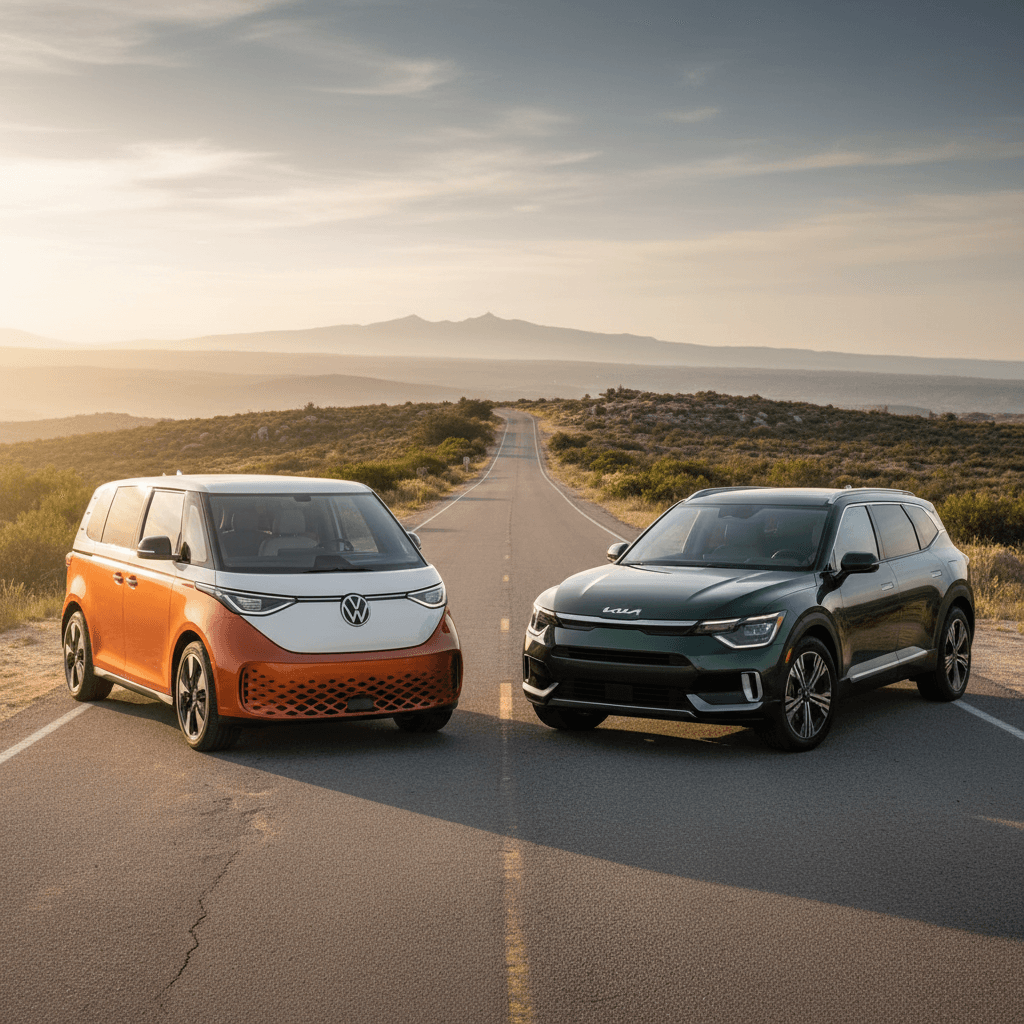
The 2026 Volkswagen ID Buzz long wheelbase is the rare electric vehicle that can make someone in a rental Kia actually turn around in traffic to stare at you. It’s a rolling mood, a three‑row family hauler in a Hawaiian shirt. But once the Instagram glow fades, you still have to live with it, range, charging, car seats, Costco runs, the whole domestic circus.
Quick Take
2026 ID Buzz Long Wheelbase at a Glance
Key Numbers for the Long Wheelbase ID Buzz
For the U.S., the long wheelbase is the only ID Buzz you can buy, and it’s configured as a three‑row people mover out of the box. In Europe there’s an entire Buzz family, short and long wheelbases, cargo versions, and now the GTX performance trims with dual‑motor all‑wheel drive and the same two‑battery strategy (79 kWh short, 86 kWh long).
Model-Year Reality Check
What’s New for 2026, and the Weird Model-Year Story
If you’re coming to the ID Buzz fresh, it’s easy to think of “2026” as a big update year. In reality, the story is more bureaucratic than dramatic. Volkswagen has decided to skip a formal 2026 model year in the U.S. and roll momentum toward a 2027 refresh, largely because early sales haven’t matched the hype and federal EV incentives have been in flux. Under the skin, though, the long‑wheelbase formula is now well‑defined.
- U.S. vans use the long wheelbase only, with roughly 128‑inch wheelbase and 195‑inch overall length.
- Battery pack is the larger ~91 kWh gross / ~86 kWh usable unit shared with the European long‑wheelbase models.
- Single‑motor rear‑drive and dual‑motor all‑wheel drive are both available; the AWD versions mirror the GTX hardware even if badging and tuning differ by region.
- Software and infotainment are on the newer ID platform with an improved 12.9‑inch touchscreen, better menus, and more robust driver‑assist features compared with early ID.4-era systems.
How to Shop Model Years Smartly
Space, Seating, and Family Practicality
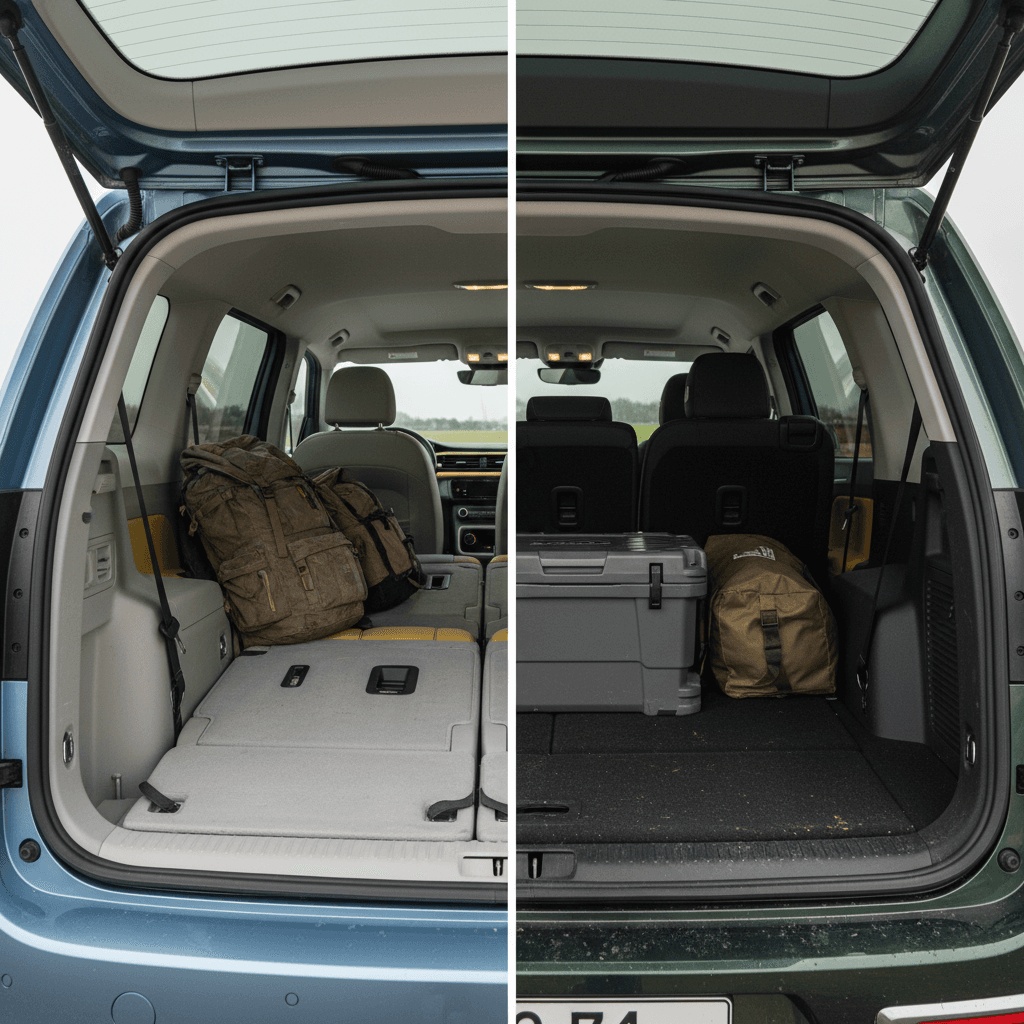
The whole point of the long‑wheelbase Buzz is space. Stretching the wheelbase by about 10 inches versus the original European two‑row van unlocks a genuinely adult‑usable third row and a much larger cargo area. Think of it as an electric minivan in funky retro cosplay.
Seating Layouts and Everyday Usability
VW finally builds the electric family bus the design always teased
Flexible Row 2
The second row slides several inches fore and aft, so you can trade legroom with the third row or open a bigger cargo well. In most trims these seats don’t tumble completely out of the way like a Pacifica’s Stow ’n Go, but they’re more comfortable.
Removable Row 3
The third row splits and can be removed in two sections. That’s clutch if you’re toggling between "people and dog" and "people and IKEA" duty.
Real Cargo Volume
With all seats up you have decent luggage space; fold or pull the third row and you’re looking at serious cubic footage, well into traditional minivan territory.
Car Seat Reality
Ambience and Design
The long‑wheelbase Buzz inherits the same cheery, lounge‑like interior as the short van: bright colors, playful trim, and a general sense that someone in Wolfsburg smuggled fun past the finance department. Visibility is excellent, the upright seating position is easy on knees and backs, and there are enough cubbies to lose a small tablet for weeks.
Practical Quirks
There are still some head‑scratchers. Not every trim gets power sliding doors. The second row isn’t as modular as a traditional minivan’s. The floor is high because of the battery, so if you’re long‑legged you’ll notice your knees riding up in the third row. Nothing fatal, but worth a long test‑sit with the whole crew.
Battery, Range, and Charging for the Long Wheelbase ID Buzz
Mechanically, the 2026‑spec long wheelbase ID Buzz is simple to describe: one big battery, two powertrains. All long vans use roughly a 91 kWh gross / 86 kWh usable lithium‑ion pack. In most markets, the rear‑drive versions target WLTP ranges in the mid‑280‑mile bracket, with the long‑wheelbase models slightly behind the short bus because, physics. In U.S. EPA testing, early long‑wheelbase AWD vans have landed around the low‑230‑mile mark, with real‑world highway testers regularly seeing something closer to 190–210 miles on a full charge.
Long Wheelbase ID Buzz Battery and Range Snapshot
Approximate values for guidance; exact ratings vary by wheel size, trim, and test cycle.
| Variant | Drivetrain | Usable Battery | Official Range | Typical Real‑World Highway |
|---|---|---|---|---|
| Pro LWB | RWD | ~86 kWh | Mid‑240s miles (EPA est.) | ~200–210 miles |
| GTX / AWD LWB | AWD dual‑motor | ~86 kWh | Low‑230s miles (EPA) | ~180–200 miles |
Remember: WLTP numbers (often quoted in Europe) are typically higher than U.S. EPA ratings.
Charging Performance
Everyday Charging Considerations
1. Plan Around a 200‑Mile Comfort Zone
If you treat 180–210 miles as your realistic highway window between fast charges, you’ll rarely be disappointed. This is a van that likes to pause for lunch about as often as your kids do.
2. Home Level 2 is Basically Mandatory
With a 86 kWh pack, you want a 40‑amp or better Level 2 charger at home. Figure roughly 9–10 hours from near‑empty to full. If you’re in a single‑family home, that’s straightforward; apartment dwellers should confirm workplace or public charging access first.
3. Battery Longevity
Volkswagen backs the high‑voltage battery for 8 years or 100,000 miles to at least 70% capacity. Day to day, aim for an 80% charge limit unless you’re heading out on a road trip, your future used‑Buzz buyer will thank you.
If You’re a Range Maximalist…
On-Road Feel and the GTX Long Wheelbase
Numbers first: dual‑motor performance versions of the ID Buzz (wearing the GTX badge in Europe) deliver around 335 horsepower and more than 400 lb‑ft of torque through all four wheels. In long‑wheelbase guise, that’s still good for a 0–60 mph run in the mid‑6‑second range, plenty brisk for something with the aero profile of a loaf of bread and about as much mass as a small moon.
How the Long Wheelbase ID Buzz Drives
Spoiler: it’s more chill surf wagon than Nürburgring refugee
Steering & Handling
Steering is light and accurate but not brimming with feedback. The long wheelbase and hefty curb weight mean this is a van that prefers smooth arcs to tight switchbacks. Push it and you’ll be reminded, gently but firmly, that physics still exists.
Ride Quality
On the right wheel and tire combo, the Buzz rides comfortably if not luxuriously; big impacts can still make their way into the cabin. Think modern minivan rather than luxury SUV, which suits the mission.
Noise & Vibes
Wind and tire noise are well‑controlled considering the billboard sides. The electric powertrain is nearly silent; most of what you hear will be children arguing about who had the tablet first.
GTX or Not?
ID Buzz Long Wheelbase vs Other 3‑Row EVs
Context is everything. As a three‑row EV, the long‑wheelbase ID Buzz doesn’t live in a vacuum; it parks next to Kia’s EV9, Volvo’s EX90, the Tesla Model X, and, if you’re cross‑shopping fuel types, a forest of hybrid and gas minivans. Where the Buzz really competes is in emotional bandwidth: it’s the only one that makes total strangers in grocery‑store parking lots genuinely happy to see you.
How the ID Buzz LWB Stacks Up
High‑level comparison against key three‑row EV competitors.
| Model | Seating | Usable Battery | EPA Range (approx.) | Max DC Charge | Vibe |
|---|---|---|---|---|---|
| VW ID Buzz LWB | 6–7 | ~86 kWh | ~230 mi (AWD) | ~185–200 kW | Retro electric van |
| Kia EV9 | 6–7 | 76–95 kWh | 230–304 mi | ~215 kW | Modern SUV, serious range |
| Tesla Model X | 6–7 | ~95 kWh | 330+ mi | >250 kW | Luxury performance crossover |
| Volvo EX90 | 6–7 | ~107 kWh | Mid‑280s mi | >200 kW | Scandi luxury SUV |
Exact specs vary by trim; this is meant as a directional guide, not a VIN‑decoder.
The Honest Trade
Charging Access, NACS Adapters, and Road Trips
Starting in late 2025, Volkswagen EVs in the U.S., including the ID Buzz, gain access to Tesla’s Supercharger network via a NACS (North American Charging Standard) adapter. That’s a big deal for the long‑wheelbase Buzz, whose modest range benefits from more frequent, more reliable fast‑charge stops.
- VW sells a branded NACS adapter (around the $200 mark) that lets CCS‑equipped Buzz models plug into Tesla Superchargers.
- Original owners of eligible new ID Buzz models can get partial rebates during the launch window; used buyers will typically pay full freight for the adapter.
- Some early‑build 2025–2026 vans may require a dealer software update so the car and charger speak the same language cleanly.
Planning Road Trips
With Supercharger access added to existing CCS networks (Electrify America, EVgo, etc.), the long‑wheelbase Buzz becomes a plausible road‑trip machine, as long as you’re honest about its range. Think two‑to‑three‑hour stints between 25–30 minute stops, not cannonball runs across Nebraska.
Where It Still Lags
Competing three‑row EVs like the EV9 simply go farther between plugs. If your family rhythm is eight‑hour stints with one bathroom break, the Buzz will feel like the needy child in the caravan. For most real families, who stop anyway, it’s less of a problem than the spec sheet suggests.
Ownership Costs and the Growing Used ID Buzz Market
New, the long‑wheelbase ID Buzz is not cheap. Even overseas, well‑equipped LWB vans punch into premium pricing territory, and the U.S. launch stickers north of many gasoline minivans. That’s one reason VW is taking a breath between model years. The bright side: a soft new‑car market tends to create a much more interesting used EV market within a couple of years.
What to Watch on a Used Long Wheelbase ID Buzz
This is where Recharged’s EV‑specific tools matter
Battery Health
The 86 kWh pack is robust, but usage patterns matter. A Recharged Score battery health report lets you see how much usable capacity remains instead of guessing from a generic dashboard bar graph.
Warranty & Software
Check remaining factory coverage on the battery and high‑voltage components, and confirm that all charging‑related software updates and recalls have been applied.
Depreciation Reality
High MSRP plus modest range is a recipe for faster depreciation. For savvy used‑EV shoppers, that’s an opportunity: you’re paying for the design and space, not eating the initial hype markup.
How Recharged Fits In
Ready to find your next EV?
Browse VehiclesWho the 2026 ID Buzz Long Wheelbase Is Really For
The long‑wheelbase ID Buzz is an unapologetically emotional purchase in a very rational segment. If your spreadsheet rules all, the Kia EV9 or a plug‑in‑hybrid minivan will probably win the comparison test in your head. But if you want an electric family vehicle that feels deliberately different, a car you’ll remember in 20 years, the Buzz has no direct rival.
You’re a Great Fit for the ID Buzz LWB If…
1. You Value Style as Much as Specs
You’re willing to trade 50–70 miles of extra range for an EV that doesn’t look like every other crossover in the preschool pickup line.
2. Your Life Has a Home Charger
You have (or can install) 240V Level 2 charging at home, so the Buzz can quietly refill overnight instead of hunting public stations daily.
3. Your Road Trips Are Human‑Scale
You usually stop every 2–3 hours for bathrooms and snacks anyway, so a 200‑mile real‑world window between charges doesn’t feel like a burden.
4. You’re Eyeing the Used Market
You’re watching early‑build vans carefully, waiting for depreciation to do its work, then you’ll swoop in with data on battery health and fair pricing from a marketplace like Recharged.
The 2026 Volkswagen ID Buzz long wheelbase isn’t the rational pick in every column. It’s not the range king, not the cheapest way to get sliding doors and three rows, and not the most polished driver’s car. What it is, is rare: a family EV with genuine charm, honest utility, and a personality big enough to justify its frontal area. If that combination speaks to you, the smartest move may be to let someone else pay new‑car money, and then find a verified, battery‑health‑checked Buzz on the used market when the timing and the pricing line up.