If you’re eyeing a 2025 Mini Cooper Electric (or earlier Mini Cooper SE) as a fun, affordable city EV, you’re probably also wondering: are there hidden problems? This guide walks through real-world issues Mini EV owners report, charging glitches, range quirks, cold-weather behavior, and more, then helps you decide if a used Mini Cooper Electric fits your life and how to shop one smartly.
Mini Electric naming 101
2025 Mini Cooper Electric overview
The 2025 Mini Cooper Electric continues the brand’s long-standing formula: a small, playful hatchback with a relatively short range but strong character. Earlier SE models used a ~32 kWh battery and delivered roughly 100–120 miles of real-world range; the new-generation 2025 Cooper Electric gets a larger pack and more range on paper, but the core trade-offs are similar: excellent city manners, tight packaging, and limited road-trip ability.
Where the Mini Electric shines
- Urban commuting: Easy to park, quick off the line, great for 20–40 mile daily use.
- Enthusiast feel: Firm chassis, direct steering, and the familiar Mini personality.
- Home charging friendly: Smaller battery makes overnight Level 1 or Level 2 charging easy.
Where it struggles
- Road trips: Limited range and modest DC fast charge speeds.
- Harsh climates: Cold weather can noticeably impact both range and performance.
- Cargo and cabin space: Great for one or two people, tight for families or big gear.
Range reality check
Known 2025 Mini Cooper Electric problems
Because the 2025 Mini Cooper Electric is still relatively new, hard failure data is limited. But between early owner reports, forums from the SE generation, and general Mini reliability data, we can group the main concerns into a few buckets:
- Charging issues and communication errors with some public DC fast chargers
- Confusion around range estimates (the "guess-o-meter") and cold-weather range drops
- Occasional HVAC and heater failures reported on earlier SEs
- Feature deletions or missing options on some trims or model years
- Isolated battery or high-voltage component recalls in very small numbers, mostly outside the U.S. so far
Mini Cooper Electric ownership snapshot
Good news on overall reliability
Battery health, range, and degradation
Mini deliberately uses a relatively large buffer on its earlier SE battery pack. That means when the car shows 0–100%, you’re not actually cycling the pack from absolute empty to absolute full, which helps limit long-term degradation. Many early SE owners with 4–6 years of use still report usable ranges close to what they saw when the car was new.
Battery-related issues and what they really mean
Most Mini Electric owners see more quirks than outright failures.
Perceived range loss
- Cold-weather impact
- More highway driving than before
- Short trips with lots of HVAC use
Tip: Track miles driven per % instead of the guess-o-meter.
Guess-o-meter swings
True degradation
How Recharged checks Mini EV batteries
Charging issues to watch for
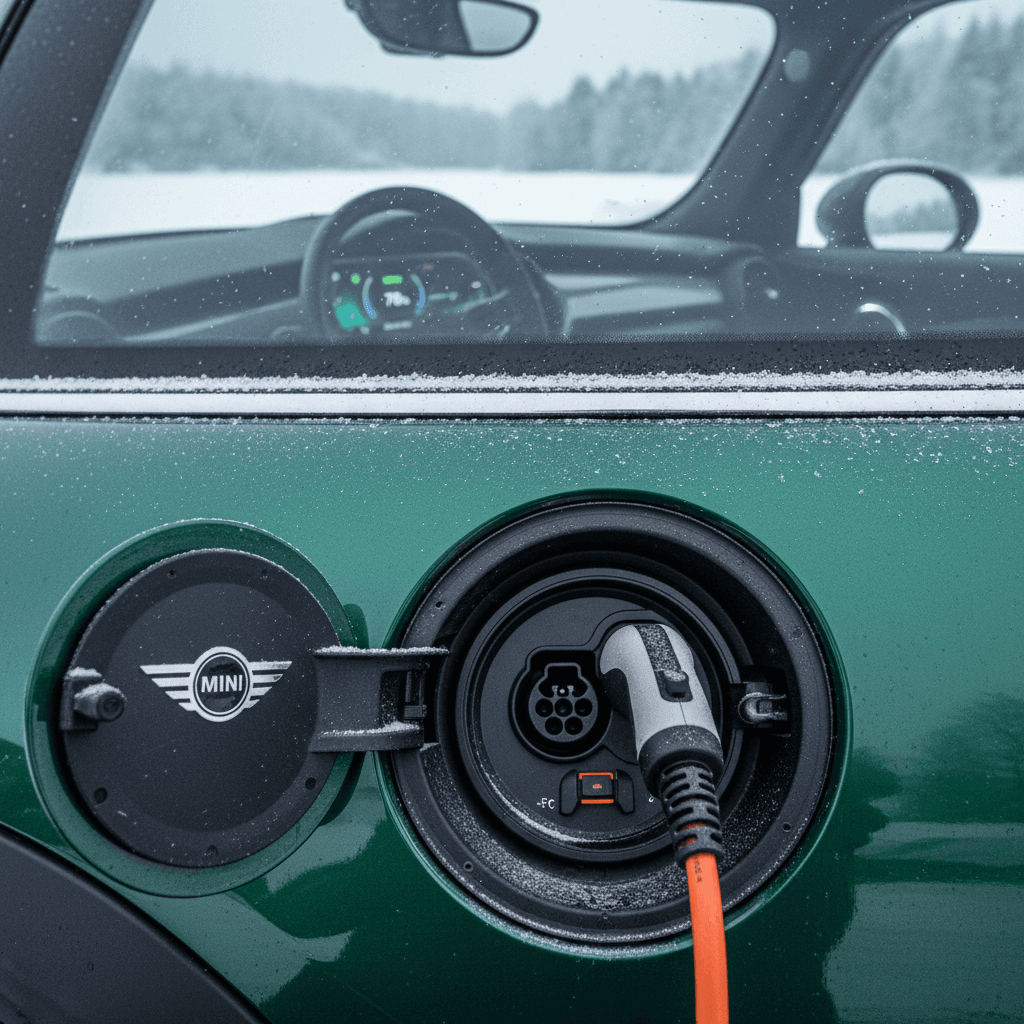
If there’s one consistent theme in Mini Cooper Electric and SE owner discussions, it’s charging behavior, especially with public DC fast charging. The problem isn’t that the car can’t fast charge; it’s that some station hardware and software combinations interact poorly with Mini’s charging system.
- Sessions that stop after 10–30 seconds at some DC fast chargers (often Electrify America or similar networks)
- Error messages about charging with reduced power at home or on Level 2
- Sensitivity to heavy cables at some stations, where supporting the connector during the handshake can keep a session alive
- Confusion when home wallboxes or universal chargers default to a lower amperage than the Mini can accept
Common Mini Cooper Electric charging problems
What owners report and how serious each issue usually is.
| Issue | Where it shows up | How it feels | How to respond |
|---|---|---|---|
| DC fast charge session stops after a few seconds | Specific stations or networks | You plug in, charging starts, then the station errors out | Try another stall or network. If the car fails on many stations, have the dealer check the DC charging hardware under warranty. |
| "Charging with reduced power" message | Home Level 2 | Charge rate suddenly drops compared with normal | Check amperage settings in both the car and the EVSE. If unchanged and persistent, book a service appointment. |
| Won’t start charging on one home charger but works elsewhere | Home, with a specific wallbox | Mini charges fine on other equipment | Check for firmware updates on the charger and its max current settings. In some cases, the EVSE, not the car, is the real culprit. |
| Connector needs to be held up at the car | Heavier DC fast-charger cables | Session fails unless you support the plug | Annoying but not typically harmful; if it happens often, document it and ask the dealer to inspect the inlet and latch. |
Use this as a triage guide, many charging quirks are solvable without major repairs.
Don’t judge the car by one bad charger
Charging checks before you buy a used Mini Cooper Electric
1. Test at your likely home setup
If possible, plug the car into the outlet or Level 2 charger you plan to use day to day. Confirm it pulls the expected power and doesn’t throw warnings.
2. Try at least one public DC fast charger
A 10–15 minute DC session will tell you whether the car can initiate and hold a fast charge. Watch for repeated failures or unusually low power that never rises.
3. Look for historic charging warnings
Ask the seller for screenshots from the car’s app or instrument cluster showing past alerts, or have a dealer scan for stored charging-related error codes.
4. Confirm onboard charger rating
Earlier SE models top out at about 7–11 kW AC. Make sure your home EVSE settings match what the car can take so you’re not blaming the Mini for a configuration mismatch.
Cold weather performance and heating quirks
Cold weather is where both the 2025 Mini Cooper Electric and older SE really show their limitations. Like all EVs, they lose range in the cold, but Minis also have a relatively small pack and, in earlier generations, no dedicated battery heater. That can mean noticeably reduced power and range in sub-freezing conditions.
Typical winter complaints from Mini EV owners
Most are manageable, but you should go in with eyes open.
Big range swings
Reduced power output
Occasional heater failures
How to make a Mini EV happier in winter
Software, features, and everyday annoyances
Most Mini Cooper Electric complaints aren’t about catastrophic failures, they’re about daily livability. The good news is that many of these are subjective, but you should know what you’re getting:
- Infotainment system that some owners find dense or unintuitive, leading many to rely on Apple CarPlay or Android Auto as much as possible.
- Missing or deleted features on some trims or model years, sometimes replaced with cash credits rather than hardware, retrofits are often impossible or impractical.
- A hyper-sensitive range estimator that constantly recalculates and can make new EV drivers anxious.
- Tight rear seat and cargo space that makes the car less practical as an only family vehicle.
Annoyances you can live with
- Using CarPlay to largely ignore Mini’s own navigation and menus.
- Accepting the range estimator as a noisy suggestion rather than a promise.
- Keeping a second, longer-range vehicle in the household for road trips.
Potential deal-breakers
- Needing real 4–5 passenger capacity regularly.
- Wanting hands-off driver-assistance on long highway drives.
- Expecting Tesla-like software polish and over-the-air feature growth.
Recalls and safety concerns
On the gasoline side, Mini Coopers have seen multiple recalls in recent years. For the electric variants, high-voltage safety issues appear rare and tightly scoped. One small recall campaign in China, for example, involved just a handful of locally produced Mini EVs with potential battery self-discharge due to defective cells; those cars were inspected and repaired or re-packed as needed.
In North America and Europe, the early SE has not been associated with widespread pack failures or high-profile fire risks the way some early EVs from other brands were. That said, you should still:
- Check the VIN of any Mini Cooper Electric you’re considering against the latest recall database.
- Verify that all open recalls (EV and non-EV related) have been completed by a Mini dealer.
- Ask specifically about any prior battery, HV wiring, or DC fast-charging module repairs and request documentation.
Never ignore high-voltage warnings
How reliable is the Mini Cooper Electric overall?
Traditional reliability rankings often lump the Mini Cooper Electric in with gas Minis, which historically have been average at best for long-term reliability. That can make the charts look scarier than the EV reality. Owner communities and long-term reports suggest that the Mini EV powertrain itself, motor, inverter, and battery, has been reasonably robust, with more headaches coming from charging compatibility and typical German-car electronics gremlins.
How Mini Cooper Electric reliability stacks up
Think of it as a premium city EV, not a set-it-and-forget-it appliance.
What owners like
- Fun driving dynamics and premium feel.
- Low running costs vs. gas Minis.
- Battery health holding up well for many early cars.
What frustrates them
- Charging quirks at some public networks.
- Limited range for highway-heavy lifestyles.
- Occasional electronic or HVAC glitches.
Overall takeaway
Used Mini Cooper Electric buying checklist
If you’re shopping a used 2025 Mini Cooper Electric or earlier SE, you’re in the sweet spot where depreciation has done its work but battery life should still be solid, if you pick the right car. Here’s a structured way to evaluate one.
Step-by-step inspection guide
1. Confirm real-world range
Start with a high state of charge, drive a known route (ideally mixed city and highway), and compare miles driven to % battery used. For many SEs, around 1 mile per 1% in mild weather is a healthy sign.
2. Pull a battery health report
Ask for any available battery diagnostics. When you buy through <strong>Recharged</strong>, this is included in the Recharged Score, so you’re not guessing about hidden degradation.
3. Inspect charging behavior
Test both AC and DC charging. On DC, the car should ramp up to a reasonable power level and hold it. On AC, it should charge at or near its rated onboard charger speed without unexplained derates.
4. Check HVAC and defrost performance
With the car plugged in and unplugged, test heat, defrost, and seat/steering-wheel heaters. Weak or inconsistent heat is a red flag, especially in colder regions.
5. Scan for warning lights and stored codes
Any persistent warnings related to the high-voltage system, charging, or driveline warrant deeper investigation. A pre-purchase inspection by a Mini dealer or EV specialist is money well spent.
6. Review recall and service history
Ask for a full service printout and confirm that all recalls and campaigns are completed. Pay special attention to any high-voltage component replacements or charging-module updates.
7. Evaluate fit for your lifestyle
Be honest about your use case. If you regularly exceed the Mini’s comfortable range window or rely heavily on public charging in a region with spotty infrastructure, another EV may be a better fit.
How Recharged simplifies used Mini EV shopping
Ready to find your next EV?
Browse VehiclesFAQ: 2025 Mini Cooper Electric problems
Frequently asked questions about Mini Cooper Electric problems
Should you buy a used Mini Cooper Electric?
If your mental picture of an EV is a long-range, do-everything family hauler, the 2025 Mini Cooper Electric and its SE predecessors will probably frustrate you. But if you want a compact, charismatic city car and understand the trade-offs, limited range, some charging quirks, and typical Mini electronics, there’s a lot to like. The key is going in with realistic expectations and a clear view of battery health and charging behavior.
When you shop through Recharged, you get a verified battery health report, transparent pricing, and EV-specialist support throughout the buying process. That means you can focus on deciding whether the Mini Cooper Electric’s unique personality and urban strengths line up with your life, rather than worrying about what problems might be hiding under the hood.