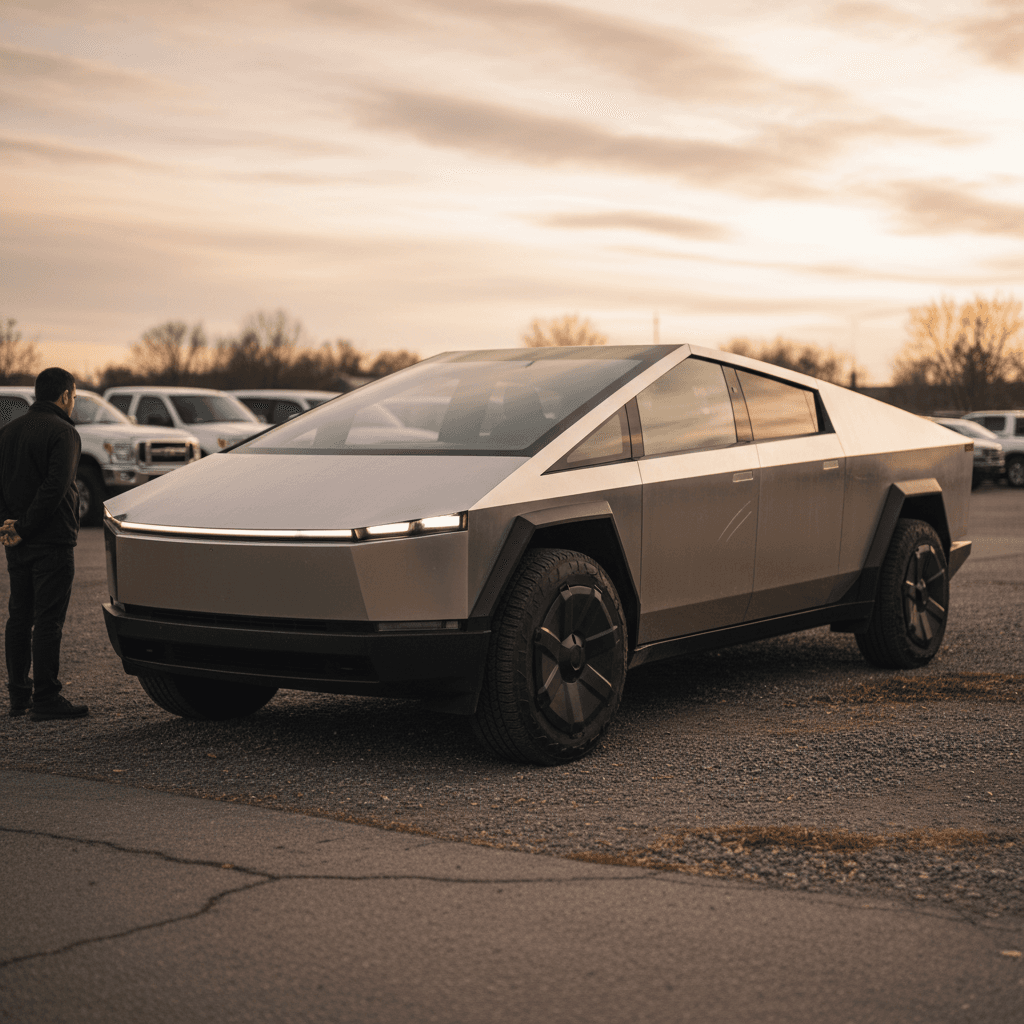
If you’re looking up a 2026 Tesla Cybertruck review for used buyers, you’re not alone. After a hype-filled launch, production headaches, and a spectacular comedown in prices, the Cybertruck has finally hit the used market in real numbers. That creates opportunity, if you understand the trade-offs around range, depreciation, and real-world usability.
Context: 2024–2026 changed the Cybertruck story
Why a 2026 used Cybertruck review matters
In 2026, the Cybertruck is a known quantity rather than a moonshot promise. We’ve seen real‑world range tests, towing road trips, and a long list of recalls and quality issues. At the same time, Tesla has slowed production, cut trims, and watched demand soften, which has hammered resale values. That combination makes the Cybertruck one of the riskiest but potentially best‑value used electric pickups you can buy, if you approach it with clear eyes.
Used Cybertruck market snapshot, 2024–2026
Quick take: Is a used Tesla Cybertruck worth it in 2026?
Used Cybertruck in 2026: Pros and cons at a glance
Big value if you fit the use case, frustrating if you don’t.
Where a used Cybertruck makes sense
- You want an attention‑grabbing EV that still turns heads everywhere.
- You mostly drive short to medium distances and tow occasionally, not constantly.
- You value the Supercharger network and over‑the‑air software features.
- You’re buying at a significant discount versus original MSRP and can tolerate some quirks.
When you should skip it
- You need consistent long‑distance towing or road‑tripping with few charging stops.
- You live in a cold climate and can’t accept big winter range swings.
- You’re risk‑averse about recalls, build quality, and repair complexity.
- You can get a more practical Rivian R1T or F‑150 Lightning for similar money.
Bottom line for 2026 shoppers
Used Cybertruck prices, deals, and depreciation
By 2026, the Wild West phase of Cybertruck pricing is over. Instead of six‑figure auctions, you’re looking at a spectrum that depends heavily on trim, miles, and build date. Early 2024 Foundation Series trucks that originally sold around or above $100,000 have in some documented cases resold in the $60,000–$70,000 range with only a few thousand miles. That’s a brutal write‑down for first owners and a clear buying opportunity for you.
Typical used Cybertruck price bands in 2026 (illustrative)
Real listings change weekly, but this captures the broad shape of the market in early 2026.
| Trim & year (typical) | Odometer | Common asking range* | Notes |
|---|---|---|---|
| 2024 Foundation AWD | 5,000–25,000 mi | $62,000–$78,000 | Often loaded with accessories and software; some sellers still test sky‑high asks. |
| 2024–2025 AWD (non‑Foundation) | 10,000–35,000 mi | $58,000–$72,000 | Sweet spot for many buyers; still under basic and battery warranties. |
| 2024–2025 Cyberbeast | 5,000–30,000 mi | $78,000–$95,000 | Massive performance, but depreciation and range realities narrow the audience. |
| Late‑2025+ trucks | Under 15,000 mi | $60,000–$80,000+ | Priced in close competition with new inventory discounts and incentives. |
Expect wide variation based on condition, options, and recall status. Always check real‑time market data before you buy.
Depreciation is still in motion
Compared with conventional pickups, even mainstream EV pickups, Cybertruck depreciation is unusually steep in the first 12–24 months. Traditional full‑size trucks often lose around 20% in the first year; some Cybertrucks have given back more than twice that. The good news is that buying used in 2026 means someone else already paid the hype tax. Your risk now is less about instant value collapse and more about how much further prices drift as supply and sentiment evolve.
Range, towing, and real-world efficiency
On paper, higher‑trim Cybertrucks promise 300+ miles of range. In the real world, most owners and independent tests land well below that, especially at highway speeds. Highway range tests of well‑specced trucks have clustered around the mid‑200‑mile mark in mild weather. Add cold temperatures, bigger wheels, or aggressive driving and it’s easy to see numbers starting with a ‘1’ instead of a ‘2’ on a full charge.
Unloaded daily driving
- Highway commuting: Expect roughly 70–80% of the official rating when you sit at 70–75 mph.
- City and mixed driving: More forgiving; stop‑and‑go can help the truck approach its rated range.
- Cold weather: Like any EV, range can drop sharply in freezing temps. Plan conservatively in winter if you don’t have home charging.
Towing and heavy loads
- Real‑world towing reports with ~4,500 lb campers have averaged about 110–120 miles per charge at highway speeds.
- Heavier loads or higher speeds can cut that further, into double‑digit effective range.
- This isn’t unique to the Cybertruck, towing is punishing for every EV, but its bluff aerodynamics don’t help.
Don’t buy on brochure range if you plan to tow
For a used buyer in 2026, the key is to sanity‑check range claims against how you’ll actually use the truck. If most of your driving is local and you tow a few times a year within a couple hundred miles of home, the Cybertruck’s limitations are manageable, especially if you have reliable home charging. If you imagine cross‑country trailers at 75 mph, you’re signing up for a lot of charging stops and frustration.
Daily driving, ride quality, and practicality
As a daily driver, the Cybertruck is more livable than its meme status suggests, but it’s not a traditional pickup. The cabin carries the minimalist Tesla aesthetic to an extreme, with a large center screen handling nearly every function and a surprisingly quiet, refined ride thanks to the air suspension (on most non‑RWD trims) and low center of gravity.
- The turning circle and rear‑steer help in parking lots, but the truck is still physically huge and can feel intimidating in tight urban spaces.
- The vault (bed) is secure and weather‑protected, but the sloped sail pillars and high bed sides make loading from the side awkward compared with a conventional pickup.
- Interior storage and seating are generous, but some owners find material choices and fit-and-finish disappointing at the original price point.
- Visibility is mixed: the forward view is excellent; the rear view depends heavily on cameras and the screen.
Think of it as an EV lifestyle rig first, truck second
Reliability, recalls, and build quality
Launching an all‑new architecture, exoskeleton body, steer‑by‑wire, and a fresh manufacturing process in one truck was always going to stress Tesla’s quality systems. The Cybertruck’s first two years reflected that risk: high recall counts, visible panel inconsistencies, and software bugs that sometimes intersected with steering and braking feel.
Reliability realities for used Cybertruck buyers
You’re buying into a fast‑moving software platform plus young hardware.
High recall volume
Build quality scatter
Software dependency
Non‑negotiable: verify recall and service history
Battery health and warranty on a used Cybertruck
Battery health is the single biggest driver of long‑term value in any used EV, and the Cybertruck is no exception. These trucks use a large structural pack designed for long life, and field data so far doesn’t suggest catastrophic early degradation across the fleet. The bigger risk is buying a truck with hard use, poor charging habits, or frequent high‑speed towing that quietly shaved meaningful capacity off the pack.
Battery and charging checklist for used Cybertrucks
1. Confirm remaining battery warranty
Check the in‑app warranty section and build date. Most Cybertrucks on the used market in 2026 will have many years of battery and drive‑unit coverage left, which is a major safety net.
2. Review charging patterns
Ask the seller how they typically charged: frequent DC fast charging and constant 100% charges are harder on packs. A car that lived on <strong>Level 2 home charging</strong> at 60–80% is usually a better bet.
3. Look at displayed range vs. original rating
Compare the current 100% charge estimate to the original EPA figure for that trim. A moderate gap is normal; a huge delta can hint at aggressive use or underlying issues.
4. Use independent diagnostics if possible
Tools like a <strong>Recharged Score battery report</strong> can quantify usable capacity, fast‑charge history, and cell balance so you’re not guessing.
5. Check for charging hardware issues
Inspect the charge port door, port itself, and any included mobile connector or adapters. These components see a lot of real‑world abuse and aren’t cheap to replace.
How Recharged derisks Cybertruck battery questions
Stainless steel body, repairs, and ownership costs
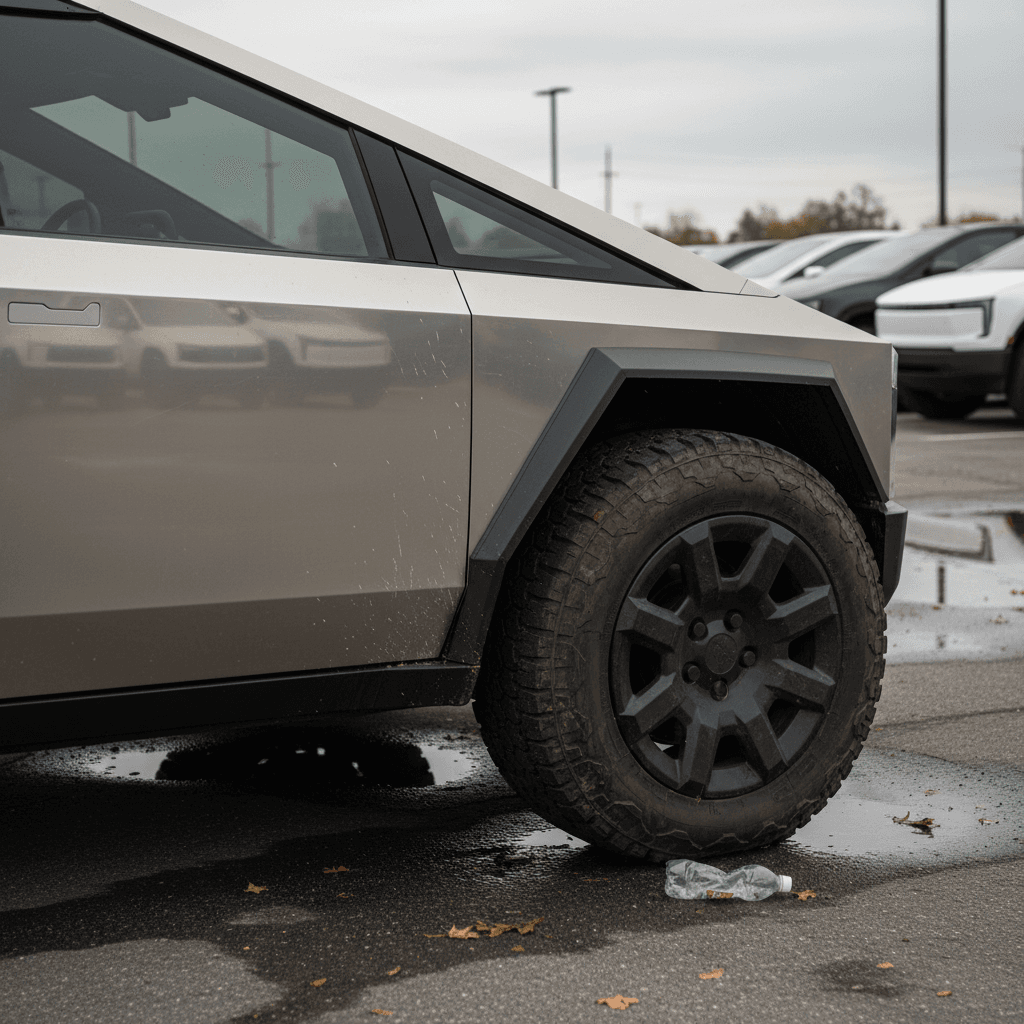
The Cybertruck’s bare stainless exoskeleton is its calling card, and a genuine ownership wildcard. Tesla emphasizes durability, but stainless is not magic. It can scratch, dent, and pick up swirl marks or discoloration. What’s different from a painted F‑150 is how you repair those flaws and who is willing to touch them.
What’s genuinely durable
- No traditional paint to chip, fade, or peel, which removes one major source of cosmetic aging.
- Stainless resists rust far better than typical pickup sheetmetal, especially in salty, winter climates.
- Minor surface scuffs can sometimes be blended with careful brushing in the grain direction, if you know what you’re doing.
Where costs can spike
- Panel damage that would be a simple repaint on another truck can require panel replacement and specialized labor here.
- Not all body shops are set up for Cybertruck repairs, especially structural or exoskeleton work.
- Insurance companies are still feeling out repair costs, which can impact premiums and total‑loss decisions.
Inspect stainless surfaces in bright, unforgiving light
How a used Cybertruck compares to Rivian and F-150 Lightning
By 2026, the Cybertruck isn’t the only electric pickup in town, and the used prices of rivals have softened too. That means you’re not choosing in a vacuum; you’re cross‑shopping a Cybertruck against mature competitors that often offer better refinement and predictability, if less spectacle.
Used electric pickup comparison snapshot (2026)
Cybertruck vs. Rivian R1T vs. Ford F‑150 Lightning
Tesla Cybertruck
- Strengths: Head‑turning design, integrated vault, access to Tesla’s Supercharger network, strong straight‑line performance.
- Weaknesses: Steep early depreciation, complex stainless repairs, polarizing styling, range hits when towing.
Rivian R1T
- Strengths: Polished interior, excellent ride/handling, clever storage (gear tunnel), strong off‑road chops.
- Weaknesses: Smaller dealer/service footprint, non‑traditional brand still proving long‑term durability.
Ford F‑150 Lightning
- Strengths: Familiar F‑150 ergonomics, strong dealer network, huge front trunk, good work‑truck ergonomics.
- Weaknesses: Range drops quickly when towing, slower charging on some trims, software less cohesive than Tesla’s.
Use your real use case to choose, not the spec sheet
Used Cybertruck buyer checklist
Step‑by‑step checklist before you buy a used Cybertruck
1. Verify build date, trim, and options
Confirm exactly which trim you’re looking at (Foundation, AWD, Cyberbeast, etc.), wheel size, and any bundled software like FSD or premium connectivity. These details heavily affect both value and usability.
2. Pull a battery and charging health report
Use tools like the <strong>Recharged Score</strong> to see real battery capacity, fast‑charge history, and charging patterns. Avoid guessing based only on the dash range estimate.
3. Check recall completion and service history
Ask for Tesla service records and cross‑check known recalls for the VIN. An incomplete recall list or long gaps in service history should trigger hard questions, or a walk‑away.
4. Inspect stainless and glass carefully
Walk the truck in bright light and low angles. Look for dents, mismatched panel grain, repairs around edges, and windshield cracks or chips; all can be expensive on this platform.
5. Test drive with your real use in mind
Bring any family members or gear you’ll regularly haul. Drive highway, city, and, if possible, a rougher stretch of road. Pay attention to steering feel, ride quality, rattles, and software responsiveness.
6. Price it against real‑time market data
Compare the asking price with similar Cybertrucks and cross‑shop rival EV pickups. In 2026, you should be seeing a meaningful discount vs. original MSRP to compensate for depreciation and risk.
How Recharged helps you shop a used Cybertruck smarter
If you decide a used Cybertruck fits your life, the hardest part is separating genuinely good trucks from early‑build science projects or poorly treated ex‑toys. That’s where a specialized EV marketplace like Recharged matters more than a generic classified listing.
What Recharged brings to the used Cybertruck equation
Data, diagnostics, and EV‑specialist support at every step.
Recharged Score battery diagnostics
Fair market pricing & financing
Trade‑in, instant offer, and delivery
Ready to find your next EV?
Browse VehiclesBecause Cybertruck values are still finding their floor, having an expert team that understands EV depreciation, battery risk, and the realities of stainless‑steel repair is a genuine advantage. Whether you’re trading out of a different EV, taking a flyer on a discounted Foundation truck, or just trying to understand what your current Cybertruck is worth, Recharged can put real numbers to the story.
Used Tesla Cybertruck FAQ
Frequently asked questions about buying a used Cybertruck in 2026
Final verdict: Who should, and shouldn’t, buy a used Cybertruck
In 2026, a used Tesla Cybertruck is no longer a speculative object of desire; it’s a real vehicle with a paper trail, recall history, and plenty of owner stories. The market has brutally repriced early hype, which is exactly why it’s worth a fresh look. If you want a distinctive EV that still turns heads, mostly drive shorter distances, and are comfortable trading some predictability for character, a carefully vetted used Cybertruck can be a compelling deal, especially when you let data, not hype, drive your decision.
If, on the other hand, you need a no‑drama work truck, plan constant long‑distance towing, or simply prefer quietly competent hardware over conversation‑starter design, you’re better served by a more conventional electric pickup or even a different type of EV altogether. The key is to match the Cybertruck’s real‑world strengths and weaknesses to your life, and to lean on tools like the Recharged Score and EV‑specialist guidance so you’re buying opportunity, not inheriting someone else’s expensive experiment.