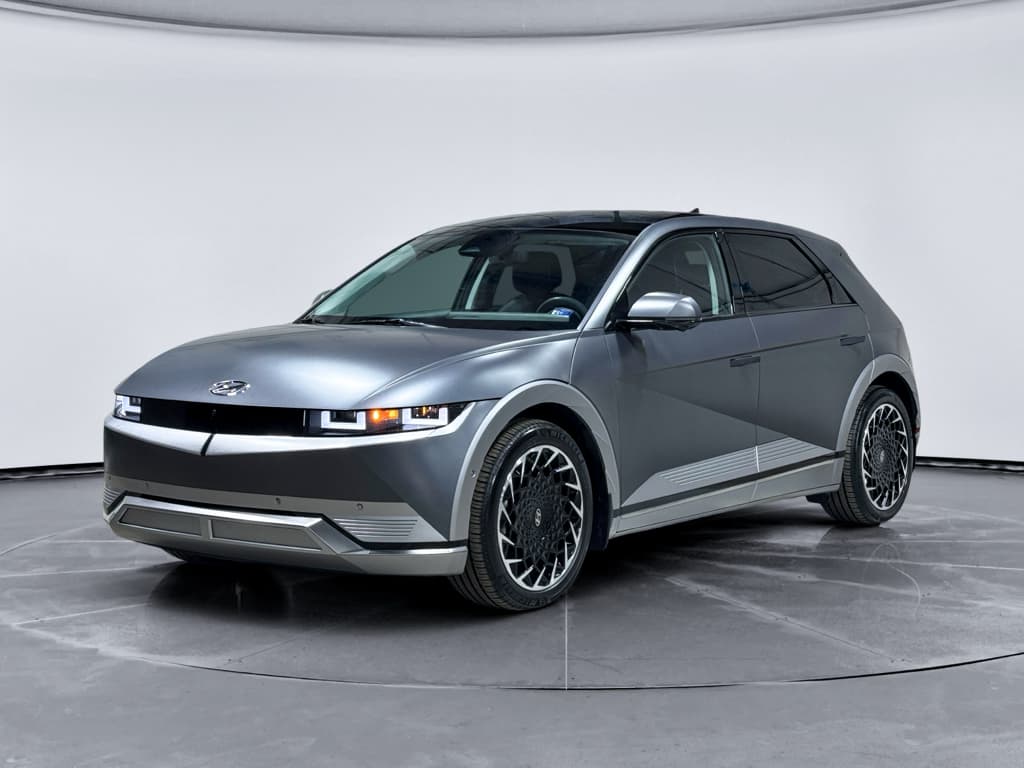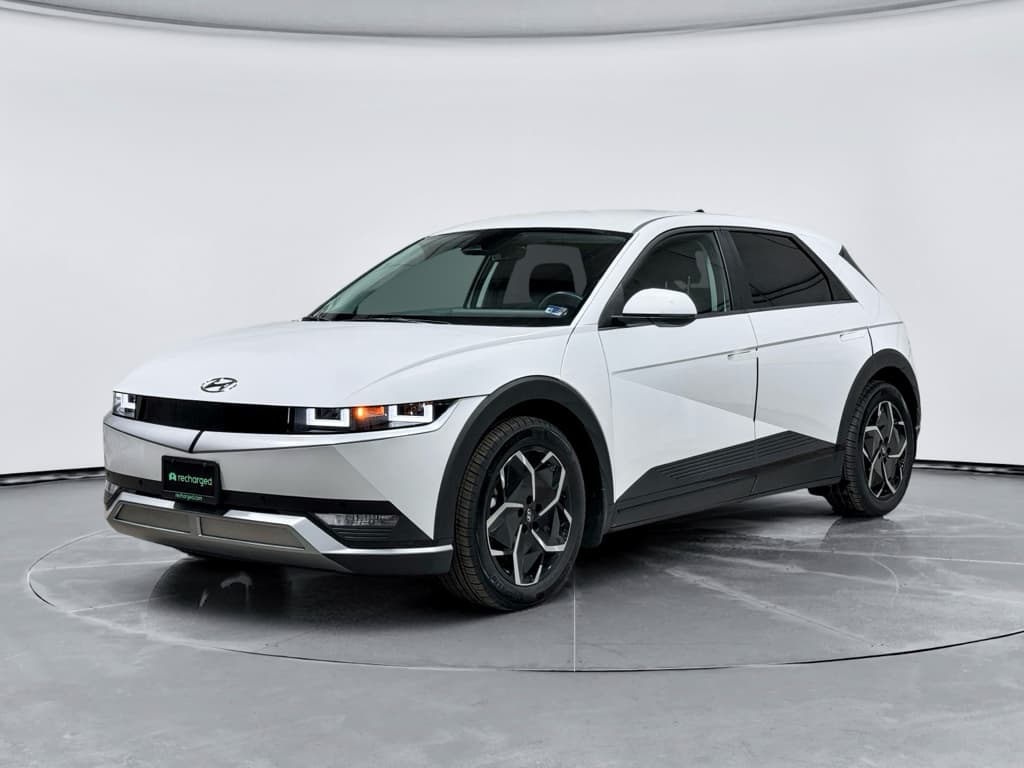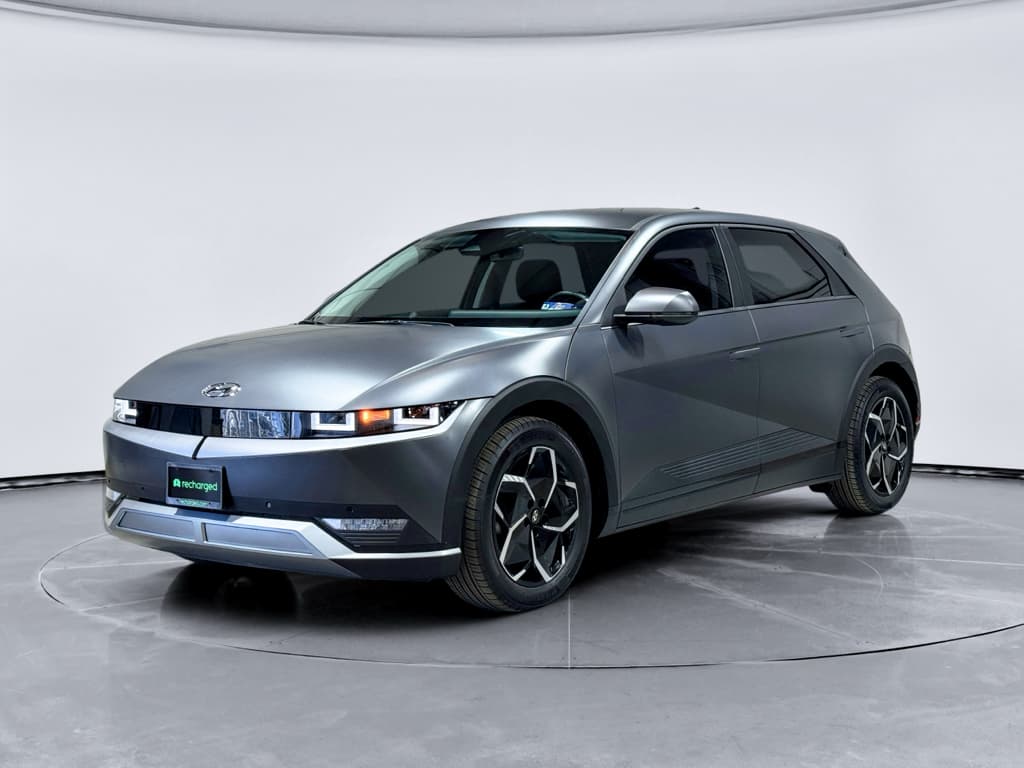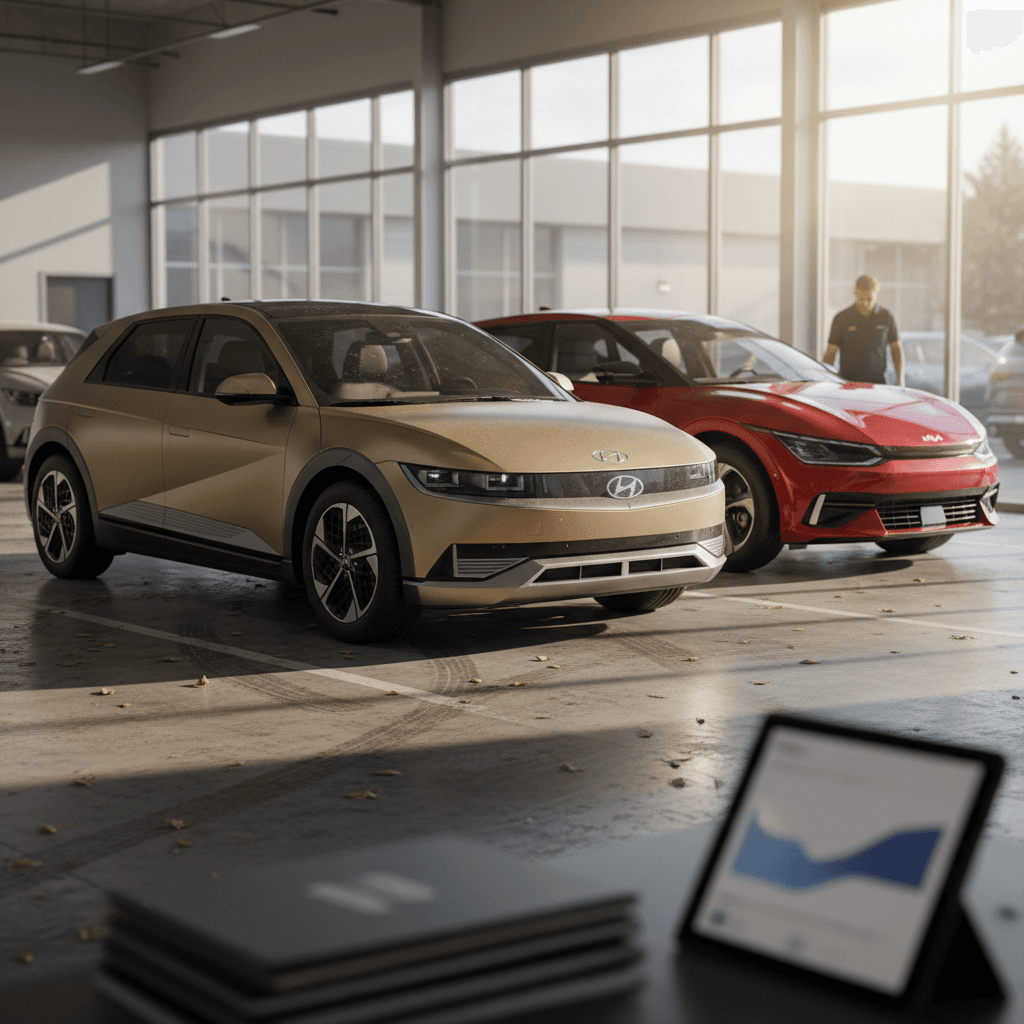
If you’re cross‑shopping a used Hyundai IONIQ 5 vs BMW iX, you’re not just picking an EV, you’re deciding between two very different takes on what a premium electric crossover should be. One leans hard into design and efficiency; the other into size, luxury, and presence.
Two excellent but very different EVs
IONIQ 5 vs BMW iX: who this comparison is for
This guide is written for U.S. shoppers looking at 2022–2025 Hyundai IONIQ 5 models and 2022–2024 BMW iX models on the used market. We’ll focus on real‑world ownership factors: depreciation, running costs, charging, space, and how each car feels to live with day‑to‑day.
- You want a premium EV with real range and fast charging
- You’re debating whether the BMW badge is worth the extra cost over an IONIQ 5
- You care about long‑term battery health and total cost of ownership, not just 0–60 numbers
- You’re open to buying online and getting expert support instead of playing dealership roulette
Used EVs are about tradeoffs, not perfection
At a glance: key specs for used Hyundai IONIQ 5 vs BMW iX
Core specs: used Hyundai IONIQ 5 vs BMW iX (U.S. trims)
Approximate specs for common trims you’ll see used. Always check the exact vehicle’s window sticker or build sheet, especially for wheel size and options that affect range.
| Spec | Hyundai IONIQ 5 (RWD Long Range) | Hyundai IONIQ 5 (AWD Long Range) | BMW iX xDrive50 | BMW iX M60 |
|---|---|---|---|---|
| Battery capacity (usable, approx.) | ~72–77 kWh | ~72–77 kWh | ~105 kWh | ~105 kWh |
| EPA range (best‑case trims) | Up to ~303 miles | ~260 miles | ~305–324 miles | ~296 miles |
| 0–60 mph (manufacturer/independent tests) | ~7.4 sec (RWD) | ~4.4–4.5 sec | ~4.4 sec | ~3.6–3.8 sec |
| Max DC fast‑charge rate | ~230–240 kW on 800V | ~230–240 kW on 800V | Up to ~195–200 kW | Up to ~195–200 kW |
| AC charging (Level 2) | Up to 11 kW | Up to 11 kW | Up to 11 kW | Up to 11 kW |
| Drive type | RWD or AWD | AWD | AWD dual‑motor | AWD dual‑motor |
| Size class | Mid‑size crossover | Mid‑size crossover | Full‑size luxury SUV | Full‑size luxury SUV |
Figures shown are typical for U.S. models but can vary by trim and wheel size.
Spec sheets don’t tell the whole story
Used pricing & depreciation: value vs luxury badge
Both of these EVs have already taken their biggest depreciation hit, but they sit in very different bands on the used market.
Typical U.S. used price ranges (early 2026 snapshot)
These are broad, real‑world asking‑price bands, not offers from Recharged, and they change fast.
Used Hyundai IONIQ 5
- Early SE/SEL RWD (2022): often mid‑$20Ks to low‑$30Ks depending on miles and condition.
- Limited & AWD: typically low‑ to mid‑$30Ks; low‑mileage or heavily optioned examples can run higher.
- IONIQ 5 N: still rare and expensive; priced more like a performance car than a family EV.
Used BMW iX
- xDrive50 (2022–2023): frequently in the high‑$50Ks to mid‑$70Ks, roughly half their original MSRP in just a few years.
- M60: often $70K+ used, especially with low miles or heavy options.
- Insurance & tax tend to be higher because of the original price and repair costs.
Depreciation picture
Price questions to ask yourself before choosing
1. What’s your total budget, not just purchase price?
Include taxes, registration, the cost of home charging, and at least the first year of insurance. For many buyers, a used IONIQ 5 keeps this total thousands below a used iX.
2. How much is the badge worth to you?
If you’ve always wanted a BMW, the iX delivers on presence and luxury. But if you’re stretching your finances to get into one, a well‑specced IONIQ 5 may be the healthier choice.
3. Do you plan to finance?
Monthly payment matters more than sticker price for most buyers. With Recharged, you can <strong>pre‑qualify for financing online with no impact to your credit</strong> and compare how an IONIQ 5 vs iX really fits your budget.
Range and efficiency: how far you actually go
Both SUVs offer real‑world highway range that makes long‑distance trips realistic, but they go about it differently: the IONIQ 5 with efficiency, the iX with a big battery.
EPA range & efficiency highlights
In independent highway testing, both models tend to come fairly close to their EPA numbers when driven sensibly, though cold weather, big wheels, and high speeds can knock 20–30% off almost any EV’s range. Because the iX carries a roughly 105‑kWh pack, it usually has a bit more usable range than an AWD IONIQ 5 on the same road trip, especially when loaded with people and gear.
Cold‑weather reality check
Charging speed and road‑trip ability
When it comes to fast charging on the road, the Hyundai IONIQ 5 punches way above its weight thanks to an 800‑volt architecture and excellent charging curve. The BMW iX can also charge quickly, but it leans more on battery size than peak speed.
Hyundai IONIQ 5 charging
- 800‑volt system enables very high DC rates on capable chargers.
- Larger‑battery models can add roughly 10–80% in about 18–20 minutes on a strong 350‑kW fast charger.
- Peak rates around the low‑200‑kW range in real use are common when conditions are right.
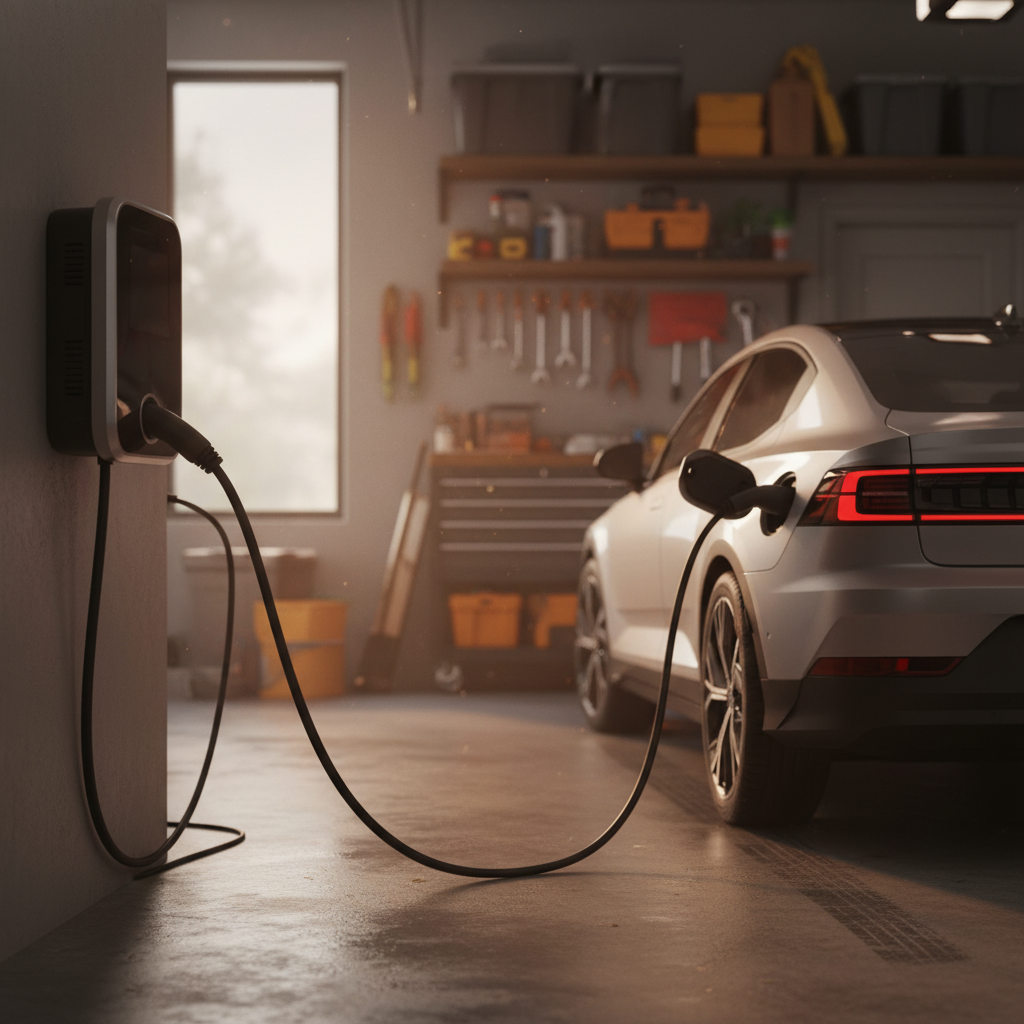
- 11‑kW onboard AC charger makes full overnight home charges realistic if you have a 240V Level 2 setup.
- Vehicle‑to‑load (V2L) lets you power tools, camping gear, or even another EV at low power.
BMW iX charging
- DC fast‑charging capability up to about 195–200 kW, depending on conditions.
- Typical 10–80% DC fast‑charge time is around 30–35 minutes on a strong charger.
- Because of the larger pack, you can often add ~100 miles of range in about 11–15 minutes.
- 11‑kW AC charging is standard; expect overnight home charges on a 240V Level 2 line.
- The sheer size of the pack means top‑off sessions take longer, but you’re starting with more range.
Road‑trip verdict
Space, comfort, and driving experience
On the road, these two EVs feel like they were designed for different customers. The BMW iX drives like a big, quiet, expensive luxury SUV; the IONIQ 5 feels like a lighter, more playful crossover that happens to rival some luxury cars on refinement.
How they feel to live with
Cabin space, refinement, and driving character at a glance.
Hyundai IONIQ 5
- Space: Wheelbase as long as some three‑row SUVs, with huge rear legroom and a flat floor.
- Comfort: Very quiet and composed; available reclining front seats with leg rests are a standout.
- Ride & handling: Light on its feet, with secure but not sporty handling. Steering is accurate but not especially talkative.
- Driving feel: Easygoing, with instant torque in AWD versions and simple one‑pedal driving modes.
BMW iX
- Space: Wider and roomier overall, with true luxury‑SUV presence and more shoulder room.
- Comfort: Exceptional seat comfort, hushed cabin, and a solid, heavy feel on the highway.
- Ride & handling: Feels planted and confident; more athletic than its size suggests, especially on smaller wheels.
- Driving feel: Abundant power, especially in M60 guise. Effortless acceleration and smooth regenerative braking tuning.
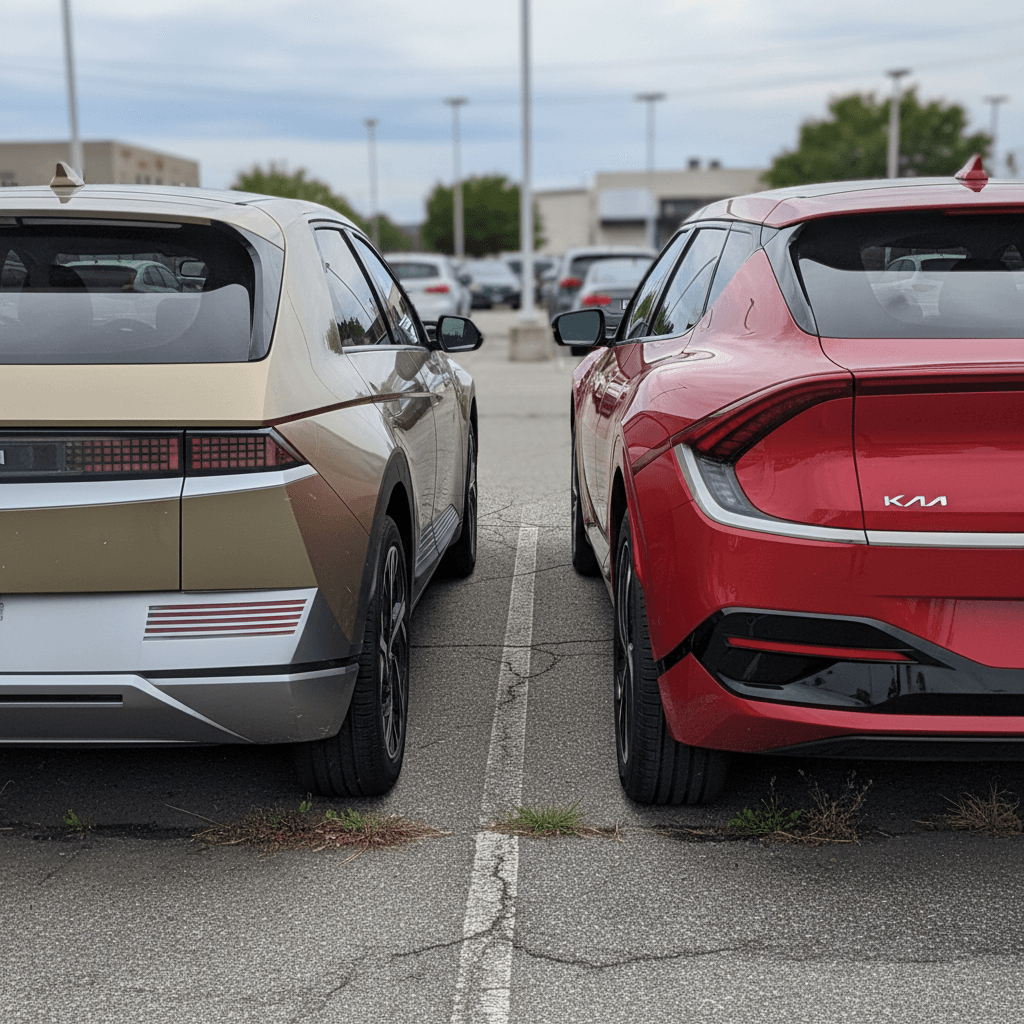
Parking and daily maneuvering
Technology, safety, and everyday usability
Both EVs are loaded with advanced driver‑assist tech and big screens, but they take different paths: Hyundai goes for clean, simple interfaces; BMW leans into high‑end materials and deeper configurability.
Hyundai IONIQ 5 tech & safety
- Dual 12.3‑inch displays for the cluster and infotainment, with a straightforward UI and physical climate controls.
- Hyundai SmartSense driver‑assist suite: adaptive cruise, lane keeping, available Highway Driving Assist, blind‑spot monitoring, and more.
- Available surround‑view cameras and remote smart‑parking in some trims.
- Wireless phone charging, wired smartphone mirroring, and plenty of USB‑C ports on later model years.
BMW iX tech & safety
- Large curved display spanning the gauge cluster and infotainment, iDrive system with deep customization (and a learning curve).
- Advanced driver assists including adaptive cruise with lane‑centering, parking assist, and optional more advanced highway features depending on build.
- Available high‑end audio, crystal interior controls, and high‑quality materials throughout.
- Over‑the‑air updates that can refine software over time.
Used‑car tech gotcha
Ownership costs: insurance, maintenance, and warranty
Neither of these vehicles burns gasoline or needs oil changes, but that doesn’t mean ownership costs are equal. The badge, size, and parts prices matter a lot over time.
Typical cost profile over 5–8 years of ownership
Assuming you’re buying a 2–3‑year‑old used example today.
Hyundai IONIQ 5
- Insurance: Generally lower than a BMW iX, especially in non‑performance trims.
- Maintenance: Routine service is mainly tires, cabin filters, and brake fluid. Parts pricing is closer to mainstream brands.
- Warranty: Hyundai offers a long powertrain and battery warranty (often 8 years/100K+ miles on the high‑voltage pack from original in‑service date).
- Tires & wheels: Smaller wheels on base/SEL trims are cheaper to replace than the huge wheels common on iX models.
BMW iX
- Insurance: Typically higher due to original MSRP and costly body/trim parts.
- Maintenance: EVs are simpler than ICE BMWs, but you’re still paying premium‑brand labor rates and parts prices.
- Warranty: BMW also offers an 8‑year/100K‑mile battery warranty on U.S. cars, plus a 4‑year/50K‑mile new‑car warranty, check remaining coverage on a used example.
- Tires & wheels: Wide, low‑profile tires on large wheels are expensive and may wear faster on heavy EVs.
Think in total cost, not just monthly payment
Battery health and used‑EV risk
For any used EV, the single most important component is the traction battery. Replacing one out of warranty can cost five figures, which is why you want more than just a generic inspection and a guess at remaining range.
- Both the IONIQ 5 and BMW iX have liquid‑cooled battery packs and thermal management, which is good news for longevity.
- High‑mileage highway use is often less stressful on packs than many short, hot fast‑charging sessions, but you need data, not guesses.
- Early‑build software bugs or charging behavior can affect long‑term health, especially if previous owners fast‑charged hard without pre‑conditioning.
How Recharged’s battery diagnostics change the equation
Ready to find your next EV?
Browse VehiclesWhich should you buy used: Hyundai IONIQ 5 or BMW iX?
At this point, the question isn’t which EV is “better” in the abstract, they’re both excellent. The real question is which one fits your life, roads, and budget.
Quick decision guide: used IONIQ 5 vs BMW iX
Match yourself to the right used EV in 60 seconds.
Choose a used Hyundai IONIQ 5 if…
- You want maximum value per dollar and lower running costs.
- You mostly haul 1–4 people and don’t truly need a full‑size SUV footprint.
- You care about fast charging and efficient use of battery capacity on road trips.
- You like modern design, a bright airy cabin, and easy maneuverability in the city.
- You’d rather put extra budget into home charging, a road‑trip fund, or your next EV, rather than into a badge.
Choose a used BMW iX if…
- You want a full‑size luxury SUV experience with EV smoothness and serious power.
- You regularly drive long distances at highway speeds and value extra range headroom.
- You’re comfortable with higher insurance, tire, and repair costs in exchange for luxury and performance.
- You prioritize cabin quiet, materials, and presence as much as efficiency.
- You’re shopping in the $60K+ used‑EV bracket anyway and want something that still feels special in 5–10 years.
In the EV world, the smartest used buys are rarely about bragging rights. They’re about matching the car’s strengths, and its compromises, to your real life.
How Recharged can help you shop smarter for either EV
Whether you end up in an IONIQ 5 or a BMW iX, buying used is where things get murky: wildly different battery histories, inconsistent dealership knowledge, and pricing that doesn’t always line up with reality. That’s exactly the problem Recharged was built to solve.
- Recharged Score Report on every car, with verified battery health, fast‑charging behavior, and fair‑market pricing benchmarks.
- EV‑specialist guidance from first question to final paperwork, people who live and breathe electric, not just whatever’s parked on the lot.
- Financing and trade‑in options tailored to used EVs, so you can line up payment, rate, and term without stepping into a F&I office.
- Nationwide digital buying experience with delivery options, plus an Experience Center in Richmond, VA if you want to see vehicles in person.
- Simple, transparent explanations of how federal and state incentives interact with your used‑EV purchase.
Next step: get pre‑qualified and start comparing real cars
FAQ: used Hyundai IONIQ 5 vs BMW iX
Frequently asked questions
The bottom line: a used Hyundai IONIQ 5 and a used BMW iX are both compelling ways to go electric, but they solve different problems. If you want attainable, efficient, and design‑forward, the IONIQ 5 is hard to beat. If you want a true luxury flagship SUV with EV smoothness and range to match, the iX earns its premium. With transparent battery‑health data, expert EV guidance, and flexible financing, Recharged can help you find the version of either that fits your life, not just your driveway.