The 2026 Nissan Leaf redesign is the model’s biggest change since it launched more than a decade ago. Nissan has turned its long-running compact hatchback into a taller, SUV-style electric crossover with a new platform, bigger batteries, and built‑in access to Tesla’s Supercharger network. If you’re trying to decide between the new 2026 Leaf, lingering 2025 hatchbacks, or a used Leaf, the details of this redesign really matter.
Quick take
2026 Nissan Leaf redesign at a glance
Key numbers for the 2026 Nissan Leaf redesign
Nissan’s third‑generation Leaf (launching for the 2026 model year in the U.S.) rides on the company’s dedicated EV architecture and pushes the car firmly into mainstream territory. Instead of an affordable, quirky hatch with modest range, the 2026 Leaf aims to be a more conventional small crossover with competitive range, faster DC charging, and tech that lines up better with newer rivals, and with Nissan’s own Ariya.
About pricing promises
From quirky hatchback to SUV-style EV
If you remember the original Leaf as a compact hatchback with tall, bug‑eye headlights and a short hood, the 2026 redesign will look like a different species. Nissan has leaned hard into crossover styling, longer hood, more conventional proportions, higher seating position, and the kind of stance buyers expect from small SUVs rather than compact cars.
New crossover stance
- Higher ride height and a more upright seating position for better visibility.
- More sculpted bodywork that’s closer to Nissan’s Ariya and Rogue than the old Leaf.
- Available larger wheels (up to 18 or 19 inches depending on trim) for a more SUV‑like look.
Practical impacts
- Interior space is optimized for passengers and cargo, important for family duty and rideshare use.
- The taller profile may slightly hurt ultimate efficiency, but bigger batteries more than make up for it.
- Ground clearance is still car‑like, so think “urban crossover,” not off‑roader.
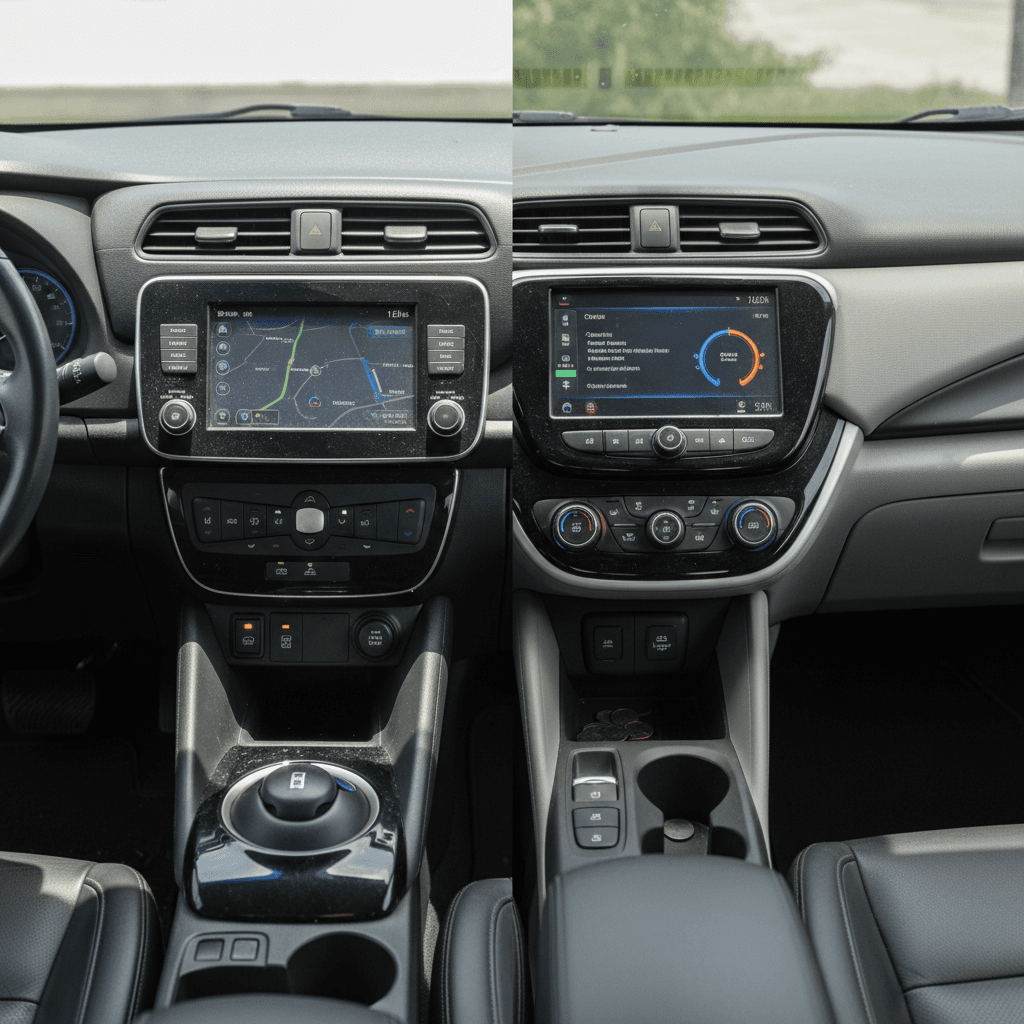
Design tip for shoppers
Battery, range, and charging: The big upgrades
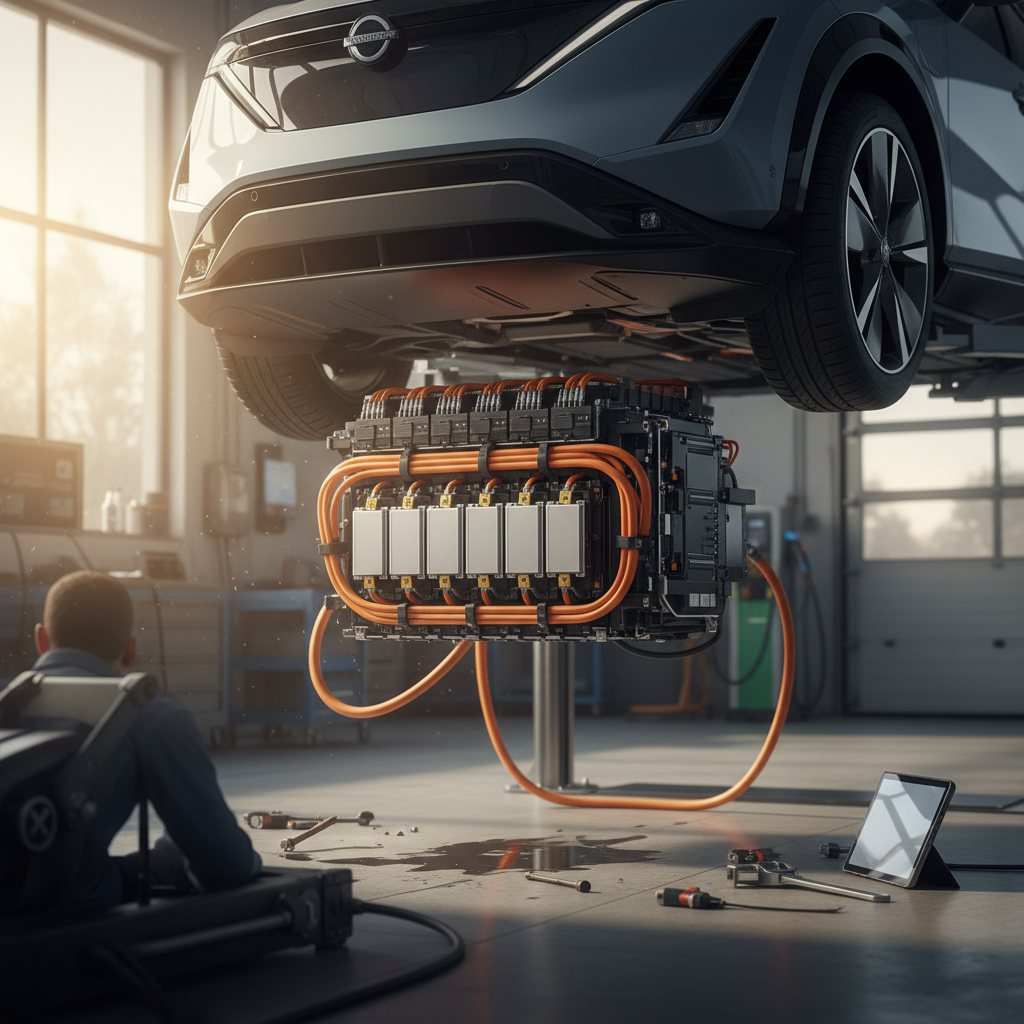
The most important part of the 2026 Nissan Leaf redesign isn’t what you see, it’s what sits under the floor. Nissan has moved to larger, liquid‑cooled battery packs and a more efficient platform, and the range numbers finally look competitive in the U.S. market.
2026 Nissan Leaf powertrains at a glance
More power, more range, and modern thermal management
52‑kWh pack (Leaf S)
- Approx. 52‑kWh usable capacity.
- Single front‑mounted motor with about 174 hp and 254 lb‑ft of torque.
- Designed as the value option once fully rolled out.
As of early 2026, this configuration has been delayed in the U.S., so availability will depend on Nissan’s later decisions.
75‑kWh pack (S+, SV+, Platinum+)
- Larger ~75‑kWh battery with liquid cooling.
- Front‑wheel‑drive motor rated around 214 hp and 261 lb‑ft.
- Targeted range up to about 303 miles in the most efficient S+ configuration.
This is the pack most U.S. buyers will see at launch, and it’s standard on the better‑equipped trims.
Expected 2026 Nissan Leaf range by trim (early estimates)
Final EPA figures can change slightly, but these are the ballpark numbers Nissan and early test drives suggest for the 75‑kWh pack.
| Trim | Battery | Est. power | Est. range (mi) | Notes |
|---|---|---|---|---|
| Leaf S | 52 kWh | ~174 hp | TBD | Delayed in the U.S.; aimed at lower starting price |
| Leaf S+ | 75 kWh | 214 hp | Up to ~303 | Efficiency‑focused configuration with smaller wheels |
| Leaf SV+ | 75 kWh | 214 hp | High 280s | More equipment, slightly lower range |
| Leaf Platinum+ | 75 kWh | 214 hp | Mid‑250s | Largest wheels and most features trade a bit of range for comfort and style |
Range estimates are based on manufacturer targets and early test data; always check the Monroney label on the specific vehicle you’re buying.
Charging performance
Two charge ports and NACS: What that means for you
One of the 2026 Leaf’s most unusual redesign decisions is its dual‑port setup. Instead of the old CHAdeMO connector, you now get a Tesla‑style North American Charging Standard (NACS) port for DC fast charging and a separate J1772 port for Level 1 and Level 2 AC charging. That combination significantly improves real‑world usability.
J1772 on the driver’s side
- Handles Level 1 (household outlet) and Level 2 (240‑volt) charging.
- Backwards‑compatible with the wallbox many current Leaf owners already have at home.
- Works with most public Level 2 stations in North America.
NACS on the passenger side
- Used for DC fast charging, including Tesla Superchargers that support non‑Tesla EVs.
- Eliminates the need for a separate adapter at most NACS stations.
- Future‑proofs the Leaf as more networks adopt NACS hardware.
Practical charging tip
2026 Nissan Leaf trims, pricing, and key features
Nissan has expanded the Leaf lineup for 2026. Instead of just a base S and a more powerful SV Plus, you now have a four‑trim walk, with the larger battery standard on every model except the postponed S. That gives shoppers clearer steps from value‑oriented to near‑luxury equipment.
Trim walk for the 2026 Nissan Leaf
From value commuter to tech‑heavy Platinum+
Leaf S (limited or delayed availability)
Intended as the price leader with the 52‑kWh pack and 174‑hp motor.
- Smaller battery to hit a lower MSRP.
- Simpler wheel and interior options.
- As of early 2026, Nissan has paused its U.S. launch, so don’t count on seeing it on every lot.
Leaf S+
Currently the effective base model in many U.S. showrooms.
- 75‑kWh battery and 214‑hp motor standard.
- Targeted starting price just under or around $30,000 before destination fees when announced, but transaction prices can vary.
- Best range in the lineup when lightly optioned.
Leaf SV+
The sweet spot for tech and comfort.
- Same battery and motor as S+.
- Upgraded wheels, interior materials, and additional driver‑assist tech.
- Dual large screens with Google‑built‑in and wireless Apple CarPlay/Android Auto on many configurations.
Leaf Platinum+
Top‑trim Leaf aimed at buyers cross‑shopping premium compact EVs.
- Largest wheels and most aggressive styling cues.
- Heated and power‑adjustable front seats, upgraded audio, more advanced safety tech.
- Range dips compared with S+ and SV+ because of wheel and tire choices.
MSRP vs. out‑the‑door price
2026 Nissan Leaf vs. previous generations
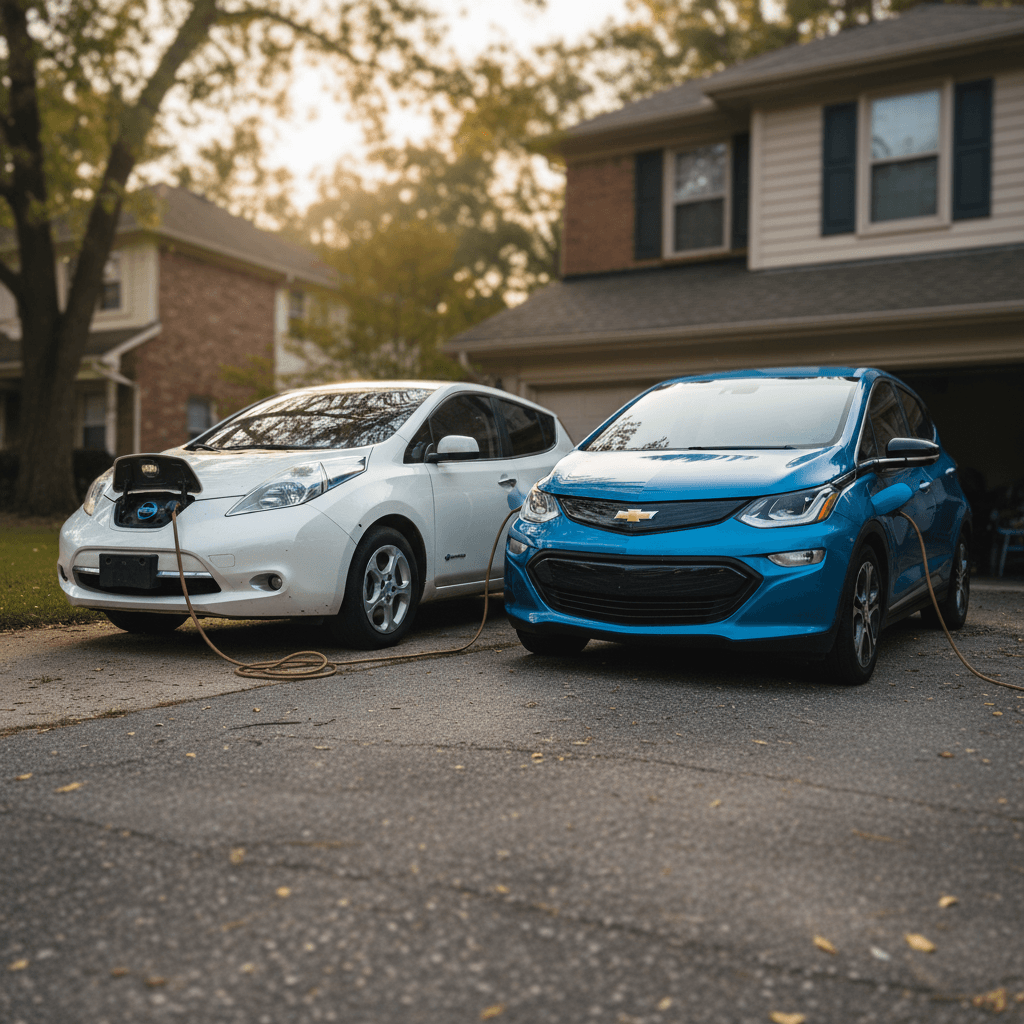
On paper, the 2026 redesign looks like a clear win over the outgoing Leaf. You get more range, modern charging, and a more desirable body style. But if you’re comparing a new 2026 Leaf to a deeply discounted 2025 or a used second‑generation Leaf, the math can get complicated.
2026 Leaf vs. 2025 Leaf vs. used second‑gen Leaf
How the new crossover stacks up against the outgoing hatch and a typical used second‑generation Leaf.
| Model / generation | Body style | Max EPA range (mi) when new | DC fast‑charge standard | Charging connector | Typical price band (early 2026) |
|---|---|---|---|---|---|
| 2026 Leaf (3rd gen) | Subcompact crossover | Up to ~303 (S+ target) | Yes, ~150 kW | NACS (DC) + J1772 (AC) | New – roughly low $30Ks to around $40K depending on trim and fees |
| 2025 Leaf (2nd gen) | Compact hatchback | Up to ~212 (SV Plus) | Yes, slower than 2026 | CHAdeMO + J1772 | New – often discounted into mid‑to‑high $20Ks as dealers clear inventory |
| 2018–2022 Leaf (2nd gen, used) | Compact hatchback | Up to ~215 when new (larger pack) | Yes, CHAdeMO | CHAdeMO + J1772 | Used – roughly mid‑teens to mid‑$20Ks depending on mileage and battery health |
Specs are representative; individual used vehicles can vary significantly in battery health and equipment.
Where the 2026 Leaf clearly wins
Who the 2026 Leaf fits, and who should look elsewhere
The 2026 Leaf is no longer a niche early‑adopter EV. It’s aimed at mainstream car and small‑SUV shoppers who want a familiar driving and ownership experience without spending luxury‑EV money.
Is the 2026 Nissan Leaf right for you?
Match the redesign to your real‑world use case
Best for urban and suburban commuters
- Daily driving in the 20–70‑mile range.
- Ability to charge at home or at work.
- Desire for crossover seating position and hatchback practicality.
Works for moderate road‑trippers
- Access to highways with solid fast‑charging coverage.
- Comfortable with a few well‑planned stops on 300‑ to 400‑mile days.
- Prefer value over blistering DC‑fast‑charge speeds.
Not ideal if you need AWD or towing
- Front‑wheel drive only, no dual‑motor version (at least for now).
- Not set up for meaningful towing from the factory.
- If you need all‑weather traction and towing, you may be better off with an EV SUV like a Hyundai Ioniq 5, Kia EV6, or certain used Tesla models.
How the redesign affects used Nissan Leaf shoppers
Every major redesign creates ripples in the used market, and the Leaf is no exception. The 2026 shift to SUV styling, larger batteries, and NACS has a few clear implications if you’re shopping used.
- Older Leafs will likely remain some of the cheapest entry points into EV ownership, especially 2018–2022 models with CHAdeMO fast charging.
- Second‑generation Leafs may see gradual price pressure as shoppers gravitate to the more versatile 2026 model with better range and Supercharger access.
- Because earlier Leafs use air‑cooled packs and older DC hardware, verified battery health becomes even more critical when you compare them to the 2026 redesign.
- The fact that Nissan canceled or delayed the ultra‑cheap 2026 Leaf S means late‑model used Leafs may compete directly on price with better‑equipped new S+ models in some regions.
How Recharged can help on the used side
Shopping checklist: New 2026 Leaf vs. used Leaf
Key decisions before you sign for a Leaf
1. Be honest about your daily range needs
Add up your typical weekday mileage, then layer in weekend and road‑trip patterns. If most days are under 50 miles and you rarely take long trips, a well‑priced used Leaf can still make sense. If you want to road‑trip with minimal planning, the 2026 Leaf’s range and NACS access are easier to live with.
2. Decide how important Supercharger access is
Tesla’s Supercharger network remains one of the most reliable in North America. The 2026 Leaf’s built‑in NACS port lets you use that network without adapters at compatible sites, which is a meaningful upgrade over CHAdeMO on older Leafs.
3. Compare true cost, not just sticker price
Factor in destination fees, dealer markups, potential state or local incentives, and long‑term fuel and maintenance savings. A slightly more expensive 2026 Leaf might pencil out once you consider lower charging costs and stronger resale value compared with an older EV.
4. For used Leafs, demand verified battery health
Battery condition is everything on earlier Leafs. Look for third‑party testing, onboard state‑of‑health readings, and any signs of rapid degradation. Recharged’s battery diagnostics and Recharged Score are designed specifically to take the guesswork out of this step.
5. Think about body style and parking
If you street‑park in tight urban settings, the older, shorter hatchback might still fit your life better. If you have a driveway and prefer SUV‑like seating, the 2026 redesign will feel more natural.
6. Consider your ownership horizon
If you tend to keep cars for 7–10 years, the newer platform, bigger battery, and NACS hardware in the 2026 Leaf are likely to age more gracefully. If you’re planning a 2–3‑year experiment with EVs, a lower‑cost used Leaf could be the smarter test run.
FAQ: 2026 Nissan Leaf redesign
Frequently asked questions about the 2026 Nissan Leaf
Bottom line: Is the 2026 Nissan Leaf redesign a smart buy?
The 2026 Nissan Leaf redesign transforms one of the market’s most familiar EV nameplates into a far more capable, mainstream small crossover. You get competitive range, a modern charging setup with NACS and J1772, and cabin tech that no longer feels a generation behind. For many buyers, especially first‑time EV shoppers who plan to keep the car for years, that makes the new Leaf a very compelling option.
At the same time, Nissan’s decision to delay the under‑$30,000 base model means the Leaf no longer owns the bargain‑EV crown the way it once did. If your budget is tight, or you prefer the old hatchback body, late‑model or used Leafs can still be smart buys when you have solid information on battery health and a clear view of local charging options. That’s where a used‑EV specialist like Recharged earns its keep, combining verified battery diagnostics, transparent pricing, and EV‑savvy guidance, whether you end up in a 2026 crossover or a well‑priced earlier Leaf.