If you’re searching for “2026 Hyundai IONIQ 7 specs release”, you’re probably trying to understand where Hyundai’s long-promised three-row electric SUV will land on range, price, and timing, and whether it’s worth waiting for compared with the IONIQ 9, Kia EV9, or other big EVs already on sale.
First things first: there are no final 2026 IONIQ 7 specs yet
What we actually know so far about the IONIQ 7
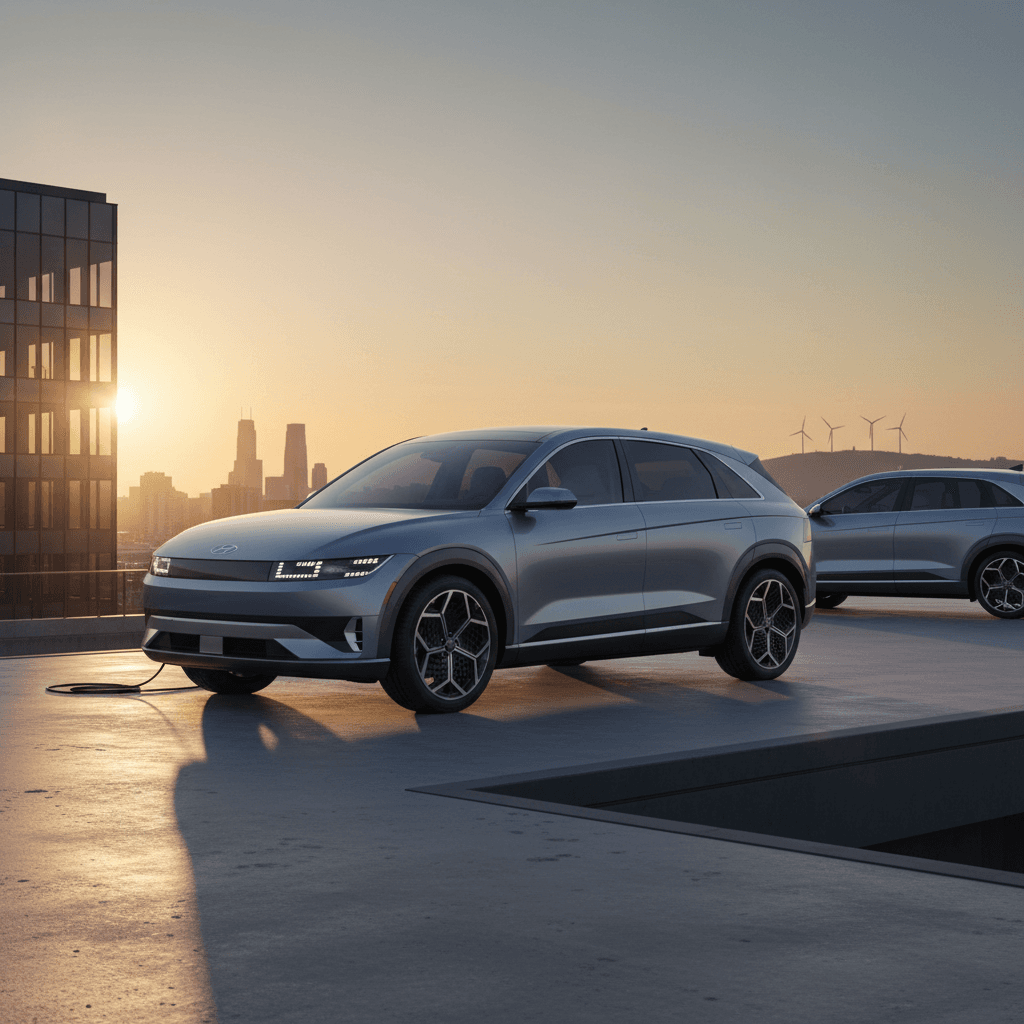
Hyundai first previewed its large three-row electric SUV with the SEVEN concept, an E‑GMP–based study that emphasized a long wheelbase, lounge-like interior, and ultra-fast charging capability. The concept is clearly the design and technology precursor to what Hyundai has called the IONIQ 7 in earlier communications.
- Built on Hyundai’s dedicated E‑GMP EV platform (shared with IONIQ 5, IONIQ 6, Kia EV9, and others).
- Sized similarly to a Hyundai Palisade, think full-size family SUV footprint rather than compact crossover.
- Previewed with an 800‑volt electrical architecture designed for 350 kW DC fast charging and very short 10–80% charge times.
- Targeted as a three-row SUV to sit above today’s IONIQ 5 and IONIQ 6 in space and price.
Since that debut, Hyundai’s roadmap has become more crowded. The production IONIQ 9, a three-row E‑GMP SUV with over 300 miles of range and a 110+ kWh pack, has effectively taken the role many expected the IONIQ 7 to fill. That raises an important question: will the IONIQ 7 still launch for the 2026 model year, or will it be repositioned or even folded into the 9 nameplate in some markets?
Nameplate confusion is real
Expected 2026 Hyundai IONIQ 7 specs based on segment and platform
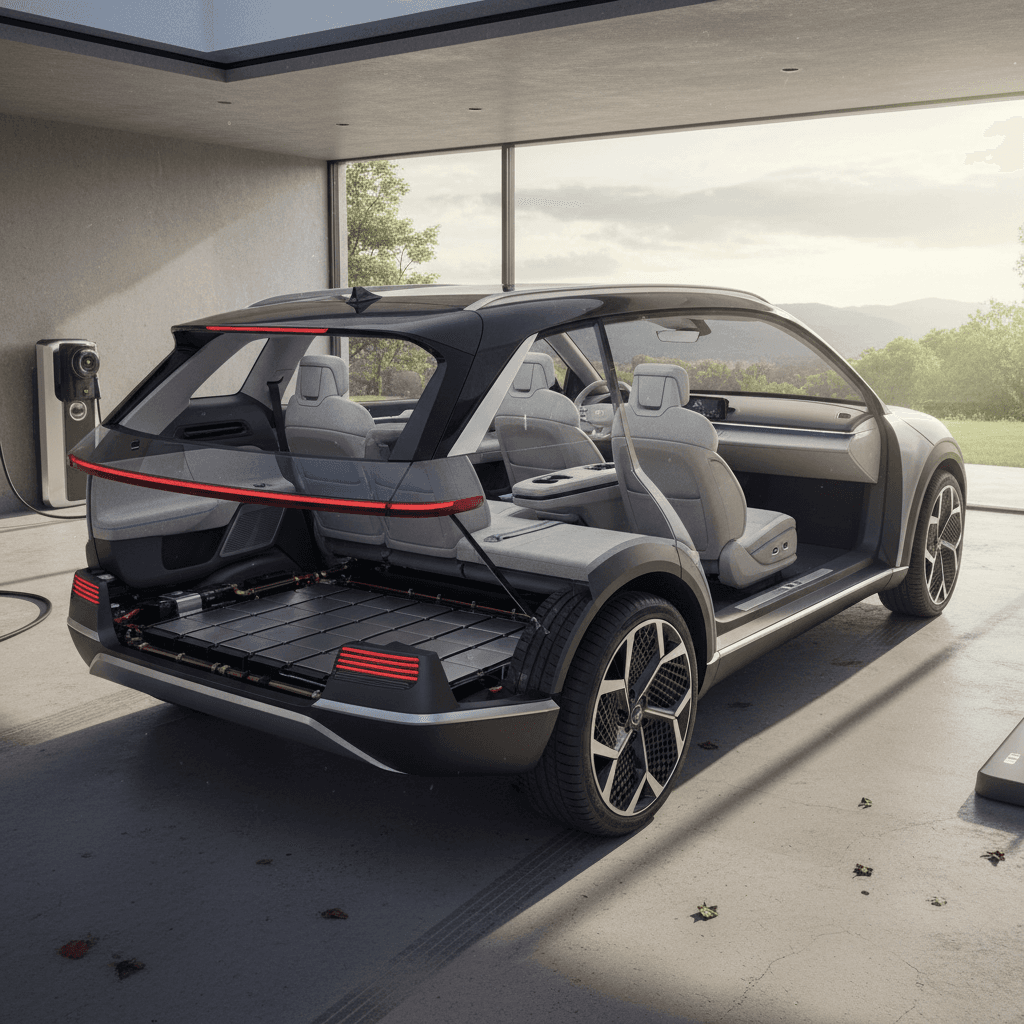
Because Hyundai hasn’t released a final spec sheet, the most honest way to talk about 2026 IONIQ 7 specs is to triangulate from three places: the SEVEN concept, today’s Kia EV9, and the production IONIQ 9. Those vehicles show us what the E‑GMP platform can realistically deliver in a big three-row SUV.
Projected 2026 Hyundai IONIQ 7 specs (educated estimates)
These are informed projections based on Hyundai’s E‑GMP platform and current three-row EVs. They are NOT official Hyundai figures.
| Category | Expected Range for IONIQ 7 | How We’re Estimating It |
|---|---|---|
| Battery capacity | ~100–110 kWh usable | Kia EV9 ~99.8 kWh; IONIQ 9 uses a ~110 kWh pack, so a three-row Hyundai sibling should be in the same ballpark. |
| Drive layouts | RWD single motor, AWD dual motor | Standard practice on E‑GMP; EV9 and IONIQ 9 both offer these configurations. |
| Power output | ~215–320 hp (RWD), up to ~420+ hp (AWD performance trims) | IONIQ 9 offers 215–442 hp depending on spec; EV9 tops out around 370+ hp. Expect IONIQ 7 to land in that envelope. |
| EPA range | Roughly 280–330 miles depending on trim | Three-row EVs with 100+ kWh packs and good aero can clear 300 miles in efficiency-focused RWD versions. |
| Charging speed (DC) | 10–80% in ~20–30 minutes on 350 kW charger | E‑GMP’s 800‑V architecture already supports these times on IONIQ 5, EV6, EV9, and IONIQ 9. |
| Towing capacity | 3,500–5,000 lbs depending on drivetrain | Kia EV9 and IONIQ 9 both target 3,500–5,000 lb ratings in the U.S. |
| Seating | 6 or 7 seats | Standard three-row configuration with optional captain’s chairs in the second row. |
| Starting price (MSRP) | High $50,000s to low $60,000s before incentives | IONIQ 9 and EV9 pricing gives a realistic bracket for a large Hyundai-branded three-row EV. |
Projected specs are subject to change once Hyundai releases final data.
How to read “projected” specs
IONIQ 7 vs. IONIQ 9 and Kia EV9: how will it fit in?
The toughest part of forecasting the 2026 Hyundai IONIQ 7 release isn’t the hardware, it’s the brand strategy. Hyundai Group already sells (or has announced) two three-row E‑GMP SUVs: the Kia EV9 and Hyundai IONIQ 9. That leaves three realistic paths for the IONIQ 7 nameplate:
Three likely roles for the IONIQ 7
How Hyundai could position a 2026 IONIQ 7 alongside the IONIQ 9 and Kia EV9
1. Slightly smaller, more affordable three-row
2. Range-optimized family hauler
3. Concept-inspired lifestyle SUV
Where the IONIQ 9 already lands
The IONIQ 9 is Hyundai’s confirmed three-row flagship EV, with a large ~110 kWh pack, 300+ mile range options, and power outputs reaching well past 400 hp in dual-motor guise. It’s aimed squarely at families who want space, performance, and tech to rival luxury brands, without luxury pricing.
Where the IONIQ 7 could make sense
For the IONIQ 7 to justify its own existence for 2026, it likely needs to be either more affordable, more efficient, or more lifestyle-focused than the 9. That might mean simpler trims, lower-output powertrains, and a price that dips closer to the top end of today’s IONIQ 5 range.
Good news: Hyundai already knows how to nail this segment
Charging tech, NACS, and real-world road-trip usability
If you’re considering a large three-row EV, you’re almost certainly thinking about road trips, ski weekends, and hauling family plus gear. That’s where charging tech matters as much as raw battery size.
What to realistically expect from IONIQ 7 charging
Plan around your family’s charging reality
Hyundai has also leaned into vehicle-to-load (V2L) capabilities on its E‑GMP vehicles, letting you power tools, camping gear, or even parts of your home from the traction battery. It would be surprising if a 2026 IONIQ 7 didn’t support similar functionality, making it attractive for outdoor families and emergency backup use.
Release timing, production, and tax credit outlook
Early reporting suggested that a production IONIQ 7 could enter series production around mid‑2024, with U.S. production following in 2025 at Hyundai’s Georgia “Metaplant” complex. That plan appears to have evolved as Hyundai focused first on the IONIQ 9 as its headline three-row EV.
How to think about the 2026 IONIQ 7 release
1. Treat 2026 as a realistic, not guaranteed, model year
Hyundai may still use the IONIQ 7 badge for a U.S. model-year 2026 SUV, but with the 9 already public, the timing and positioning could shift. Don’t assume you’ll see 7s on dealer lots in early 2026.
2. Watch the Georgia plant ramp-up
Hyundai’s U.S. EV and battery production in Georgia is designed to maximize federal tax-credit eligibility. When the 7 does launch, local production will be crucial for pricing competitiveness.
3. Follow tax-credit rules, not rumors
Federal EV rules have been in flux. Instead of assuming a future $7,500 credit on a 2026 IONIQ 7, watch which trims and VINs actually qualify closer to launch, and consider that some incentives now show up as <strong>instant discounts</strong> at the point of sale.
4. Expect staggered availability
Early allocations often prioritize higher trims and better-equipped models. If you want a base-spec IONIQ 7, you may be waiting longer than early adopters ordering top trims.
Don’t build a family budget around an unannounced EV
Who the 2026 IONIQ 7 is really for
Assuming Hyundai moves forward with a 2026 IONIQ 7 that slots slightly below the IONIQ 9, here’s the buyer profile it’s likely targeting:
Ideal IONIQ 7 buyer profiles
If you see yourself here, the 7 could be worth waiting for
Growing families moving up from a compact EV
Road-trip focused households
Payment-sensitive buyers watching depreciation
If you’re more interested in maximum power, luxury-grade materials, or off-road capability, you may be better served by the IONIQ 9, Kia EV9, or even upcoming competitors from Toyota and others. The IONIQ 7 is most likely to shine as the smart-value, high-efficiency choice in Hyundai’s three-row lineup.
Should you wait for the IONIQ 7 or buy a three-row EV now?
You probably searched for 2026 IONIQ 7 specs because you’re trying to time a purchase. Here’s the uncomfortable truth: waiting for a nameplate that isn’t fully revealed yet is always a gamble, especially if your current vehicle is aging or your family’s needs are changing fast.
Reasons to wait for the IONIQ 7
- You’re not in a rush, your current vehicle works fine for at least another 18–24 months.
- You specifically want Hyundai’s latest interior design language and software stack in a three-row EV.
- You’re comfortable with early-adopter risk: first-model-year quirks, supply constraints, and fast-moving incentives.
Reasons to buy a three-row EV sooner
- Your family already needs more seats or cargo space today.
- There are strong deals on existing models like the IONIQ 9, Kia EV9, or other three-row EVs, especially used examples.
- You’d rather buy a proven configuration with real-world owner data than chase theoretical specs.
Think in use-cases, not model-years
Shopping used three-row EVs while you wait: how Recharged helps
If you like the idea of a Hyundai three-row EV but don’t want to sit on the sidelines until 2026, the good news is that the used three-row EV market is maturing fast. Early Kia EV9s, IONIQ 9s, and other large EVs are already starting to show up in the pre-owned market, and depreciation can work in your favor.
Why consider a used three-row EV through Recharged
Transparent battery health and a simpler buying experience
Verified battery health
Curated EV inventory
Financing & nationwide delivery
Ready to find your next EV?
Browse VehiclesIf you end up deciding that waiting for a 2026 IONIQ 7 isn’t the best move for your family, a low-mile, well-documented used three-row EV can bridge the gap at a lower upfront cost, and without betting your life plans on an unreleased model.
2026 Hyundai IONIQ 7 FAQ
Frequently asked questions about the 2026 IONIQ 7
Bottom line on the 2026 Hyundai IONIQ 7
The search term “2026 Hyundai IONIQ 7 specs release” reflects a real shift in the market: families are ready for big electric SUVs, and Hyundai has the platform to deliver them. What’s still unsettled is the exact role the IONIQ 7 will play alongside the already-announced IONIQ 9 and Kia EV9.
From a hardware perspective, you can safely expect a roughly 100–110 kWh battery, realistic 280–330 mile range, 800‑V fast charging, and three-row practicality. The open questions are timing, pricing, and whether Hyundai ultimately emphasizes affordability, long‑range touring, or lifestyle design with the 7 badge.
If you’re flexible on timing and curious to see how Hyundai finalizes the lineup, keeping an eye on official announcements through 2026 makes sense. If you need space and certainty now, looking at IONIQ 9, Kia EV9, and other used three-row EVs, especially with Recharged’s battery‑health‑verified inventory, allows you to make a data‑driven decision today instead of waiting on speculation.