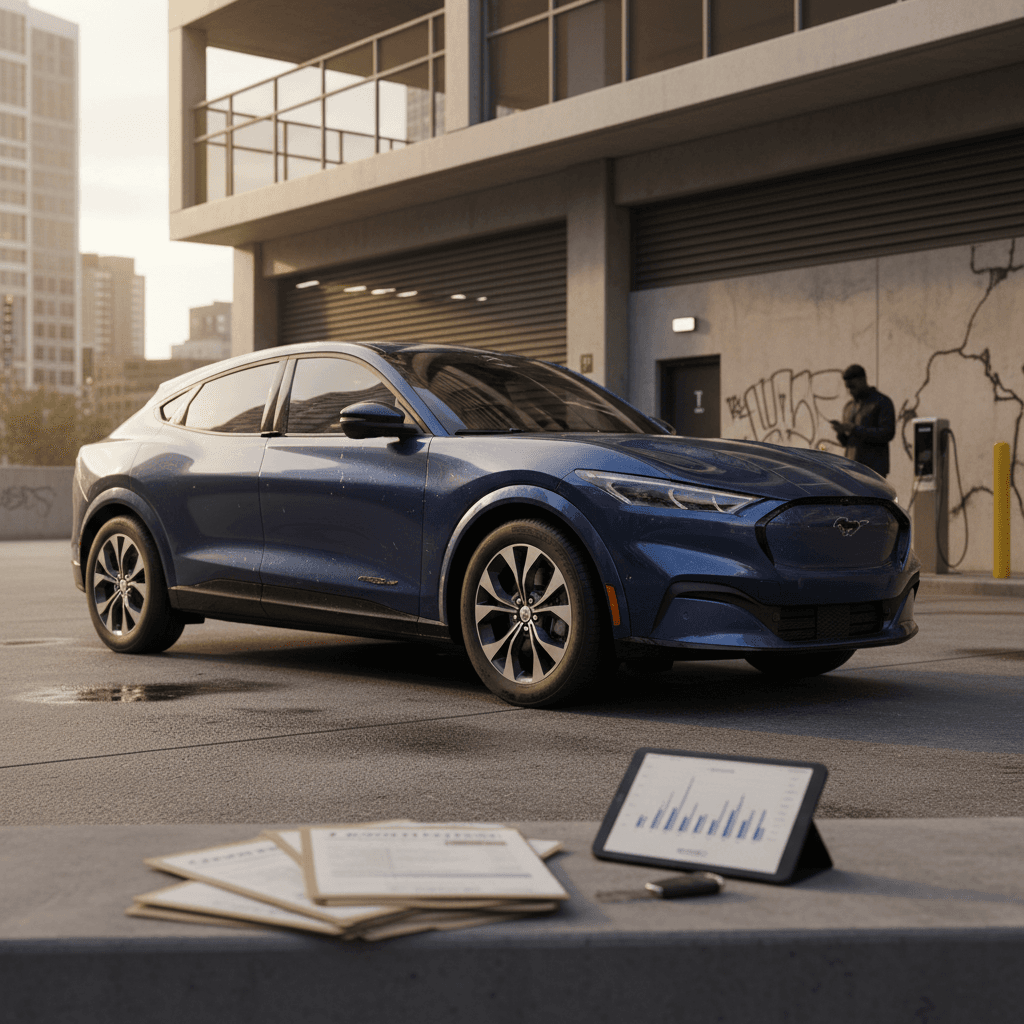
If you like your EVs with a bit of attitude, a used 2026 Ford Mustang Mach‑E is probably on your radar. By 2026, Ford has had several model years to refine its electric pony SUV, and the latest cars benefit from software updates, small feature tweaks, and a maturing used market that softens prices compared with new. This review focuses specifically on what the 2026 Mustang Mach‑E looks like as a used‑car buy: how it drives, what’s changed for 2026, known trouble spots, and how to shop smart.
Used‑focused review
Overview: What’s New on the 2026 Mach‑E, and Why It Matters Used
The 2026 Ford Mustang Mach‑E is more evolution than revolution. The basic recipe is unchanged: a compact, all‑electric crossover offered in rear‑wheel drive (RWD) or all‑wheel drive (eAWD), with Standard Range and Extended Range batteries and performance‑oriented GT and Rally trims. Ford continues to shuffle features and packages, 2026 models add new paint colors and reconfigured option bundles, but also quietly delete small conveniences like rear seatback map pockets on some trims and move the once‑standard front trunk (frunk) to the options list in certain markets.
2026 frunk change
Mustang Mach‑E in the Market by 2026
For used‑car shoppers, the key takeaway is that the 2026 car is part of a mature product line. Earlier software‑related recalls, charging curve tweaks, and cabin quality concerns have largely been addressed by mid‑cycle improvements and over‑the‑air (OTA) updates. What you’re really deciding is whether the 2026 tweaks and remaining warranty coverage justify paying extra versus a well‑spec’d 2023–2025 Mach‑E.
Trims, Range & Performance on the 2026 Mustang Mach‑E
Ford’s 2026 Mustang Mach‑E lineup continues the familiar four‑trim structure: Select, Premium, GT, and the rally‑inspired Rally. Powertrain and battery choices mirror the 2025 car closely, so you can shop a used 2026 using what we already know about range and performance from the previous year.
2026 Ford Mustang Mach‑E Trims at a Glance
Approximate performance and range targets for the 2026 Mach‑E, based on 2025 specs and early 2026 guidance. Always verify exact ratings for the VIN you’re considering.
| Trim | Drivetrain | Battery | Approx. Power | Est. EPA Range |
|---|---|---|---|---|
| Select | RWD or eAWD | Standard Range | ~260–280 hp | ~220–250 mi |
| Premium | RWD or eAWD | Std or Extended Range | ~290–340 hp | ~240–320+ mi |
| GT | eAWD | Extended Range | ~480 hp | ~230–260 mi |
| Rally | eAWD | Extended Range | Similar to GT | Slightly lower than GT due to tires & aero |
Actual EPA ratings can vary by wheel size, options and driving conditions.
How to sanity‑check range on a used Mach‑E
If you’re cross‑shopping performance EVs, the GT and Rally trims remain properly quick, with 0–60 mph times in the mid‑3‑second range when launch control is engaged and the battery is warm. The Select and Premium are more relaxed, but still deliver strong, instant torque that makes every on‑ramp fun. For daily commuting and road trips, the sweet spot for most used‑car buyers is a Premium Extended Range RWD or eAWD, you get the longest range, more equipment, and calmer ride tuning than the GT.
Driving Experience: How the 2026 Mach‑E Feels on the Road
On the road, a 2026 Mustang Mach‑E feels like a polished version of the car Ford launched a few years earlier. The steering is still on the sporty side for an SUV, and the low‑slung battery keeps the center of gravity down, so you don’t get the tippy, top‑heavy feeling common in some gas crossovers. The ride is firm but not punishing, especially on 18‑ or 19‑inch wheels. GT and Rally trims are noticeably stiffer and can feel busy on broken pavement, which is something to keep in mind if you live someplace with rough winters and patched roads.
What most used shoppers will like
- Instant torque: Even base trims jump away from stoplights with ease.
- Confident highway manners: The Mach‑E tracks straight and feels solid at speed.
- Quiet cabin: Little powertrain noise, just some tire and wind on coarse surfaces.
What might bug you day‑to‑day
- Firm low‑speed ride: You’ll feel expansion joints more than in a soft‑tuned crossover.
- Brake feel: The handoff between regen and friction can be a bit grabby until you’re used to it.
- BlueCruise limits: Optional driver‑assist is helpful but only on mapped highways, and subscriptions add cost.
Good news for used‑car buyers
Reliability & Recalls: What Used‑Car Shoppers Should Know
By 2026, the Mach‑E’s reliability story is a mix of software‑heavy teething issues and a stout underlying battery and drive system. Earlier model years saw multiple over‑the‑air updates to improve charging behavior, instrument cluster glitches and driver‑assist quirks. More recently, there have been two higher‑profile recalls that matter to anyone buying a used 2026:
- A large recall for 2021–2025 Mach‑E SUVs to fix electronic door latches that could stay locked after the front doors were closed, potentially trapping rear passengers. The remedy is a software update performed by dealers at no charge.
- A recall covering certain 2024–2026 Mach‑E models for an integrated park module fault that could allow the vehicle to roll away if the park mechanism fails to lock. Again, the fix is a software update applied by dealers.
Recall checklist for any used 2026 Mach‑E
Owner reports from earlier years point to a few other recurring themes: occasional 12‑volt battery failures that can brick the car until jump‑started, infotainment freezes, and the usual EV growing pains with dealer familiarity. The good news is that many of these issues have been mitigated via software and updated parts by the time the 2026 cars roll out.
If you’re shopping used, what matters most is service history. A 2026 Mach‑E with clean bodywork, regular maintenance, and proof that recall software updates were installed is a much safer bet than a low‑mile car that’s been in and out of the shop with intermittent electrical gremlins. This is where a third‑party health check, especially on the high‑voltage system, pays dividends.
Interior, Tech & Comfort: Living With a Used 2026 Mach‑E
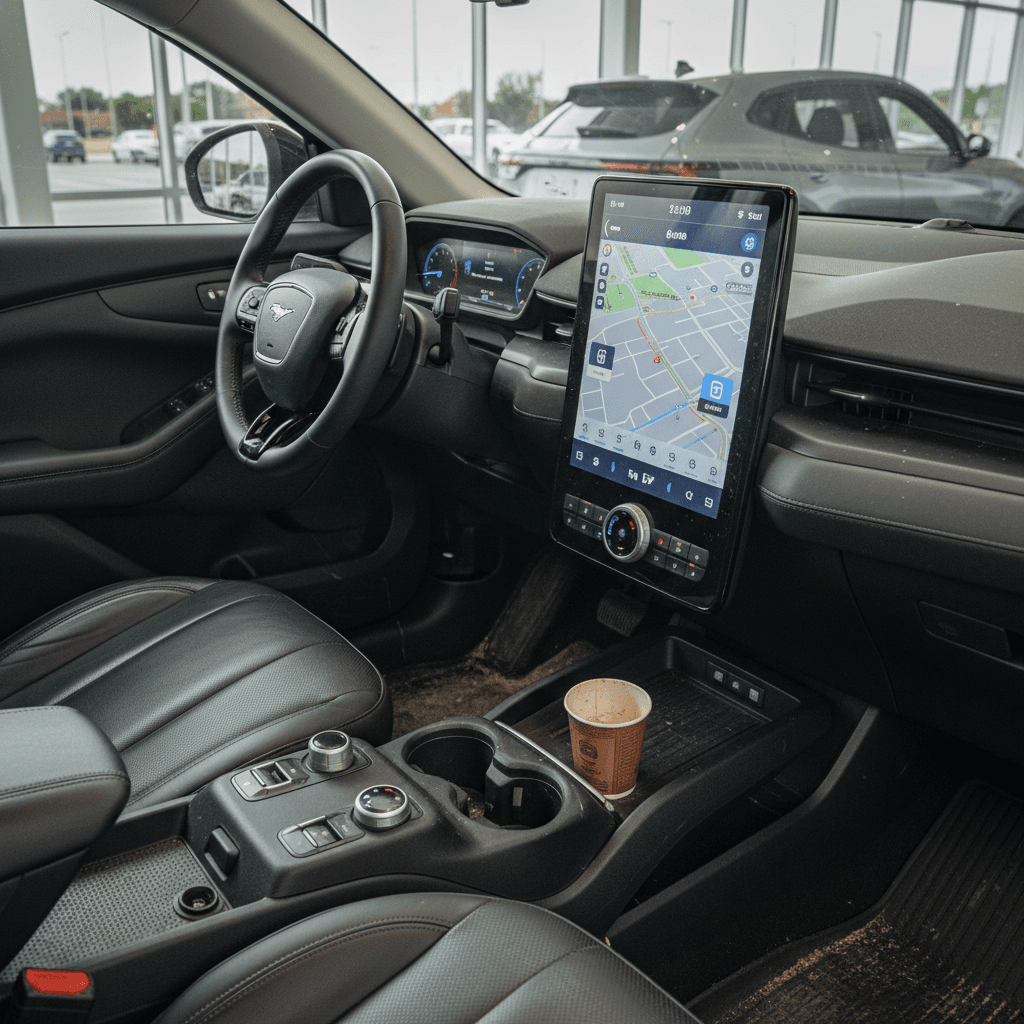
Climb into a 2026 Mustang Mach‑E and you’ll recognize the interior if you’ve ever sat in a 2021–2025 car. The tall portrait‑style touchscreen dominates the dash, a slim digital cluster sits ahead of the driver, and materials range from simple cloth and soft‑touch plastics on Select trims to more upscale finishes and panoramic glass roofs on Premium and GT models. Space is generous for four adults plus luggage; five fit in a pinch.
2026 Mach‑E Interior: Highlights & Tradeoffs
What stands out when you’re buying used
Comfort & Space
Front seats are supportive on long drives, and the flat floor makes rear legroom feel generous for a compact SUV.
Tech & Screen
The big touchscreen looks modern and gets OTA updates, but some shoppers still prefer physical knobs and buttons for climate controls.
Practical Storage
Hatchback cargo area is roomy, but for 2026 you must confirm whether the front trunk is actually fitted, on some trims it’s now optional.
The small‑stuff compromises
On the tech side, the Mach‑E’s Google‑powered navigation, wireless Apple CarPlay and Android Auto (where supported), and FordPass app integration make the daily experience feel current. As with any software‑heavy EV, some owners complain about slow boot times, random error messages, or updates that don’t land as expected, but the overall experience is competitive with rival compact electric crossovers from Hyundai, Kia and Volkswagen.
Ownership Costs & Depreciation for a 2026 Mach‑E
One reason a used 2026 Mustang Mach‑E is attractive is that earlier cars have already absorbed the steepest part of EV depreciation. Recent resale analyses on newer Mach‑E models show roughly a 40–45% value drop within the first two years, putting typical used prices for mainstream trims in the mid‑$20,000s to mid‑$30,000s depending on year, mileage and battery size. As 2026 models start trickling into the used market in late 2027 and 2028, you can expect something similar if new‑car pricing stays in line with 2025.
Cost Snapshot for Mach‑E Ownership
Insurance costs vary by region, but most owners report premiums similar to other compact luxury crossovers. The big levers you control are purchase price and charging. If you can install home Level 2 charging and you buy a 2026 Mach‑E at the right discount from new, your per‑mile cost of ownership can undercut a comparable gas SUV over a five‑ to eight‑year span.
Let depreciation work for you
Battery Health & Range Checks on a Used 2026 Mach‑E
With any used EV, battery health is the headline story. So far, real‑world data on earlier Mach‑E model years shows modest degradation when the car is charged sensibly, think DC fast charging used for trips, not daily, and regular updates installed. By the time you’re considering a used 2026, it should still be well inside Ford’s 8‑year/100,000‑mile battery warranty, which is a major safety net.
How to Evaluate Battery Health on a Used Mach‑E
1. Check warranty start date
Ask for the original in‑service date; Ford’s high‑voltage warranty runs 8 years/100,000 miles from that point. A 2026 car sold new in late 2026 will typically be covered into 2034.
2. Compare displayed range to EPA rating
With a full charge, note the car’s estimated range. If it’s significantly lower than the EPA figure for that trim and tire combo, ask why, driving style, climate and degradation all play a role.
3. Review charging history
A car that lived on DC fast charging every day may have a more stressed pack. Ask where the last owner charged, and look for home Level 2 usage in the owner’s app screenshots if possible.
4. Scan for battery‑related DTCs
Have a shop or EV specialist scan for diagnostic trouble codes around the battery, cooling system and onboard charger, especially if you see any high‑voltage or powertrain warnings.
5. Take a long test drive
Drive at highway speeds for at least 20–30 miles and watch how quickly the state of charge and estimated range drop. Abrupt drops out of proportion to distance may warrant further inspection.
How Recharged helps here
Pre‑Purchase Checklist for a Used 2026 Mustang Mach‑E
Beyond battery health and recalls, a good inspection separates a great used 2026 Mach‑E from one you’ll regret. Because the Mach‑E’s powertrain is mostly sealed and low‑maintenance, you’ll spend more time looking at software behavior, charging hardware and basic body condition than at belts, fluids or exhausts.
Used 2026 Mach‑E Pre‑Purchase Checklist
Confirm trim, battery and drivetrain
Use the window sticker (or a build sheet) to verify whether you’re getting Standard or Extended Range, RWD or eAWD, and the correct trim level. Values swing thousands of dollars across configurations.
Inspect wheels, tires and brakes
Check for curb rash, uneven tire wear and rotor scoring. Performance GT and Rally models may have led harder lives; budget for premium tires if you’re buying one enthusiastically driven example.
Test all doors, locks and windows
Given past latch‑ and lock‑related recalls, open and close every door and window several times. Verify keyless entry, phone‑as‑a‑key (if equipped) and remote unlock via the FordPass app.
Evaluate interior wear
Look for seat bolster wear, sticky center screen, peeling trim and loose panels. Small squeaks on a test drive can grow annoying quickly, especially on rough roads.
Check charging equipment
Make sure the included charge cable works on Level 1 and Level 2 (if applicable), and test public charging at least once before buying, ideally a DC fast‑charge session.
Verify software version & features
In the settings menu, note current software version and confirm that key features like CarPlay/Android Auto, navigation, and BlueCruise (if equipped) operate correctly.
Bring a specialist, human or digital
Who Is a Used 2026 Mach‑E Right For?
Great fit for
- Commuters and small families who want an EV with some personality and enough space for kids and cargo.
- Drivers upgrading from older gas crossovers who will appreciate the instant torque and low running costs.
- Shoppers nervous about first‑gen EVs, by 2026 the Mach‑E has several model years of updates and a long battery warranty behind it.
Might want to look elsewhere
- Big‑family haulers who truly need a third row; the Mach‑E is a two‑row crossover.
- Set‑and‑forget types who hate software updates or occasional tech quirks, any modern EV will ask for some digital patience.
- Track‑day regulars who want repeatable high‑speed laps; a GT or Rally can be fun, but that’s not its long‑term mission.
FAQ: 2026 Ford Mustang Mach‑E Used Buying Questions
Frequently Asked Questions About the 2026 Mach‑E (Used)
Bottom Line: Is a Used 2026 Mach‑E a Smart Buy?
Taken as a whole, the 2026 Ford Mustang Mach‑E remains one of the more engaging electric crossovers you can buy, new or used. It’s not perfect, ride quality can be firm, software still has its occasional moods, and feature shuffles like the optional frunk will annoy some shoppers. But as a used proposition, a 2026 Mach‑E leverages several years of running changes, a still‑robust battery warranty, and meaningful depreciation to deliver a lot of EV for the money.
If you’re considering a used 2026 Mach‑E, treat it like the sophisticated electric appliance it is: verify battery health, software status and recall completion before you fall in love with the color and wheels. Do that, and you’ll have a quick, practical, characterful EV that fits family duty during the week and still feels enough like a Mustang to make you take the long way home. And if you’d rather not decode all that alone, shopping a curated inventory on Recharged, with transparent Recharged Score Reports, nationwide delivery and EV‑savvy support, is one of the easiest ways to get into the right Mach‑E the first time.